• Image courtesy of Robert Blumenthal Gallery.

    Image courtesy of Robert Blumenthal Gallery.

    Featuring: Gavin Kenyon, JPW3, Ryan Foerster, Sam Moyer, Sayre Gomez, Sean Townley

    t,o,u,c,h,i,n,g
    February 12 – March 15, 2014
    Robert Blumenthal Gallery
    1045 Madison Ave. 3rd FL
    New York City
    robertblumenthal.com

    bruskin__melancholy_androgynous_warriors__web

    Image courtesy of Marlborough Gallery

    Grisha Bruskin: H-Hour
    February 12 – March 15, 2014
    Marlborough Gallery
    40 West 57th Street
    New York City
    marlboroughgallery.com

    Hannah Höch was a pioneer Dadaist of 1920’s Berlin. Somewhat forgotten, or at least pigeon-holed by art history; she was a social provocateur who clashed with the Nazis and was found guilty of Entartete Kunst (degenerate art).

    The exhibition is a survey of the artist’s works on paper and is the first major exhibition of Höch’s art in Great Britain, bringing together over 100 works from major international collections. The exhibition examines Höch’s career from the 1910’s to the 1970’s—if circumnavigating her prolific array of oil painting and drawing—the exhibition at least focuses on her most remembered output: photo-montage and collage and her works of fantastische kunst.

    Höch’s art was often an astute social satire on the female form, and the politics of Europe. The artist’s human condition is resolutely female, and reflects her own experiences. A reflection of the female form, and identity in society, as well as art.

    These were figurative abstractions of tension and urgency. A juxtaposition of formal abstract aesthetics and emotional socio-cultural clout—initially reflecting a period of enthusiasm and great change in a post First World War Berlin.

    Yet Höch’s art was radical in contrast to the purely formal concerns of the Dadaist movement. The ‘simultaneous muddle of noises’ that the Dada Manifesto called for was discarded by Höch for a certain aesthetic balance, a definite composition, and a narrative structure, often politicized.

    This one-woman Dadaist revolution also reflected a more obvious socio-political content and feminist drive, prevalent in the creative party of 1920’s Berlin, eventually to be trampled under booted heel by a ‘mad, inhuman, bestial clique‘—as the artist herself described the Nazis—once she was no longer muted by their tyranny.

    In fact the Second World War saw the artist publicly derided for her degenerate works, and she lived out the war in cautious seclusion. A period that saw no public displays of her work, or opinion. Yet her art was spared exhibition in Die Ausstellung Entartete Kunst—the Degenerate Art exhibition of 1937—as many of her peers fled Europe to America to continue the movement.

    But it was the compositional harmony of Höch’s work as opposed to the ‘anti-art’ of the Dada aesthetic that may have been the reason for her seeming erasure from Dadaist history. It was in the 1920’s that fellow Dadaists John Heartfield, and George Grosz decried her inclusion in the First International Dada Fair. Also the fact that fellow German Dadaists considered their female peers ‘charming and gifted amateurs’, suggests that left-wing art movements were not spared sexism, even in a progressive Berlin.

    Höch was also an artist exploring the contradictions of her own identity, juxtaposed against a society in either post-war ascension or decline, whether in the darkening clouds of a pre-war Berlin with a tableaux of a fluid sexuality and social conscience, or with more than a glimmer of biting satirical wit.
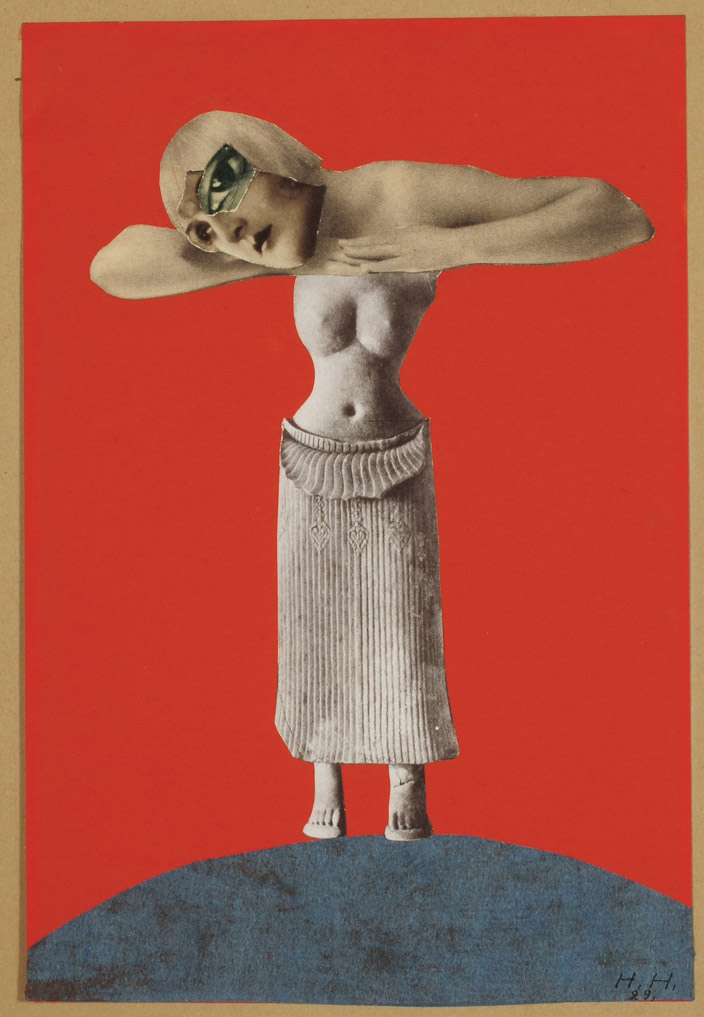
    Hannah Hoch, Ohne Titel (Aus einem ethnographischen Museum) (Untitled [From an Ethnographic Museum]) 1930. Collage 48.3 x 32.1 cm. Museum für Kunst und Gewerbe, Hamburg. Image courtesy of Maria Thrun.

    Hannah Hoch, Untitled (From an Ethnographic Museum), 1930. Collage
    48.3 x 32.1 cm. Museum für Kunst und Gewerbe, Hamburg. Image courtesy of Maria Thrun.

    The ‘Ethnographic Museum’ series, in which large heads from African sculptures appear on bodies of European women, have encouraged a didactic response amongst art historians in the past, suggesting that these works offer a critique of Germany’s imperial sojourns into Africa. If anything they were more likely to be a reference to the endless use of the female form in art, juxtaposing the totemic iconography of a ‘fertile’ African aesthetic of the time with the social freedoms of a 1920’s Berlin—but with the slight nuance of exploitation.

    There are certainly references to the gaze of the viewer and objectification of the female form, and it’s socially disempowering consequences, bringing to mind; ‘The surveying woman is a man, the surveyed woman is a woman’, a notion that Höch would probably agree with, if not the language with which the concept is posited.

    The stark nature of racial inequality in a 1930’s Germany was also referenced on several occasions in the artist’s work – a courageous act in the period of the Weimar republic.

    There is also an anachronistic tendency to read a feminist agenda when viewing the works – yet the female figures of Höch’s photo-montages often express a knowing place, not only within the composition, but in history, both art history and cultural history; while creating mischief in their own social present.

    Höch was not a follower of the strict formalist theory of Dadaism—hers was a detail of arrangement—abstracted social-conceptual imagery—often focusing on the female form and with a political vibrancy – a power to excite an anarchic aesthetic reflecting a period of tumultuous social upheaval.

    But post World War Two Höch’s insightful and piercing aesthetic softened into lyrical abstraction. The artist’s anarchic social criticism was worn down by the fear of Nazi oppression—or maybe this was a reflection of a new found social and artistic freedom; her social commentary was quieter and her ‘attacks’ less ferocious.

    One of the artist’s final works; ‘Lebensbild (Life Portrait) 1973′, is a complex photo-montage including images of Höch throughout her career. Having lived through one of the most eventful centuries in human history, she embraced the new media of ‘photo-matter’ often using it to comment on the very subjects it had captured.

    Amongst the detailed collage is an almost hidden image from the Apollo moon landings and the famous image of ‘Earth Rise’. Höch’s figure is collaged into the image as an almost final act of mischief and a clever narrative of artist as attestor to the world. Human action processed through the eye of the artist as social conscience and political commentator of unmediated expression.

    As Höch is not only observing the moon landing but peering over the shoulder of the astronaut, with magnifying glass in hand looking back at, and observing the earth. The most objective view of ourselves in history. A conceit to a lifetime of critical study and manipulation of the photograph, and a modest, almost hidden statement of witness to a lifetime of change, and an artist’s moral obligation.

    By Paul Black

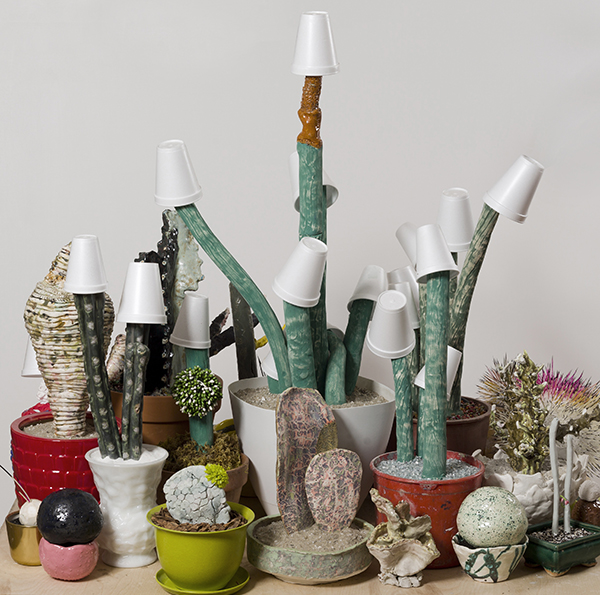
    lscacti_v2_sm272

    Image courtesy of CRG Gallery

    Lisa Sanditz: Surplus
    February 13 – March 15, 2014
    CRG Gallery
    548 West 22 Street
    New York City
    crggallery.com

    Taye was just wondering:

    What are you doing tonight?

    What time do you get out of work?

    Do you like ice cream?

    Do you like puppies?

    Is it cool if I meet you outside your work with ice cream and puppies?

    Please let me know, it’s cold out here in just my undies.

    Theo Rosenblum’s third solo show with Vito Schnabel features a series of black, monochromatic reliefs, which are a shift from the artist’s typically colorful and ebullient, pop-infused sculptures. The show is a darkly romantic meditation on the power dynamics of predator and prey, as well as death and the manifold forms it takes on, both real and imagined.

    Both the black, austere palette, and the physicality of the reliefs bring to mind Louise Nevelson’s found object assemblages. Black acts as a formal and conceptual unifying force, giving cohesion to the oddball eclecticism.

    A large mushroom cloud looms over the entire show with its immense aura. Yet it remains more of a symbol of the a-bomb than an actual threat. Its absence of color, and its sculptural, containment transforms it into more of a movie prop.

    To the right of the nuclear explosion, a pair of skeletal arms, peer out from beneath a chained wooden floorboard. The meticulously rendered wood of the floorboard as well the highly detailed bricks imbue the piece with a sense of time and history, and could very easily be the backdrop of an Edgar Allen Poe story. Although, unlike Poe, the gesture seems more funny than creepy, and it brings to mind the nudge, nudge, wink, wink, attitude of so many horror movies that took place in the eighties and early nineties.

    At the end of the main wall, a human hand removes a lobster from a tank of a dozen or so lobsters, lying bleakly at the bottom. Their carefully sculpted bodies break apart the shape of the relief and disrupt the rectangle. The scene is reminiscent of David Foster Wallace’s essay; Consider the Lobster, which he wrote for Gourmet magazine, describing the gluttony and horror of the Maine Lobster festival. Similarly, a feeling of empathy and hopelessness pervade in the relief. Titled, The Hand of Fate, the impression is that our own fate is not dissimilar from that of the lobster.

    On the left wall, a cozy domestic scene, complete with a fragment of a comfy couch, a trophy fish, and a curtained window, remain in tact although most of the room’s wall has been ravaged by some being that tore a doorway through to the outside world. It takes a moment to grasp what exactly has just happened, making it one of the most mesmerizing pieces in the show. There’s an eerie tension between the tidy domesticity of the room and the seemingly boundless nature of the evergreen woods and mountains peering through the impromptu doorway. A path of footprints in the snow lead directly into the scene of the crime, indicating that whoever or whatever did this has not yet left the premises.

    Rosenblum’s darkly playful ruminations on death remind us of how impermanent and fragile everything is, and touch upon one of the most universal experiences in which everyone for once becomes truly equal.

    By Irena Jurek

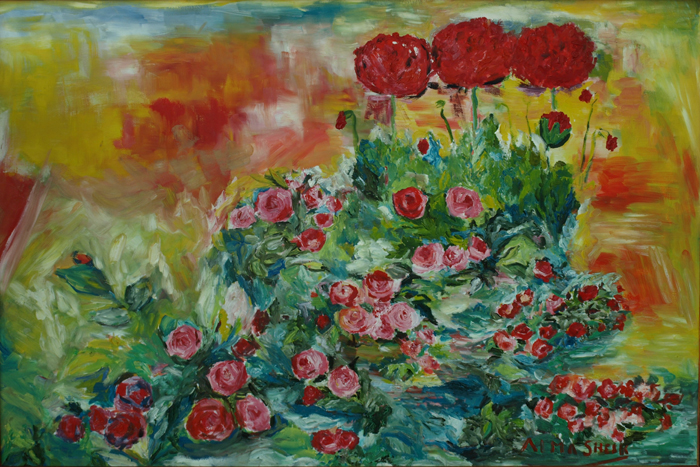
    Image courtesy of artist

    Image courtesy of artist

    My works are mostly oils on canvas, but I also work in acrylics and pastels. A sincere and passionate painting celebrates life in all its different incarnations. My subjects are typically abstracted natural forms, landscapes, human figures, and still lifes that have their foundation in a perception of reality. I find that I am attracted to various objects, which I feel express something to me. These objects then take on different shades, colors, and forms as I allow my self-expression to influence my painting.

    alma-art.it


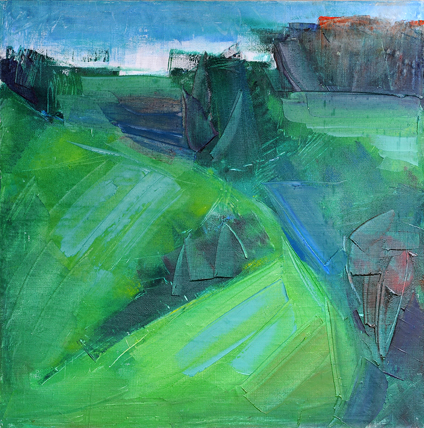
    Image courtesy of artist

    Image courtesy of artist

    Colors are my emotions that guide me through the real world. The real world is complex and full of pain. What I seek in color and space is the beauty which is hidden behind human sentiment. As a result of my quest for sensation, the world becomes much simpler, a lot more energetic, and beautiful. This is achieved by intensifying the significance of color. It is pure pleasure for me to generate ideas and work on images. My creations are not the imitation of the surrounding world but a memoir of reality, which is inseparable from human experience.

    lonitsachichinadze.ge

    Image courtesy of artist

    Image courtesy of artist

    I come from the Faroe Islands, but I live in Denmark now. My inspiration comes from the Faroese light and colors. My art represents an eternal search and longing to recreate fleeting moments and the changing glimmer of light, but I must continuously remind myself that it can only be done in glimpses.

    ossurmohr.dk

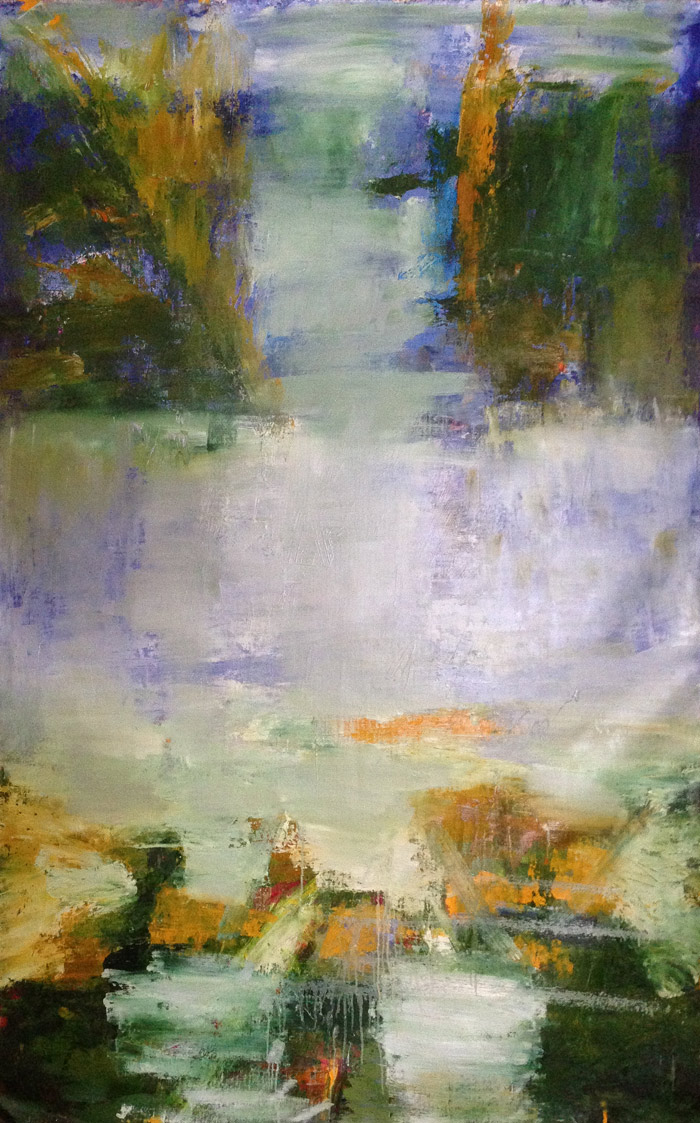
    Image courtesy of artist

    Image courtesy of artist

    A creation is not separated from the creator, until it leaves him. When I create, it is the representation of all parts and forces in me. Sometimes I will be under the influence of my inner and sometimes my inner will be in dialogue with something exterior, which has touched me and stayed engraved as an inner impression.

    Finding a way of expression with different tools and media and trying to achieve a balance between my mind, my thoughts, and my body—which are all related and inevitably connected to inner and outer atmospheres and realities—is what I attempt through my art.

    The canvas becomes the vessel, which receives, contains, and irradiates all that in different lights shine or fade in that moment.

    Essentially, we all have some kind of question in our journey through this life.

    Being in life and creating I try to carve and discover paths never walked before.

    judithstahlschidlowsky.com

    News | Exhibitions