
The work of Kremena Lefterova. Image courtesy of Red Royalty Gallery.
Kremena Lefterova: The Emperor’s New Clothes
April 4th – May 5th, 2014
64 Delancey St.
New York City
redroyaltygallery.com




The work of Kremena Lefterova. Image courtesy of Red Royalty Gallery.
Kremena Lefterova: The Emperor’s New Clothes
April 4th – May 5th, 2014
64 Delancey St.
New York City
redroyaltygallery.com
Robert Walden and Henry Chung of Robert Henry Contemporary are a making a life in the art world work for them. The gallery they run together is a collaborative project, so it comes with the territory. As Robert points out, “there is always a give and take…just like anything else in life.” While the cooperative duo have been working together as curators since the 1990’s, coincidently both Robert and Henry began their careers working on the opposite side of the gallery desk, starting out as artists. They still share a studio space in Red Hook.
Even though Henry didn’t think he would ever work as curator, he believes, “it does make sense that artists do end up curating. I see it as analogous to any other artistic discipline. It just happens that the curators use other people’s work as a medium, the gallery as a substrate. The finished piece is the exhibition.” The curator is kinesthetically involved, connecting the dots for the viewers.
For both curators, art has been used as a point of reference throughout their lives, anchoring their childhoods and subsequent careers. Robert’s father was an artist and a professor of art; making his son’s transition into the art world smoother than most. Henry credits the influence of his mother to lead him in a creative direction. She would take him to the Brooklyn Museum every Saturday, where they took art classes together. “My memories of these moments are quite profound. They were some of the first times I saw my mother as a whole person who could do things other than ‘mom’ things.”
Given their longstanding investment and experience with art from an early age, both curators agree that the origins of their curatorial projects can stem from anywhere, sometimes the farther away from the visual arts the better. Henry interjects, “inspiration can happen anywhere. The more unconventional, the more compelling the exhibition could be. Getting back to the connect-the-dots metaphor, it’s not so much fun if you’re only connecting dots that are close to one another.”
The gallery presents mainly solo exhibitions, and tends to hearken back to the visual and conceptual principles that both curators share. They use their gallery as a point of exploration, in which the exhibitions function as a continuous string of challenges and experiments. While some shows are conceptually closer to their personal visions, “other shows are farther away. So, rather than a series of curatorial projects Robert Henry Contemporary functions as one continuous curatorial exploration with every show, containing some, but not necessarily all of the ideas in the cluster of interests that Henry and I share.”
Considering the name of their curatorial endeavor, Robert Henry Contemporary, art of the moment is of primary interest. While both curators share much in common, their artistic preferences and interest tend to be quite different. Henry states, “I’m attracted to somewhat minimal work. I also have a tendency towards works on paper, as well as works that are heavily process oriented.” Robert admits he has a great love for Dutch portraiture and landscape paintings of the northern Renaissance. “Rogier van der Weyden, to name one.”
Every show is an amalgamation of Robert and Henry’s personal visions and philosophies, and while this may appear to be a daunting task, the duo isn’t too stressed about it. “I think collaboration often requires compromise by all parties involved. The most successful collaborations are ones where you can see the dialog between the voices, and not simply the lowest common denominator.”
And if you asked these two what they would change about their space if they could, you’d find they’re perfectly satisfied just where they are. Henry states, “I actually don’t like to think about our gallery and our curatorial vision in those terms. Any space can be the most beautiful space in the world if you knew what to do with it. As for a dream artist, this is Brooklyn, after all. There are a lot of artists out there. In that mix is some really exceptional work.”
Robert and Henry are always looking to their next project, anticipating how they can provoke their viewers to ask questions, and engage with their space and the work they believe in. They aren’t slowing down anytime soon. This fall the gallery is anticipating a number of solo shows by artists James Cullinane, Richard Garrison and Noah Loesberg. In December 2013, Robert Henry Contemporary will head to the beach for the Aqua Art Fair in Miami. We have no doubt they will work hard together to bring the heat.
Chelsea gallery hopping is pretty fun most of the time, and often it’s a good idea to bring a friend along for company. Then there are some times when that other person is more of a distraction than an ally. Whether it’s because they have a different opinion of the work than you do, that they talk too much during the experience, or get they tired of walking around too easily; sometimes it is better just to go see art by yourself.
The following are a few exhibitions throughout the Chelsea gallery scene involving art that is better when viewed alone. Maybe the art is really understated and requires your undivided attention to really bring out its subtle beauty. Maybe the work is intentionally overwhelming and you can go there alone to really get lost in it. Whatever the case, here are a selection of shows you can go see right now by yourself and be thrilled. Actually, you may want to bring your dog. They are usually good, quiet company, and all the cool people are doing it these days.
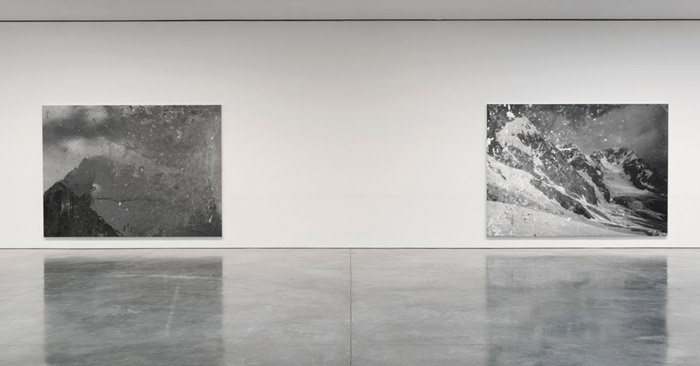
Rudolf Stingel is currently on view at Gagosian Gallery.
Rudolf Stingel
March 4th – April 19th, 2014.
Gagosian Gallery
522 West 21st St.
New York City
gagosian.com

Kiki Smith is currently on view at Pace Gallery.
Kiki Smith: Wonder
Feb 28th – Mar 29th, 2014.
Pace Gallery
510 West 25th St.
New York City
pacegallery.com
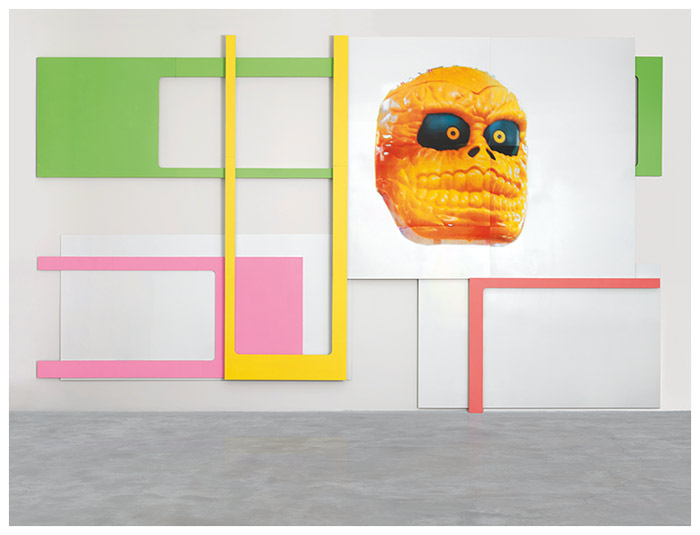
Michel Majerus has work currently on view at Matthew Marks Gallery.
Michel Majerus
February 8 – April 19, 2014.
Matthew Marks Gallery
502, 522, and 526 W 22 St.
New York City
matthewmarks.com
Elisabetta Benassi’s work The Dry Salvages is an impressively large orange book, which at first glance appears to be a specific resource, packed with a decidedly organized volume of information. A little further digging and an inspection of the introduction page reveals the fact that it is actually a collection of 10,000 entries, each specific to details collected by NORAD (North American Aerospace Defence Command) in their Space Object Catalog. As you may infer from the name of this document, this resource is a collection of all the known pieces of detritus left suspended in orbit within our atmosphere as a result of humankind’s many forays into space exploration.
A number of the objects listed are satellites we purposefully positioned within our stratosphere for one reason or another. On the other hand, as accident almost always out-weighs intention, the majority of the categorized debris were not left behind on purpose. Everything from apparatus released in routine comings and goings of spacecraft, to articles left behind as the result of aeronautical mishaps are collected here and organized by multiple pieces of data. Some examples of the categories of definition include the objects being listed by size, weight, country of origin, and calculated distance from earth in the nearest and most remote periods of their regular orbit. Benassi has restricted herself to collecting all the known information for objects over a certain size and placed it in one massive volume for our inspection.
The sheer thickness and heft of the book are enough to make one think twice about all the articles we are responsible for leaving behind. It is odd to think of these pieces of space trash as never changing. Typically things we discard are left to rot or are subject to some form of slow decay, until they finally melt away, becoming part of the landscape they come to call a second home. The articles Benassi has brought to our attention are similarly discarded, but being left to hover in the vacuum of space, they find themselves doomed to a different fate; one that involves a seeming infinity of floating solitude, never to change, they are fated only to circle, looking down on us forlornly from above. The articles will not be subjected to weathering. Liberated from rain, wind, or invasive insects, they remain suspended over our heads forever—spinning around in a cold, lonely orbit.
Personification of detritus aside, the work seems to access an important philosophical link between our understanding of the human body and the unfathomable power of thought, as connected by the utility of the imagination. This very abstract, intangible set of information and has been organized as a charting of hard, real numbers; able to be understood in relation to our own experiences with knowable objects. It is a cleverly practical and analytical system to define a quantity of orbital objects whose actual location and trajectory the average viewer can only access via his or her own imagination. Unless we are experts, we also have to trust Benassi’s word that these hovering pieces of detritus do in fact exist at all.
It’s a leap of faith that is pertinent to any work of art, really—a trust that what you see aspires to some form of aesthetic truth in one way or another. The Dry Salvages stands as a solid compendium of facts; a daunting collection of stated truths in a bold orange and cobalt jacket. It’s a book that stares back at you from the shelf, patiently awaiting the next time you feel inspired to peruse and comprehend a far-away reality of spinning debris.
Reviewed by Matthew Hassell
Maybe we shouldn’t be surprised, but it seems there are a large number of New York City museum shows worth getting out to see right now. In the wake of all the fuss and action of Armory Fair week, a number of hot shows have gained attention both due to exhibiting the most impressive art names and through presenting surprisingly exciting exhibitions. Usually there are a couple museum shows here or there that look promising, but at this point in time it seems every major museum is boasting something important.
Maybe it’s just that the sun is shining and there is the lingering promise of warmer weather that makes us want to leave the apartment, but it definitely helps that there are so many museum shows to go see. Here’s a list of the best shows we think are worth your valuable time:
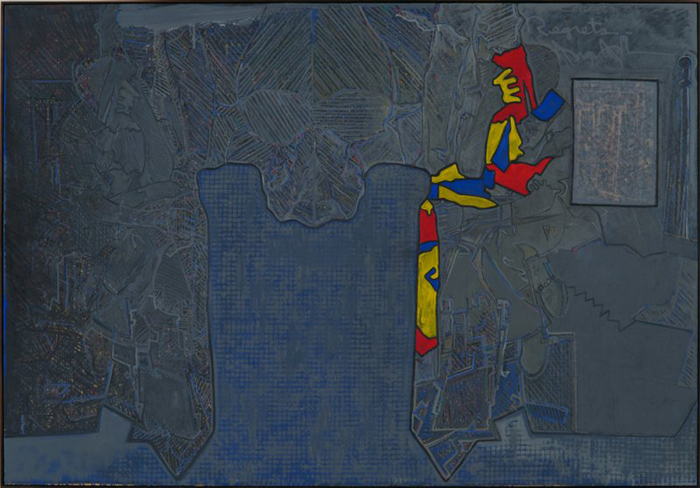
A new work by Jasper Johns.
Jasper Johns: Regrets
March 15th–September 1st, 2014.
MoMA
11 W 53rd St.
New York City
moma.org

A work by Sterling Ruby
The Whitney Biennial
March 7th – May 25th, 2014.
The Whitney Museum of American Art
945 Madison Avenue
New York City
whitney.org
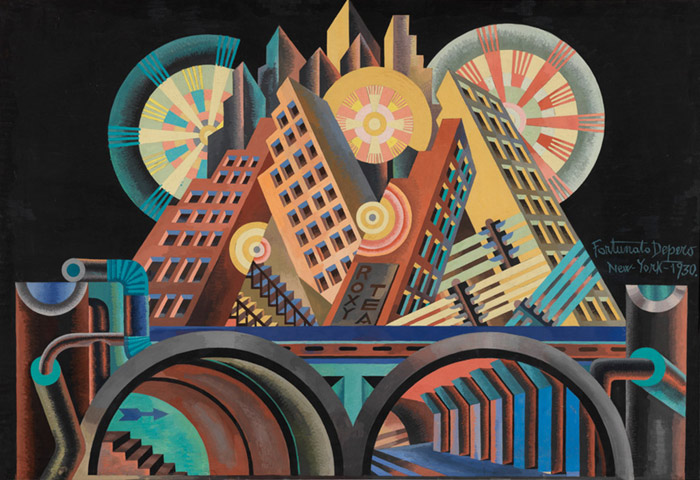
A futurist work by Fortunato Depero.
Italian Futurism, 1909–1944: Reconstructing the Universe
February 21st-September 1st, 2014.
The Guggenheim
1071 5th Ave.
New York City
guggenheim.org
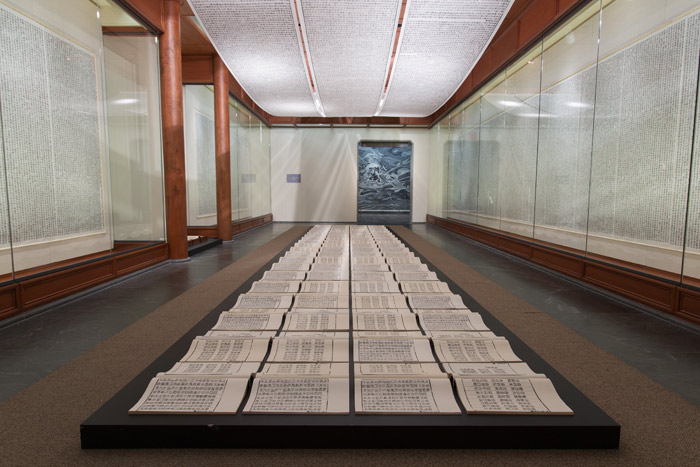
A work by Xu Bing.
Ink Art: Past as Present in Contemporary China
December 11th, 2013–April 6th, 2014
The Metropolitan Museum of Art
1000 5th Avenue
New York City
metmuseum.org

A work by Pawel Althamer.
Pawel Althamer: The Neighbors
February 12th – April 13th, 2014.
The New Museum
235 Bowery
New York City
newmuseum.org
Abstraction purists love to wail and moan when a show focuses mainly on the human body. Especially in New York, what could be worse than being forced to see a person everywhere you look? Most of us spend our entire daily commute with our eyes glued to the ceiling, our phone, or the floor, pretending the person next to you that you can’t help but smell isn’t even there. The ride to the gallery is no different, and then when you get there you’re forced to look at more people, and even worse, to pretend you like it!
Luckily there are actually a bunch of shows up right now that make looking at the human form quite enjoyable. We’ve put five of them together that we think you won’t be able to pretend not to like. Have a peek and then go see them in person. You never know, you may just meet the love of your life. If you have your checkbook on you, you may even be able to take him or her home for keeps. (The work of art that is, please don’t buy any of the actual people. That’s frowned upon these days, didn’t you see Steve McQueen’s latest work?)
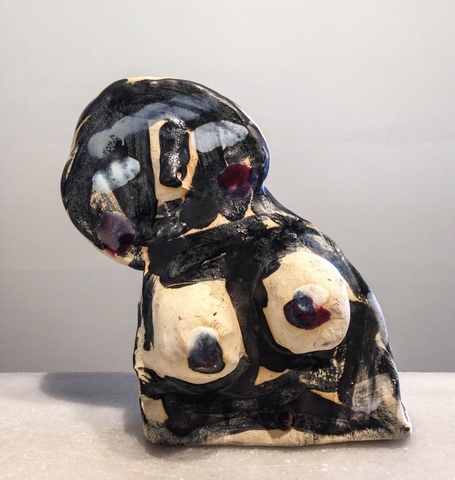
Image courtesy of BSAC and Ballast Projects
Featuring: Ryan Schneider, Austin Eddy, and Mira Dancy
Feeling Human
March 5th – April 19th, 2014
Bleeker Street Arts Club
305 Bleeker St.
New York City
bsacny.com
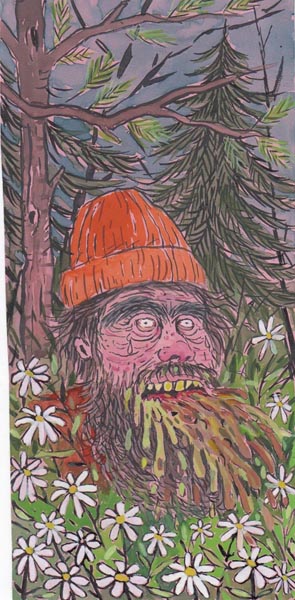
Image courtesy of Asya Geisberg Gallery.
Rebecca Morgan: No Church In The Wild
February 20th – March 29th, 2014
Asya Geisberg Gallery
537 W 23rd St.
New York City
asyageisberggallery.com
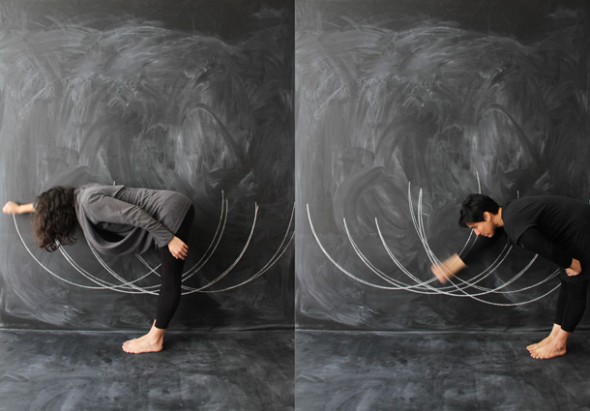
Image courtesy of AC Institute.
Featuring: Vanessa Enríquez and Ilya Noé
Zirkel (1+2)
March 13th – March 26th, 2014
AC Institute
547 W 27th St.
New York City
artcurrents.org
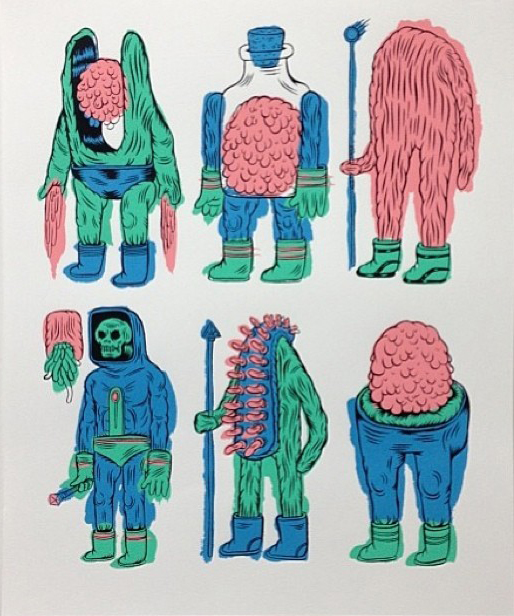
Image courtesy of Wayfarers.
Joshua Ben Longo: Hypnagogia
March 14th – April 10th, 2014
Wayfarers
1109 Dekalb Ave.
Brooklyn, NY
brooklynwayfarers.org
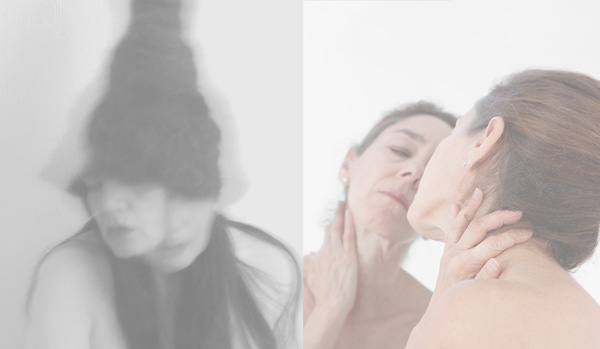
Image courtesy of Momenta Art.
Featuring: Joy Episalla and Susan Silas
To Selves
March 7th – April 13th, 2014
Momenta Art
56 Bogart St.
Brooklyn, NY
momentaart.org

Image courtesy of Brian Morris Gallery.
Featuring: Alicia Gibson, Kristina Lee, and Jaqueline Cedar.
How The Light Gets In
March 6th – April 5th, 2014.
Brian Morris Gallery
163 Chrystie St.
New York City
brianmorrisgallery.com

Courtesy of the artist.
Abstract, colorful, and dynamic in composition, my paintings are created in the richness of oils, the spontaneity of acrylics, and fluidity of encaustic layers. They are an improvisation in color as paint covers the canvas in harmonious tones & colors creating a spontaneous “visual jazz.”
I’m driven by color every day and listening to jazz music opens the mind and inspires my soul’s response to create in the moment. From the deserts calming palette and versicolored, fantastic skies, to big cities filled with energy and brilliance, I enjoy the impact of color. The beauty of life is in everything around us.
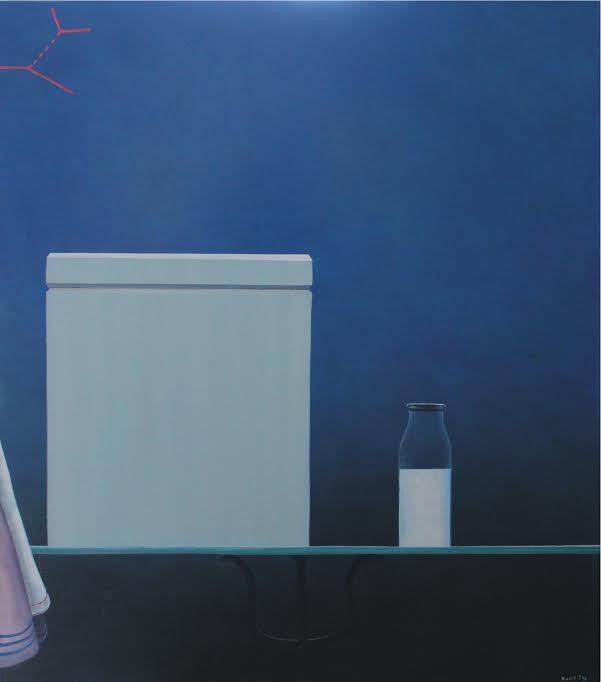
Roset, Schrödinger’s cat: animal-lover’s variant. 2013. Courtesy of the artist.
Since modern physics and cosmology give answers to todays philosophical questions, they simultaneously pose new ones. I think that these sciences should be spread more into fine arts, and I do this by painting. My work consists of different concepts. Over the years, did I work exclusively of acrylic on canvas in order to concentrate on the subject matter. The reproduced painting belongs to the series “Quantum Theory.“ I illustrate anecdotic items of famous scientists and each picture contains specific symbols. Other series of works are “The Nothing“ (cosmologically) and “Poetical Physics.“
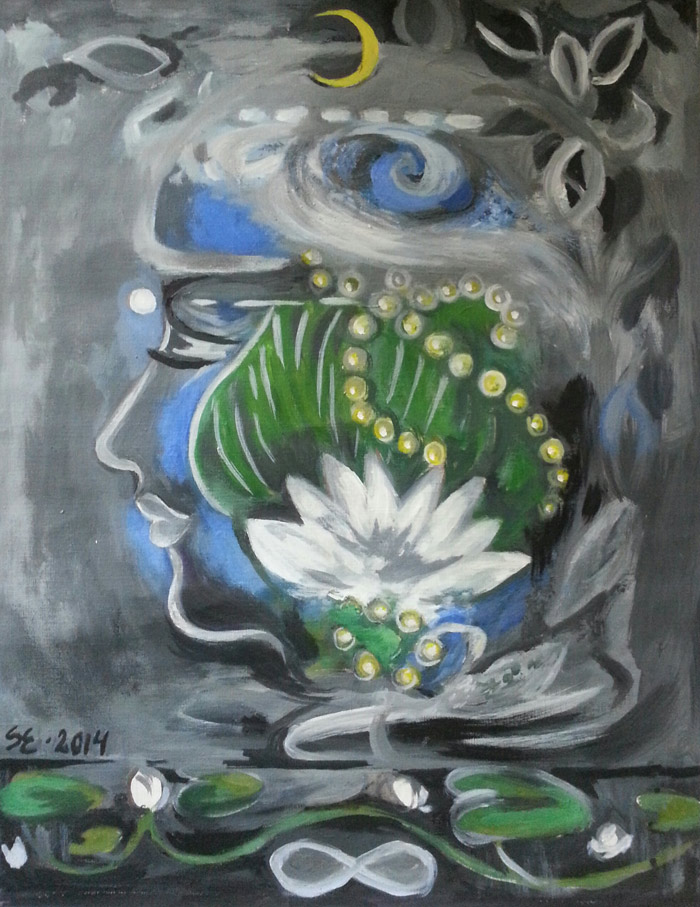
Courtesy of the Artist.
I call myself an artist for humanity. I paint about life, and the human being in the center of it as a part of the creation. The colors and themes in my works tell a story in such a way as we color our lives with different paint and make different choices. I want to invite the viewer to discover his story and take a journey into the universe of his own. There are many ways in life, there are all the colors of the rainbow, but we all look for happiness and we need to find our universe in a personal harmony: The Peace Within.











