• Showcasing everyone from big names to emerging stars, there is a lot of great art to be seen in NYC these days. Here are our selections for the best shows that are up to be looked at right now. All across town, from painting to sculpture to video and performance, take a peek and then get out and see these great exhibitions before they come down. Most of them only have a few weeks left!


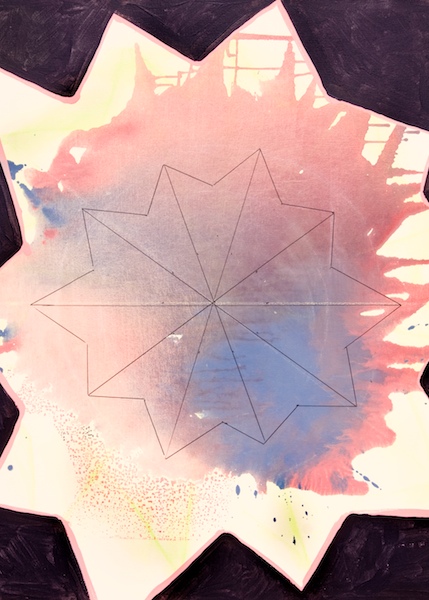
    Rudolf Stingel's latest work, now on view at Gagosian Gallery.

    Rudolf Stingel’s latest work, now on view at Gagosian Gallery.

    Rudolf Stingel
    March 4th – April 19th, 2014.
    Gagosian Gallery
    522 W 21st St.
    New York City
    gagosian.com


    Heidi Bucher's first show in the US in a very long time is now at Swiss Institute.

    Heidi Bucher’s first show in the US in a very long time is now at Swiss Institute.

    Heidi Bucher
    February 19th – May 11th, 2014.
    Swiss Institute
    18 Wooster St.
    New York City
    swissinstitute.net


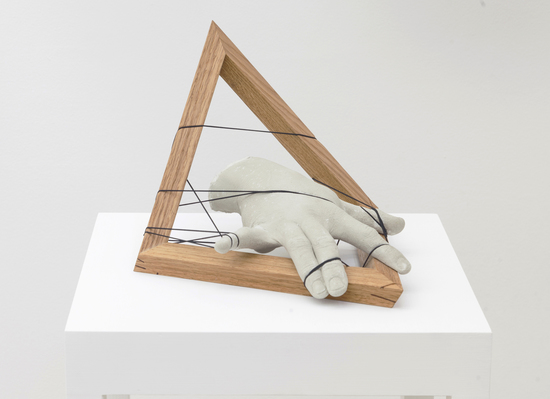
    Darren Blackstone Foote's work is part of a great group show as the last show ever at Dodge Gallery.

    Darren Blackstone Foote’s work is part of a great group show as the last show ever at Dodge Gallery.

    Featuring: Recbecca Chamberlain, Dave Cole, Taylor Davis, Darren Blackstone Foote, Ted Gahl, Sheila Gallagher, Ellen Harvey, Jane Fox Hipple, Jason Middlebrook, Daniel Phillips, Cordy Ryman, Environmental Services, and Lorna Williams

    Thank You
    April 10th – April 24th, 2014.
    Dodge Gallery
    15 Rivington St.
    New York City
    dodge-gallery.com


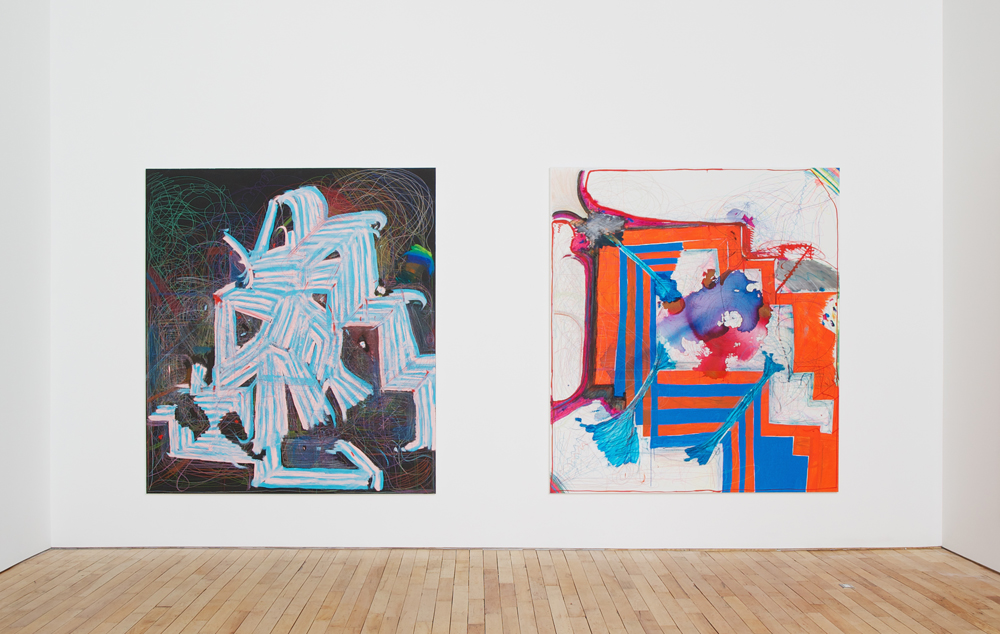
    Joanne Greenbaum has a heck of a painting show now on view at Rachel Uffner.

    Joanne Greenbaum has a heck of a painting show now on view at Rachel Uffner.

    Joanne Greenbaum
    March 8th – April 20th, 2014.
    Rachel Uffner Gallery
    170 Suffolk Street
    New York City
    racheluffnergallery.com


    Every spring the Tribeca Film Festival rolls through lower Manhattan for a short but rich visit. The festival, founded in 2002, partially as an effort to reinvigorate Manhattan, is now a New York City staple. There is always a dynamic line-up, including independent films, documentaries, narrative feature-length films, and shorts. Happening from April 16-27, here are a few of our top picks for this year:


    Time Is Illmatic, Directed by One9

    Time Is Illmatic takes a look into rapper Nasir “Nas” Jones and his debut album, Illmatic. Don’t miss the April 16th screening at the Beacon Theater to see Nas perform live after the premiere of the film.


    An Honest Liar, Directed by Justin Weinstein, Tyler Measom

    An Honest Liar follows the mission of magician James “The Amazing” Randi, to expose the easy tricks charlatans—faith healers, fortune tellers, and the like—have taken from magicians to dupe their believers.


    Begin Again, Directed by John Carney

    A serendipitous and mutually beneficial encounter of two musicians provides them the chance to create soulful, transformative music together in Begin Again.


    Night Moves, Kelly Reichardt

    Environmentalists’ plan to blow up the Green Peter Dam goes wrong as they discover the major consequences of even their smallest actions.


    Acetate Diary, Russell Sheaffer

    Following a terrible medical diagnosis, experimental filmmaker Russell Sheaffer began using a roll of 16mm film as his written diary, culminating in this abstract expression of sound and color.

    Image courtesy of the artist.

    Image courtesy of the artist.

    Strong colors play an important role in my pictures in oil and acrylic. They allow me to express my positive view towards life. The owners of my paintings say that they are captivated by my landscapes, flowers or abstactions, and that my art is for the heart.

    Since 1982 I did over 50 exhibitions in Switzerland and abroad. 1997 I was listed in the ”Lexicon on art in Switzerland” and in 2001 I became a member of the “Guild of Swiss mountain art painters”.

    adrianopassardi.ch

    Image courtesy of the artist.

    My work is characterized by a searching through and experimentation with the form and matter of painting. It is important for me to expose a painting technique that is improved and enriched by my own experience, which may even lead to the development of my own distinct technique.

    My painting begins with emotion. That emotion builds form and a climate within the picture. This painting is from my inside.

    I am working on a number of cycles that complement each other and together form a full scale of my feelings and experiences. In the cycle Screens, human silhouettes stand amidst light and gloom—life and death. This cycle is characterized by very differentiated matter. Light is very important, which is an essential, formal problem in my paintings. The second cycle is Obsessin, where a woman is wrestling with phobia and obsessions. I try to express these conditions in a symbolic manner with mall predatory creatures in sharp fluorescent colors. The third cycle, Imago, concerns the transformation of a woman into a metaphysical figure. The colors symbolize good energy—color transformation in the direction of emotional elation.

    palkawinek.art.pl

    Based On, If Any, Jordan Rathus’s incisive and wildly entertaining museum debut, at the Hudson Valley Center for Contemporary Art focuses primarily on videos that playfully deconstruct and subvert preconceived expectations of both authorship and viewership.

    Drawing on the materiality of film, Rathus dissects the conventions of the medium, and also draws attention to the liminal space in which film and art history overlap.

    Rathus’s larger than life personality pervades throughout the show, and she stars in many of her films acting out roles as diverse as a game show contestant, an anthropologist, and at times even “playing” her own self. By placing herself center stage, Rathus also pokes fun at the idea of the auteur, and offers an exhilarating contrast to the mythologized and typically male dominated role of a filmmaker. Cindy Sherman comes to mind when looking at Rathus’s videos, because of the elements of self-portraiture, staging, and role-playing. However, for Rathus, gender is not as all encompassing as it is to Sherman, instead it is a constituent in a much larger whole.

    Working from a Rolodex of preexisting genres, Rathus collages the tropes and specific details inherent to the styles and models that she alludes to. In Real Work/ The Game Show, Rathus deconstructs and reinvents the reality TV and the game show genre, infusing it with fantasy, nostalgia, autobiography, and a titillating wink. References to the French New Wave abound in all the videos, and this piece especially nods to Agnes Varda, notably the only female auteur in the movement, and her investigations into the feminine role and how it applies to celebrity and beauty.

    The false realism of travelogues is exposed in Based On, If Any, a video that also provides the title of the show. Rathus acts out the role of a hysterical megalomaniacal anthropologist who is more concerned with her own image and celebrity than the Panama Canal that she is covering as a video journalist. Much of the hilarity comes from how little actual information is provided about Panama, and how much of the spotlight is shined on Rathus’s character. Interestingly, the location and setting seem almost irrelevant, since the flippant approach to anthropology, egotism, and the careless lack of understanding for another culture could take place anywhere. The poignant yet laughable over the top absurdity, along with the way in which the structure and style of the film is exposed through the use of music, and unexpected editing decisions directly references Godard.

    There are also a series of shorts that are more gestural and spontaneous, like a sketch the fragmented idea expresses with immediacy and directness. With the more involved pieces, the improvisational moments are woven into the narrative. It’s gratifying to experience the quickness of the shorts that pack a power and punch. In I’m Happy For You, anthropomorphized, shots of trees and branches exchange niceties, small talk, and compliments as friends or acquaintances. By imbuing nature with human characteristics, she isolates and satirizes clichéd conversations and makes them seem fresh. Daring the viewer to reexamine everyday experience and find something new about it, Rathus achieves revealing the bizarre in the ordinary.

    By Irena Jurek

    Image courtesy of Trestle Gallery

    Image courtesy of Trestle Gallery

    Featuring: Catherine Cullen, Mary Schiliro, Craig Olson, Regina Bogat

    Stargazing
    April 11 – May 16, 2014

    Trestle Gallery
    168 7th street, 3rd floor
    Brooklyn
    trestlegallery.org

    Ryan Whittier Hale

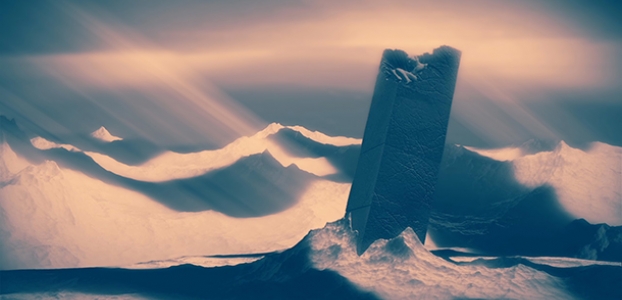
    Ryan Whittier Hale, Still from “Monolith” (2012)

    Featuring: Mark Beasley, Tim Berrensheim, Alexandra Gorczynski, Ryan Whittier Hale, Claudia Hart, Jeremiah Johnson, Brookhart Jonquil, Sophie Kahn, Alex M. Lee, Sara Ludy, Shane Mecklenburger, Jonathan Monaghan, Mikey McParlane and Michael Mallis, Brenna Murphy, Nicholas O’Brien, Jaakko Pallasvuo, Jon Rafman, Nicolas Sassoon, Jasper Spicero, Kate Steciw, Katie Torn, and Krist Wood.

    Performances by: ATOM-r (Mark Jeffrey and Judd Morrissey), Zach Blas, Ann Hirsch, Miao Jiaxin, Mikey McParlane, and Vincent Tiley.

    Curated By: Claudia Hart, Nicholas O’Brien, and Katie Torn


    Opening Reception – April 17
    7:00-9:00PM

    Night of Performances – April 25
    Doors open to Public 6:00PM

    Closing Reception – May 8
    6:00PM – 9:00 PM

    The New Romantics
    April 17 – May 10
    Eyebeam
    540 West 21th St.
    eyebeam.org

    Image courtesy of Studio 10

    Image courtesy of Studio 10

    Featuring:Erik Moskowitz, Amanda Trager

    The Story of Elfranko Wessels
    April 11 – May 4, 2014
    Studio 10
    56 Bogart Street
    Brooklyn
    studio10bogart.com

    Leah Oates: What was your background, and what has been your progression as an artist? Were there any creative types in your family, and when did you know you were going to be an artist?
    Katherine Daniels: I grew up in Huntington, West Virginia. I was always drawing. As I was bad at sports and was also dyslexic, my parents really nurtured my interest in art. My mom knits and sews beautifully, so I saw how her hands were always busy and how she chose projects and colors.

    There was a lady named Ruth Ettling in my church who was a fairly well-known artist. She made beautiful prints and collages. I got to visit her studio when I was in high school, and I remember wanting to have a studio like hers. She went to Rhode Island School of Design and was thrilled for me when I was accepted to go to college there.

    I studied painting because I wanted to master color, but I’ve evolved into a sculptor. Now I make this hybrid between painting and sculpture where I build surfaces of color with weaving, sewing, and beading instead of paint.

    LO: Please explain the themes in your work as well as your working process. For instance, some artists are very methodical while others are more instinctive. Please elaborate.
    KD: The idea of a garden in paradise influences the organic abstractions I make. I worked at the Metropolitan Museum of Art for many years in Asian and Islamic art, and that time deeply influenced my work. The symmetry in jewelry from India, the balance between realism and abstraction in Japanese screens, and the beauty and fantasy of the borders in Persian paintings really connected with me.

    I work instinctively but in a very orderly and organized manner. I organize my materials so that I have a sense of color, scale, and a goal of what I want to accomplish, and then I dive in.

    LO: You are a painter, sculptor and also create public works. Are there any differences with each way of working?
    KD: I approach each medium differently.

    With painting, I have an idea about a size, palette, and compositional approach, but it’s pretty loose. I usually can’t articulate what I am doing in a piece until after I’ve done it.

    With sculptures and installations, I usually gather together materials that I want to work with and start organizing the colors and forms until I develop a compositional plan.

    I can usually say what direction I’m going in if not the final destination.

    With public work, the site rules all of those elements. I look at the site and try to imagine how I can bring my visual voice to the space, history, and requirements of the place.

    Public art requires that you fully articulate what you’re going to do before you find out if you are going to get the opportunity.

    LO: Who are your favorite artists and why?
    KD: I love Calder’s use of color and play, Lee Bontecou’s articulation of nature and abstraction, the way Kiki Smith and Louise Bourgeois use materials. Judy Pfaff’s compositions are so dynamic. Having worked at the Met, I developed a long, close relationship with the collection there. The Tiepelos at the top of the main staircase blow me away every time I see them; I’m awed by the color and compositional dynamism of those paintings.

    LO: What advice would you give younger artists on how to mark success as an artist? Success seems to be marked by big galleries making big money. Do you think that there are other ways to mark success as an artist?
    KD: Not everyone is going to get rich or even get by, and very few artists will always be “hot stuff.”  My advice: commit to a life of making art, with success being measured by your satisfaction with a piece or body of work. Make making art and building a body of work the priority; then, you need to find a balance in which you are creating the work, showing it, and engaging with the art world outside of your studio.

    Image courtesy of FiveMyles

    Image courtesy of FiveMyles

    Featuring: Pamela Council, Patrice Renee Washington, Sara Jimenez, Sondra Perry

    Re: Purpose
    April 12 – May 4, 2014

    FiveMyles
    558 St. Johns place
    Brooklyn
    fivemyles.org

    News | Exhibitions