• Leah Oates: How did you become an artist and what is your family background?
    Elana Katz: I come from a family involved in the arts, both of my parents are classical musicians, my grandmother was a painter, my aunt is a poet, and I myself was trained as a classical ballerina as a child, very intensively in the Russian “vagonova” method. I left dance as a teenager as it is a brutal and even destructive world; creative expression involving the use of the body, however, is a fundamental need of mine. It has been a part of my life since childhood, and really I cannot exist without this.

    During my undergraduate studies at Parsons School of Design I majored in photography, and I found myself doing mostly performative work—performing for the camera. It wasn’t until the end of my BFA studies that I realized what was crucially missing from this practice was the live performance itself—the physical body in time, used as a vehicle for communication, and the engagement and interaction with a live audience. I started working primarily with performance art as a medium in 2008, and knew that I had found my most fulfilling means of creative expression. I have remained focused on this practice all through my time living in Berlin and working internationally.

    LO: What are the ideas in your work and what is your working process? 
    EK: My topics of focus vary, in some cases I’m concentrated on challenging the limitations of the body, in other instances on making a commentary on cultural/social conventions, and often these days I’m concentrated on post-memory and historical perception. Foundational to all my work, however, is an aim to create an experience of questioning and even unlearning what is assumed in society.

    In terms of creative process, I never know when ideas will come to me. What will resonate and stimulate ideas, or simply intrigue, is always unpredictable. In some cases, I know that I am engaged by a set of circumstances and that I want to make an artistic commentary on it, but the idea for the artwork doesn’t come until later. I am very visual, so frequently the idea for a performance, or photo, video, or installation piece surfaces as a visual image. And, a great deal of what I do is based on intuition—an artist should never disregard intuition. Even if one doesn’t understand immediately one’s intuitive decision, in my experience, an understanding always comes in retrospect. In this way I actually learn a lot from my own work.

    LO: What is it like as the artist being observed in a performance and also observing the audience at the same time. Does it give you a creative boost?
    EK: I gain a great deal of energy from the audience, even without direct contact. I can feel their presence, even though most of the time my performances don’t even involve eye contact. The presence of the public almost always produces creative strength in me—even when I don’t feel their support. If I feel judged by them, for instance, I still feel their engagement, their participation, and I gain strength from this.

    LO: What kind of reactions and impressions have your performance works had from audience members?
    EK: In some cases my work strikes a cord in the viewer and they understand it and connect with it immediately. I am always thrilled when this happens of course, as it means that my communication was absorbed in a very straightforward manner. Sometimes the public is also made uncomfortable by my performances, and they respond in a way that is judgmental or mocking, and I consider such responses to be also be very important and even successful, as it means my work has generated a challenging situation for the viewer. Performance work has the potential to provoke thought and feeling, so in fact I find that whenever this occurs, it means that the work is powerful, and it is thus successful work.

    LO: Why do you think art is important to people and to the world?
    EK: Art has the potential to make one see the world in new ways; it can awaken an understanding (whether this be visual, sensory, or conceptual), within the viewer through the unique sensitivity of the work, and it has the capacity to force one to question and step outside of what one knows.

    LO: What advice would you give an artist who has just arrived in NYC and who is not sure where to begin? 
    EK: I really wouldn’t know what advice to give, I am not based in New York myself, and I have not lived in New York City as a working professional for any extended period of time (only for several months in 2010, when I moved back to the city to work as a re-performer for Marina Abramovic during her retrospective at MoMA). I actually might tell them to first go someplace else in order to build a practice in an environment conducive to creativity and with less financial pressure than in New York. This is what I have done myself in Berlin. I do intend to return to New York one day soon, however. The city has such a remarkable energy, it is stimulating and inspiring like no place else. Once one has built some experience and accomplishment as an artist, surviving in New York without compromising one’s practice is more reachable, this is my impression at least. Let’s see in the next few years if I’m right about that

    LO: Who are your favorite artists and why?
    EK: Marina Abramovic, Marta Jovanovic, Nezaket Ekici, Ai WeiWei, Arti Grabowski, Philip Metz, Paul McCarthy, and Louise Bourgeois.

    All of them, in completely different ways, make me see the world in new ways. They awaken understandings within me through their unique sensitivity, and/or they force me to question and step outside of what I know.

    LO: What are your upcoming projects?
    EK: I am currently working on an extensive project in the Balkans titled Spaced Memory, which pertains to places of Jewish history that no longer exist—that were destroyed, built-over, and forgotten. I work with mostly site-specific performances to contemplate the topics of post-memory and absence at these locations of historical erasure. I recently financed the work through a successful crowdfunding campaign, with the help of over 131 contributors. In May I had two performances within the frame of this project in Belgrade, where I worked in collaboration with the REX Cultural Center and the Embassy of Israel in Serbia. I will be continuing the project this spring in Serbia and Kosovo, and in the fall I will be researching and creating site-specific artwork in Romania.

    In June, I have a new series of performances and a solo exhibition in Belgrade at Gallery 12 HUB. It is titled Blue Holding, and the work deals with references to corporeal pain, the live and dead body, and the body as an instrument. This show runs June 05 – 20, with performances on June 5th, 6th, and 7th.

    In July I will be performing in New York, I’m excited to be working for the first time with Station Independent Projects on the Lower East Side. I will be doing a new performance that pertains to cultural assimilation, and the piece will result in an installation which will remain on view for several days at the gallery.

    In 2015 I’m also planning a new large-scale performance in Germany, which will deal with the memory/ post-memory of my family history in Aachen (Western Germany). This work will deal again with the topic of cultural assimilation, and will also, somewhat indirectly, contemplate methods of commemoration of the World War II period.
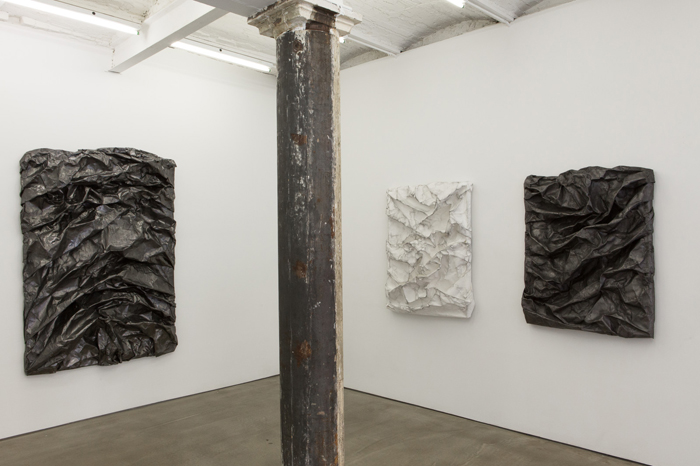
    Courtesy of Denny Gallery.

    Courtesy of Denny Gallery.

    Lauren Seiden: Querencia
    May 1 – June 8, 2014
    Denny Gallery
    261 Broome Street
    New York City
    dennygallery.com

    Courtesy of 33 Orchard.

    Courtesy of 33 Orchard.

    Featuring: Anonymous Tantra, 
Bill Augustus, 
Michael Banicki
Gary, Batty
, Lisa Beck
, Huma Bhabha, 
Dike Blair, 
Richard Bloes
, Jesse Bransford
, Mai Braun, 
David Breskin
, Bruce Brosnan
, Alex Brown
, Jared Buckhiester, 
Todd Chilton
, Lucky Debellevue, 
Lorenzo De Los Angeles, David Deutsch
, Anne Doran
, Evie Falci
, Vincent Fecteau
, Daniel Feinberg
, Carl J. Ferrero, 
Robert Fontanelli
, Jason Fox, 
Tom Friedman
, Sam Gordon
, Daniel Hesidence
, Mamie Holst, 
Bill Jenkins
, Clint Jukkala, 
Steve Keister
, Richard Kern, 
Selena Kimball
, Isabella Kirkland
, Kinke Kooi, 
Bill Komoski
, Todd Knopke, 
Steve Lafreniere, 
Michael Lazarus,  
Judy Linn, 
Alejandro Loureiro Lorenzo
, Gina Magid
, Andrew Masullo, 
Douglas Melini
, Tracy Miller
, David Moreno, 
Naoto Nakagawa, 
Darinka Novitovic
, Josh Criscione Nusbaum
, Kylin O’Brien
, Bobbie Oliver, 
Ji Yeon Park, 
Jim Pedersen, 
Jerry Phillips
, Josh Podoll
, Jason Reppert
, Richard Rezac
, Nathaniel Robinson, 
Kay Rosen
, Alexander Ross
, Nancy Shaver
, David Shaw, 
Rick Siggins
, Aaron Sinift
, Cary Smith
, Ben Snead
, Ned Snider
, Tom Of Finland
, John Torreano, 
Lily Van Der Stokker, 
Tyler Vlahovich
, Sally Webster, 
Alan Wiener, 
Kevin Wolff
, and B. Wurtz

    Let’s Go Let Go: In Memoriam Hudson
    June 25 – July 26, 2014
    33 Orchard
    33B Orchard Street
    New York City
    33orchard.com

    NY Arts Magazine: Please tell us something about your work that often gets overlooked by the unfamiliar or untrained eye.
    Damon Zucconi: It’s hard to answer this because I feel like, by definition, I shouldn’t know the answer. But something that’s become apparent, only recently to me, as I live with the things I make, is the amount of time I have to devote to the maintenance of certain pieces—usually work that is primarily viewed in a web browser. Rendering engines change, APIs change, support for certain technologies wane (notably, Flash). Maybe now I have to make something work in a context that’s mobile. How does the work change knowing that it gains some mobility?

    So, some work accumulates subtle differences with each iteration, each fix. Sometimes these are significant. And this process is maybe not so transparent. I mean, it’s part of the public record as much as I can make it be. But there’s a specific kind of technical audience to whom that information is privy.

    Something that’s fun to imagine is how this slow creep of incremental change leads to something completely novel and disassociated from the original intent. I’m left to wonder how the next iteration of the Google Maps API will force my hand. What other forms of art are subject to deprecation?

    There’s also this Ship of Theseus-like paradox—are these things singular works? How does the work maintain it’s identity over time—is it the same work? Is it done now? Was it done before? How do I know when to stop? These are the kinds of questions one imagines only painters deal with. Really great questions. And a nice side effect of all this is that in restating something’s original logic, you revisit the decisions that led to its existence in the first place.

    Tomorrow through the 31st, The Chocolate Factory Theater in Long Island City will present Karen Sherman’s One with Others. This work is an evening-length trio that questions how things can fit or hold together and the constructions necessary in being one’s real self. The work premiered in 2013 at DC’s Dance Place and features striking achievement from artists both on and off stage; Karen Sherman performs with Joanna Furnans of Chicago  and Don Mabley-Allen of Minneapolis, with lighting design from Carrie Wood, and technical prowess from Janet Clancy, both of whom are from NYC.

    Based in NYC from 1988 to 2004, Karen Sherman now lives in Minneapolis and works out of both cities. Her work is noted for its visuality, rigor, and wry social commentary, while her adventurous approach to performance and bucking of dance orthodoxy have won her recognition from artists, audiences, and critics across a range of disciplines and aesthetics.

    In anticipation of the work to come, the following is a conversation between Karen Sherman and Anna Marie Shogren, a Brooklyn (and Minneapolis)-based dancer and writer, who has worked much previously with KS and, also, peripherally with this work.

    Anna Marie Shogren: In the voiceover, in the very beginning of your solo you say,  “I don’t want to be so personal for nothing…”
    When we first talked about discussing the work, we talked about how I had worked with you for so many past projects, and that I still feel like I have a lot of questions. There is still a lot of mystery about your decision making and your composition, your thinking behind everything. And then that line rings. As an artist I do feel like I have an ethical thing about wanting work to be generous; that if you are taking someone’s time you have to give them something back, something that you worked on. But, I also think there is a line that has to be drawn, you need to be protective of yourself as an artist, not be too vulnerable to the ferocious audiences. I am curious if you have a feeling about how and what you want to share within a process, because it seems, and maybe I am wrong, that you have guidelines for yourself about what you share and what you don’t.

    Karen Sherman: I think a lot of my work is really personal, but, I think this piece risks a little more. Not autobiographical, but something like that. I was really interested in biography when I started, not necessarily my own, but just the idea of that. And I think because this piece isn’t really about anything else, it’s not drawing from … say, like with Copperhead, which really drew from someone else’s experience; the Manson family women. This piece really drew from the group experience, the trio. And, I was really interested in Andre Agassi and David Foster Wallace, and I thought a lot about their stories. But my interest was really in a feeling of commonality, in their struggles really being common struggles. I think, in this piece, there were ways all three of us are in it, or, I think it’s really interesting for me to think about whether that ended up happening or not happening. And that line, ‘I cannot stand here and be so personal for nothing’, to me he’s not saying that as a resistance, it’s not a manifesto, it’s not, ‘here’s whats not going to happen in the piece, and I’m telling you that at the start.’ That’s not what he is saying, it’s not what I am saying, it’s not what I am saying through him. It’s actually, ‘I really am going to be personal, for nothing, and I don’t necessarily like that, but it’s my fate.’ It’s a very French, and it’s great, that Claude who does the voiceover, is French. But it really is, “this is the deal, this is the transaction.”

    AMS: And like a request of the audience, too? Like, please meet me at the table?
    KS: I don’t know if it’s a request. To me there is something really defeatist about it. Like, as the audience, you are coming in at the end of the struggle. Even though, with the action that is happening at the same time, with the bouncing, it is mid-struggle, I mean that whole wall bounce choreography, it’s like attempting and failing over and over again at this thing you know really you should stop attempting, but maybe you’ll, maybe I’ll get it right.  And, I think there is a point in the pros and cons list section, something that I sometimes write. Oh, I think I write it in the pros column, maybe I write it in the cons column. How ironic that I’m not sure. It says ‘Hide real self.’ I think of it as a pro, that you can hide your real self in a dance or in the performance; there is a way that people can’t see you.

    AMS: I agree with that. I mean, I think I started performing as a very shy kid that was like, I can get away with doing whatever the hell I want on stage, because I am quote unquote hiding my real self, you know, but really I can do all the weird stuff that I truly want to do, it was actually both. Because it was prefaced by it being performance, I had a mask, I had a guard.
    KS: Yeah, well you know that everything that happens in the performance is true, but it’s not a documentary, and things change over the course of you making them, so your not dancing your memoir. This piece isn’t a memoir, but everything in it is true.

    AMS: The show is pretty thick with sculptural, functional, worn items; design goes through and through. I was just curious about what you did during the Fusebox Festival workshop that you lead about transferring different media through dance, transferring work with certain media onto different media?
    KS: Well, I think it took me a long time to realize I think this way, but often when I am making a dance I do other things as an escape from the dance. Sometimes it’s because I want to do something else, like downtime things, or I want to do something that is more tactile and more actualized than dance because dance is so abstract. I mean it’s abstract in that it only exists when you are doing it. You have to have people, if it’s a solo, you have to have yourself, and be capable, and able, and physical up to par to rehearse, Then everybody has to to show up, on time, and you have to have a plan. I love all of that about dance, how hard it is to manifest, and how inexact it can be. Like, you are aiming for one thing and then something else happens, and that is really   incredible. But, I think sometimes I crave, more static, tactile processes. So, often I am doing other things for that reason, like building stuff or making music, because it is more fun. Actually making dances, a lot of the time, isn’t very fun for me, making dance material. So I do these other things because they give me more pleasure and because I am less invested in them.

    AMS: Thats what I was going to ask. I mean, I love to draw because I feel like I can’t figure out how to place any artistic seriousness in it, so I am very pleased with my work even though it is pretty terrible.
    KS: Yeah, well I think I have that with some things more than others, most things I feel like I am pretty forgiving with myself about, including dance. I mean, I don’t really consider myself a dance artist in this way where I am like, oh, I have to make this most amazing choreography. I don’t come from a trajectory towards dance, so I don’t have that kind of ego investment in it either.

    AMS: And dance is so expansive, that is just one path?
    KS: I make dances and that is the world in which I work. I identify as someone who makes dance but I also don’t feel that dance has to do everything for me, and also I haven’t often thought of myself as, necessarily, good at dance. I mean there is a lot riding on it, but not everything is riding on it for me in that way. I think sometimes in the past I have tried to make carpentry things where, I didn’t have many tools, so I didn’t really have a way to make the right size piece of wood for this thing, so I would have to figure out a way to go get that piece of wood or buy that piece of wood, and have it cut, and all of that is so logistically involved that I would just blow it off, and be like, oh fuck it, now I’m not going to make the thing at all. I think, although I don’t consider myself a wood worker by any means, there was still this idea that the thing I wanted to make was so specific in my head or at least this one element of it was so specific that if I couldn’t do that, I just wouldn’t do it at all. So when I started making things for this show… I always sort of tell this story about how I used to go down into my basement, with a glass of wine, and I’d grab this piece of wood and this piece of wood, just scrap wood that I had. One of the pieces was a piece of backing board that I had used for another project for somebody else, so I had been drilling into all of these stacks of paper, and that piece of wood was the wood I had underneath it all.

    AMS: the door?
    KS: No, one of the thigh pieces. It’s a hole saw. Yeah, there is like a drill hole and then another hole around it, like a ringworm sort of look. That’s how it marks on the wood. So I just grabbed that piece and another piece and sort of just stuck them together with this hook, and then realized this is the piece, this is the dance. I wasn’t invested in an identity as a woodworker so I was able to work with this really shitty material that allowed me to realize something about the dance that I wouldn’t have been able to get to if I had been trying to be more anal about it, or have these really beautiful pieces of wood, or have these exact things all figured out in my head and then try to manifest it in an object. So there is a way I can be more exploratory, or more exploratory than I can be with dance, exploratory without worrying about making a product. And, I think what happens for me, too, is that on some level I am working on the dance all of the time so the background systems are running, I am creating on some level. It’s finding its outlet wherever it can find it’s outlet. Most of the music in this piece is stuff I made, but some of it is stuff that I made a long time ago and it happened to fit for this piece, and some of it I made just for the piece. This goes for the text as well.

    I think of them all as being languages and so they are all trying to help say the thing. None of them can say the thing on their own, you need all of these things to say it, and it’s probably still not getting said, whatever it is, but they are complimentary approaches.

    Ah Bushwick! The hip, self-sufficient subculture of art at the outskirts of Brooklyn is teeming with energy, ready to explode at the end of the week with the 8th iteration of Bushwick Open Studios. Continuing with it’s upward trend, the experience is set to be a fitting celebration of Brooklyn art culture. This year marks a send off for many of the spaces that will soon close at the 17-17 Troutman building, all of whom have been asked to close their doors. Hopefully the celebration will do justice to their varied contributions to the neighborhood.

    Come ready to celebrate. The program this year includes an opening party, a community day, an electronic music showcase, and a cinema showcase along with the closing party on Sunday. The experience spans a giant swath of blocks throughout the neighborhood and spills forth a good distance into Ridgewood. You can’t see it all, but we encourage you to try as the event seems to keep getting better and larger each year. Just make sure you take some time to plan your route beforehand. We’ll see you there!

    artsinbushwick.org

    Matías Cuevas, Max Warsh, Rob Davis

    Chancing with the Stars

    Featuring: Matías Cuevas, Rob Davis, Max Warsh

    Chancing with the Stars
    Breaking Down Everyday Architectures
    May 29 – June 1, 2014
    Opening Reception: May 29, 6:30 – 9:30pm
    Cuevas Tilleard Projects
    9 Great Jones St., Floor 2
    New York City
    cuevastilleard.com

    Davide Zucco, Untitled, 2013, oil paint, spray paint, engraving, on silver faced panel, 124x104cm

    Davide Zucco, Untitled, 2013, oil paint, spray paint, engraving, on silver faced panel, 124x104cm

    Featuring: Joe Brittain, Ethan Greenbaum, Kristen Jensen, Davide Zucco

    Curated by Marco Antonini

    Personal Prehistories
    May 29 – Aug 2, 2014
    Scaramouche
    52 Orchard Street
    New York City
    scaramoucheart.com

    Brian Morris Gallery
    Featuring: Carol Salmanson and Ruth Hardinger

    As Above/So Below
    May 15 – June 14, 2014

    Brian Morris Gallery
    163 Chrystie St.
    New York City
    brianmorrisgallery.com


    13_-_Hans_van_Meeuwen-Serge_Bernier_Reading
    Hans van Meeuwen: The Civilized World
    May 30 – June 29, 2014 
    Storefront Ten Eyck Gallery
    324 Ten Eyck St
    Brooklyn
    storefrontteneyck.com

    News | Exhibitions