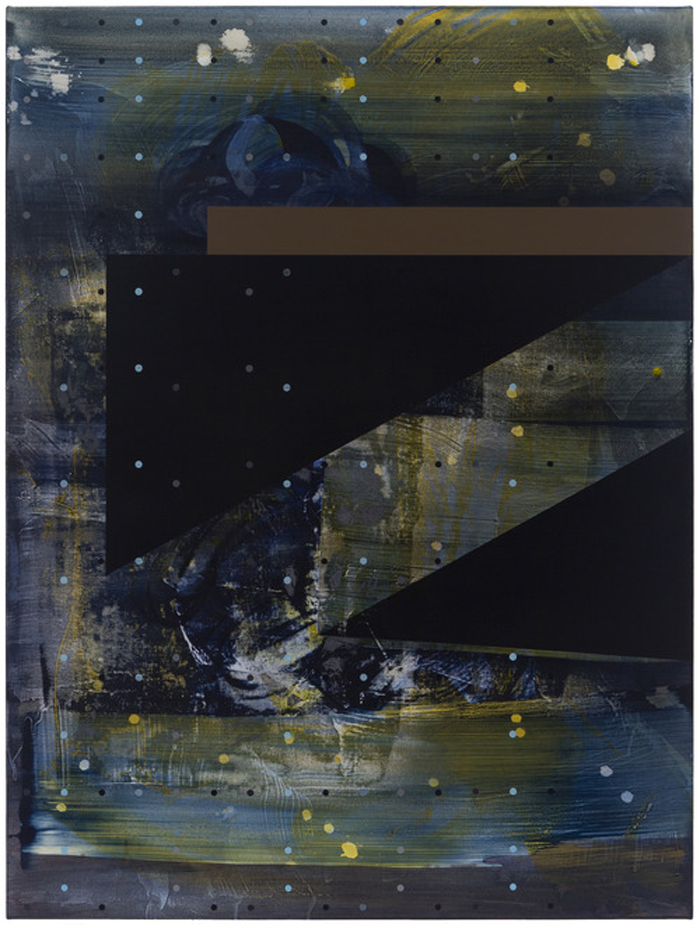
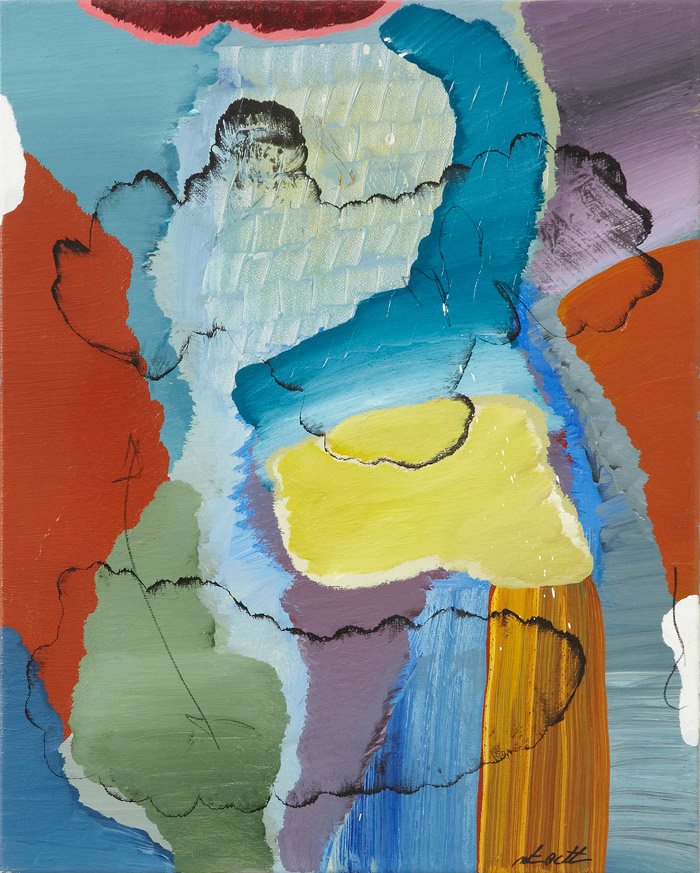
Vince Contarino, Elegy, 2012. Acrylic on Canvas, 48 x 36 in.
Vince Contarino: For Your Eyes Only
May 16 – June 22, 2014
TSA
44 Stewart Ave, #49
Brooklyn
tigerstrikesasteroid.com




Vince Contarino, Elegy, 2012. Acrylic on Canvas, 48 x 36 in.
Vince Contarino: For Your Eyes Only
May 16 – June 22, 2014
TSA
44 Stewart Ave, #49
Brooklyn
tigerstrikesasteroid.com
If you made it to Bushwick this past weekend for the open studios extravaganza, chances are you are just returning to your senses right about now. The intensity of the event continues to grow exponentially each year. Uninvolved locals find their neighborhood suffocatingly swamped with people, insiders wander around with their heads down attending to their phones or the available neighborhood maps, artists network and chit chat until their brains are bread pudding, and outsiders wade through the crowds with their heads on a swivel, wondering what where the fuck we all came from. It’s entirely overwhelming, even for New York.
Every art news source seems to want to announce who or what they thought was the best thing to be seen through all the madness, but one wonders how any publication could ever have assigned enough people to the event to have seen it all. Instead, we’ve put together a handful of moments that may easily have escaped your attention. Here are our BOS 2014 hidden gems:

Image courtesy of the artist
Cate Woodruff: Lovely, brightly colored light abstraction photographs that almost seem to be manipulated, but are actually digital images shot through a beautifully distorted hand made lens.

Image courtesy of the artist
Sarah Anderson: Quirky kinetic sculptures made from selectively composed elements which are equal parts serious and tongue in cheek.
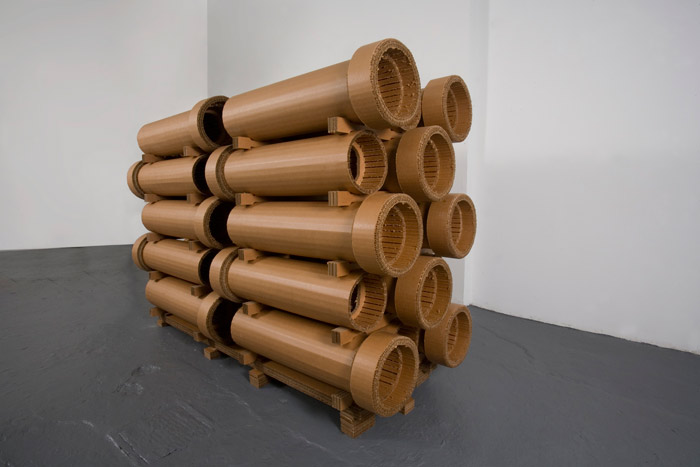
Image courtesy of the artist.
Noah Loesberg: Everyday things relating to architecture and the movement of bodies in space are squashed, rearranged, and presented to us anew.

Image courtesy of the artist.
Shane McAdams: Seemingly eroded styrofoam which is then sprayed a range of pigments that serve to both give volume to and illuminate the complexity of the abstract receding forms.
Killer Drinks: One studio included this rosemary and rhubarb reduction spicy salted rim frozen awesomeness. It was exactly what we all needed in the midst of all the running around. The delicious experience was provided by Jessica Grindstaff and Stephanie Draves Dunn.


Pratt MFA Thesis Exhibition: WITH
May 12th – June 13th, 2014
Pratt Manhattan GradComD Gallery
144 West 14th Street
New York City
prattgradcomd.com
There was no place better than Industry City for a screening of a film so central to Brooklyn. Set up in between looming warehouses, the atmosphere of the opening night for Rooftop Films’ 2014 Summer Series was relaxed as people mingled and found seats. Indie and Brooklyn-based band Rumors performed a long thirty-minute set preceding the film’s screening, playing several similar, soothing harmonies that provided nice background noise. Rumors vocalist and bassist Chris Bordeaux also composed the soundtrack for Obvious Child.
Originally a short film she worked on with Karen Maine and Elisabeth Holm, Gillian Robespierre’s talent and continued passion for the film shines through the feature length version of Obvious Child. Perhaps as a result of creating the short, the story of film’s final form is complex yet solid.
Set in Brooklyn, the film follows Donna Stern (Jenny Slate), a comedian in her late twenties going through several crises at once: getting dumped, getting fired, and getting pregnant. Though Donna seems to be going through a dark time, the comedy isn’t necessarily always dark—yet the story isn’t unrealistic, either.
From start to finish, Obvious Child induced non-stop laughter from the audience as a result of the perfect combination of a brilliantly organic performance from comedian and actor Jenny Slate, with a solid screenplay from writer and director Gillian Robespierre. In the Q&A following the screening, Robespierre described the first time she and the film’s co-writers saw Slate perform her stand-up routine. “We either wanted to be her best friend or put her in our film.”
Robespierre also mentioned how she was “fed up” with most of today’s romantic comedy films, especially ones that involve girls getting accidentally pregnant. Slate agreed with Robespierre that “[the film] has everyday comedy” and realistic dialogue.
When Donna meets Max (Jake Lacy), it’s obvious that he’ll be the love interest. The two do have chemistry; even in spite of what Max accidentally does to Donna in the alley when they first meet. But though their relationship is charming and not unlike that between the main characters of Knocked Up, it is definitely not the main focus, or most interesting aspect, of the story.
But vastly unlike romantic comedies—and in particular, accidental pregnancy—centered-films, Obvious Child includes abortion. Not all accidental pregnancies end with the woman having the baby, Robespierre pointed out. Abortion is a touchy subject, but somehow Robespierre included it without giving off a political tone. In fact, the film itself didn’t really give the impression that the story was just about abortion or that it was a “comedy about abortion,” as the Q&A moderator suggested.
Like Slate implied, the comedy of Obvious Child is present throughout in a natural flow, lacking any sitcom-y vibes. With that comes with female-centered comedy bits—both in Donna’s stand-up routine and in her life in general—that haven’t really been spoken about in other comedies with strong-leading ladies. The brilliant comedy and multi-dimensional character all come together through a role literally made for Slate, which she fits perfectly with her wittiness and despite her lack of acting experience.
Bridesmaids and Pitch Perfect were just the beginning. Not only does Obvious Child destroy the weirdly common notion that “women aren’t funny” —it redefines what romcom should be.
By Zoe Halsne

Courtesy of the artist.
Through my work I try to convey my emotional reality without figures or figurative association, and to portray the barriers between the visible and invisible worlds, as well as the nature of the struggle between light and darkness. The realization of my innermost self succeeds by means of compositional aspects with primary colors. Ranging from red to yellow, I employ a rich set of shades and a limited use of black, which serves to define the colors. Using gestural brush work, I layer single, translucent colors over one another. Sometimes as many as 150 colors, layered on top of each other, build to become the picture.
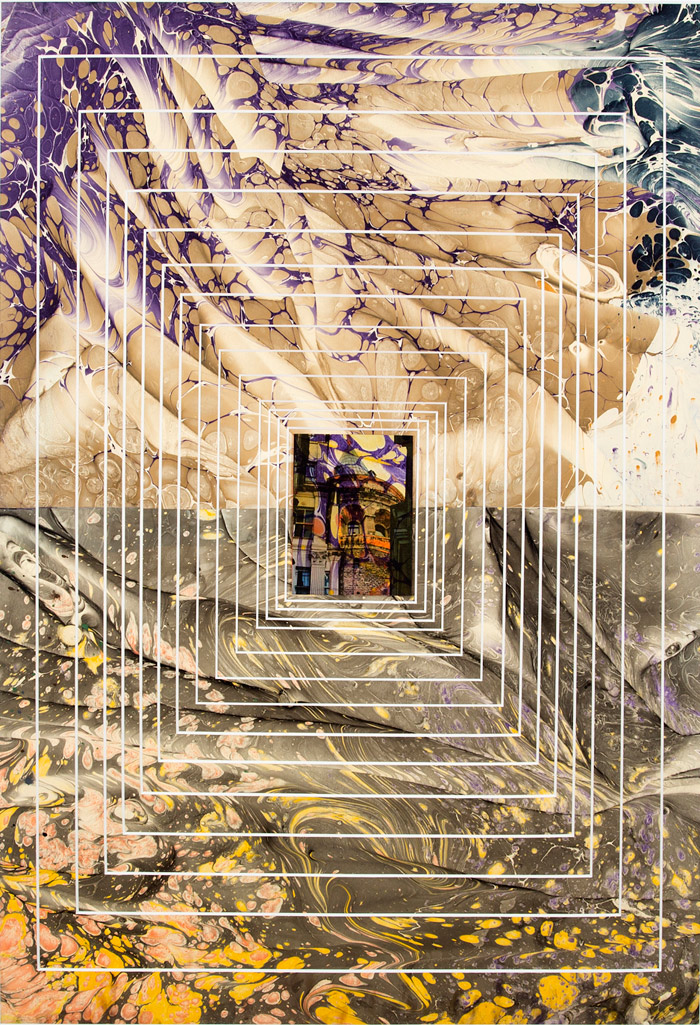
Courtesy of the artist.
Ebru, also known as paper marbling, is one of the most important Turkish arts. This consists of spattering ochre using brushes made of horsetail on the surface of a viscous mucilage, in order to obtain marvelous patterns carefully transferred onto paper.
Ebru Uygun stands out with her modern vision of this traditional turkish art by developing new techniques. Instead of transferring her art on paper, Uygun has reflected it on wood, tile, and cloth, and therefore has integrated The Art of Ebru into our everyday life. “The harmonious dance of the colors reflects my wonderland!” says Uygun, “It’s a world where evil has no place. It’s pure and clear. When I’m marbling, I discover new worlds… It’s a joy.”
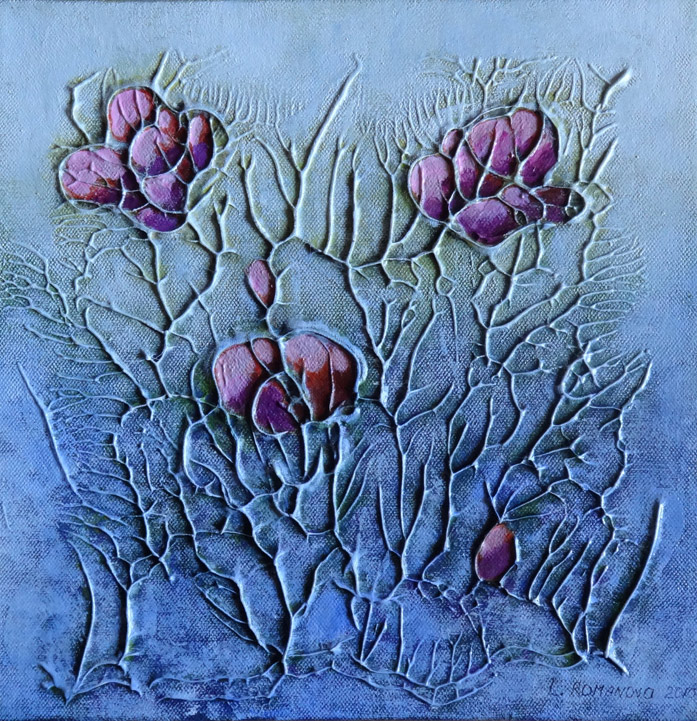
Courtesy of the Artist.
I was born in Russia but I live in Sweden. My art is the story of my life, it is my feelings that choose the colors. The main source of my inspiration is nature, where color plays the lead role.
Courtesy of the Artist.
To paint does not have to be a cleansing process where your negativity and regret is brushed away with every stroke of a brush. To paint can easily be an expression of the opposite; an expression of faith, hope, and love. This is what characterizes my approach to painting.
My paintings are in many ways an idea of nature; maybe a reflection, maybe an interpretation, maybe some sort of a statement, maybe an expression. It is the drama of the colors that I strive to capture. The contrast between the colors act like a pulse, like vibrant energy. In my universe, colors are a kind of music where the notes have to fit together to create harmony, but also create a dramatic collision and strong confrontations.
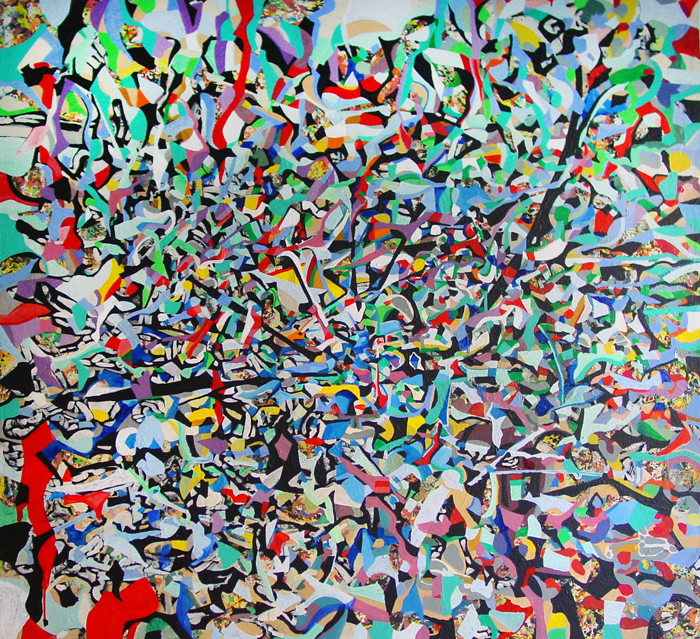
Courtesy of Lu Magnus Art Laboratory + Salon.
Michael Wyshock: Water Threads
May 30 – July 3, 2014
Lu Magnus Art Laboratory + Salon
55 Hester Street
New York City
lumagnus.com











