• History
    November 6, 2014 – December 13, 2014


    billh

    New York, NY- Bill Hodges Gallery is pleased to announce that we have reopened in/at our new location at
    529 W. 20th St and that our reception thus far has been delightful. Our third exhibition, titled History, opens November 6th and will be on view through December 13th. This exhibition will feature the work of several historic and contemporary artists on a medium that is arguably the most significant to the history of art.


    Most art historians seem to think the first art images were created on cave walls.  I think, however, the first art was created in the ground dirt.  Regardless of whichever came first, it is universally established that the first art on paper was done on papyrus.  Since that point in time, artists and art educators alike continuously share the sentiment that work produced on paper is of primary importance. As we actualize our thoughts through words or action, our ideas become resistant to change. With further deliberate thought, we manifest our ideas through mediums such as canvas, clay, or stone for even more permanence. History showcases works on paper and imparts a testament to the medium.  Photographs, drawings, lithographs, serigraphs, and etchings by renowned artists Mickalene Thomas, Kehinde Wiley, Lyle Ashton Harris, Carrie Mae Weems, Romare Bearden, Norman Lewis, Jacob Lawrence, Chester Higgins, and Roy DeCarava comprise the variety of mediums and artists exhibited.


    Mickalene Thomas brings contemporary photographic style to the exhibition like none other. In a similar fashion to her rhinestone works, the work in this exhibition, Les Trois Femmes Noires, (pictured above), portrays the casual elegance of ebony skin through form, expression, and the juxtaposition of pattern. Also included is a telling drawing by iconic African American contemporary painter Kehinde Wiley, which served as a study for his work Passing Posing (The Martyrdom of St Symphorian). Wiley’s work often plays on the statuesque figures depicted in classical painting; for this work, Jean-Auguste-Dominique Ingres’ The Martyrdom of St Symphorian provides the foundation in which Wiley expounds upon in a work of art entirely of its own respect.


    The way in which African-American artists have influenced one another, in turn influencing those who come after, is also considered in the curation of this exhibition. Minstrel, a striking photograph created during 1987 and 1988 by Lyle Ashton Harris, commands attention and is about as “in your face” as a photograph can get. Moreover, the late Roy DeCarava‘s photograph Untitled (Man with Portfolio), while far less confrontational, still manages to permeate the viewer with its heaviness.


    Jacob Lawrence‘s artwork is impactful both when examined individually and within the context of art history. Included in this exhibition is a distinctive example of his work, a well-documented drawing, Children at Play (ca.1955). This is a work notably created during a period in between the making of some of Lawrence’s most influential works, evidencing his varying methods of process. Also, a monoprint from Romare Bearden‘s distinguished Jazz Series (1979), entitled Introduction for a Blues Queen (Uptown at Savoy, is the original used to print the entirety of the sequence, as confirmed by the Bearden Foundation and the ink on the back of the work.


    The Bill Hodges Gallery is located on the 2nd floor of 529 W. 20th Street between 10th Avenue and 11th Avenue. Our closest subways stations are at 14th St. & 8th Ave. (A-C-E-L) and 23rd St. & 8th Ave. (C-E). Gallery Hours are Tuesday to Friday 10am – 6pm and Saturday 12:30pm – 5:30pm. Press viewings can be arranged. For more information or to arrange a viewing, please contact Bill or Navindren Hodges at (212) 333-2640 or via email at info@billhodgesgallery.com.
    Press Release
    Readymade: Contemporary Art from Bangladesh
    October 3 – November 20, 2014
    Philadelphia, PA

    Readymade | Contemporary Art from Bangladesh

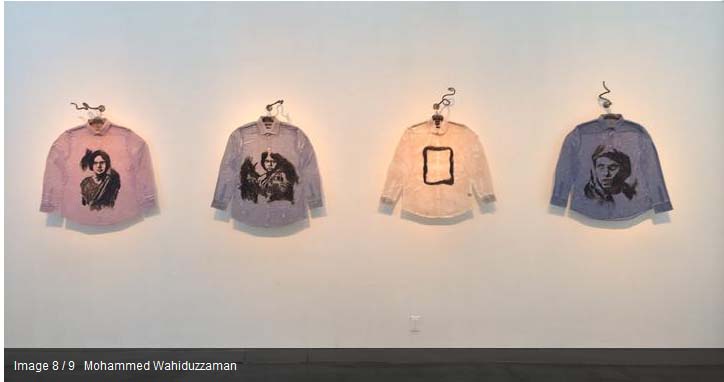
    Featuring Kazi Salahuddin Ahmed, Masum Chisty, Khaled Hasan, Imran Hossain Piplu, Promotesh Das Pulak, Dhali Al Mamoon, Yasmin Jahan Nupur, Mohammad Wahiduzzaman & Wakilur Rahman.

    Twelve Gates Arts is proud to host the first ever extensive survey of contemporary Bangladeshi art, curated by Aicon Gallery in New York. The exhibition features nine artists collectively exploring the complex and interlocking cultural, political, economic and environmental issues currently facing the often paradoxical and rapidly changing society and state of Bangladesh in the new millennium.

    The nation’s exploding population, the daily socioeconomic struggles of the lives of millions, the consequences of climate change, shifting cultural and gender demographics and the future of industry and economic growth are just some of the vastly influential issues informing and challenging the visual and verbal language of Bangladesh’s diverse and quickly growing contemporary art scene.

    The work in this exhibition unpacks these issues through the concept of the readymade, both in its art historical context, and as a term referring to Bangladesh’s massive and unwieldy ready-to-wear garment industry, which has made headlines recently due to the tragic consequences of its lack of regulation and harsh suppression of reform, while also remaining the economic backbone of Bangladesh’s growing economy.

    When Marcel Duchamp challenged high art by making the mundane monumental, he called it readymade. The spaceless conjunction of ‘ready’ and ‘made’ is fraught with tension, simultaneously existing as an affirmation, yet a contradiction. This signifies convenience at the cost of quality, access at the cost of wholesomeness, and success at the cost of failure. Ultimately, it marks a divide that is hard to bridge. As Bangladesh encounters these many divides and contradictions, ‘readymade’ becomes an identity in itself.

    With rising levels of greenhouse gases in the environment, the global climate is changing. Extreme storms, long the scourge of low-lying Bangladesh, are increasing in frequency and ferocity; and, there is the rising sea level. Bangladesh presents the largest assemblage of humans at such a low elevation. It is inherently readymade for a natural disaster of epic proportions. With a still trotting, if not galloping, population growth and a shrinking landmass from rising waters, Bangladesh is also a readymade demographic time bomb. About 40% of the population is below the age of 25. If these tens of millions of young men and women are not educated and put to work, Bangladesh is readymade for social unrest. Yet, it is in readymades that Bangladesh seeks a path to redemptive transformation. Readymade is the locally popular term for ready-to-wear clothing. It is an industry of which Bangladesh, with its large work force and low wages, has become the global epicenter, with the garment industry comprising nearly 90% of its Gross Domestic Product. This epicenter, occasionally shaken by a tragedy of epic proportions, is merely inconvenienced by smaller everyday tragedies. Labor organizers disappear into the night, while dissenting workers find their jobs- and at times, limbs-gone. The lack of economic diversity promotes an endemic occurrence of sweatshops and unsafe labor conditions, favoring capitalism over social welfare, susceptible to poverty and malnutrition of children, with a growing sex trade of prostitution and child trafficking into India. It is an industry readymade to propel Bangladesh forwards or back; and, at times, it seems to do both.

    Whether a storm changes the coastline or a factory collapses upon its occupants, it takes a myriad of tragedies for the world to focus on Bangladesh. Can tragedy be the price of good-tidings to come? The disaster, in the case of a factory-collapse, is not natural but manmade. For the looming tragedy of climate change, man’s authorship should at least allow for remediation. Will the proverbial ‘silver lining’ be a clear establishment of a civil society’s predominance? The political leaders, no matter how tainted, know that they would have to seek the people’s mandate, sooner rather than later. Bangladesh has had a growing democracy for three of its four decades in existence. From being the poorer, undernourished and fledging of the two wings of Pakistan – the nation it broke from in 1971 – Bangladesh today has peace, a vibrant economy, higher rates of development and greater empowerment of its people, especially its women.

    Is Bangladesh, then, readymade to chart a way forward? Are its artists ready to play a part in this charted route? Culture has always been integral to Bangladesh’s identity. It was born of a struggle to protect a language and its associated culture. “Readymade”, the first major curated exhibition of contemporary Bangladeshi art in Philadelphia and New York, seeks to re-introduce a society long known as a reliable source of disaster news, as one that is at a fork. A big disaster may yet unfold of many little ones; but equally, there is hope for the emergence of a civil society, with art and artists at its vanguard.

    Readymade| Contemporary Art from Bangladesh will run from October 3 – 31, 2014. Gallery hours are Wed – Sat: 11-5 and by appointment. For additional information please contact Aisha Zia Khan at 215.253.8578 or by email: info@twelvegatesarts.org

    NOVEMBER 10, 2014 – JANUARY 17, 2015

    TAKASHI MURAKAMI

    IN THE LAND OF THE DEAD, STEPPING ON THE TAIL OF A RAINBOW

    murakami

    To me, religions are a narrative…Natural catastrophes, earthquakes, are things caused by nature. Such chaos is natural, but we have to make sense of it somehow, and so we had to invent these stories. That is what I wanted to paint.
    –Takashi Murakami

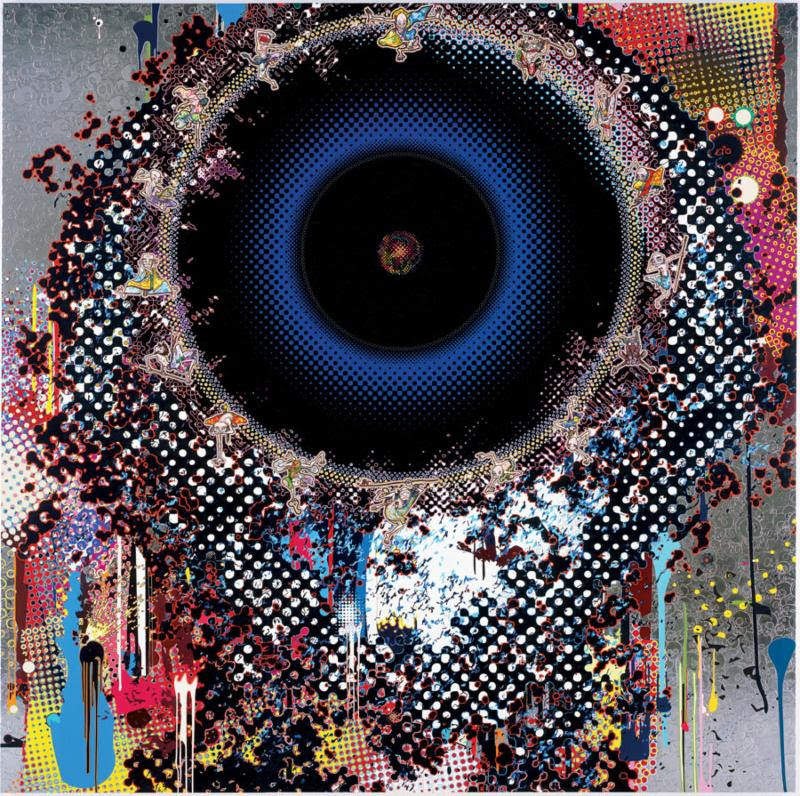
    Gagosian New York is pleased to announce “In the Land of the Dead, Stepping on the Tail of a Rainbow,” a major exhibition of new paintings and sculptures by Takashi Murakami.

    A lightning rod of cultural dichotomies (high/low, ancient/modern, oriental/occidental), Murakami believes the artist to be one who perceives and limns the borders between worlds. Combining classical techniques with the latest technologies, he moves freely within an ever-expanding field of aesthetic issues and cultural inspirations. Parallel to the dystopian themes that pervade his work, he recollects and revitalizes traditional narratives of transcendence and enlightenment, often involving outsider-savants. Mining religious and secular subjects favored by the so-called Japanese “eccentrics” or non-conformist artists of the Early Modern era commonly considered to be counterparts of the Western Romantic tradition, Murakami situates himself within their legacy of bold and lively individualism in a manner that is entirely his own and of his time.

    Since the devastating Great Tōhoku Earthquake of 2011, Murakami has explored Japanese art produced in response to historic natural disasters. For example, in the aftermath of the Great Asei Edo Earthquake of 1855, painters such as Kano Kazunobu portrayed the five hundred arhats (or rakan), the spiritual protectors of the Buddha’s teachings, as stewards of enlightenment in dire times. While Kazunobu employed diverse Eastern and Western techniques in his vast scroll paintings, Murakami has created an immersive installation, entered through a 56-ton replica of a sanmon (sacred gate), of eclectic arhats; deliquescing clones of his fictional creature Mr. Dob; and karajishi, the mythic lions that guard Japanese Buddhist temples. Here is a contemporary belief system, constructed in the wake of disaster, that merges earlier faiths, myths, and images into a syncretic spirituality of the artist’s imagination. In totemic sculptures representing demons, religious sites, and self-portraits; and paintings that conflate classical Japanese techniques with Abstract Expressionist tropes, science-fiction, manga, and Buddhist and Shinto imagery, Murakami investigates the role of faith amid the inexorable transience and trauma of existence.

    Takashi Murakami was born in 1962 in Tokyo, and received his BFA, MFA and PhD from the Tokyo University of the Arts (formerly the Tokyo National University of Fine Arts and Music). He founded the Hiropon factory in Tokyo in 1996, which later evolved into Kaikai Kiki, an art production and art management corporation. In addition to the production and marketing of Murakami’s art and related work, Kaikai Kiki functions as a supportive environment for the fostering of emerging artists. Murakami is also a curator, a cultural entrepreneur, and a critical observer of contemporary Japanese society. In 2000, he organized a paradigmatic exhibition of Japanese art titled “Superflat,” which traced the origins of contemporary Japanese visual pop culture in historical Japanese art. He has continued this work in subsequent impactful exhibitions such as “Coloriage” (Fondation Cartier pour l’art contemporain, Paris, 2002) and “Little Boy: The Art of Japan’s Exploding Subcultures” (Japan Society, New York, 2005). In 2011, he organized the “New Day: Artists for Japan” international charity auction at Christie’s New York in response to the 2011 Tōhoku earthquake and tsunami.

    Murakami’s major solo exhibitions include Museum of Contemporary Art, Tokyo (2001); Museum of Fine Arts, Boston (2001); Fondation Cartier pour l’art contemporain, Paris (2002); Serpentine Gallery, London (2002); and Château de Versailles, France (2010). The comprehensive survey exhibition “© MURAKAMI” opened at Museum of Contemporary Art, Los Angeles in 2007 and traveled to Brooklyn Museum, New York; Museum für Moderne Kunst, Frankfurt; and Guggenheim Museum, Bilbao during 2008-09. “Murakami-Ego,” whose centerpiece was an astonishing 100 meter painting inspired by the Tōhoku earthquake, was on view in 2012 at the Al Riwaq Hall in Doha, Qatar. “Takashi Murakami: Arhat Cycle” was presented at Palazzo Reale, Milan in 2014.

    Jellyfish Eyes, the first in a trilogy of feature films directed and produced by Murakami, debuted in April of 2013 at Los Angeles County Museum of Art and has screened at museums and cinemas throughout the world.

    Murakami lives and works in Tokyo.

    Erwin Olaf @ Bar Babette – Thursday | Donnerstag 16. Oct 22 h

    unnamed

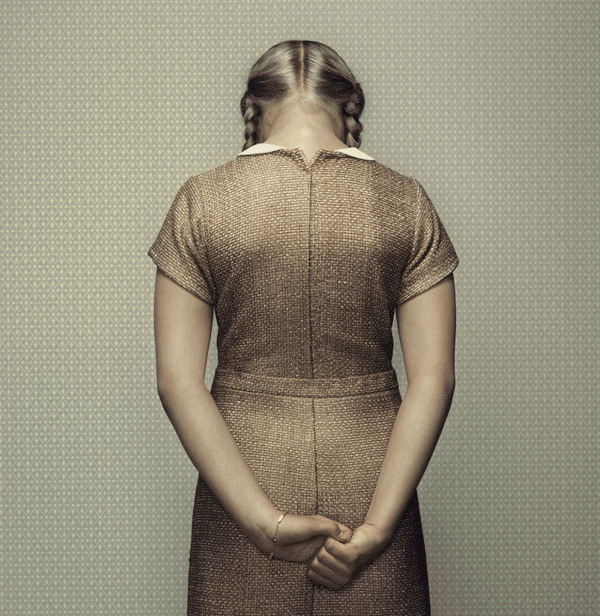
    On the occasion of Berlin´s start into “Month of Photography” Dutch artist Erwin Olaf will sign his latest catalog “Erwin Olaf. Volume II” by Aperture at Bar Babette this Thursday at 22 h. Wagner + Partner is proud to offer the chance to first get a signed catalog that night. A limited amount of copies is available, be on time!

    Accompanying this event Wagner + Partner has arranged a show with works from Erwin Olaf´s “Fall” series and the film “Le dernier Cri” at Babette (16.- 30. Oct). Bar Babette, Karl-Marx-Allee 36, 10178 Berlin

    Already at 19 h “Month of Photography” will open its main exhibition “Memory Lab. The Sentimental Turn” at Martin Gropius Bau including Erwin Olaf´s series “Berlin“.

    Note: The gallery will also offer a chance of getting this catalog signed by Erwin Olaf himself at PULSE in Miami (7 Dec) while presenting his “Keyhole” series at the fair.

    Homeland [IN]Security:Vanishing Dreams
     Dorsky Gallery Curatorial Programs 
    is pleased to present:
    Securing Homeland:Rebounding/Rebuilding for a Sustainable Future
    A Panel Discussion
     Moderated by exhibition curator
    Margaret Mathews-Berenson
    Panelists: Brian Baer, Cynthia Barton, Deborah Gans
    and Mary Mattingly

    Sunday, October 26, 3:00-4:30 pm

    security-00

    Mary Mattingly
    Towards a Heterotopia, 2008


    The panel, moderated by the curator, Margaret Mathews-Berenson, will focus on innovative solutions to the problems of homelessness and displacement caused by catastrophic natural and man-made disasters. Panelists will discuss innovative projects and proposals by artists, architects, non-profit organizations and government agencies around the world to address issues of housing for those in need. Among these are post-Katrina housing in New Orleans and rebuilding efforts for victims of Hurricane Sandy in the New York area; designing with sustainable materials; urban reclamation projects in Chicago, Houston and Detroit; collaborations between artists, urban design professionals and local communities; and social entrepreneurship in contemporary art and architecture. In conclusion, panelists—together with audience participants—   will contribute ideas and recommendations for addressing these problems in the future. Handouts will include a list of organizations worldwide that provide meaningful solutions in the hopes that audience members might be inspired to assist them in accomplishing their goals.
    Brian Baer– is the Regional Program Coordinator for Architecture for Humanity here in New York, where he is leading and managing the Hurricane Sandy Reconstruction program. He received his architecture degree from The Catholic University of America in Washington, DC and is a LEED accredited professional and certified by NCARB. Baer has over 25 years’ experience of sustainable, community-aided design solutions for educational, cultural, civic and nongovernmental agency projects across the United States. He has collaborated with a wide variety of constituencies to bring consensus and success to the design and building process. Currently he is managing the ReNew NJ/NY Schools, ReStore the Shore, and authored the Resilience through Education and Design Centers programs.


    Cynthia Barton– is the Housing Recovery Program manager at the New York City Office of Emergency Management and Housing Recovery Program manager for the U.S. Department of Homeland Security’s Regional Catastrophic Preparedness Grant Program. She holds a master of architecture from Yale, and was previously the managing director of Architecture for Humanity New York, and a contributing editor to the book, Design Like You Give a Damn: Architectural Solutions to Humanitarian Crises. Her disaster-relief work includes post-earthquake housing in India with Shigeru Ban and most recently overseeing the design and construction of a prototype for urban post-disaster housing in Brooklyn, NY.
    Deborah Gans-The Gans Studio is known for its innovative “extreme housing” design prototypes for people displaced by homelessness, natural disasters and war. Their continuing work on alternative forms of shelters includes: disaster relief housing for Kosovo refugees; an interim housing system for the homeless commissioned by Common Ground; a community based planning and design project for post-Katrina New Orleans; and currently, a similar project in Sheepshead Bay post Super Storm Sandy. The Gans Studio prototype for a deployable Roll Out House (originally designed for refugee camps) was shown in Into the Open, an exhibition at the United States Pavilion in the 2008 Venice Biennial featuring civic-minded projects by contemporary architects. Among her many publications on landscapes of displacement are: Extreme Sites: Greening the Brownfield and essays in Beyond Shelter: Architecture and Human Dignity, Design Like You Give A Damn, and Expanding Architecture among others. She is a contributing editor for BOMB magazine and the Italian journal BOUNDARIES.
    Mary Mattingly– An artist based in New York, Mary Mattingly recently launched WetLand, 2014, a floating sculpture, eco-habitat and performance space at Penn’s Landing in Philadelphia. This follows her Flock House Project, 2012: three spherical living-systems incorporating rainwater collection that cycled water through edible gardens, solar panels, and enclosed living spaces. These spheres journeyed through New York City’s five boroughs and are currently in Omaha, NE. Mattingly also founded the Waterpod Project, 2009, a barge-based public space containing an autonomous habitat that docked at piers in each of New York’s five boroughs. Her work has been exhibited at the International Center of Photography, the Seoul Art Center, the Bronx Museum of the Arts, the New York Public Library, deCordova Museum and Sculpture Park, Robert Mann Gallery, and the Palais de Tokyo.
    TITLE
    Studio black EvaHild1

    EVA HILD
    October 16 – November 16, 2014
    Reception Thursday October 16 6-8pm

    Contact the gallery for more information: margolis@nancymargolisgallery.com

    logo

    Photo Anna Sigge and Eva Hild
    Please let me know if you do not want further e-mails from me.

    JESSICA SANDERS

    “SWELL SWOLLEN”

    OCT 16 – NOV 15, 2014

    OPENING RECEPTION: THURSDAY, OCT 16, 2014, 6-8 PM

    Jessica Sanders, Crumple A58 & Crumple A59 (details), 2014, Beeswax on stretched linen with artist frame

    Jessica Sanders, Crumple A58 & Crumple A59 (details), 2014, Beeswax on stretched linen with artist frame

    ***

    Johannes Vogt is pleased to announce Swell Swollen, the first solo exhibition by Jessica Sanders. Born in 1985, Sanders is based in Brooklyn, New York and works between the realms of sculpture and painting via in depth procedural investigations. The exhibition is composed of new works from the Crumple series, the artist’s largest to date, alongside two series of wax-based sculptures.

    Material considerations provide the conceptual framework and entry point for Sandersʼ work. Trained as a sculptor, she has been using beeswax since 2006. The material has a low melting point while still maintaining its form, allowing the beeswax to exist on the threshold of a state change. Her interest in fluidity is underscored by the ease with which she shifts formats from sculpture to painting and back. In both the floor and the wall works, surface, transparency, and structure remain a primary concern. In the Crumple paintings, the beeswax is applied to the linen while hot, embedding the fabric with wax. The resulting skin is then broken apart in the crumpling process, forming a complex texture and cleft surface. In this series the wax dually acts as the driving force of the composition as well as a lens with which to look past it and into the ground itself. By contrast, Sanderʼs solid wax sculptures are resolutely opaque, and have a smoothness of a settled, viscous liquid. They appear as if in on the border of self destruction; slumped over themselves, or propped against the wall.

    Ingrained in Sandersʼ studio practice are tactile experimentation and observation. Materials and process are mined, dissecting and inquiring without a decided end. In the resulting work, a single trait is honed and followed to its most apt endpoint. Evident in her paintings and objects is the exploration of the physical processes governing the materials behavior, creating systems to reveal the singularity within seemingly known matter.

    The Wax Curve sculptures are cast without an inner structure. Minute shifts in proportion allow some works to slump and find stability, while others continue to move and shift with time. The Crumple series, functioning as a ballast to the Wax Curves, breaks down the originally built-up surface. This fragmentation produces a field antithetical to the smooth-skinned casts in structure, process, and action. Sandersʼ new series of Wax Edge Wood works are derived directly from the construction of the Crumple series. They are braces cast inadvertently then isolated, the ephemera at the margins of process.

    Sanderʼs work has received recent reviews from Modern Painters Magazine, Artslant, Art in America and Blouin Artinfo. She has recently been featured in a two person exhibition at Kansas, New York, and several group exhibitions at Showroom, Brooklyn; FIFI Projects, Sanpedro, Mexico; and Johannes Vogt Gallery, New York. Forthcoming exhibitions include group shows at Berthold Pott, Cologne; Paul Kasmin in residence at Middlemarch, Brussels; and a solo presentation at Neochrome in Turin, Italy.

    Frieze London 2014:

    Wednesday 15 October (Professional Day, premium tickets only)
    Thursday 16 October
    Friday 17 October
    Saturday 18 October

    FREEZE

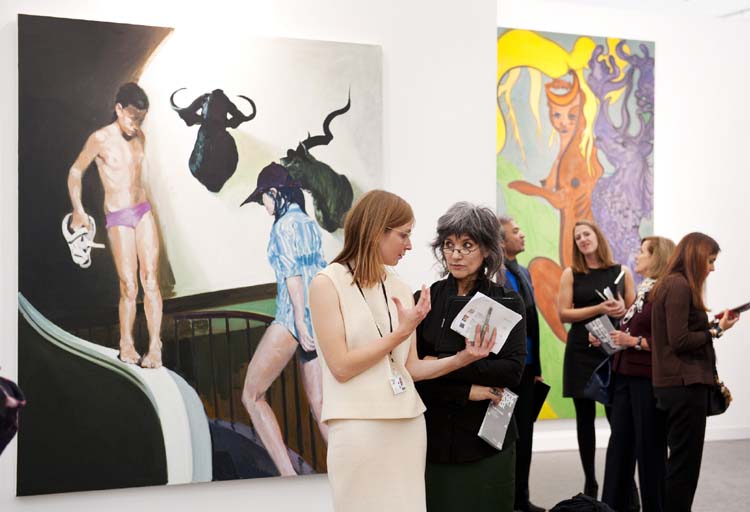
    Frieze London is the contemporary art event of the year. In addition to being able to see and buy art by over 1,000 of the world’s leading artists, the fair features Frieze Projects, the fair’s unique and critically acclaimed programme of artist commissions and Frieze Talks, a prestigious programme of debates, panel discussions and keynote lectures.

    This year, the fair also introduces Live – a new section dedicated to ambitious performance-based installations. Live includes work specially conceived for the fair as well as the restaging of historical pieces.

    Frieze London is housed in a bespoke structure in The Regent’s Park. Located in the heart of London, it is within easy walking distance of the city’s West End.

    ART SILICON VALLEY/SAN FRANCISCO
    OCTOBER 9-12, 2014

    silicon-valley

    75 International Galleries | Can’t Miss Art Talks | Special Exhibitions

    Art Silicon Valley/San Francisco (Art SV/SF) is Art Miami’s new International Contemporary and Modern Art Fair on the West Coast opening October 9-12, 2014. Centrally located between Silicon Valley and San Francisco, the fair is proud to present 75 highly respected international galleries and art institutions from France, Italy, Germany, England, The Netherlands, Finland, South Korea, Switzerland, United Kingdom, Venezuela, China, Austria, Argentina and The United States. The Fair will showcase investment quality Contemporary & Modern works of art for acquisition from the 20th and 21st centuries, including emergent talent and new media artists. Over 750 artists from 42 countries will be on exhibit during the fair.

    Art Silicon Valley/San Francisco is pleased to partner with the following notable bay area cultural institutions, many of whom are organizing independent exhibitions and events for the fair. We welcome these curatorial efforts and opportunities to encounter new art and ideas as an added dimension to the weekend’s events. We look to these cultural partners, along with the stellar international and U.S. artists and galleries represented at the fair, to provoke, surprise, and delight creative people throughout the Bay Area and Silicon Valley: Fine Arts Museums of S.F. (Artpoint); Creativity Explored;Leaders in Software and Art (LISA); Movimiento de Arte y Cultura Latino Americana (MACLA); San Francisco Art Dealers Association (SFADA); San Jose Institute for Contemporary Art (SJICA) ; Stanford Art Spaces; tmoro projects; UC Davis Art Studio; ZERO1; Shipyard Trust For The Arts (STAR); Djerassi Resident Artists Program; Leonardo/LASER; di Rosa Museum; San Jose Museum of Art (SJMA).

    The Fair takes place at the San Mateo County Event Center in San Mateo, conveniently located at the crossroads of U.S. 101 and CA 92 freeways and just 10 minutes south of San Francisco International Airport.


    Image courtesy of Bushwick Film Festival

    Image courtesy of Bushwick Film Festival

    7th Annual Bushwick Film Festival 
    October 2-5, 2014

    Multiple locations
    Brooklyn, NY
    bushwickfilmfestival.com

    News | Exhibitions