

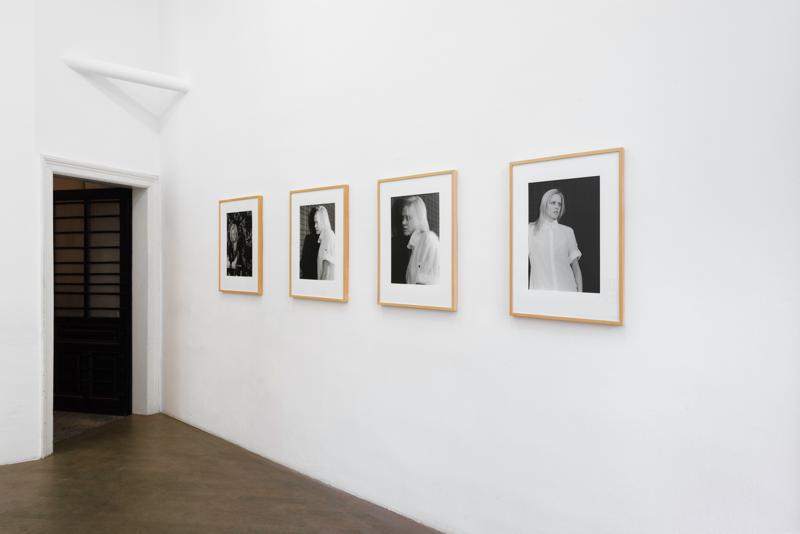
• Excerpts from the exhibitions How They Met. Part 1 – Mother and Her House, Part 2 – Sex (2008) Installation view, Galerie Emanuel Layr, 2014

    Excerpts from the exhibitions
    How They Met. Part 1 – Mother and Her House, Part 2 – Sex (2008)
    Installation view, Galerie Emanuel Layr, 2014

    OPENING 18.11. 7 PM | WHITE (Essence) Filko – Laky – Zavarský 1974 – | and Exhibition Views

    curated by_vienna 2014, The Century of the Bed
    Excerpts 
from
    How They Met. Part 1: Mother and Her House
    SupaStore
    The Issues of Our Time (1 & 3)
    Fille/Garçon
    In the Middle of Affairs
    curated by Egija Inzule
    with Dominique Gonzalez-Foerster, Morag Keil,
    Mélanie Matranga, Bonny Poon, Josephine Pryde, Sarah Staton
    2.10.2014 – 13.11.2014

    Excerpts From How They Met. Part 1: Mother and Her House, SupaStore, The Issues of Our Time (1&3), Fille/Garçon, In the Middle of Affairs is a group exhibition based on “remakes” of preexisting exhibitions with works by artists Dominique Gonzalez-Foerster, Morag Keil, Mélanie Matranga, Bonny Poon, Josephine Pryde and Sarah Staton. Curator Egija Inzule selected and brought them together as her contribution to Vienna’s annual curated_by festival.

    The original exhibitions came from different languages, spaces, contexts and times. Within this “thinking through exhibitions,” the miniature shows are listed one after the other (along with corresponding material, such as original press releases and ephemera), in the four separate gallery rooms of the Gallerie Emanuel Layr. To insist on quoting the context of a work’s “original” exhibition can be seen as an exaggeration thought to underline the specific social relations, situations and conditions that frame the artworks and modes of working and which define the reasons for the artworks’ and working approaches specific forms.

    How They Met. Part 1: Mother and Her House and Part 2: Sex was a collaborative project by the artists Josephine Pryde and Sarah Staton, presented in form of two exhibitions simultaneously on view at Galerie Bleich-Rossi and the Gabriele Senn Galerie in Vienna in 2008. The artists’ central themes of their exhibition – how they got together, how they started to know each other, and where they came from – were meant to refer to the social relations running through art practices. In their press text in 2008, when referring to the “results” of their collaboration and re-viewing it they wrote: “Now, thankfully at last fully socialised, they review the tropes. How feeble were they? Why attempt to establish a working partnership? Even as a fake? Now? Where can you drive the autobiographical? Where will it drive you? What does the labour that is self-knowledge look like anyway.”

    The Issues of Our Time (1&3) was part of a series of three exhibitions put together by the team of the exhibition space castillo/corrales. Parts 1 and 2 took place in the exhibition space in Paris in 2013, while part 3 was conceived for the event-based program of Artists Space Books & Talks in New York City in 2014. Part 3 included a carpet with cables running underneath it, designed by artist Mélanie Matranga, among other elements and artworks specifically conceived as stage and backdrop for the two-week public program. The Issues of Our Time series began with discussions about approaches to the thinking and making of art that were described as the dynamics of self-portraiture through projection. The exhibition generated a kind of fluent whole, based on separate works by different authors.


    Within the space of The Issues of Our Time (1&3) another exhibition (also co-curated by Egija Inzule) In the Middle of Affairs (Künstlerhaus Stuttgart: 2010) was mentioned, more as a footnote. Within the context of this exhibition the artist Bonny Poon performed her Re-Enactment of The Cool-Down, Body Movement Workshop (help for breathing and bending). The performance and the installation consisted of water bottles by an internationally-known Austrian brand and white exercise towels, as a trace in the space, a brand of the artist herself, a tag of an artwork almost invisible, but simultaneously inscribed in many attitudes and gestures of the gallery and the exhibtion’s everyday lifestyle.


    The exhibition Fille/Garçon was a solo gallery show by the artist Dominique Gonzalez-Foerster realized in 1995 at Gallery Koyanagi in Tokyo. The installation was an homage to the sentō, the Japanese public bath. Gonzalez-Foerster captured its emblematic formats: including a gender based colour-split of the space – baby blue and pink. Previously gender-mixed, separate bathing was introduced in Japan during 1868–1912, a time of modernization and westernization. Further elements in Gonzalez-Foerster’s installation adopted from the sentō were little wooden chairs and buckets, low mirrors (here represented as baby blue and pink tinted acrylic glass plates: story-boards with cut-out magazine collages). The middle of the space is filled with a large tiled area in the same colour-split code, a baby blue and pink reference to Carl Andre’s work Steel-copper plain (1969), here as a signifier for the sentō hot tub. A text by Benjamin Weil that accompanied the two parts of the exhibition – “The first part goes with the pink side, the second with the blue” – describes the many notions, including the cinematic perspective of this work, discussing “intimacy within the public place where one is exposed and simultaneously protected by convention. It occurs in a particular type of time frame: the body takes over the mind”.

    Sarah Staton’s SupaStore was an art-translation-of-fashion pop-up store, a seven-year project that the artist ran from 1993–2000. Light gestures and works by artists, made specifically for the “store” context, were installed to resemble and mimic what fashion does and how fashion and shopping circulates. SupaStore was a pre-internet hub, materialized in a collection of smaller objects, or things with a definable “use”. The project was backed up by the strongly-developing notion of shopping:  “Shopping is melting into everything and everything is melting into shopping.” (The Harvard Guide to Shopping: 2001) The re-enactment in Vienna of Sarah Staton’s SupaStore, entitled SupaStore/Sleep 2014, includes excerpts from SupaStore Boutique (1994), SupaStore NYC (1997) and SupaStore Manc (1998). Books, music and video references have been included in the installation to suggest a meta-level notion, a kind of theatrical gesture to provide evidence to the whole idea and the large acceptance of network-lifestyle, consumerism and “shopping” in general.

    http://www.emanuellayr.com/de/exhibitions/detail/id/3-2391/index.html
    unnamed

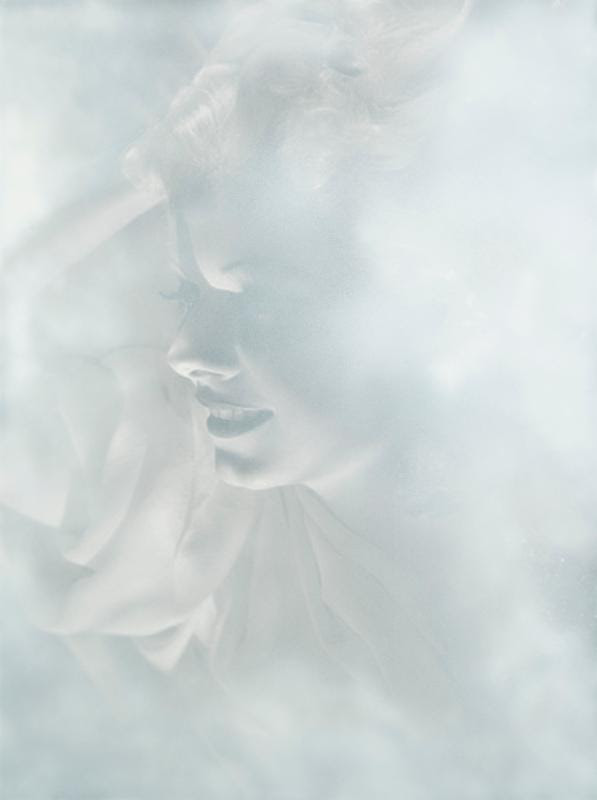
    Stuart Netsky, Grand Illusion, 2014, White hairspray on archival digital print, 24 x 36 inches


    Bridgette Mayer Gallery presents:
    Sirens a solo exhibition by Stuart Netsky

    On view: December 2, 2014 – January 30, 2015 

    PHILADELPHIA –Bridgette Mayer Gallery announces its upcoming exhibition, “Sirens,” a solo show by Stuart Netsky on view from
    December 2, 2014 to January 30, 2015, with an opening reception on Thursday, December 11, 2014, 6 – 8 p.m.


    Bridgette Mayer Gallery is pleased to announce our winter exhibition which will feature the work of gallery artist Stuart Netsky. Netsky’s exhibition, entitled “Sirens,” is his first one-man show at the gallery as well as his first solo exhibition in Philadelphia in several years. His new works include a variety of prints, mixed media pieces, paintings and sculptures that incorporate images of sirens, goddesses and pop culture icons. In a new and unique endeavor for the artist, he will additionally be creating an installation in The Vault Room which will feature limited edition table settings, women’s silk scarves, silk pillows and blankets.


    Netsky appropriates art historical references and imagery from popular culture and integrates them into his works to emphasize underlying violent and sexual symbolism that exposes the guise and hypocrisy of the excess and superficiality of his subject matter. He describes his new body of work with the following quote by Gertrude Stein: “It is natural to indulge in the illusions of hope. We are apt to shut our eyes to that Siren until she allures us to our death.”


    “Stuart Netsky has long been interested in how gender roles and sexual stereotypes are communicated in Hollywood films, fashion, and renowned works of art. In his new work, the focus is on women in various guises-ranging from goddesses in Greek mythology to Hollywood celebrities and icons of modern art. Persephone, Venus DeMilo, Elizabeth Taylor, and Marilyn Monroe as well as Modigliani’s elongated muses and Picasso’s Desmoiselles D’Avignon are all venerated and miraculously transformed.” –   Judith Tannenbaum, November 2014


    Stuart Netsky has had over a dozen solo exhibitions in Philadelphia and New York since 1990. His first museum survey, organized by the Institute of Contemporary Art in Philadelphia in 1993, included a multi-part installation referencing the AIDS epidemic and issues of vanity and mortality. Netsky’s work has been in recent shows across the U.S. including “Mind Over Matter: Reworking Women’s Work” (Museum of Fine Arts, Santa Fe, NM); “Influence, Anxiety and Gratitude” (List Visual Arts Center, MIT, Cambridge, MA); and “S(how)” (Institute of Contemporary Art, Philadelphia, PA).
    Gallery hours are Tuesday – Saturday 10:00 a.m. – 6:00 p.m.
    & by appointment.  For pricing, images or additional exhibition information please contact t: 215 413 8893 e: bmayer@bridgettemayergallery.com 


    article0_popup

    International Association of Art Critics Elects President and Secretary-General

    The International Association of Art Critics, or AICA, has reelected Marek Bartelik as president of the organization for the 2014-17 term and Marjorie Allthorpe-Guyton as the new secretary-general for 2014-18. The elections were held last month at the forty-seventh AICA International Congress in South Korea, during which the 2014 Prize for distinguished contribution to the field of art criticism was posthumously awarded to Lee Yil, along with the 2014 Incentive Prize to young critics for Lee Sun Young. AICA was established as an NGO by UNESCO in 1949 to promote independent art criticism around the world. Bartelik is the fifteenth president of the organization while Allthorpe-Guyton is now its first secretary-general from the UK.


    click

    Solo exhibition of photocopy collages by Jason Haufe at Factory 49, Sydney, Australia. 18 – 28 February 2015 

    10 November 2014

    Paradoxically, technology is both affirmed and denied in the collages of Melbourne based artist Jason Haufe. In spite of the works handmade appearance, not one line or form has been hand drawn.

    Haufe uses pieces of paper that were either photocopied from the source material directly, or manipulated digitally on a computer and then printed and photocopied. Much of the source material comes from patterns on the back of pay slips or from the inside of envelopes, photocopied on different scales and then distorted beyond recognition.

    These patterns form the basis for the discovery of new visual connections. While collage may be the medium, it is this process that allows the work to function as drawing. Freed from the drudgery of mark making, unique or irregular forms can be repeated many times in new and different combinations.

    Undulations and shifts in the line are the result of an emphasis on discovery and decision making, not hand gestures or preconceived ideas. Having exploited the machine in pragmatic fashion, Haufe betrays no love or faith in technology.

    This is Jason Haufe’s third solo exhibition at Factory 49 and his first comprising collages.

    FB-PICTURE-POST-BW_no address

    {male to female}

    EXHIBITION

    by

    OlgaVolodina

    NOVEMBER 20-27, 2014
    “I don’t stick to a certain style in my art.
    I don’t want to be labeled as a fashion or nude art photographer.
    Life is impermanent and subject to constant change
    and so is my work”
    Olga Volodina
    by
    440/10 SUKHUMVIT 55 /THONG LOR/ 4th FLOOR
    between soi 14-16, next to Top Charoen Optical
    farmanigallery.com
    rooftopGallery Bangkok
    Olga Volodina is a Russian-born photo artist currently
    residing in Bangkok. Back in the day she started her
    professional career as a fashion art photographer in Moscow.
    Olga is the author of several social and art photo projects.
    Her works were featured on TV, in print media and exhibited in
    art galleries.

    Almost all of Olga’s works are focused on a human.
    Character, charisma, body, beauty, behavior, relationship,
    actions and mistakes, everything that we call a human life is
    both the main source of inspiration for her and object of her art.
    Male to Female (MTF) Classic nude photography of
    transgender models in black and white.
    Woman Touch, Olga Volodina’s first exhibition in Bangkok,
    was a simple yet exciting way to express the beauty of a
    nude female body through the medium of black and white
    photography. MTF exhibition is a kind of sequence project
    that utilize the same aesthetic of sensual mood to show
    transgender bodies as an art object.
    In the civilized modern world, a choice of sexual orientation is
    the right of every human. People learn how to live among the
    variety of opinions, attitudes and sexual preferences.
    In general we have to learn tolerance.
    As long as transgenders have been existing artists and
    photographers mostly use this phenomenon in art to provoke
    or shock their audience with documental realism often
    underlined with some strong social meanings.
    Photographer Olga Volodina chose another way.
    She prefered the style of classic black & white nude
    photography that doesn’t attract with its play of colors and
    devoid of any social context . Here attention to composition,
    lighting and the beauty of a not-so-obvious-yet human body
    is more important. There are just calm and sensual nude
    pictures shot the same way as classic nude female
    photography.

    It lets a viewer to keep attention undistracted
    and see the beauty of a transgender body the same way as a
    male or female naked body.
    {male to female}

    unnamed

    GALLERY 98

    Online Only — http://gallery.98bowery.com/

    X MAGAZINE BENEFIT STREET POSTER, 1978

    An original 1978 street poster advertising the X Magazine Benefit with the Contortions, DNA and other No Wave bands. The benefit paid the printing cost for the third and final issue of X Magazine. Designed by Seth Tillett. From Gallery 98’s extensive inventory of art and ephemera from 1970s and 80s.

    Visit our inventory page:
    http://gallery.98bowery.com/inventory/

    unnamed

    FIGURE PAINTING INTENSIVE RESIDENCY & EXHIBITION

    Residency Dates: February 16 – 27, 2015

    Invitation to Artists:

    Dacia Gallery invites emerging and established artists to participate in this exciting Artist Residency program in New York City. Dacia’s Artist Residency provides an academic program to inspire, refine and redefine the creative direction of artists in a figure painting intensive two-week program. The application is open to visual artists worldwide, including all mediums and styles of artwork. We are accepting artists that want to dedicate their time to painting, learning the ins and outs of the New York art world and exploring all the wonderful opportunities that the city has to offer artists. Art classes will alternate between figurative painting and drawing, the business of art, guest speakers and lecturers. We will explore the contemporary art galleries of Chelsea and the Lower East Side and visit the great museums of New York. Additionally, an exhibition and opening reception will be held for the participating resident artists at Dacia Gallery. This is a wonderful opportunity to study and paint in NYC. If you are interested in participating registration is now open.

    New York City artists as well as national and international artists may register. Please see our website for full details on the residency. www.daciagallery.com

    FOR COMPLETE INFO AND TO REGISTER CLICK HERE

    banners

    Miami River Art Fair | 3rd. Edition
    December 4 – 7, 2014

    VIP Collector’s Preview | December 4 | 6 – 11pm

    Fair Hours | December 5 – 7 | 12-8pm

    Fair Location | Downtown Miami Convention Center
    James L. Knight International Center
    400 SE 2nd Ave, Miami, FL 33131 USA

    http://miamiriverartfair.com/the-fair/

    artbasel

    2014 Miami and Miami Beach Art Fair
    Information about Miami Art Week 2014, including art fairs in both Miami and Miami Beach the first week of December. It’s filled with useful info, fair descriptions, locations, hours, special events, admission prices and much more. The guide is now available for viewing and for helping you with trip planning. Information and will continue to be added until November 29th. Also, this year we’ve expanded the “Getting Around Section” and the very useful Guide.

    unnamed

    Elger Esser, Ninfa – Physadeia, 2013, Unikat, Directprint, AluDibond, Shellac,
    98 x 123 x 4,5 cm, © VG Bild-Kunst, Bonn 2014


    Elger Esser
    Ninfa
     
    14 Nov 2014 – 31 Jan 2015
    opening: Thursday, 13 November 2014, 7 – 9 pm
     

    “Only by way of a nymph does nature become landscape.” – Elger Esser

    Galerie Rüdiger Schöttle is proud to present the fifth solo exhibition of German photographer Elger Esser. On view are works from his most recent series of landscape photographs, entitled Ninfa (“nymph”), which were created in the eponymous Italian Giardino di Ninfa, south of Rome.

    As the area is particularly well protected at the foot of the Lepini Mountains and at the head of the river Ninfa, an ecosystem with a unique flora and fauna, the origins of which date from Ancient Rome, was able to develop there. Its urban structures were abandoned due to the plague and various crusades in the Middle Ages, and were reconquered by nature. In the 16th century, the aristocratic family of Caetani commissioned the construction of an English Garden around this fertile landscape of ruins. For centuries, the enchantedGiardino di Ninfa has attracted artists, literati and poets – among them Giorgio Vasari, Virginia Woolf, and Gabriele D’Annunzio.

    In his examination of Ninfa, Elger Esser focuses on the mythological spirit which inhabits this place. The works have titles such as Orseis, Abarbarea, andNysa, named after the water, rock, and flower nymphs of Greek mythology. In color and in black-and-white, Esser approaches the water- and wildlife sprawling in the ruins and rubble, creating an allegorical set of works which breathes new life into these nymphs.

    The high quality of Esser’s one-of-a-kind prints emphasizes the mysterious character of the surroundings in which the works were created. In a special process, the photographs were printed directly on aluminum and coated with Shellac, giving their surface a painterly quality. The photo works are supplemented by video installations which render the movements of the water and its sounds in the Garden more tangible.

    Elger Esser (born 1967 in Stuttgart) spent his final school years in Rome. He returned to Germany to study in the famous class of Bernd and Hilla Becher at the Academy of Arts in Düsseldorf (1991–1997). Since then, his landscape images and vedute have been shown in numerous international venues, among them the Solomon R. Guggenheim Museum New York, the Stedelijk Museum Amsterdam, the Kunsthaus Zürich, the Centre Pompidou Paris, and the Lenbachhaus Munich.

    Florian Süssmayr 
    14 Nov 2014 – 31 Jan 2015
    opening: Thursday, 13 November 2014, 7 – 9 pm

    Hey, Lovers Club, Geyerwally, Lindwurmstrasse, Schelling Salon, U6 Großhadern, Marienplatz, Nein, BC Harta, Ok Girls – these are some of the titles that are typical for the works of Florian Süssmayr. His repertoire ranges from the haphazard – such as his recent series of t-shirts smudged with oil, which he wears when he paints and which manifest both as framed objects and re-portrayed as oil paintings – to hand-picked and staged subjects which often have their origin in everyday life. 

    One of the artist’s new works shows the back of a woman’s head with classically coiffed hair which anticipates an equally pretty face, the sight of which we are, however, denied. “Betti” is Süssmayr’s version of Gerhard Richter’s almost eponymous painting. Much like its precursor, it is a photorealistic painting which remains reduced to a color palette of shades of white, gray, brown, and black, as Süssmayr’s works frequently do. The artist applies the paint directly and in a single step to the correct spot on the canvas. Florian Süssmayr is a master of this “pinnacle” of the classic disciplines of art.

    However, this painting also consists of a second act. Süssmayr’s “Betti” does not wear a quaint flower blazer, but a riveted leather jacket – perhaps a reminiscence of Florian Süssmayr’s punk phase, when he toured with his band Lorenz Lorenz, and a nod to the left-wing autonomous milieu of the 1980s, which he was part of? It is more likely that the artist consciously seeks out a counterpoint to the bourgeois idyll of Gerhard Richter’s portrait. “Fuck the …” is written in large letters on the leather jacket. Here Süssmayr quotes yet another painter, Daniel Richter, a punk among painters. Punk motifs and quotes are present in the works of both artists, and there are also biographical parallels. We read the once controversial and by now politically rather irrelevant slogan, “Fuck the Police,” on a riveted jacket in Daniel Richter’s painting, “Lonely Old Slogan”. The two artists share a rather subversive mindset. It is a joy to see how Florian Süssmayr manages to combine Gerhard Richter’s bourgeois motif with the subject of the rebel Daniel Richter, while remaining genuinely Süssmayr in the process.  

    Often, Süssmayr’s motifs are not exactly unambiguous. The character of his images changes through layering: Subtitles render his paintings film stills, overpainting makes a landscape scribbling paper, scratches and signs of wear and tear transform a mannerist resurrection scene into a blatant reproduction. Correspondingly, the artist transposes his motifs into various media: A photograph becomes a painting which, in turn, is photographed, photocopied, or printed as a wallpaper to become the background of new images.

    A limited edition will be published exclusively for the exhibition.

    Amalienstrasse 41 / 80799 Munich 
     Tues–Fri 11 a.m. – 6.00 p.m. / Sat 12 noon – 4.00 p.m. / Tel. +49 89 333686 / Fax +49 89 342296
    info@galerie-schoettle.de
    www.galerie-schoettle.de


    News | Exhibitions









