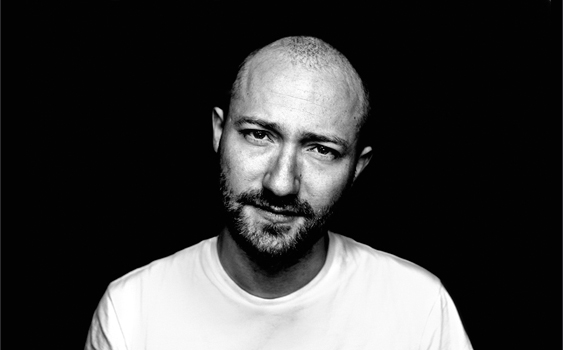
“There are no CDs involved. It’s a technological orgy up there and I try and keep it more my music than anyone else’s. If people come out to see deadmau5 I want them to hear deadmau5 music.”
Joel Zimmerman doesn’t like being called a DJ. The dance music phenomenon from Toronto, better known as deadmau5, rolls his eyes at the description which he sees as a hopelessly outdated way of describing what he does. His sets are closer to live performances as he assembles tracks on the fly using cutting edge computer technology including software that he’s helped to write himself.
Fedde le Grand is a Dutch house DJ and producer best known for his 2006 track “Put Your Hands Up 4 Detroit“. Fedde le Grand is seen as a “defining figure in house music”; noted not only for his ability to create “huge mainstream” hits, but to “move seamlessly” between these and “edgier, underground sounds.”[1] Le Grand is a frequent headliner at mainstream EDM events like UMF and TomorrowLand, more unconventional EDM festivals such as Sensation and Coachella, popular club venues such as Pacha Ibiza, Green Valley, and Marquee LV, as well as home country events like ADE, Amsterdam Music Festival, and the annual DJMag Top 100 DJs Awards. Le Grand is also known for his remixes of popular artists such as Coldplay, Michael Jackson, Shakira & Rihanna, Mariah Carey, Timeflies, and Martin Solveig.
Predictable music is usually the most forgettable. Fortunately for electro-funk artist Benji Hughes, his debut double CD, A Love Extreme, struts with enough ear candy and lyrical surprises to make it one of the year’s most memorable releases. Over the course of two dozen tracks, Hughes keeps listeners guessing with a wildly eccentric blend of jazz, circus dirges, R&B, space rock, folk and electronica. It’s a lush and breathless mix with extreme mood swings, from boundless joy to utter despair.
At times, A Love Extreme feels like it’s about to careen off a cliff, which is precisely what makes the album so compelling. With a rich baritone voice, Hughes charges through the absurd (tight T-shirts and mummies), the mundane (annoying neighbors, dull parties) and the bittersweet (growing old and lost lovers), with groggy melodies, funk rhythms and plenty of humor.
Hughes lives and writes in Charlotte, N.C. He recorded A Love Extreme with producer Keefus Ciancia over the course of four months in 2007. Hughes recently told NPR’s Andrea Seabrook that he wrote so many songs for the album, it was hard to decide what to include.
“There were so many songs that it seemed wrong to leave anything out,” he says. “And to put it all on one CD and make you have to listen to something for way too long… I mean, it’s like, listen to the first CD — it’s about 30 minutes — and if you want to listen to the other one, cool. It just made sense.”
A Love Extreme (a play on John Coltrane’s classic A Love Supreme) would be an impressive album coming from any veteran artist. Beck, clearly one of Hughes’ role models, comes to mind. The fact that this is the product of Hughes’ first time in the studio makes it that much more remarkable. When we close the books on 2008, expect to see A Love Extreme among the year’s best albums.
Paul Kalkbrenner has truly remained down to earth. He is talented, ambitious and successful – although his inner child always is ever visible beneath the surface. He is a loner, yet full of empathy. A cosmopolitan, yet ever firmly rooted in Berlin. He is a raver with his arms in the air allowing himself moments of reflection. A man who is able to lose himself completely in exhilaration and trance but who never switches off his mind.
Kalkbrenner’s music is challenging and full of energy, but also has serene and profound moments. The music aims toward ecstatic situations and at the same time is entirely in the here and now. It deals with the pressure one is exposed to on a daily basis as well as the knowledge that work and a daily routine is not all there is – it combines trance, art, madness, friendship, hope, family and love in one.
Paul was still a child when techno became immensely popular in Berlin after the fall of the Wall. But still he was able to experience how the eastern part of the city turned into an anarchic-creative playing field for young people who had been liberated from regulations by the government and who had become euphoric due to this new-found freedom.
In fall of 1992, Paul and his friend Sascha Funke began deejaying together. They performed at local youth clubs where people their age hung out and played pool. Most of the time, these places were only open until midnight. However, Paul’s mother had decided that his curfew was at 11 pm. The greatest thing for him was owning an Underground-Resistance-Hoodie. The two friends religiously collected techno records and Paul experienced the first rush of electronic music in mythical clubs in Berlin such as Tresor, Planet, Walfisch or E-Werk.
When he was eighteen, Paul went on a little detour: He worked as a cutter in television for two years, sitting in the ARD and ZDF’s editing trucks at political conventions. He used the money he earned there to buy his own equipment and produce his first tracks. From that moment on it was clear to him: he wanted to perform live. Much to the dismay of his parents, graduating from school and receiving a professional training fell by the wayside.
Paul and Sascha meet Ellen Alien at a Bpitch-Party. She pays them a visit and is taken with their personalities as well as their music. And in 1999 Paul’s first tracks – at the time still hiding behind the alias Paul dB+ – are released by Ellen Allien’s recently established label Bpitch Control. The first record “Friedrichshain” hits home immediately. Paul is able to juxtapose the dark monotonous sound of the time with an unabated passion for partying. Numerous maxis follow and it is not before long that he discovers his affinity toward the album format. He releases two albums in a row: “Superimpose” (2000) and “Zeit” (2001).
The music media becomes interested in Paul. Nationwide bookings is business as usual. His third album “Self” is released in 2004. As opposed to the typical Kalkbrenner sound, where grand emotional gestures interconnect with a dancefloor sound, “Self” is the kind of music, which works independently away from a party situation. The album has the feel of a cohesive narrative as Paul creates a story entirely made out of sounds for the listener and which is able to unclose new spaces and themes chapter by chapter.
The individual character of “Self” becomes especially evident in light of the fact that the punk-electroclash sound dictates the scene at the time. A while later, when minimal becomes the rage, Paul responds to it with his melodramatic Rave-hit “Gebrünn Gebrünn”. “Gebrünn Gebrünn” develops into a crossover-hit throughout the scene and in every record bag and Paul finally steps up into the sphere of the Techno-Bel-Etage.
Right after “Self” is released in 2004, Berlin-based film director Hannes Stöhr – a declared fan of Kalkbrenner from the early days – contacts Paul. Stöhr wants to make a movie about an electronic musician and Techno-Berlin of the 2000s and he wants Paul to be the one to produce the soundtrack. The two of them meet and share their knowledge and their ideas. Quickly it becomes clear that Paul has more to offer than just the music and they start working on the first drafts of the script. During this collaboration Hannes realizes that Paul would be the ideal protagonist for the movie. Paul accepts the offer without hesitating. The movie is to be titled “Berlin Calling.”
In order to produce the soundtrack Paul and Sascha Funke spend six months in Aix-En-Provence in the south of France. Far away from the dismal winter in Berlin, he composes his most multi-faceted and mature piece so far. Such an abundance of sound and the subsequent emotional nuances, which are conveyed, is something that extends beyond the accustomed vocabulary of electronic dance music. Paul’s observation: “Techno has always been full of melancholy. It can be very sad: the delicate within the harshness. There is a difference between popular music and art music. I make art music.”
Back in Berlin Paul gets to work on filming “Berlin Calling” with a performance, which is unconventional yet authentic. His vitality, spontaneity and physical energy is convincing. An intimate dialogue develops between the real Paul and the character in the film called Ikarus, in whom he recognizes a kind of demon. Hannes Stöhr expertly varies locations and the dramatic register and with his portrayal of the party metropolis of Berlin is able to take the film to a larger and more universal level.
After a fulminant premiere at the film festival in Locarno where Paul spontaneously performs a live set, the film develops into a ticking time bomb. One European country after another is conquered, the film runs for several years at the Kino Central in Berlin. The soundtrack as well as the single “Sky And Sand” break all sales records. The album goes platinum with more than 200.000 sold records. “Sky And Sand” is in the single charts for 121 weeks and this is a success that no other single has reached since the charts were established in 1977.
After collaborating for a decade, Paul parts with Bpitch Control in late 2009. His success has uprooted him from the Bpitch setting and Paul now has to communicate directly with his fans. He doesn’t need an intermediary any longer in order to release music and organize concerts. His first independent step is a European Tour in early 2010, which is sold out within a very short period of time – 100.000 people see him live on stage.
After this Paul and his team take on an entirely new challenge: a DVD titled “2010 – A Live Documentary”, a cinematic journey through his European tour, directed by Max Penzel and with Hannes Stöhr as dramaturge (who both worked on “Berlin Calling”). In order to capture this unique experience, fifteen concerts were filmed by up to eight cameras at the same time and subsequently edited by the Berlin based vector oriented design group Pfadfinderei. The documentary part of the film gives an intimate insight into backstage and “on the road” situations, where Paul’s dry humor, which is so typical for Berlin, can be seen.
Paul’s fifth album “Icke Wieder” is released in June of 2011 on Paul Kalkbrenner Musik. On “Icke Wieder”, Paul transfers the depth and dreamlike quality of “Self” onto a danceable sound. The album reaches gold status with over 100.000 sold CDs and during the following tour he is able to entertain 125.000 fans. These numbers can make your head spin, but Paul keeps his calm. More than anything, he is surprised by his success: “It is strange that my techno-style can be heard throughout the venues. At live shows, where everybody is screaming, everybody is going crazy – and that is exactly what I have been doing for fourteen years now.”
Only one and a half years later Paul’s next album is released. For the first time he can encompass all aspects and facets of his music in a singular and comprehensive stroke on the seventeen tracks of “Guten Tag”. These seventeen tracks form not only a cross-section but are also the essence of everything that came before and to Paul it is his most perfect album to date. And although he stands far away from his fans, he is right there in their midst. Passionate and serene. Down-to-earth with his head in the clouds. Highly concentrated – and ever raving.
It’s been said that a great song can transport the listener to a specific time or place. If so, the music of Senator and The New Republic is a trip back to the golden age of FM radio, when melody was king and singer-songwriters ruled the airwaves. Led by Adam Greenberg and comprised of a cast of New York’s finest musicians, the band practice in an all-too-uncommon brand of indie-pop that values musicianship and song craft equally.
Adam Greenberg is a singer-songwriter who excels at both parts of his job description. At first glance, he would seem to be a modern-day Harry Nilsson—a comparison Greenberg would welcome—his emotive tenor alternating between pitch-perfect croon and heart-rending falsetto, navigating melodies just slightly too complex to be called singsong. But rather than channel sounds and styles, Adam finds a way to adopt the ethos of the artists that influenced him: the Zombies’ baroque perfectionism, the dark humor and rhythmic quirk of XTC, the playfulness found in Stevie Wonder’s classic recordings, the Jeff Lynne/ELO wall of sound. His personality shines through in the lyrics, alternately poignant and sarcastic, but ultimately relatable. Sometimes clever, but only just so.
On Senator and The New Republic’s self-titled debut, Greenberg combines these elements for a sound definitively his own, from the jangly lilt of “Call My Mechanic” and the breezy melancholy of the first single, “Intermission,” to the psychedelic overtones and synth-scapes of “Overcalculating” and “Bettie Page.” To bring his compositions to life, Greenberg enlisted the help of Grammy-winning engineer Michael Tudor, and an impressive selection of players—among them Jason Hart (Rufus Wainwright), Matt Johnson (Jeff Buckley), Catherine Popper (Ryan Adams) and Bill Dobrow (Black Crowes, Sean Lennon).
Greenberg’s music quickly hit its mark. Initial pressings of the self-titled CD sold out immediately. Senator and the New Republic logged over 385,000 downloads, thanks in part to an iTunes Single of the Week promotion for “Intermission.” The album was simultaneously featured on the main pages of the iTunes Store and CDBaby.com. In fall 2010, the band appeared alongside artists like Thom Yorke and the National as part of the Mark Mulcahy tribute project Ciao My Shining Star, and placed as finalists in the Taylor Elixir Test Drive Acoustic competition, earning Greenberg a pair of new guitars and 10,000 online views for the “Intermission” video. And he’s willing to go door-to-door to spread the word: Greenberg has taken the New Republic on the road for three U.S. tours in two years.
In addition to more touring, 2012 will bring a steady flow of new Senator and The New Republic music in the form of a monthly series of online singles, beginning in February. Greenberg will also produce regular YouTube videos, starting in January, in which he’ll feature new and cover songs, live performances, and special guests. There’s truly no time like the present to let Senator and the New Republic take you on their auditory journey.
Driving down the county highway that leads to Pachyderm Studio, it’s only natural to start to imagine all of the rock stars over the past 30 years who’ve made this same curious trek. Although the drive isn’t too long, it’s far enough off the beaten path to leave the cityscape far behind in the rearview mirror—that is, if the aforementioned rock stars were even coming from the heart of the city at all.
Did someone pick up Kurt Cobain and baby Frances Bean from the airport and bring them down these dark roads? And what about PJ Harvey, Superchunk, Mudvayne? The commutes for Minneapolis-based bands like Soul Asylum are a little easier to imagine, but the idea of so many hard-edged rock ‘n’ rollers roaring past the sign that reads “Cannon Falls, pop. 4,083″ still boggles the mind.
With so many iconic ’90s alt-rock albums recorded at Pachyderm—Nirvana’s In Utero, Live’s Throwing Copper, Babes in Toyland’s Fontanelle, Soul Asylum’s Grave Dancers Union—I was expecting the ghosts of grunge rockers past to be hovering all around the remote, woodsy grounds of the studio. But as soon as the van I was traveling in steered its way down the driveway and the bright orange trim of the newly remodeled buildings came into view, I got the strong impression that the storied Pachyderm Studio of days gone by is actually very much alive.
The reason for this particular trip to the Cannon Falls studio was to pay a visit to engineer Nick Tveitbakk with a van full of my radio colleagues. Tveitbakk has a long history of working in studios in the Twin Cities, including several years co-owning the Sound Gallery and years working with John Kuker at his Seedy Underbelly studio before it was relocated to Los Angeles, and Kuker recruited Tveitbakk to help him remodel and run Pachyderm when he purchased it out of foreclosure in mid-2011. (Update: Sadly, on Feb. 2, John Kuker passed away at age 40.)
To say that the property had fallen into disrepair by the time Kuker purchased it doesn’t quite paint the full picture; it was literally falling apart.
“This place was really, really trashed,” Tveitbakk says, stopping us in the entryway to ask us to remove our shoes so we don’t tarnish the perfect, plush new orange and navy carpeting. “The roof was falling in, and there were rats and raccoons and people living in the attic.”
A few of us let out laughs of disbelief. Wait, people?
“It probably took a year, almost two years just to root out all the weird meth head guys that were squatting here while this place was in shambles,” he continues. “I mean, this remodel took almost three years. It was that bad.”
Tveitbakk says they started remodeling the smaller building that contains the recording studio first, brought in new equipment, and then quietly started engineering albums for local artists down in the studio while the contractors got to work fumigating and overhauling the main house. The work was finished in early 2014, just in time for artists like Trampled by Turtles, Jeffrey Foucault, and Motion City Soundtrack to load in their luggage for month-long stays.
As we move around the balcony of the airy, two-story living room, wander past the fireplace made famous by Nirvana’s only photo from their Pachyderm sessions, and congregate around a mid-century modern hutch in the dining room, one thing becomes glaringly apparent: every aspect of the building’s original 1960s aesthetic has been lovingly restored, right down to the rust-colored lampshades and flawless wood paneling.
“That was all John,” Tveitbakk says. “A lot of the local contractors would come in with these weird Menards countertops, and we’re like, ‘No, we’re trying to restore this to look like 1962.’ John’s just all about ‘60s and ‘70s, orange and gold, brown. So this house is like his dream home.”
A hidden downstairs tiki bar opens to an opalescent black-tiled swimming pool, and retro-outfitted bedrooms wait around every corner. With enough beds and couches to sleep a dozen people or more, it’s easy to see why most bands choose to live on the grounds while recording their albums.
“When we loaded in our gear to the space, there was a doe just sitting by a tree like five feet from where we were walking, just waiting for its mother,” remembers Motion City Soundtrack’s Joshua Cain. “Like, it was the safe spot for it. And I think Pachyderm’s a safe spot.”
“What’s nice is sometimes you can’t get away from what’s going on and you get music fatigue, but this way you can always get away if you need to,” adds Motion City frontman Justin Pierre. “And I don’t want to get too goofy about it, but just being in the same place where Nirvana made In Utero–there was something about that. There was something magical.”
La Roux is an English synthpop act formed in 2006 by singer Elly Jackson and record producer Ben Langmaid. Their debut album La Roux (2009) was a critical and commercial success, winning a Grammy Award and producing hit singles such as “In for the Kill” and “Bulletproof“. Recording of a follow-up album was marred by unsuccessful collaborations, the cancellation of two planned release dates, and reported conflict between the duo.[1] Langmaid ultimately left the group, and Jackson released a second album, Trouble in Paradise, in 2014, maintaining the former duo’s name.
Official website
http://laroux.co.uk/
The Bar Sinister is a soul-rock band based in Berlin. Well-known for their passionate live performances, the group write songs which are dramatic and memorable. Their music, which they describe as pop-soul-theatre, is cleverly arranged in the pop format, as if each piece were a mini-musical.
My name is José Mercado (jay) I was born in Brooklyn NY 1982 now live in Dallas tx I’m American – Puerto Rican and started painting in 2014 a friend of mine who is a artist told me to give it a try and I been painting ever since I use mostly house paint and spray paints on primed and unprimed canvas I’m inspired by Pollock , Basquiat , just to name a few .. father of two beautiful girls who love my art and married to a very supportive wife ……I have about 18 piece’s at a store front gallery and about 5 piece’s at a public library and am very grateful to have this all happen in a very short period of time and hope to continue this journey in a world full of art.
Jay’s Art
Art by Zach Christopher
Art For A Dream is an online gallery featuring artists who fundraise for charity with their art. We do not take a commission from our artists and the service we offer them is free which helps them to continue to make a positive difference in the cause they are supporting. We give them their own profile which they can sell their art from and help build their social network so they can tell the world about their dream. The art on this site is more than just aesthetic, but is making a positive impact on the world. Our goal at Art For A Dream is to continue to find artists who want to make a positive difference and give them the tools they need to be successful and to educate them on how to market themselves so that they can better benefit their dream and make that positive difference a reality. If you are an artist with a dream we ask you to join us. Let us help you help the world. Tell us about your dream…