• I knew Vito in the late sixties and participated together in Street Works. It was solitude, obsession and fear to push the boundaries and stay away from labels and categories where you were defined and pigeon hold. He refused to be called “artist” even into the 70’s and 80’s. I was sorely distracted by his eventual confines and association with “studio and architecture” rather then the “Nomadic” energy he first exuded.

    – Abraham Lubelski

    Vito Acconci an American designer, architect, performance and installation pioneering artist has died in April, 2017 at age 77.

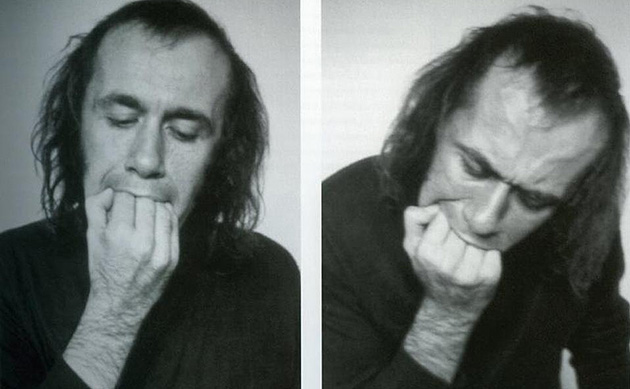
    Hand and Mouth. Vito Aconcci, 1970. Image:Magazine Archive DOMUS

    Hand and Mouth. Vito Aconcci, 1970. Image:Magazine Archive DOMUS

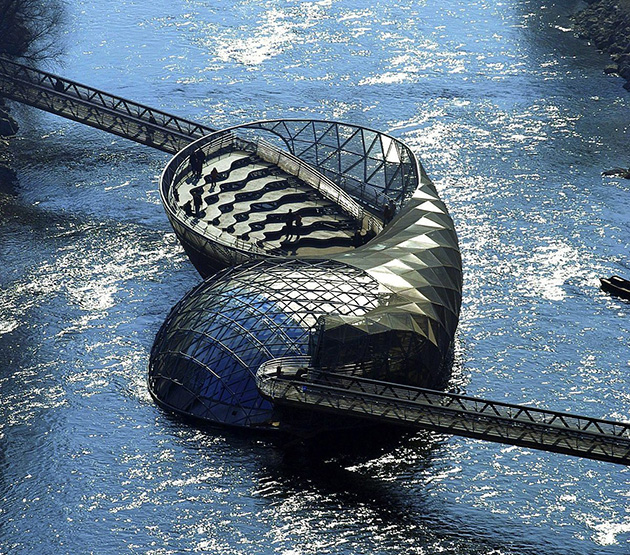
    Murinsel Bridge, Graz Aconcci Studio 2003. BLDBLG

    Murinsel Bridge, Graz Aconcci Studio 2003. BLDBLG


    Video: WHERE WE ARE NOW (WHO ARE WE ANYWAY?).

    Titled after one of Vito Acconci’s iconic artworks, WHERE WE ARE NOW (WHO ARE WE ANYWAY?) is a new short film by director Zachary Heinzerling that follows Vito and Maria Acconci, and Klaus Biesenbach in the days prior to the opening of his solo exhibition of early works at MoMA PS1.

    Shared via YouTube: The Museum of Modern Art
    Published on Sep 15, 2016


    NY Arts staff


    Bahrain foremost contemporary art fair is held under the patronage of the country’s top officials, who feel obliged to help artists find their audience, buyers, and, above all, lay the foundation for emerging talented generation. What was it like this year? Find out from our eyewitness report.

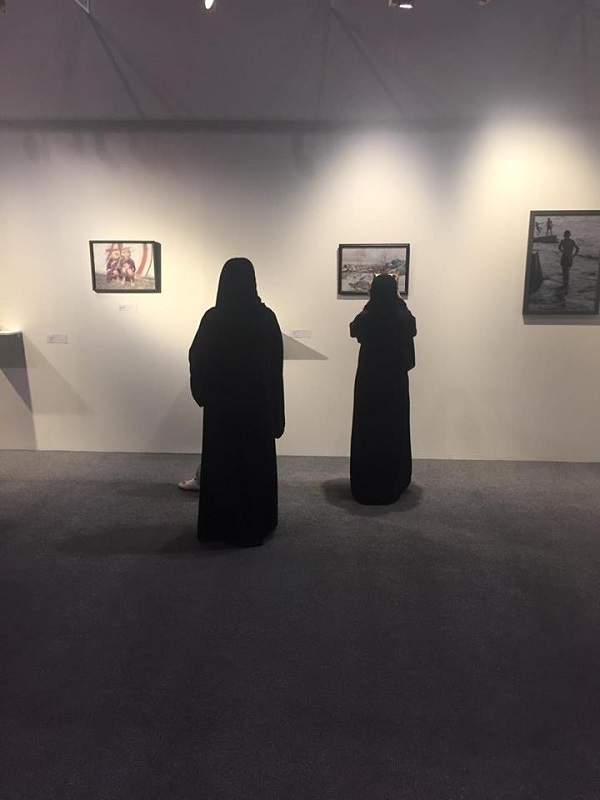
    From March 23-26 the International Exhibition & Convention Center in Manama, the Kingdom of Bahrain, hosted the second contemporary art fair Art Bahrain Across Borders 2017 (ArtBAB 2017), curated by the team of British experts led by Alistair Hicks, Jonathan Watkins and David Hawkins.

    The event program included three sections: personal stands of Bahrain contemporary artists, stands representing 11 galleries from around the world and video art broadcast on more than 10 wide screens.


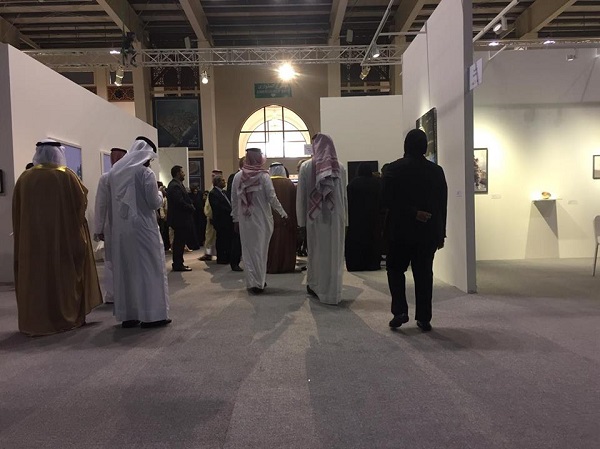
    Photo: Oleg Olenev

    Photo: Oleg Olenev

    Taking place only for the second time and as opposed to such art fairs as Positions Berlin, Barcelona International Art Fair or Rotterdam Contemporary, ArtBAB 2017 was staged with consummate care – in particular the team’s work, voluntary help, an opportunity to arrange the artists` works outright on the stands, as well as excellent professional lighting.

    Taking into account external advertising and the patronage of the Queen consort of Bahrain herself, ArtBAB 2017 enjoyed immense popularity among the locals and became a major focus of public attention in the Persian Gulf region.


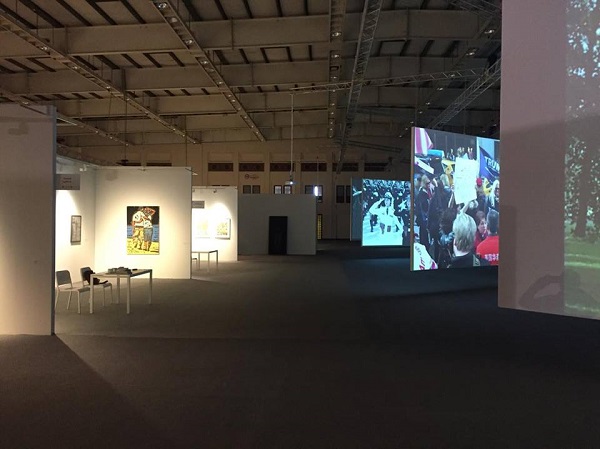
    Photo: Oleg Olenev

    Photo: Oleg Olenev

    In fact, as far as the art fair participants are concerned, ArtBAB 2017 proved to be not inferior to its competitors such as Art Dubai, and   was apparently expected to be a success: apart from Indian galleries, European galleries were represented by Maddox Gallery (London, UK), TSEKH (Kyiv and Vilnius, Ukraine-Lithuania), David Risley Gallery (Copenhagen, Denmark), Temnikova & Kasela (Tallinn, Estonia) and Charraudeau (Paris, France).

    The prices for the art were reasonable and commensurate with average European ones. Substantial purchases were made for corporate and private collections, for instance, several pieces of art, that had previously belonged to TSEKH gallery, entered some of the Bahrain private collections. Moreover, the art fair attracted cross-border investment through foreign businessmen working in the region. Among other things, the curators livened up the event with numerous workshops and panel discussions such as the discussion on the art market issues.

    It appeared to me, that Eastern European galleries, in spite of such a vivid presence of their original and innovative content, constituted  an exception rather than the rule.

    Video art by China`s Cao Fei, and even more so by Japan`s Shimabuku and Estonia`s Flo Kasearu – their works occupied almost a third of the exhibition center – emotionally attenuated the modernist message of the art fair. Such were the oriental landscapes and abstractions, a few portraits, animalistic paintings, some of the objects, attracting visitors from the very first glance, looked already familiar or rather “in the style of Damien Hirst” – especially horses designed in different materials and techniques.

    Realizing the importance of contemporary art for the economy and the image of the country, not only Her Royal Majesty, but also other high-ranking officials drew attention to the exhibition by their personal appearances, visits to the stands, and sometimes even by expressing their preferences to certain works of art. In addition to the aforementioned, some modern galleries and artists from Oman, The United Arab Emirates, Syria were also represented at the art fair.

    Photo: Oleg Olenev

    Photo: Oleg Olenev

    The attendance of Art Bahrain Across Borders stood out as having a high profile. The elite of the Kingdom delicately welcomed our art. It should be noted that the general public of Bahrain was not only willing to accept contemporary visual art, but was also very considerate towards the outstanding and challenging achievements of European art, such as Mykola Bilous’ innovative method of harmonising colours as well as extraordinary watercolours by Yevhen Petrov.

    Great interest on the part of the top officials, and what is more, the genuine convergence and tight communication between different cultural identities are an indication of a favorable attitude towards the event.

    It goes without saying that visual art so different from the conventional art context may not hit the taste of the public all at once.

    On the whole, the very staging of such a high-level art fair as Art Bahrain Across Borders 2017 is a great achievement for the whole region, country, organizers, curators and ordinary visitors.

    – By Oleg Olenev
    TSEKH gallery Kyiv / Vilnius, tsekh.com.ua

    Images: (Hereinafter – Art Bahrain Across Borders 2017/ All the pictures have been provided by the author of the article.)

    (The author of the article expresses his gratitude to the Kingdom of Bahrain, Manama and the International Exhibition Center for their cordial hospitality and warm welcome.).

    The article was originally written and published for Art Ukraine.

    Nadir 2, hand painted 35mm slide, 2016, courtesy of Miguel Abreu Gallery

    Nadir 2, hand painted 35mm slide, 2016, courtesy of Miguel Abreu Gallery

    Sunday, April 30, 2017
    1PM – 6PM

    Performances

    Raha Raissnia
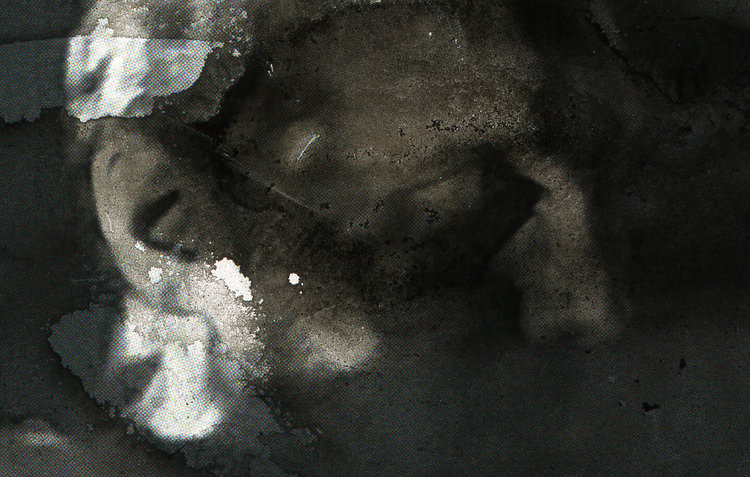
    Nadir 2
    30 minutes
    2:30PM, Mana Theater

    Matthias Brown
    Falling Faces
    13:40 minutes
    3:30PM, Mana BSMT

    Dan Tepfer
    Acoustic Informatics
    60 minutes
    4:30PM, Mana Theater

    Free admission with RSVP

    MANA
    888 Newark Ave.
    Jersey City, NJ 07306

    unnamed

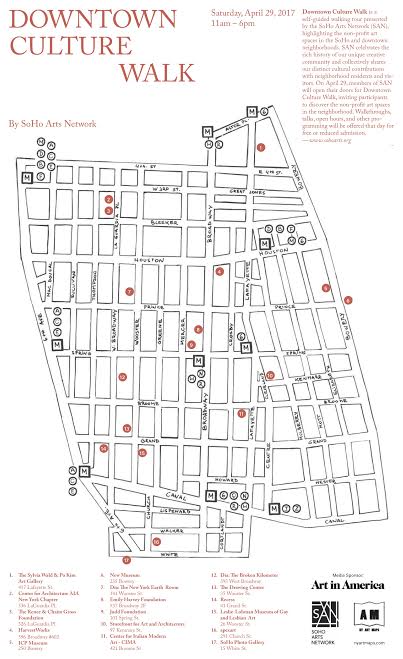
    Downtown Culture Walk is a self-guided walking tour presented by the SoHo Arts Network (SAN), highlighting the non-profit art spaces in the SoHo and downtown neighborhoods. SAN celebrates the rich history of our unique creative community and collectively shares our distinct cultural contributions with neighborhood residents and visitors. On Saturday  April 29, members of SAN will open their doors for Downtown Culture Walk, inviting participants to discover the non-profit art spaces in the neighborhood. Walkthroughs, talks, open hours, and other programming will be offered that day for free or reduced admission. Download map and schedule of programs at http://www.artinamericamagazine.com/san

    Date
    Saturday, April 29, 2017
     
    Time
    11:00am-6:00pm
    Website 
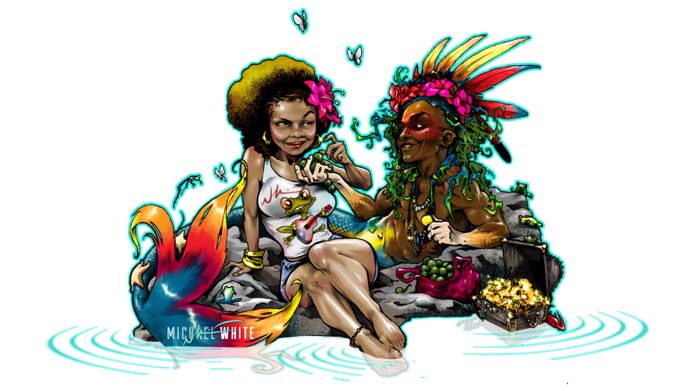
    Credit Michael White / Miguel Blanco

    Credit Michael White / Miguel Blanco. ©Bronx Museum of the Arts

    The Bronx Museum of the Arts welcomes the Black Speculative Arts Movement (BSAM) 2017 Convention, #BSAMFUTURISMO2017. BSAM is an annual Afrofuturism, black comics, film, and arts convention held throughout the United States and abroad. Read more >

    BSAM encompasses different positions or basis of inquiry: Afrofuturism, Astro Blackness, Afro-Surrealism, Ethno Gothic, Black Digital Humanities, Black (Afro-future female or African Centered) Science Fiction, The Black Fantastic, Magical Realism, and The Esoteric. BSAM conventions include live performances, seminars, classes, hands on workshops, a full international film festival via MECCAcon, plays, sales of comics, art, and artisan creators, and much more. Students are welcome to submit proposals to participate.

    Free Admission

    20 April – 17 June 2017, Hauser & Wirth New York, 69th Street

    Opening: Thursday 20 April 2017, 6 – 8 pm

    New York NY… On 20 April 2017, Hauser & Wirth will debut its Portable Art Project with an exhibition of wearable objects commissioned from fifteen artists – works that exist somewhere between sculpture and bodily adornment. Organized by Celia Forner, who collaborated closely with the artists, the Portable Art Project includes unique pieces as well as editioned series, crafted from an array of materials ranging from traditional gold and silver with precious and semi-precious gems, to enamel, aluminum, bronze, and iron. The initiative began with an invitation to Louise Bourgeois, who in 2008 conceived different spiral-like precious metal cuffs. In the years since Bourgeois designed these first contributions, the Portable Art Project has evolved to include John Baldessari, Phyllida Barlow, Stefan Brüggemann, Subodh Gupta, Mary Heilmann, Andy Hope 1930, Cristina Iglesias, Matthew Day Jackson, Bharti Kher, Nate Lowman, Paul McCarthy, Caro Niederer, Michele Oka Doner, and Pipilotti Rist.
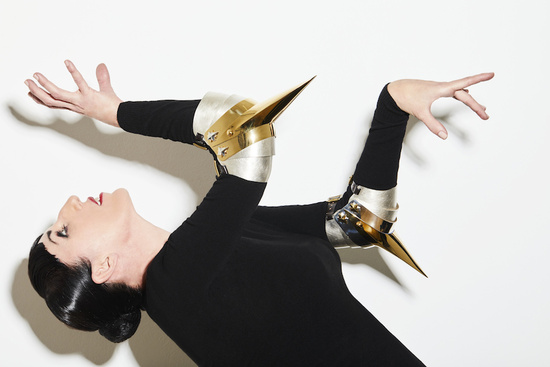
    John Baldessari, Crowd Arm (Gold on Silver), 2016 and Crowd Arm (Gold on Gold), 2016 Photograph by Gorka Postigo, modelled by Rossy de Palma © John Baldessari Courtesy the artist, Marian Goodman Gallery and Hauser & Wirth

    John Baldessari, Crowd Arm (Gold on Silver), 2016 and Crowd Arm (Gold on Gold), 2016
    Photograph by Gorka Postigo, modelled by Rossy de Palma
    © John Baldessari
    Courtesy the artist, Marian Goodman Gallery and Hauser & Wirth

    The artists’ pieces will be on view at Hauser & Wirth’s uptown space at 32 East 69th Street through 17 June 2017.

    Prior to the era of Modernism, boundaries remained firmly fixed between painting and sculpture, classified as ‘fine art’, and jewelry, which belonged strictly to the province of applied arts. By the turn of the 20th century, these boundaries began to blur. Such artists as Lucio Fontana, Georges Braque, and Pablo Picasso brought broader respect to jewelry as an art form via their experiments with wearable objects, while Surrealists Salvador Dali, Max Ernst, and Man Ray explored jewelry as a form of expression and self-assertion. American artist Alexander Calder was the first to make jewelry part of his ongoing practice, constructing wearable pieces that fit smoothly into his wider oeuvre. Forming jewelry as one-of-a-kind works developed by hand, the artist made these pieces not only as loving gifts but to advance his exploration of formal sculptural issues. He fashioned wearable objects with the dynamism of the human body in mind – small sculptures that were set in motion or defined in space by the geometries of the wearer’s body – and thus established a new threshold for the pursuit of jewelry as fine art. Over the course of his career, Calder created nearly 2,000 pieces of jewelry and inspired subsequent generations of artists to actively experiment with wearable sculpture.

    The Portable Art Project expands upon this history in the present with new works by 15 artists, using Louise Bourgeois’ uncanny cuffs as its starting point. Bourgeois’ bracelets are swirling coils of rose gold, yellow gold, and rhodium-plated silver. Intimate counterpoints to the artist’s familiar large-scale sculptures of coiled aluminum, often seen suspended and in seeming motion, these cuffs bond the wearer with Bourgeois through an intense and active embrace.

    The personal connection between artist and wearer is more explicit in Caro Niederer’s ‘Charm Bracelets’ (2009). Each consists of 7 charms that are in fact small framed photographs delicately imprinted on glass. Whereas traditional charm bracelets are beloved as three-dimensional records of a wearer’s own life, with each charm marking a biographical milestone, Niederer’s charms implicate the wearer in her life by depicting scenes of her home, studio, and travels.

    Alluding to the sense of play often associated with personal adornment, Pipilotti Rist’s large-scale, gestural lucent polycarbonate and computer wire squiggle necklaces, called ‘Jewellery for Wintertimes’ (2016), offer up surges of color intended to ‘awaken the body in a timeless spring.’ Color and gesture likewise define Mary Heilmann’s seven bold disk necklaces, each a veritable breastplate of hollow silver disks lacquered in vivid hues. For Heilmann, the body is a canvas onto which beautiful pools of paint are poured, making the wearer ‘visible from across the room.’ Phyllida Barlow’s grand electroformed and enameled knots also emphasize color, suggesting futuristic bows of recycled fabric that evoke the urban clamor and wit of her acclaimed large-scale sculptures.

    Whereas Rist, Heilmann, and Barlow offer up richly colored sculptural works that celebrate the properties of their inorganic materials, Michele Oka Doner’s pieces take on the monochrome atmosphere of an inky night punctuated only by stars. Her ‘Plankton’ bracelet (2016) and ‘Nekton’ neckpiece (2016), are comprised of diamond-encrusted, darkly patinated bronze that has been carefully twisted and tangled to resemble aquatic organisms that might cling to a wearer after a night swim. The artist often manipulates the metal of her finished wearable sculptures to fit a specific anatomy, merging work and wearer.

    Paul McCarthy’s slyly elegant silver, yellow gold, and rose gold butt plug pendants offer a winking commentary on our desire for expensive playthings in a world where minimalist sculptures may become culturally indistinguishable from sex toys. Similarly, New York artist Nate Lowman merges high and low in pendants of steel with brown and champagne diamonds, shaped like the cruciform lifting mechanisms of tow trucks. Both works of collaged detritus and tributes to history’s treasured relics, his pieces riff on the contemporary relevance of one of the oldest forms of unisex jewelry known: the crucifix. Pendants are also the chosen form of Subodh Gupta, whose contributions to the Portable Art Project echo the large-scale studio sculptures of India’s everyday kitchen implements that are signatures of the artist’s oeuvre. Gupta’s gold necklaces are the mouths of humble jars and urns from which sparkling emeralds and diamonds tumble.

    Known for dramatic architectonic works constructed from industrial materials, Cristina Iglesias has conceived jewelry that utilizes the human body as scaffolding for small sculptures. The Spanish artist’s contribution to the Portable Art Project comprises three unique aluminum pieces of ‘body armor’ that encircle the hip, shoulder, and wrist, respectively. John Baldessari’s elbow armor similarly addresses a particular portion of the anatomy with piercing yellow gold spikes protruding from overlapping silver plates. The blithe surrealism of this piece is echoed in the artist’s single nose earring; picture-less frame necklaces; and an enameled sterling flock of shoulder-perching birds with gleaming precious stone eyes.
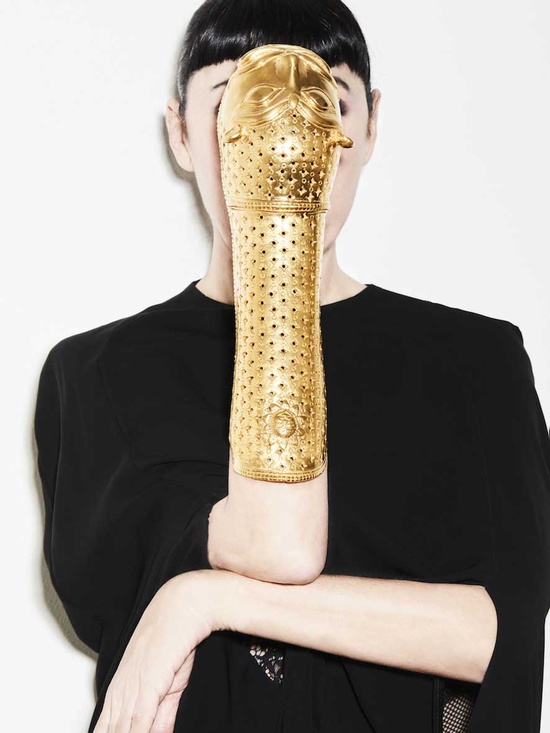
    Bharti Kher, Warrior Bracelet, 2017 Photograph by Gorka Postigo, modelled by Rossy de Palma © Bharti Kher Courtesy the artist and Hauser & Wirth

    Bharti Kher, Warrior Bracelet, 2017
    Photograph by Gorka Postigo, modelled by Rossy de Palma
    © Bharti Kher
    Courtesy the artist and Hauser & Wirth

    Bharti Kher’s lion-headed ‘Warrior Bracelet’ (2016) is intended to both physically and emotionally transform the wearer. It is jewelry as talisman and protector; and by virtue of requiring the wearer to hold it in place via a concealed handle, it harkens to elements of performance. Kher has described this highly adorned gold-plated work as an empowering accessory, ‘a skin the shaman carries… Wear it to work and keep it in your bedroom for when you need to call into being your warrior.’
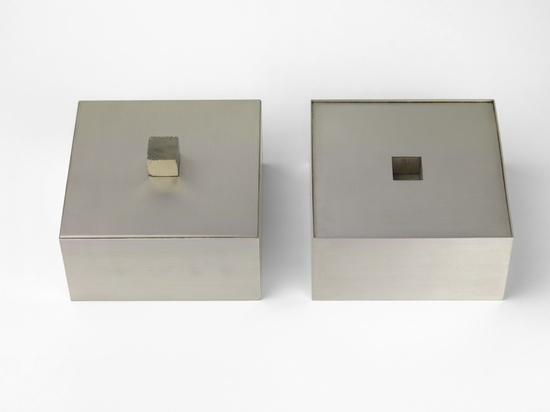
     Fool's Gold (Large) — Stefan Brüggemann, 2016 Cube: Pyrite Ring: Pyrite & 18kt yellow gold Cube: 15 x 15 x 15 cm / 5 7/8 x 5 7/8 x 5 7/8 in Ring: 4h x 2 x 2.3 cm / 1 5/8 x 3/4 x 7/8 in © Stefan Brüggemann Courtesy the artist and Hauser & Wirth Photo: Todd-White Art Photography


    Fool’s Gold (Large) — Stefan Brüggemann, 2016
    Cube: Pyrite
    Ring: Pyrite & 18kt yellow gold
    Cube: 15 x 15 x 15 cm / 5 7/8 x 5 7/8 x 5 7/8 in
    Ring: 4h x 2 x 2.3 cm / 1 5/8 x 3/4 x 7/8 in
    © Stefan Brüggemann
    Courtesy the artist and Hauser & Wirth
    Photo: Todd-White Art Photography

    Whereas many works in the Portable Art Project are conceived to be noticed, several participating artists have responded with rings that are the initiative’s smallest and most discreet objects. The title of Stefan Brüggemann’s ‘Fool’s Gold’ (2016) alludes to the material used to create his pyrite ring, which is housed in a simple futuristic cube of the same medium. The surface of the pyrite, a mined mineral, is mottled with natural imperfections that give Brüggeman’s pieces subtle variation. Andy Hope 1930’s classical gold rings are deliberately stripped of details and, consequently, rendered timeless and universal.
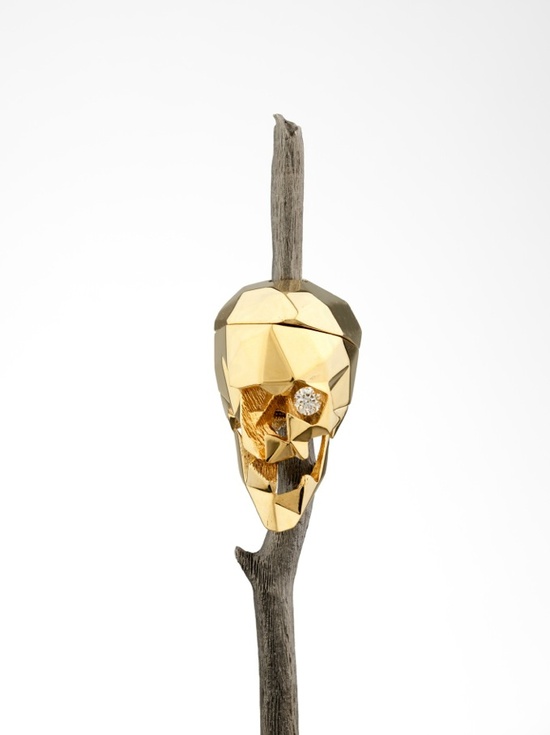
     Vanitas I (detail) — Matthew Day Jackson, 2013 Ring: Yellow gold, silver, diamond Rod: wood 47 x 16.5 x 21.6 cm / 18 1/2 x 6 1/2 x 8 1/2 in Scull and ring: 3 x 3 x 4 cm / 1 x 1 1/8 x 1 5/8 in Ring only: 2.5 x 2.8 x 4 cm / 1 x 1 1/8 x 1 5/8 in Scull piece only: 1.8 x 3 x 3.5 cm / 3/4 x 1 1/8 x 1 3/8 in © Matthew Day Jackson Courtesy the artist and Hauser & Wirth Photo: Todd-White Art Photography


    Vanitas I (detail) — Matthew Day Jackson, 2013
    Ring: Yellow gold, silver, diamond
    Rod: wood
    47 x 16.5 x 21.6 cm / 18 1/2 x 6 1/2 x 8 1/2 in
    Scull and ring: 3 x 3 x 4 cm / 1 x 1 1/8 x 1 5/8 in
    Ring only: 2.5 x 2.8 x 4 cm / 1 x 1 1/8 x 1 5/8 in
    Scull piece only: 1.8 x 3 x 3.5 cm / 3/4 x 1 1/8 x 1 3/8 in
    © Matthew Day Jackson
    Courtesy the artist and Hauser & Wirth
    Photo: Todd-White Art Photography

    By contrast, Matthew Day Jackson’s contributions stand apart for being compositional elements of larger sculptures. Mining the memento mori theme that has coursed through the intertwining histories of art and jewelry for centuries, Day Jackson has made two pieces centered around the skull as icon and adornment. The first is an electroformed, blackened silver skeleton wall sculpture that includes a removable ring. The gold skull piece consists of a wooden branch that rises 18’ from a stump carved with a beautiful forest scene. The top of the rod is encircled by a collage of gold forms fitted together, including an expressionistic skull ring with gleaming diamond eyes. In these works, Day Jackson posits the sculpture as a body in itself, with a work of jewelry adorning and serving as a clue to his intended meaning.

    Documentation
    The exhibition also includes a commissioned series of performative photographs of celebrated Spanish actress Rossy de Palma, best known for her starring roles in the films of Pedro Almodóvar. Shot by Gorka Postigo, these images capture de Palma engaging with each work as an extension of her body and a tool for expressing identity: a talismanic conductor of physical sensation and emotion. As artist Subodh Gupta has observed, ‘When someone is wearing an artwork, his or her own body and persona become the context for the work, so it can entirely change the meaning of a work. In some senses, a certain amount of control that one may have had over an artwork, as the artist, is lost; you have to hand that over to the person wearing the work.’

    The Portable Art Project exhibition will be documented in a fully illustrated catalogue.


    Courtesy of : © Hauser & Wirth New York

    Eugene Rodriguez is a San Francisco based artist whose paintings and films create a visual bridge between the past and present by illuminating untold and erased stories and setting them alongside exigent current events.

    Selected Artworks:

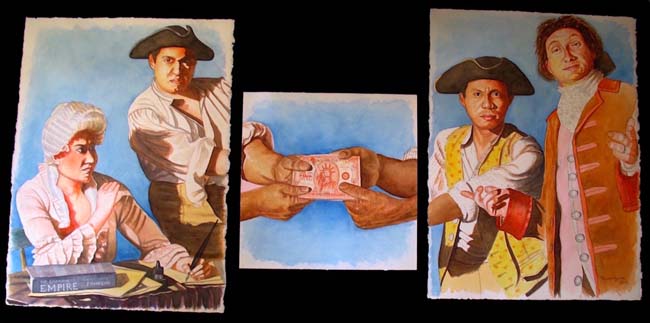
    Tug Of War, Triptych, 30” x 70”, watercolor on Arches paper, 2016

    Tug Of War, Triptych, 30” x 70”, watercolor on Arches paper, 2016

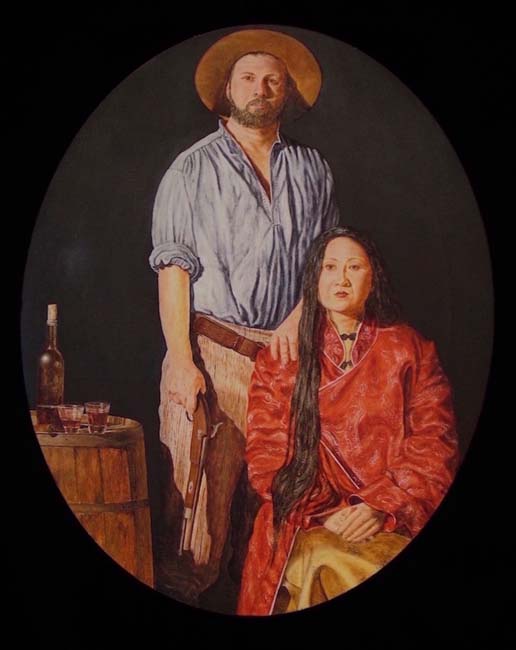
    Untold Gold #1 – Ah Toy and Henry Conrad, 18” x 20” Oval, oil and wax on canvas, 2015

    Untold Gold #1 – Ah Toy and Henry Conrad, 18” x 20” Oval, oil and wax on canvas, 2015

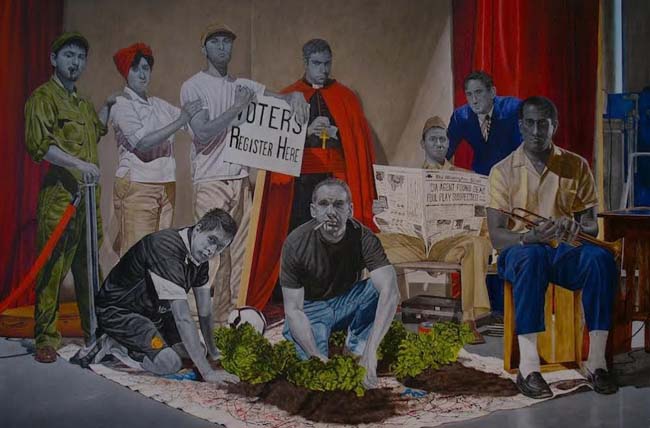
    The Great Society: A Work In Progress, oil and wax on linen on panel, 32” x 48” x 1.5”, 2014.

    The Great Society: A Work In Progress, oil and wax on linen on panel, 32” x 48” x 1.5”, 2014.

    Eugene_Rodriguez1

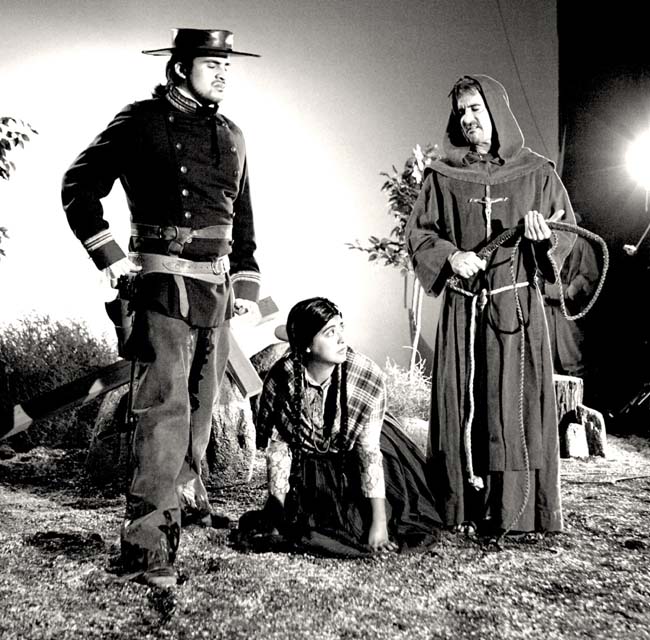
    Scene 3, Photo Still. Contesting Edén

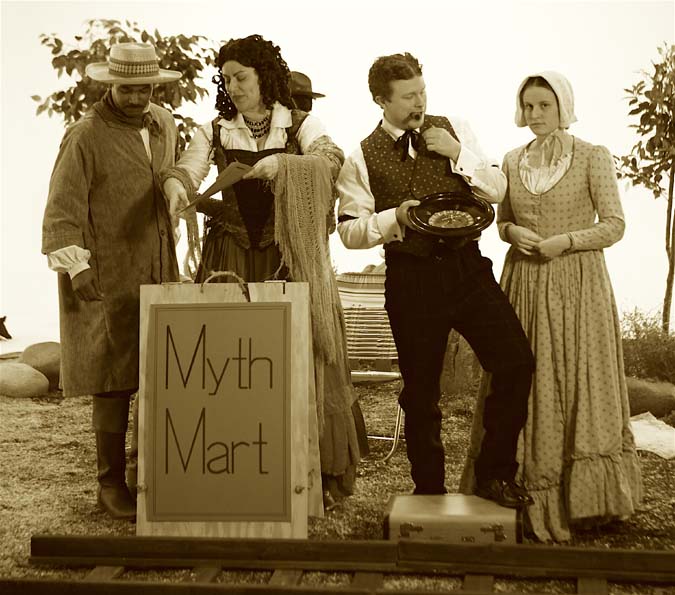
    Scene 1: Photo Still, RUSH (Myth Mart)

    Scene 1: Photo Still, RUSH (Myth Mart)

    Artist’s official website: www.eugenerodriguez.com

    Decades after giving up the dream for good, an art critic returns to the work he’d devoted his life to, then abandoned — but never really forgot.

    By

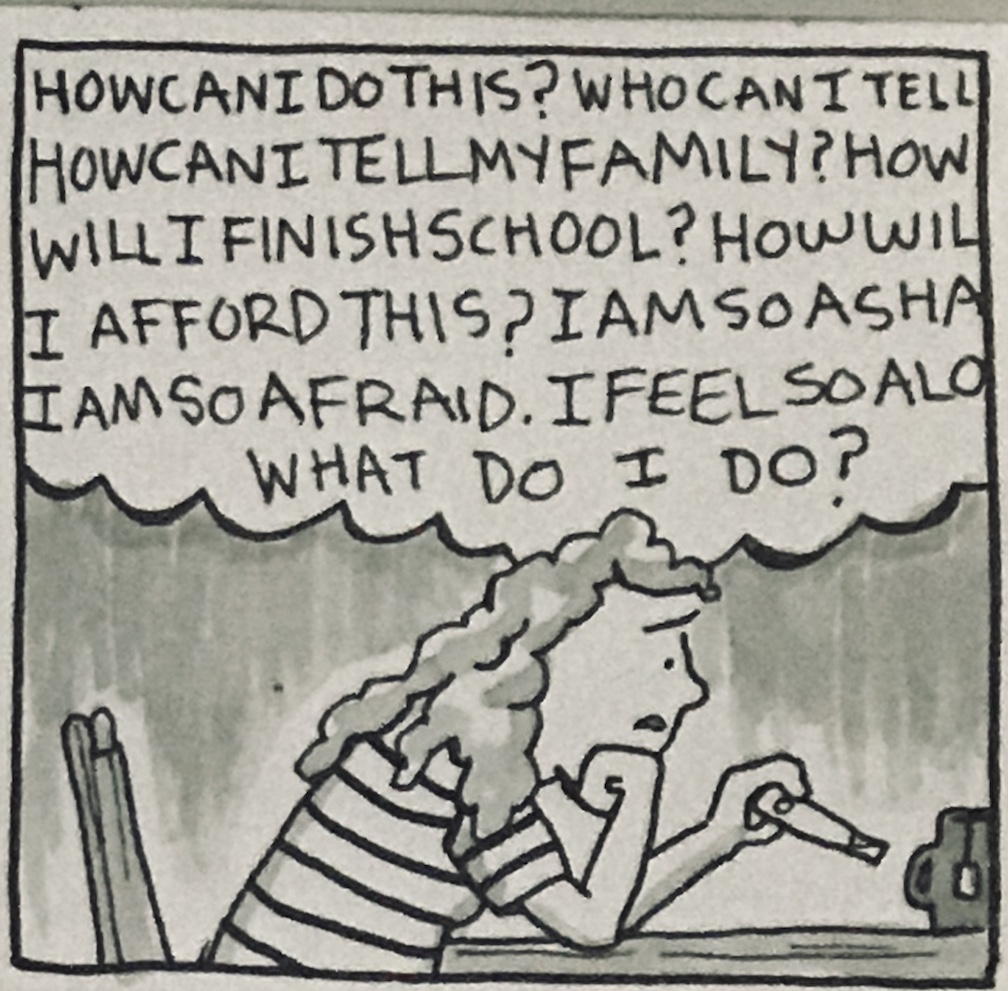
    It pains me to say it, but I am a failed artist. “Pains me” because nothing in my life has given me the boundless psychic bliss of making art for tens of hours at a stretch for a decade in my 20s and 30s, doing it every day and always thinking about it, looking for a voice to fit my own time, imagining scenarios of success and failure, feeling my imagined world and the external one merging in things that I was actually making. Now I live on the other side of the critical screen, and all that language beyond words, all that doctor-shamanism of color, structure, and the mysteries of beauty — is gone.

    I miss art terribly. I’ve never really talked about my work to anyone. In my writing, I’ve occasionally mentioned bygone times of once being an artist, usually laughingly. Whenever I think of that time, I feel stabs of regret. But once I quit, I quit; I never made art again and never even looked at the work I had made. Until last month, when my editors suggested that I write about my life as a young artist. I was terrified. Also, honestly, elated. No matter how long it’d been — no matter how long I’d come to think of myself fully as a critic, working through the same problems of expression from the other side — I admit I felt a deep-seated thrill hearing someone wanted to look at my work.
    Of course, I often think that everyone who isn’t making art is a failed artist, even those who never tried. I did try. More than try. I was an artist. Even sometimes a great one, I thought.

    I wasn’t totally deluded. I was a lazy smart-aleck who felt sorry for himself, resented anyone with money, and felt the world owed me a living. For a few years, I attended classes at the School of the Art Institute of Chicago, although I didn’t always pay tuition and got no degree. But I did meet artists there and saw that staying up late with each other is how artists learn everything — developing new languages and communing with one another.


    Read more

    baner_lodz_bez_logo-800x228-1

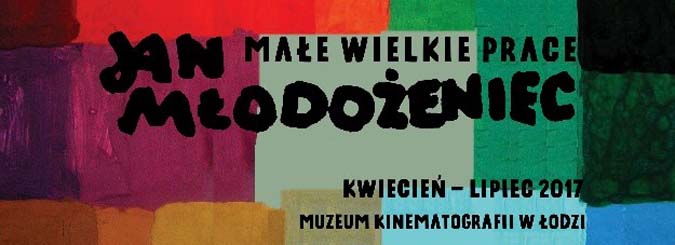
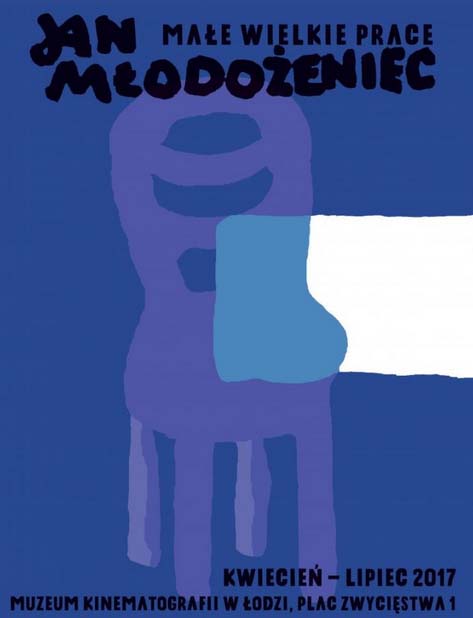
    On April 20, at 7 PM, within the celebrations of the Year of Avant-Garde, marking a centenary of avant-garde in Poland, together with the Foundation Editions Spotkania, we would like to invite you to the vernissage of exhibition titled „Jan Młodożeniec. Small, grand works”(Jan Młodożeniec. Małe wielkie prace).

    Jan Młodżeniec, a world-famous poster artist, is classed, next to Henryk Tomaszewki, Jan Lenica, Waldemar Świerzy and Roman Cieślewicz, as one of the “founding fathers” of the renowned Polish school of poster. His works are distinguished by their cheerful, oftentimes jocular atmosphere, warm colourway, excellent use of light and his very own stroke style. The exhibition, drawing from the private collection of the artist’s sons, a graphic designer, Piotr Młodożeniec, and a painter, Stanisław Młodożeniec, presents works on paper, gouaches illustrating everyday creative work of Jan Młodożeniec.

    The collection of the Film Museum contains more than 100 original posters of the extensive achievement of the artist. The oldest work dates back to 1952 and was created for film Utro nad Rodinata (Spieniony nurt) directed by Anton Marinovich. Works chosen from our collection by the son, Piotr, comprise part of the exhibition supplementing private “Small, grand works” with a section of Jan Młodożeniec work consisting in film poster design. They include signature and well-known posters for films such as: Once Upon a Time in America (Dawno temu w Ameryce) dir. Sergio Leone, The Conformist (Konformista) dir. Bernardo Bertolucci or Blue Velvet dir. David Lynch. There is also a poster from Piotr Szulkin’s film titled King Ubu (Ubu Król) which was used by the director in 2003, already after the designer’s death. Jan Młodożeniec was fascinated by the character of Alfred Jarry’s drama and in 1990s created a series of 40 portraits of the title King Ubu.
    Exhibition in the Film Museum, prepared under the Year of the Avant-Garde to mark a centenary of avant-garde in Poland, has also been enriched with innovative, futuristic poetry of Stanisław Młodożeniec, Jan’s father and grandfather of Piotr and Stanisław. In this way the background of artistic work by Jan Młodożeniec at our exhibition is the wing devoted to avant-garde poems by an artist of the earlier generation. The second exhibition wing presents the works for the next generation artists – Jan’s sons. The exhibition showcases two paintings by Stanisław, painted on the basis of photographs. One of them presents Stanisław’s grandfather with his friend Jarema, and the other one – Jan with his sons: Piotr and Stanisław. We will also present an animated film by Piotr inspired by his grandfather’s poem “Futurobnia”.

    “Jan Młodożeniec. Small, grand works” (Jan Młodożeniec. Małe wielkie prace).
    Exhibition Vernissage: 20 April at 7 PM
    Film Museum in Łódź
    Pl. Zwycięstwa 1

    Free entrance

    Untitled-1


    Learn More

    www.kinomuzeum.pl

    News | Exhibitions