
Installation view, rêvolutions, French Pavilion, Venice Biennale, 2015. Image: Le Figaro
Céleste Boursier-Mougenot
rêvolutions
French Pavilion – Giardini di Castello
May 9–November 22, 2015




Installation view, rêvolutions, French Pavilion, Venice Biennale, 2015. Image: Le Figaro

Charlotte Park, #25, oil on canvas, 37 x 46 inches
BERRY CAMPBELL is pleased to announce the exclusive representation of the estate of Charlotte Park (1918–2010), an artist whose important contribution to the Abstract Expressionist movement during its early years has recently been acknowledged. Writing in the New York Times, just before Park died in late 2010, Roberta Smith called Park “a natural painter and a gifted colorist,” whose “ascension into the ranks of widely known Abstract Expressionists” was probably too late for her to witness. Overshadowed by the attention given to the work of her husband, James Brooks, Park kept a low profile over the course of her career, while painting some the strongest and most brilliantly colored canvases of her time. Her art is a strong case against the idea prevalent from the 1950s onward that women were incapable of the muscularity and confidence necessary to be action painters. The representation of Park’s estate adds to Berry Campbell’s leading role as a showcase for the work of established and mid-career artists in the modernist tradition. Other estates and artists represented by the gallery include Edward Avedisian, Walter Darby Bannard, Stanley Boxer, Dan Christensen, Eric Dever, Perle Fine, John Goodyear, Balcomb Greene, Gertrude Greene, Ken Greenleaf, Raymond Hendler, Jodie Manasevit, Jill Nathanson, Stephen Pace, William Perehudoff, Ann Purcell, Syd Solomon, Albert Stadler, Susan Vecsey, James Walsh, and Joyce Weinstein.
View More Works by Charlotte Park
BERRY CAMPBELL
New York, NY 10011
The Botín Foundation presents Sol LeWitt. 17 Wall Drawings. 1970-2015
The exhibition space of the Botín Foundation in Santander will host the exhibition Sol LeWitt. 17 Wall Drawings. 1970-2015 from the 18th of July to the 10th of January 2016. Organized in collaboration with the Yale University Art Gallery and the Estate of Sol LeWitt, it is Spain’s most ambitious exhibition to date devoted entirely to Wall Drawings by one of the leading lights of 20th century art who is regarded as the father of Conceptual Art.
The exhibition –curated by John Hogan, Director of Installations and archivist of Wall Drawings at the Yale University Art Gallery who, since 1982, worked as a drawer for Sol LeWitt; and by Benjamin Weil, Artistic Director of the Botín Centre– will offer visitors a unique view of the stylistic and conceptual development of wall drawing in the artist’s oeuvre.
Sixteen of the Wall Drawings from the selection on display in the exhibition, executed between 1970 y 2015, have never been shown before in Spain –only the seventeenth drawing was previously shown in Spain in 1989– and most of them have never been shown again since they were first made more than twenty years ago. In addition, Wall Drawing 7A will be executed for the first time in the Botín Foundation’s exhibition space.
Sol LeWitt. 17 Wall Drawings. 1970-2015 revolves around one of LeWitt’s basic theoretical principles which has since then become widespread in the practice of contemporary visual art, namely, the supremacy of the idea and of the creative process over the work of art proper. As the artist himself pointed out: “the idea is the machine that makes the work of art”.
Additionally, the collection of Wall Drawings on show in Santander reflects the extraordinary consistency of LeWitt’s systematic explorations and the notable diversity and evolution of his artistic praxis, both from a stylistic point of view (from his simple geometric figures to “continuous” and “complex” forms) and in terms of the variety of media used (graphite, colour pencils, India ink and acrylic paint).
Apart from the works on view in the exhibition space, visitors will be able to view Wall Drawing #499 (Flat-topped pyramid with color ink washes superimposed, 1986, originally installed in the conference hall of the Botín Foundation in Santander in 1992, which is to be re-installed for this exhibition.
Sol LeWitt devoted a substantial part of his career to producing books, publications, prints and other multiples. The Archivo Lafuente, a key international documentary collection specializing in 20th century art, has collaborated to complement the exhibition with a selection of artist books that will help visitors contextualize Sol LeWitt’s Wall Drawings with the rest of his oeuvre. Lastly, a relevant collection of documents related to the artist and his work will be on display in the exhibition.
The show will be accompanied by an exhibition catalogue collecting some of Sol LeWitt’s writings, alongside several texts by experts and personal recollections by contributing artists. The exhibition’s curator Benjamin Weil has made the selection, which explores the artist’s development and oeuvre.
Sol LeWitt. 17 Wall Drawings. 1970-2015 reaffirms the Botín Foundation’s ongoing commitment to research into the genre of drawing (which up to this point has focussed on Spanish artists) and it directs the spotlight back onto an exploration of the creative process, which is a key aspect of the institution’s training programme that includes the Visual Arts Grants and the Villa Iris Workshops, given by international artists.
Sol LeWitt was a key player in the establishment of Conceptual Art, a movement that has made a deep and lasting mark on contemporary artistic praxis. At the beginning of the 1960’s, artists distanced themselves from the predominant Abstract Expressionism and conferred equal, or even greater importance, to the creative process leading to the work of art than the resultant work of art itself, thus separating the concept or idea from its execution.
In the year 1967, LeWitt published an article in Artforum titled Paragraphs on Conceptual Art that has come to be regarded as a genuine manifesto of Conceptual Art. In it he stated: “All intervening steps, scribbles, sketches, drawings, failed work models, studies thoughts, conversations, are of interest. Those that show the thought process of the artist are sometimes more interesting than the final product”.
In 1971 added: “If the artist carries through his idea and makes it into visible form, then all the steps in the process are of importance. The idea itself, even if not made visual, is as much a work of art as any finished product”.
The Wall Drawings
Sol LeWitt created more than 1,200 Wall Drawings from 1968 to 2007. He made the first of them in 1968 at the Paula Cooper Gallery in New York, as part of an exhibition to raise funds for student committees mobilized against the Vietnam War.
Drawing on the wall and intervening materially, conceptually and directly with the exhibition space, the artist disintermediated the art object. His gesture involved an ephemeral materialization of the work of art, which could be erased and recreated in another space by someone else, thus freeing the work from its pedestal and from its condition as a unique object.
In order to execute these Wall Drawings, LeWitt developed a singular work method based on simple logical or mathematical instructions that anyone could be carry out. Despite occasionally realizing some of the drawings himself, most of them were carried out by artists or students. In Santander, the 17 Wall
Drawings will be executed by a team of drawers, who formerly worked with LeWitt, aided by young artists and art students.
The techniques and stylistic elements of the Wall Drawings evolved as time passed. While the early ones were made in black pencil and, subsequently, in colour pencils, at the beginning of the 1980’s LeWitt began to employ ink washes, which conferred the pieces a quality similar to fresco painting. From 1997 he introduced acrylic paint, creating broad fields of intense, vivid colours.
From the beginning of his artistic voyage, the concept of serialism (the repetition and combination of elements), which the artist developed in his Wall Drawings, represented the bedrock of his work. From 1969 to 1970, LeWitt produced four series of drawings on paper (Drawing Series I, II, III & IV), based on what he described as his “coat of arms”: a square containing a set of four squares, each of which featured one of the four basic types of lines used by LeWitt: vertical, horizontal, diagonal upward and diagonal downward. The first series (Drawing Series I) consists of twenty-four different combinations of this same structure, while the following three series (Drawing Series II, III, and IV) result from possible permutations of the first.
The artist reduces the colour range used in the Wall Drawings to four prime colours: grey, red, yellow and blue, which correspond to the four basic types of lines. By superimposing these colours, LeWitt creates an unlimited variety of new tones. Over time the relatively austere combinations of curved and straight lines of his first works led gradually to increasingly irregular and dynamic models and forms.
About the artist
After obtaining a bachelor’s degree in Fine Arts in 1949 at Syracuse University, Sol LeWitt (Connecticut, 1928 – New York, 2007) served in the United States army in the Korean War. In 1959 he moved to New York where he studied at a school of illustrators and worked in the publishing sector until 1956, the year in which he joined the architecture studio of I. M. Pei in New York as a graphic designer. This contact with architects was an important constituent in the development of his thinking about art making. In the same manner that architects conceive of buildings without needing to actually build them, Sol LeWitt believed that artists could create “the idea or the concept” and detach themselves from its execution.
In 1960 he took a job at the bookshop of the MoMA alongside the art critic Lucy Lippard. Subsequently, he joined the security team of the New York museum, where his co-workers included artists such as Robert Ryman, Dan Flavin and Robert Mangold.
During this decisive stage of his artistic career, Sol LeWitt took part in a number of seminal group exhibitions such as Primary Structures at the Jewish Museum in New York in 1966, which signalled the start of so-called Minimalist Art. In 1967 he published Paragraphs on Conceptual Art and in 1968 he took part in Documenta IV in Kassel. In 1969 he was included in the exhibition When Attitude Becomes Form, curated by Harald Szeeman at the Kunsthalle in Bern, and that same year he published Sentences on Conceptual Art in the American art magazine Artforum.
The Stedelijk van Abbemuseum in Amsterdam hosted a complete retrospective of his Wall Drawings in 1984 and published a full inventory of all the ones that had been made. In 2006, under the initiative of
the Director of the Yale University Art Gallery, the Massachusetts Museum of Contemporary Art (MASS MoCA) and the Williams College Museum of Art invited Sol LeWitt to work on a retrospective exhibition. The artist selected the works to be presented and chose their location, but he died before the opening, in 2008, at the age of 78. This monumental exhibition will remain open until at the Mass MoCA until 2033.
LeWitt’s work is to be found in the most important museum collections worldwide, including: Museo Nacional Centro de Arte Reina Sofia in Madrid, MACBA in Barcelona, Tate Modern in London, Stedelijk van Abbemuseum in Amsterdam, Centre Pompidou in Paris, Guggenheim Museum, Whitney Museum of American Art, Museum of Modern Art (MOMA) and Dia Art Foundation in New York; as well as National Gallery of Art in Washington, DC., and San Francisco Museum of Modern Art (SFMOMA).
A walk through the exhibition (17 Wall Drawings)
Wall Drawing 821A (March 2007)
Sol LeWitt first executed this wall drawing in acrylic paint, Wall Drawing 821, in 1997 using the original template of four squares, each with lines going in different directions. Unlike #821, which was black, #821A was executed in white paint on a white wall, thus subtly creating an almost spectral presence in the space. The symbolic power of this piece is remarkable, especially as it is one of the last Wall Drawings to have been made by the artist before his death. Due to its close relationship with the essence of Sol Le Witt’s work, #821A has been chosen to mark the exhibition’s entrance and exit.
Wall Drawing 7A (July 2015)
This wall drawing, which will be installed for the first time in Santander, is a variation of Wall Drawing 7, whose inaugural execution took place in 1969, though on this occasion the media used will be colour pencils. This series, based on LeWitt’s original “coat of arms”, is a variation made by juxtaposing two, three and four types of line to create a variety of colour combinations. This superimposition of layers was also the point of departure for his ink drawings. It is at the same time the oldest and the newest piece in the exhibition. Despite the fact the artist championed the notion that the work of art already exists before its materialization, he also underlined the importance of its execution by dating the work at the time of its first installation – a way of acknowledging the work done by the artists who actually produced it.
Wall Drawing 118 (December 1971)
This is one of the first drawings to reflect the concept of randomness, an ingredient that played a significant role in the creation of Sol LeWitt’s Wall Drawings. On this occasion, the instructions provided by the artist purposefully allow room for interpretation by the person in charge of drawing the piece, granting them freedom for their own rendering and execution. Here it is the location of points on the walls of the room that decides the structure of the drawing.
Wall Drawing 413 (March 1984)
At the beginning of 1980, Sol LeWitt began to employ coloured ink washes applied to the walls using soft rags, thus conferring them a fresco-like appearance. To arrive at this series, the artist used the cross reverse method by which the elements of each of the original templates, consisting of four primary colours: grey, yellow, red and blue, are crossed and reversed. The result of these permutations is a grid of twenty-four sets, which in turn contain four squares divided into four equal parts. The colourful and irregular patterns produced by these combinations are clearly noticeable.

Sol LeWitt. Wall Drawing 413
Color ink wash. First installation: Moderna Museet, Stockholm.
First drawn by: David Higginbotham, Jo Watanabe. March 1984.
Courtesy of the Estate of Sol LeWitt. Photo credit: MassMoCA. Kennetfick.
Wall Drawing 237 (June 1974)
This drawing represents one of the six basic figures of LeWitt’s vocabulary, the trapezoid, created using halfway points, corners and the centre of the wall. In autumn 1973, Sol LeWitt commenced work on a series of location drawings, which reproduced his instructions for making the piece written by hand on the wall as an integral part of the drawing. The writing appears as a carefully reproduced text which reveals an intrinsic poetic quality. This demonstrates that the instructions provided by the artist are precise, limiting any possibility for interpretation by the drawer.
Wall Drawing 614 (July 1989)
Grids, together with other primary geometric structures (Squares, Circles, Triangles), are an essential part of Sol LeWitt’s artistic language and the conceptual hallmark of his work. In this wall painting the person who draws it is free to interpret its execution. The only instructions provided by the artist are: “Rectangles formed by 3-inch (8 cm) wide India ink bands, meeting at right angles”.

Sol LeWitt. Wall Drawing 614
India ink. First drawn by: David Higginbotham, Liam Longman, Philip Riley, Jim Rogers, Elizabeth Sacre.
First installation: Lisson Gallery, London. July 1989.
Yale University Art Gallery / Gift of the artist.
Wall Drawing 620E (October 1989)
Isometric figures emerge for the first time in the artist’s Wall Drawings in 1981 (Wall Drawing 350), as a logical prolongation of Sol LeWitt’s work with trapezoids and more complex geometric forms. In order to depict three-dimensional forms, instead of drawing them using linear perspective, LeWitt introduces isometric projection, a technique in which all the angles are equal, suggesting volume but not the illusion of depth. Wall Drawing 620E belongs to a private collection and this is the first time it can be viewed in a public space.
Wall Drawing 51 (June 1970)
This drawing is the first, and one of the few of its series, to contain references in its structure to the architectonic space in which it is installed, focussing the viewer’s attention on the space in which it is located. The instructions given by the artist show that “All architectural points” (corners, doors, windows and the wall itself) should be connected to one another by hundreds of “straight lines”. This piece is also the only wall drawing to demonstrate a complex network of marks made using blue chalk, a very apt material if we take into account the conceptual nature of this work.
Wall Drawing 46 (May 1970)
Executed for the first time a few days before the premature death, at the age of 34, of the sculptor Eva Hesse, this drawing may be regarded as Sol LeWitt’s homage to his close friend. The piece marks the beginning of a new stage in his work, which would be a crucial addition to his vocabulary as it introduced irregular pencil lines for the first time as a way of paying tribute to the distinctive organic contours of Hesse’s work. The relevance of this work is indicated by the fact that from this moment onwards until his death, LeWitt would include it in nearly all of his major exhibitions.
Wall Drawing 869C (1998)
Randomness is conferred a new facet in this drawing, devised to be executed by several people who must repeat, as faithfully as possible, the first line drawn by the original drawer. It is thought that to make the drawing of the first piece of this series the artist was inspired by his observation of a mountain range.
Wall Drawing 280 (January 1976)
This work is one of the first in which Sol LeWitt paints a background colour – on this occasion an intense yellow background. He superimposes blue lines emerging from the four corners onto the grid, red lines run from the halfway point of the four sides and white lines from the centre of the drawing to various points. The work was originally executed in 1976 by a team of artists consisting of Diane Bertolo, Linda Brooks, Charles Clough, Pierce Kamke, Robert Longo, Kevin Noble, Cindy Sherman and Michael Zwack.

ol LeWitt. Wall Drawing 280
Red, blue and white crayon, black pencil grid, yellow wall. First drawn by: C. Clough and others. First installation: Hallwalls, Buffalo, New York. January 1976. Collection of Doris and Donald Fisher, San Francisco, CA. Photographer Ian Reeves.
Wall Drawing 386 (January 1983)
This wall drawing consists of a progression of geometric forms or stars (frequently employed by Sol LeWitt in his work) made in ink. There is an almost kinetic quality to this serial variation. It is a linear progression in which, as the drawing proceeds, we can observe each star increase its number of vertices. The piece is a prolongation of the artist’s fascination for forms, sequences, patterns and solutions to geometric problems.
Wall Drawing 110 (September 1971)
This is one of the first drawings to include arcs (the first was executed in July 1971). The structure is reminiscent of gothic architecture and rose windows.

Sol LeWitt. Wall Drawing 386
India ink washes . Environmental dimensions. First drawn by: Julie Jarvis, Renee Milliken, Anthony Sansotta.
First installation: Carol Taylor Art, Dallas, Texas. January 1983.
Courtesy of the Estate of Sol LeWitt.
Photo credit: Phogo by Alessandro Zambianchi. Courtesy Massimo De Carlo, Milan/Londres.
Wall Drawing 154 (April 1973); Wall Drawing 157 (April, 1973), Wall Drawing 208 (October-November 1973) and Wall Drawing 213 (September 1973)
Wall Drawing 154 is part of a series of works that allow us to explore the artist’s creative process. Like Wall Drawing 157, this piece analyses the position of a line inside a square, displaying the importance of permutation in LeWitt’s oeuvre. In his instructions the artist specifies the size of the square and the correct position of the line, but he does not designate the length of the line leaving this up to the person responsible for executing the drawing.
LeWitt applied the same concept to a subsequent series that included both Wall Drawing 208 (October-November 1973) and Wall Drawing 213 (September 1973), on display in this exhibition, but the geometrical construct within the square is more clearly related to the border line, and creates a dynamic that is maybe less evident in the earlier series.
RELATED ACTIVITIES
On the 30th of July, at 20:00: Musical Visit to the Exhibition
The Drumming Percussion Group will perform a selection of compositions by the American composer Steve Reich, whose work is related to Sol LeWitt’s visual explorations.

Installation view, 2013-2015 Queens Museum Studio Program Exhibition. From left: on wall, Caitlin Keogh; on floor, Galeria Perdida; far end of gallery, Juan Betancurth. Photo by Hai Zhang.
After Midnight: Indian Modernism to Contemporary India, 1947/1997
On view March 8 to June 28, 2015
The era following India’s 1947 independence was marked by the emergence of Indian modern art led by the Progressive Artists’ Group and their extended friends. A half-century later, the year 1997 signaled the beginning of a new phase with a sudden visibility gained by Indian artists in a newly globalized contemporary art world. After Midnight: Indian Modernism to Contemporary India, 1947/1997presents the juxtaposition of these two historical periods in Indian art for the first time, examining the modernists from 1947 through the 1970s, and the contemporary from 1997 to the present. Shifting zeitgeists in India’s cultural production are explored, and how these artistic practices regard and contest a geo-political consciousness of the nation through the veins of modernization and globalization are revealed. Curated by Dr. Arshiya Lokhandwala.
2013-2015 Queens Museum Studio Program Exhibition
On view March 22 to June 28, 2015
Marking the second year of its Studio Program, the Queens Museum presents an exhibition featuring the works of twelve artists, who, working singly and in partnerships, have occupied studios at the Queens Museum during 2013-2014 and 2014-2015. Artists include Nobutaka Aozaki, Juan Betancurth, Onyedika Chuke, Mike Kenney, Caitlin Keogh, galería perdida, Jewyo Rhii, Bunny Rogers & Filip Olszewski, Caroline Woolard & Lika Volkova, and Brian Zegeer. Participating Social Practice Queens artists include Sol Aramendi, Seth Aylmer, Scott Braun, Barrie Cline, Gina Minielli, Nicky Mourino, and Francisco Karmelic.
Behind the Curtain: Collecting the New York Fairs
On view through Oct 18, 2015
Over a fourteen month period, Behind the Curtain: Collecting the New York Fairs will reveal little known artifacts and souvenirs drawn from national and regional private collections, as well as the museum’s own.
Designing Eye Exposition Posters from 1893–2000
On view through Oct 18, 2015
On loan from the collection of Erik & Betsy Gordon to celebrate the anniversaries of the New York World’s Fairs, this exhibition features twenty-two rare exposition posters from a period of over one hundred years and spanning several continents

SOLD ART est une galerie d’art urbain en ligne qui propose à la vente des œuvres d’artistes internationaux reconnus issus du Street Art.
https://www.facebook.com/soldart/videos/761944467256822/
http://www.soldart.com/
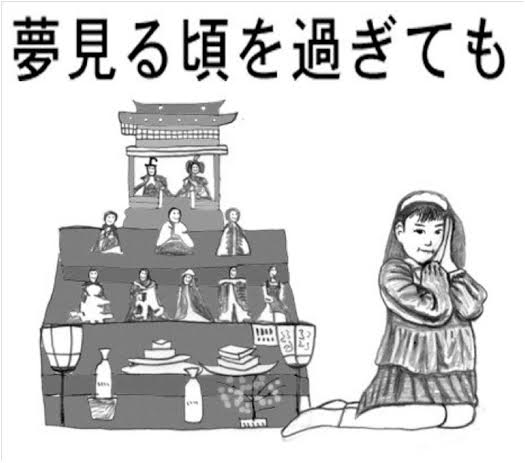
March 3 is Doll’s festival. Girl’s festival.
– Cartoons by Tetsuro Susumu, Japan

The Rubin Museum of Art has deep institutional and personal connections with Nepal, its people, traditions, and material culture. The Museum’s collection of art, for example, includes almost 600 works of Nepalese origin. As devastating news and photographs continue to emerge from the region, the world is shocked at the effects of the earthquake.
The Rubin Museum’s mission is rooted in forging sustained connections, through art and ideas, to the Himalayan region. In that spirit, we extend our hearts and minds as Nepalese, and millions of others across the globe, confront the loss of life, injuries, and devastation to the built environment of the region.
Many of you are looking for ways to help and connect with the affected communities in the region. We have created this page as a resource: learn how you can support, engage with the Nepalese art and cultural heritage from our collection, and check back frequently for updates on special programs and activities at the Rubin.
In the aftermath of the earthquake, many of you are asking: “How can I help?”
Here is a list of vetted organizations on the ground looking for financial support.
http://rubinmuseum.org/page/nepal-quake-relief
150 West 17th St.
New York, NY 10011
(212) 620-5000

Andy Warhol Ten Portraits of Jews of the 20th Century exhibition., Museum of Contemporary Art in Krakow (MOCAK), photo: Rafał Sosin
At the exhibition we show the eponymous series that portrays the most prominent 20th-century personalities of Jewish extraction. Amongst them are academics, politicians and figures related to the world of culture such as Albert Einstein, Sigmund Freud, Golda Meir, Gertrude Stein and Franz Kafka. Andy Warhol – a leading figure of pop art – was keen on reproducing the facing of the people around him and on experimenting with his own portrait. One of such self-portraits also appears in the exhibition, as a visual commentary on the main section that features in the title of the exhibition. In his portraits, the artist usually employed the technique of silk-screen printing, which allowed him to reproduce a composition repeatedly, also modifying the colour.
MOCAK
Museum of Contemporary Art
in Krakow
ul. Lipowa 4
30-702 Krakow, Poland

Hwang Kyu-Baik, Window , 1984
Hwang Kyu-Baik: seen and unseen is the first print exhibition of the MMCA Korea’s Korean Contemporary Artists Series inaugurated to approach the history of contemporary Korean art from a multilateral perspective. Hwang Kyu-Baik(1932- ) was born in Busan in 1932 and moved to France in 1968. After his settlement in 1970 in New York, the heartland of contemporary art, he started to commit himself to the mastering of mezzotint techniques, one of intaglio printmaking processes. By internalizing and modernizing the traditional medium of mezzotint Hwang succeeded in shaping his own unique style. His fine mezzotints of refined composure and lyricism have been awarded prizes at various international print exhibitions since the mid 1970s: the International Biennal of Graphic Art, Ljubljana(1979, 1981), the British International Print Biennale, Bradford(1974), and the Florence Print Biennale(1974). This has led to the acquisition of his works by major museums throughout the world for their collections including the Museum of Modern Art, New York, Musée d’Art Moderne de la Ville de Paris, the British Museum, the Victoria & Albert Museum, and the Albertina. He was also commissioned to make the poster for the 1984 Winter Olympics in Sarajevo that made him the world-acclaimed artist. As the artist’s first solo show held in Korean Art Museum, a retrospective of his six decades career, one can appreciate the quintessence of the oeuvre of Hwang who had long ago accomplished his unrivaled status as a printmaker abroad.
The exhibition is largely divided into three parts – the first part is his early print works made in Paris after his arrival at France in 1968 and the reenactment of his printmaking studio; the second part showcases his mezzotints produced in New York from the 1970s to the 1990s; the last part consists of his paintings created since his return to Korea in 2000 until recent years.

Photograph by Marco Scozzaro. Courtesy of Marco Scozzaro/Frieze.
Frieze New York will return to Randall’s Island Park, Manhattan from May 14 to 17, 2015. For the fourth consecutive year, Frieze New York is sponsored by Deutsche Bank.
Housed within an innovative structural design and overlooking the East River, the fair will showcase the world’s most exciting contemporary galleries. This year sees the introduction of Spotlight, a new gallery section which will take place alongside the existing Frame and Focus sections. The fair also benefits from a celebrated non-profit program comprising Frieze Projects, Talks, Sounds and Education.
The World’s Leading Contemporary Art Galleries
The fourth edition of Frieze New York will bring together over 190 of the world’s leading contemporary galleries. With a particularly strong showing of local galleries this year, those new to Frieze New York include: Acquavella (New York); Blum & Poe (New York/Los Angeles), Clearing (New York/Brussels), JTT (New York), Matthew Marks Gallery (New York); McKee Gallery (New York); Pace (New York) and Skarstedt (New York).
Solo and special presentations that promise to be focal points in the fair include: Philippe Parreno (Pilar Corrias, London); T.J. Wilcox (Gladstone Gallery, New York); Giuseppe Penone (Marian Goodman, New York); Lesley Vance (David Kordansky, Los Angeles); Richard Tuttle (Pace, New York); and Canan (Rampa, Istanbul); two-artist presentations by Marilyn Minter and Laurie Simmons (Salon 94, New York) and John McCracken and Franz West (David Zwirner, New York); and a new installation by Iran do Espírito Santo (Fortes Vilaca, São Paulo).
Spotlight, Frame and Focus
The 2015 fair introduces Spotlight, a new section for solo presentations of 20th-century art which has been a critically acclaimed feature at Frieze Masters in London. Advised by curator Adriano Pedrosa, Spotlight explores unexpected positions from established artists and presents new research into art from emerging territories, as well as significant work from overlooked artists. Rasheed Araeen (Aicon Gallery, New York), Lynn Hershman Leeson (Gallery Paule Anglim, San Francisco & Waldburger Wouters, Brussels), Howardena Pindell (Garth Greenan Gallery, New York), Carolee Schneemann (Hales, London) and Ibrahim El-Salahi (Vigo, London) are all included in the first New York edition of Spotlight.
Solo presentations by young galleries under eight years old, Frame features the most exciting emerging galleries from around the world. Additions to this year’s list include Antenna Space (Shanghai) showing Liu Ding; Freedman Fitzpatrick (Los Angeles) with Mathis Altmann; Mathew Gallery (Berlin) showing Than Hussein Clark; and Supplement (London) with Philomene Pirecki. Frame is advised by curators Raphael Gygax and Jacob Proctor.
A section for galleries founded after 2003, Focus brings curated projects specially conceived for Frieze NewYork and includes the most forward-thinking galleries working today. A number of these galleries have previously been exhibitors in the Frame section of the fair, including Bureau (New York); Carlos/Ishikawa (London); and Real Fine Arts (New York), which further underlines the fair’s commitment to fostering a community of galleries throughout all stages of development. Galleries participating in Focus that are new to Frieze New York include: Chi-Wen Gallery (Taipei); Foxy Production (New York); Frutta (Rome); Hunt Kastner (Prague); Instituto De Visión (Bogotá), Silberkuppe (Berlin) and Travesia Cuatro (Guadalajara/Madrid).












