• “I paint flowers so they will not die.
    I hope the leaving is joyful; and I hope never to return.
    Feet, what do I need you for when I have wings to fly?
    I paint self-portraits because I am so often alone, because I am the person I know best.
    I never paint dreams or nightmares. I paint my own reality.
    Painting completed my life.
    I leave you my portrait so that you will have my presence all the days and nights that I am away from you.” – Frida Kahlo

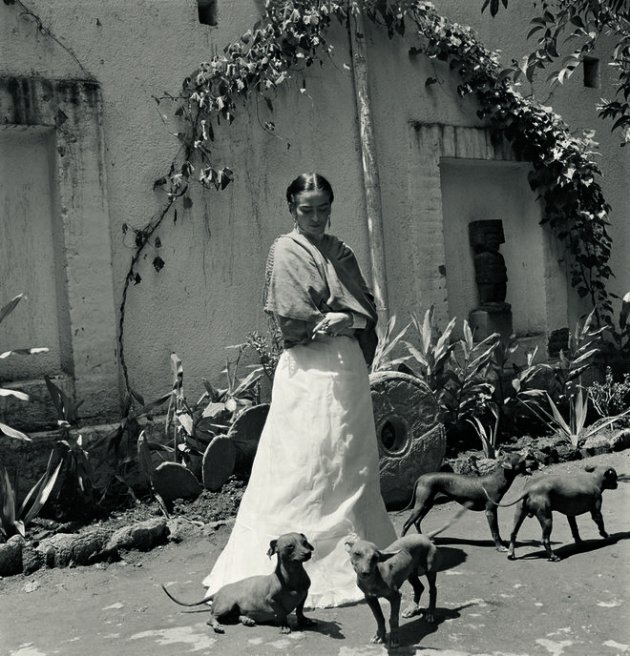
    Frida Kahlo with her dogs in Coyoacán, Mexico City, 1951—Photo: © Gisèle Freund / IMEC / Fonds MCC

    Frida Kahlo with her dogs in Coyoacán, Mexico City, 1951—Photo: © Gisèle Freund / IMEC / Fonds MCC

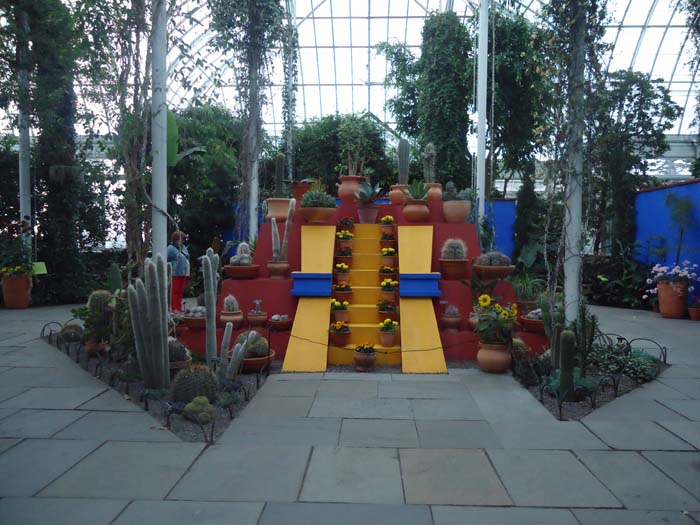
    Walking through the Enid A. Haupt Conservatory at the New York Botanical Garden, the visitors will appreciate a variety of exotic plants and the blue courtyard walls — a marvelous spectacle re-creating Kahlo’s studio and garden at Casa Azul (“Blue House”) in Coyoacán, Mexico City. The artist’s childhood home outside of Mexico City where she resided in her later years, which overlooked the garden – artist’s organic world.

    The blue walls of Frida Kahlo's "Casa Azul," a scene at "Frida Kahlo: Art, Garden, Life," at The New York Botanical Garden.Photo: NY Arts/J.Gora

    The blue walls of Frida Kahlo’s “Casa Azul,” a scene at “Frida Kahlo: Art, Garden, Life,” at The New York Botanical Garden. Photo: NY Arts/J.Gora

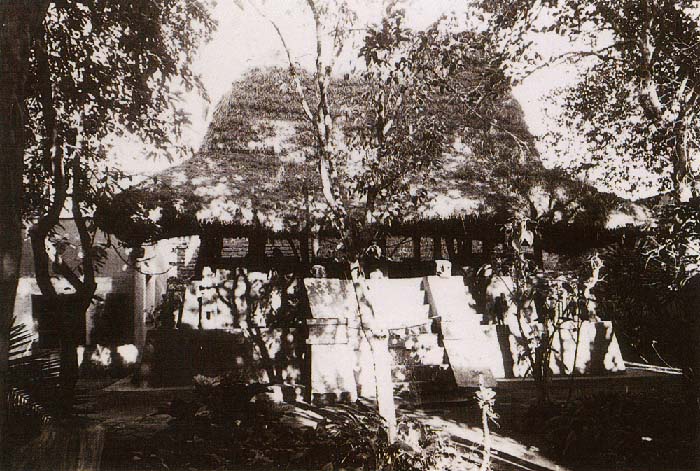
    Pyramid constructed by Diego in the garden at the Casa Azul

    Original pyramid constructed by Diego in the garden at the Casa Azul.

    A re-creating of Frieda Khalo's studio overlooking the garden at "Frida Kahlo: Art, Garden, Life" exhibit at The New York Botanical Garden. Photo: NY Arts/J. Gora

    A re-creating of Frieda Khalo’s studio overlooking the garden at “Frida Kahlo: Art, Garden, Life” exhibit at The New York Botanical Garden. Photo: NY Arts/J. Gora

    Nickolas Muray, Frida with Nick in her studio, Coyoacan (1941).

    Nickolas Muray, Frida with Nick in her studio, Coyoacan (1941).

    Kahlo in her art portrayed how nature is part of a fascinating cycle of human life depicting both: it’s beauty and decay. The gardening played an important part in artist’s creative development. As Kahlo said: “I paint flowers so they will not die,” this quote expresses her private isolated world, where flowers and plants become immortal, even though when autumn arrives, they would be gone.

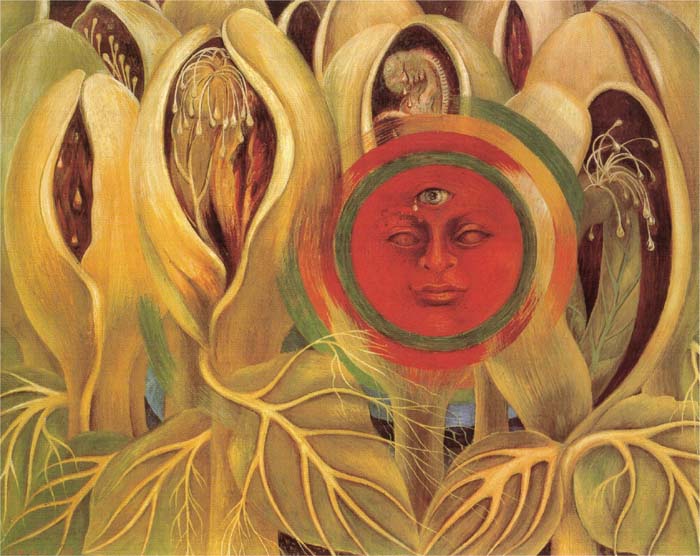
    Sun and Life - Frida Kahlo, 1947

    Sun and Life – Frida Kahlo, 1947

    The “Art, Garden, Life” in addition contemplates on artist’s two fatal incidents of her life: a bus accident in 1925 that left her permanently disabled and in chronic pain, and her turbulent relationship with Diego Rivera.

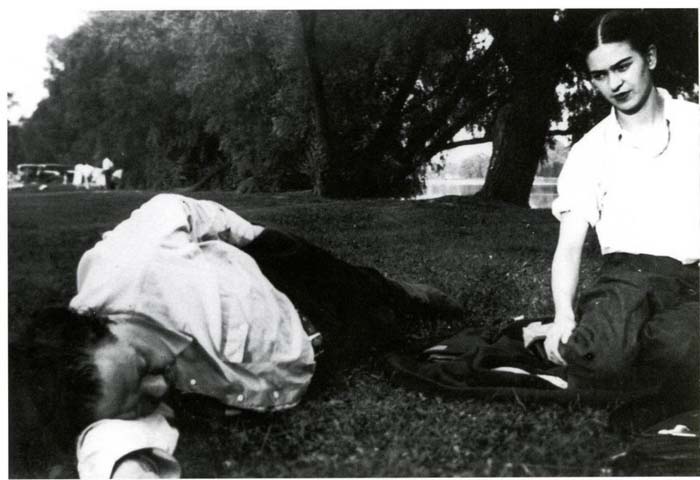
    Rivera and Kahlo on Belle Isle (photo courtesy of the Detroit Institute of Arts)

    Rivera and Kahlo on Belle Isle (photo courtesy of the Detroit Institute of Arts)

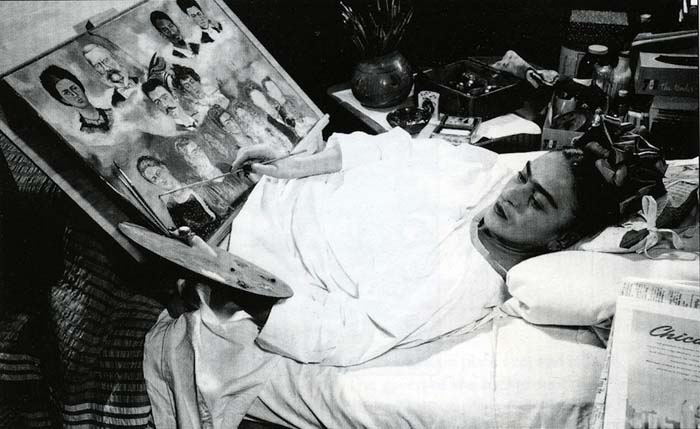
    Frida Kahlo, painting in bed. Coyoacán, Mexico archives.

    Frida Kahlo, painting in bed. Coyoacán, Mexico archives.

    Frida's favorite plant - cactus. "Frida Kahlo: Art, Garden, Life" exhibit at The New York Botanical Garden. New York Botanical Garden. Photo: NY Arts/J. Gora

    Frida’s favorite plant – cactus. “Frida Kahlo: Art, Garden, Life” exhibit at The New York Botanical Garden. New York Botanical Garden. Photo: NY Arts/J. Gora

    Curated by an art historian and specialist in Mexican art Adriana Zavala, Ph.D., the multifaceted exhibition includes a rare display of more than a dozen original Kahlo paintings and drawings on view in the LuEsther T. Mertz Library’s Rondina and LoFaro Gallery at the Garden.

    “Frida Kahlo: Art, Garden, Life” exhibit at The New York Botanical Garden. New York Botanical Garden.

    “Frida Kahlo: Art, Garden, Life” exhibit at The New York Botanical Garden. New York Botanical Garden.

    By Jolanta Gora/Amy Banker, NY Arts

    Curated by Emil Memon and Kyoko Sato Ono, and the show is made possible by Patrick Oban
    May 15-29, Open to the public by appointment Mon-Fri 12-5pm.

    There is an album by the great British Punk/Goth band The Damned History of the world (Part 1) that inspired the name of the present Art show. A great record, vinyl for that matter, with a killer Art work on the jacket and great music tracks. Our Art show follows this music metaphor. Every Artist in it has a complex Art practice developed over many years of work. As with a great music LP where every song has depth, intellectual as well psychological, a clear production, melody and a musical hook, where a meaningful message is carried in a most efficient way, so are the works assembled in this show.
    History of the World: that’s a very big idea to tackle, no doubt a case of arrogant ambition. If you think of history as space in time filled with objects in motion or static, a flow of ideas, of words, as language, organic and inorganic matter, action, violence, love, sex, tenderness, beauty & ugliness, social structures, social justice or injustice, capital, labor, oppression, liberation, global warming, Big Bang, War, race, radioactivity, and yourself, inhabiting and responding to all that, endlessly….until the end of the words….
    If you think of history as a mind space were thinking is generated, morphed from chemicals and electricity into a concrete form, where your individual stand and perspective forms the history of the world, the creative options are without limits. This engaged creativity is what connects Artists in this show.
    Well, it could be that history as we have known it is collapsing all around us, and that a new and unknown History of the World (Part 2) is replacing it.    (Emil Memon)

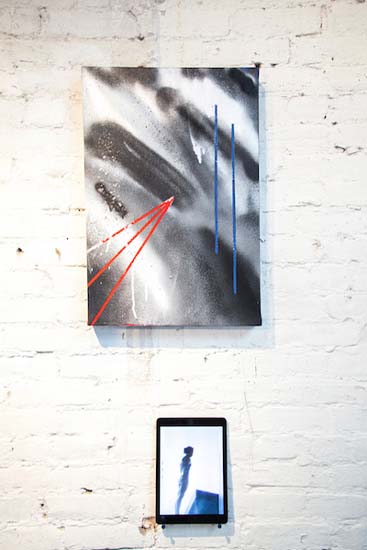
    Emil Memon, Social Democracy, 2015. Photo by Yuko Torihara

    Emil Memon, Social Democracy, 2015. Photo by Yuko Torihara

    Five artists will meet in SoHo to create another history of the world. Assuming the world we live in now is Vol.1, they will be reinventing this world to create Vol.2. A vast amount of great art has been born out of SoHo, a ‘historic site’ for the art world. Art has the incredible power to change people, societies, and the world itself. All artists in the show are based in New York, are highly experienced in their careers, and continuously strive toward higher levels of artistry.


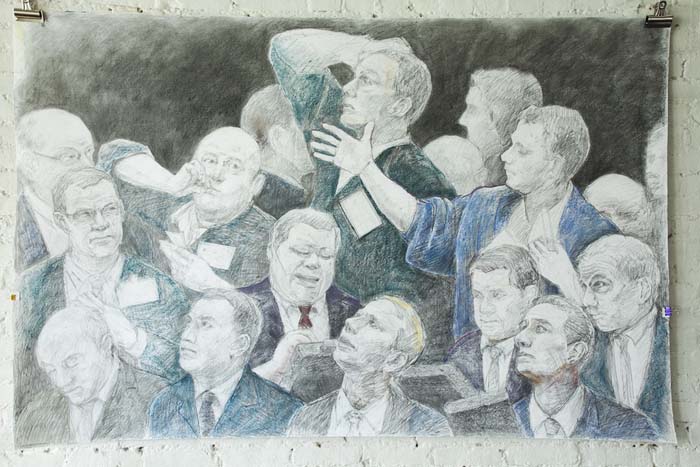
    Momoyo Torimitsu "Study for a Tapestry" (2015)  Photo by Yuko Torihara

    Momoyo Torimitsu “Study for a Tapestry” (2015) Photo by Yuko Torihara

    Momoyo Torimitsu (b. Japan) is best known for the series of work Salarymen. She will be bringing a brand new work tentatively entitled “Study for a Tapestry” (2015), after a four- year hiatus from her art career. In this study, Torimitsu draws workers on Wall Street, one worker looks pleased while another seems disappointed; through this juxtapositions, Torimitsu attempts to portray the diverse range of emotions that can be found on Wall Street. Wolfgang Staehle (b. Germany) is a key player in the high-tech art world. He will also install a recently finished work from ongoing series of portraits. In this “Portrait” (2015) series, each work is a specific person’s portrait, and reflects his/her social network. Noritoshi Hirakawa (b. Japan) is known for his erotic, poetic photographs. For this exhibition, he has chosen works which best fit the venue’s optimally designed residence-art-gallery. A “Subject” (2004) consists of 14 photographs, and was made in collaboration with architect Thom Mayne. Through this work, they explore the interaction between people and architecture. The pieces look animated only when there is human activity going on inside. Pawel Wojtasik (b. Poland) a guru of video artists, often reflects Buddhist thoughts in his art, His work “Single Stream” (2013) was presented at the 2014 Whitney Biennial. “Next Atlantis” (2010), to be featured in this show, was created after Hurricane Katrina hit the US in 2005. Music featured in this video was composed by Sebastian Currier.  Emil Memon (b. Slovenia) is a well-known artist in his country with his video work “Blue Movie” (1983). Recently he has been working on the series “HyperAbstruction”(2012-). His latest work in this series will be making its debut in this show. While blue and red colors are used in many of his works, this time he created a black and red painting (2015), which reminds me of Japanese filmmaker Kurosawa.      (Kyoko Sato Ono) 


    Wolfgang Staehle, Commercial, 1990 & Portrait, 2015. Photo by Yuko Torihara

    Wolfgang Staehle, Commercial, 1990 & Portrait, 2015. Photo by Yuko Torihara

    Noritoshi Hirakawa, Subject, 2004

    Noritoshi Hirakawa, Subject, 2004

    フリーズ・アートフェア・ニューヨーク週間:ソーホーで展覧会
    「世界の歴史 第2巻」
    主催:パトリック・オルバン、佐藤恭子   
    キュレーター:エミル・メモン、佐藤恭子
    参加アーティスト:
    鳥光桃代、平川典俊、エミル・メモン、パヴェル・ウォイタシク、ウォルフガング・スティル
    期間:2015年5月15日~29日
    【一般公開は要予約で18日(月)~22日(金)、25日(月)~29日(金)】
    連絡先:emilmemon2002@yahoo.com   または日本語はKyokosatoono@gmail.com まで。
    新たな世界の歴史を始めようと5人のアーティストがソーホーに集まった。ソーホーでは多くの重要なアートが生れ、歴史的に重要な場所である。アートは人々、社会、世界を変えて改善することができる。(第1巻はいま我々が生きている世界である。)参加アーティストはニューヨーク在住で、これまで多くの経験を積んできており、さらなる高みを目指して精力的に活動している作家たちからなる。
    鳥光桃代(日本生)は90年代にサラリーマンを扱った作品で一躍有名になった。4年間の沈黙を経て新作「タペストリーのための習作」(仮題、2015)を公開する。ある者は喜び、ある者は落胆、という具合にウォール・ストリートで見られるすべての感情と光と闇を一つの画面に象徴的に集結させている。平川典俊(日本生)はエロスと詩的な写真でよく知られる。彼は今回の会場であるソーホーのパトリック・オルバン氏の完璧にデザインされたロフトを意識して、最もふさわしいと思われる作品を我々キュレーターとともに選んだ。この「サブジェクト」(2004)シリーズは合計14点からなり、建築家のトム・メイン氏とコラボレーションして制作した。建築とその中にいる人との相互作用を模索しており、建築はその中に人がいて初めて生き生きとして見えるのである。ウォルフガング・スティル(ドイツ生)は、ハイテクアートを代表する作家だ。彼も新作で今後シリーズとして制作予定の「肖像」(2015)を発表する。作品はそれぞれ具体的な人の肖像だが、その人の社会的ネットワークをデジタルで反映したものとなっている。パヴェル・ウォイタシク(ポーランド生)は、映像界の重鎮で、作品には彼自身の仏教思想が色濃く表現されている。「シングル・ストリーム」は昨年のホイットニー・バイエニアルで上映された。本展の「ネクスト・アトランティス」(2010)は、2005年にアメリカに大惨事を及ぼしたハリケーン、カトリーナが元になっている。エミル・メモン(スロベニア生)は、彼の出身国で有名な作家で、「青の映画」(1983)が特によく知られている。2012年からシリーズとして制作している「超抽象」の新作を発表する。青と赤が彼の作品には特徴的に使われいるが、この作品では白黒に赤と映画監督の黒澤明を思わせる色彩を取り入れている。

    Photo London at Somerset House, in the heart of London, from 21-24 May 2015.

    Photo London is a unique photography event, produced by Candlestar.  It will showcase the broad range of photographic practice – from vintage to contemporary.   It will feature a major international photography fair for up to 70 of the world’s leading photography galleries together with an innovative public programme supported by the LUMA Foundation. The public programme will open up new audiences for photography, showcase emerging talent and promote the concept of photography as an asset class.

    At a time when so many of us are using our smartphones to capture images of the people and sights around us, we shouldn’t forget photography’s significance as a long-lasting art form. There is an incredibly rich variety of photography, both historical and contemporary and it would be wonderful to see a new international photo festival in London. It would add to the other art and design festivals that draw visitors from across the UK and around the world.’

     Boris Johnson, Mayor of London

    A high level  Advisory Board advise on the development of Photo London. They play a key role in the development of the various networks on which Photo London depends. The Advisory Board are committed to establishing Photo London as a major event in international art world calendar.

    ADVISORY BOARD MEMBERS

    Beverley Buckingham  Beth Colocci  Tim Delaney  Maryam Eisler  Ratan Engineer           Leo Johnson  Ali Khadra  David Knaus  Fatima Maleki  Lady Hayat Palumbo  Nigel Pleming  Karen Ruimy  Andy Simpkin  Maria Sukkar  Rebecca Wang

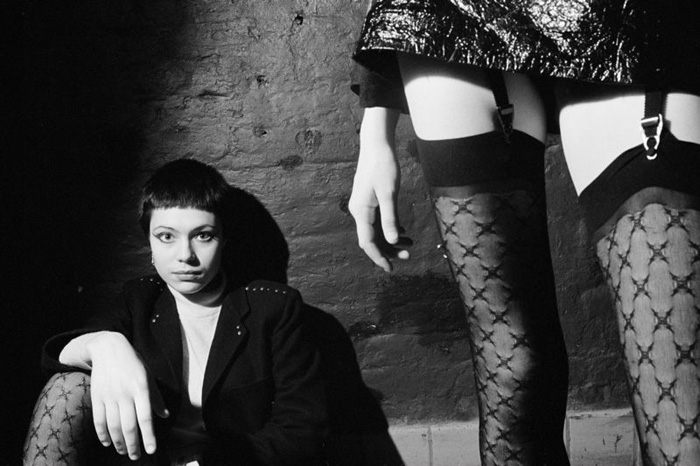
    Untitled, from the series “Punks”, 1976-77 ©Knorr and Richon, courtesy Eric Franck Fine Art (London)

    Untitled, from the series “Punks”, 1976-77 ©Knorr and Richon, courtesy Eric Franck Fine Art (London)

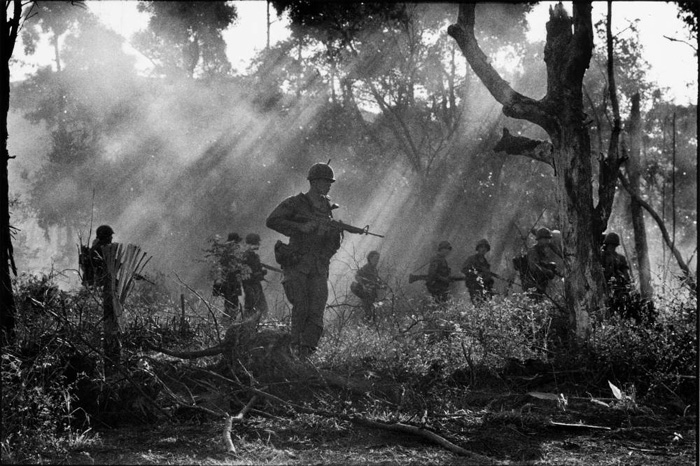
    US 173rd Airborne Brigade patrol, A Shau Valley, South Vietnam, December 1967

    US 173rd Airborne Brigade patrol, A Shau Valley, South Vietnam, December 1967. School Gallery/Olivier Castaing.

    Portrait d’un bouffon au sourire grimacant 2014. Sacha Goldberg. School Gallery / Olivier Castaing (Paris)

    Portrait d’un bouffon au sourire grimacant 2014. Sacha Goldberg. School Gallery / Olivier Castaing (Paris)

    Hyde Park 1949 © Ernst-Haas. ATLAS Gallery (London)

    Hyde Park 1949 © Ernst-Haas. ATLAS Gallery (London)

    Sama Alshaibi Fatnis Al Gazirah from Silsila series 166 X 250 cm. Diasec Print Edition of 1 1AP 2014. Ayyam Gallery (Beirut, Dubai, London)

    Sama Alshaibi Fatnis Al Gazirah from Silsila series 166 X 250 cm. Diasec Print Edition of 1 1AP 2014. Ayyam Gallery (Beirut, Dubai, London)

    Photo London 2015. Nicolas Dhervillers "Tribute to Julius LeBlanc Stewart" 2013 ©Nicolas Dhervillers, courtesy School Gallery/Olivier Castaing. Photography 354 x 433 in. edition 8 2AP.

    Photo London 2015. Nicolas Dhervillers “Tribute to Julius LeBlanc Stewart” 2013 ©Nicolas Dhervillers, courtesy School Gallery/Olivier Castaing. Photography 354 x 433 in. edition 8 2AP.

    More: www.photolondon.org

    The new Cohen Banker is a New York School refinement of the subtle figuration that characterized her art. The work of this agile expressionist has reached a new way, and promises to tour it back from Miami Basel Spectrum, Architectural Digest Home Fair, and Artexpo New York, to the Berkshire Arts Festival and Art Hamptons next June.

    Amy Cohen Banker’s art has a diverse and prolific trajectory. Her artistic hunger has driven her through installations of birds deconstructed to their bones, and family osseous relics piled up in blue rags, to different video-art projects often times integrating voice-over narrators and paintings and collaborations, to quotidian photography, or marker crayon and pastel drawings, or geometric watercolors inspired on the early twenties Kandinsky. Of the many places she has explored and continues exploring we can confidently say that Cohen Banker’s forte resides in her mixed media paintings preponderantly based on oil on canvas.

    Invariably affiliated to abstract expressionism, there have been significant variations in her style worth mentioning. The nineties saw a body of work stylistically diverse. There is dripping and splashing, but there is drawing and shadowing. We can recognize Duchamp broken surfaces in “Strip Club” and Basquiat doodles in “Circus Girl” or “Versaille Still”. Perhaps the common ground was the presence of the painting as a particular gesture on top of a white background, an expressive filigree presented to the spectator as a gift by an extended arm.

    "Circus Girl", Acrylic on Canvas 2'x 3'. 1998

    “Circus Girl”, Acrylic on Canvas 2’x 3′. 1998

    The first decade of the XXI century is a creative maelstrom I don’t dare to synthesize but just point out that is full, intense and stormy. Her figuration takes many forms and grows exponentially while abstraction loses its dominance particularly in a series of portraits exemplified by the sufficient “Queen Mari”, and a number of fragrant still lifes.

    This figurative inclination has grown larger and subtler over time, to a point where paintings purely abstract were ever more frequent, and obvious figuration started to recede in favor of an elusive referentiality.  Still, Cohen Banker paintings two years ago were, even in their abstraction, referential with titles like “Cezanne and a friend toasting with wine” or “Bedroom Interior” or “Queen Bee” as a sophisticated way of adapting to the reality of things: adaequatio intellectus et rei. “On the wings of a nightingale”, one of the flagships of this former period, was inspired by Paul McCartney homonymous song and indeed the morphology of an arching brown bird out there.

    Bedroom Interior, Oil on canvas, 18x24 inches. 2013

    Bedroom Interior, Oil on canvas, 18×24 inches. 2013

    The new Cohen Banker that I have seen has broken any adaequatio at once, and doesn’t look at things of the exterior world but things from within herself. This way of introspection has given a new dimension to her painting, adding to her style the limpid and unfading quality of the intangible ideas.

    “Story Told” is a lynchpin in the new period. It encompasses the two hemispheres of this time as the coastline the confines of two realms.   There is a combat in it, between up and down, left and right. One faction advances unified and the other rushes diversely and tempestuously.  The blue falls like a heavy fog scattering loose condensed tongues, while the reddish side crackles and flagellates, turns and twists, breaks and hurts. This large wound scarce in its abundance, indolent in its agitation, gives blind claws on new and old scratches. This painting represents the dichotomy of her latest period: the grief of persistent pains, and the hope of a pristine future; ineluctable reminiscence of a sensitive educated attentive heart.

    Story Told, 11"x14", acrylic on canvas, 2015

    Story Told, 11″x14″, acrylic on canvas, 2015

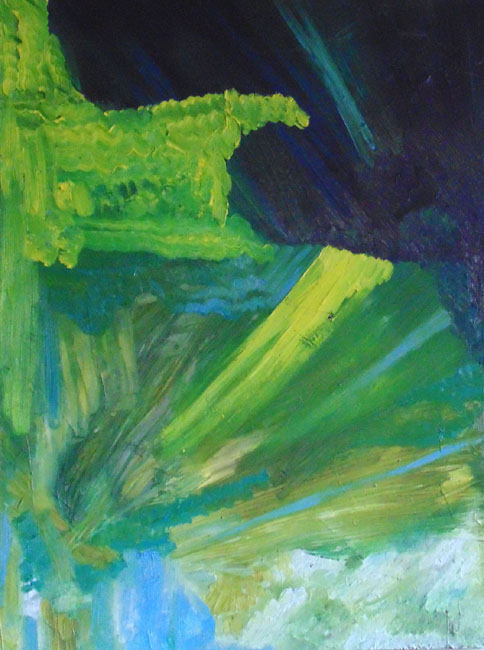
    That blue voluntarism re-emerges in “Follow the Bliss” with renewed green hopes and lines of progression crashing against a cloud of ominous uncertainties.  The intimate pinks and oranges of “Joy” and languid water lilies like greens and yellows of “Voice II” convey this blissful promise with harmonious sinuosity. But pain isn’t gone and is faced up front in the conflictive “Elegy”, and as a long low mourn full of awareness and acceptance in “Lamentation”.

    Follow Your Bliss, Into the Light, 2015, 36"x48", oil on canvas,

    Follow Your Bliss, Into the Light, 2015, 36″x48″, oil on canvas,

    Cohen Banker is an established painter that maintains her relevance with action and exploration, keeping her art out there gaining momentum, therefore I wouldn’t be surprised if her next creations depart from this personal analysis and probe me a subjective observer, which indeed I am. I’ll visit her booth at Art Hamptons in July. I’m curious about her next moves and how these paintings may strike me differently during the summer.

    – Manuel Pardo


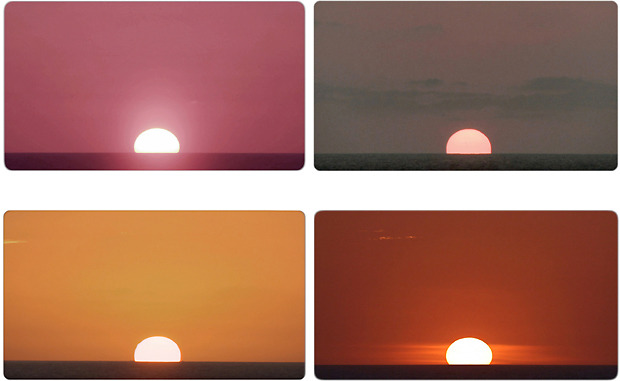
    Image: Andrea Galvani, The End (stills), 2013–2015. Multichannel video installation, 16 mm transfers to HD, dimensions variable. Courtesy of the artist and Art in General.

    Image: Andrea Galvani, The End (stills), 2013–2015. Multichannel video installation, 16 mm transfers to HD, dimensions variable. Courtesy of the artist and Art in General.

    Andrea Galvani, An Art in General New Commission

    Opening Reception:
    Saturday, May 16, 6–8pm

    Performances:
    Saturday, May 16, 6:30pm & 7:30pm

    Exhibition:
    May 16, 2015 – June 27, 2015
    6th Floor Gallery

    Art in General is pleased to present The End, a New Commission by Andrea Galvani in the 6th floor gallery.

    Developed over two years of research conducted in the United States and Mexico, The End is a cross-disciplinary trilogy of multimedia works. Art in General will present a unique stage of this project – a multichannel, synchronized video installation documenting one collective action. The End is an homage to the heliocentric model of our solar system championed by Galileo Galilei, father of modern cosmology.

    Over the course of months, Andrea Galvani coordinated with local camera operators to film the sunrise along the eastern coastlines of five different Central American countries. On January 8, the anniversary of Galileo’s death in 1642, the event was filmed in over 30 different locations simultaneously. In the resulting installation, the horizon line where the sky meets the sea becomes continuous and seemingly infinite, extending our perceptions of time and space. Concurrently, the simultaneous temporal actions are made distinguishable by discrepancies in atmospheric conditions, the sensitivity of 16mm film, and the movements of each hand held camera. The resulting installation juxtaposes a multiplicity of subjective perspectives, expanding the horizon into a unified visual field.

    The End challenges the idea of boundaries as points of separation, instead suggesting points of contact. Boundaries change position, accumulate power, produce energy. They define topologies and conditions of differential equations in mathematics; they govern the laws of thermodynamics. Boundaries can be political, geographical, or psychological territories. Horizons are the perimeters of perception, both sensitive and cognitive. With The End, Galvani seeks to extend our experience of the horizon’s spatial and temporal limits, articulating their physical and conceptual elasticity.

    Geological time began with the first sunrise: a recurring event representing the primordial chronography of our planet’s movement around the sun. We are part of this continuum for a brief moment, a single oscillation in the pendulum of cosmic existence. The End presents the opportunity to witness the sunrise ad infinitum.

    Andrea Galvani is an Italian artist living and working in New York and Mexico City. He earned a BFA in sculpture from the Academy of Fine Arts in Bologna in 1999 and his MFA in Visual Art from Bilbao University in 2002. His work has been exhibited at international venues including the Whitney Museum, New York; 4th Moscow Biennale for Contemporary Art; the Mediations Biennale, Poznan, Poland; 9th Biennale of Contemporary Art of Nicaragua; Aperture Foundation, New York; The Calder Foundation, New York; Mart Museum of Modern and Contemporary Art, Trento, Italy; Macro Museum, Rome; GAMeC, Bergamo, Italy; De Brakke Grond, Amsterdam; Oslo Plads, Copenhagen, among others. In 2011, he received the New York Exposure Prize and was nominated for the Deutsche Börse Photography Prize. He has been a visiting artist at NYU (2009-10) and has completed artist residencies at Location One International Artist Residency Program New York (2008), LMCC Lower Manhattan Cultural Council (2009), M.I.A. Artist Space Program/Columbia University School of the Arts, Brooklyn, NY (2010). From 2006 to 2009, he was a professor of Photographic Language and the History of Contemporary Photography at the University of Carrara for Fine Arts in Bergamo, Italy.

    ‘All art is valid. We are all part of artistic community and all human beings who will achieve peace’ – Yoko Ono

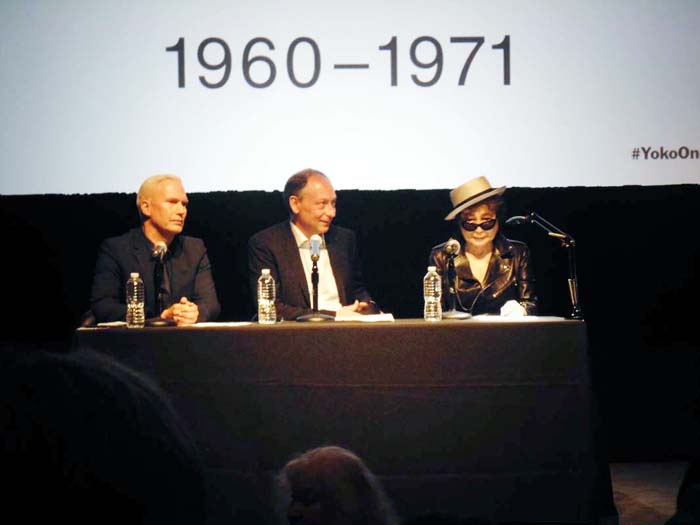
    “Yoko Ono: One Woman Show, 1960-1971,” which runs from May 17 through Sept. 7, includes about 125 early art pieces, works on paper, films, installations, performances and audio recordings.

    Ono Inspires us through creative, nurturing, collaborative and go getting spirit, waiting to make the world, locally and globally a better place.
    Universal messages connect locally while transcending geographic boundaries and speak to the fundamental root of the human experience. She affects and effects that art is all of us and everywhere that we choose and peace will come if we smile and if we are patient and open.

    During  years of her extensive career, Ono moved among New York, Tokyo, and London, serving a pioneering role in the international development of Conceptual art, experimental film, and performance art. Her earliest works communicated to viewers in verbal or written form. Her creativity radically questioned the division between art and the day to day life by asking viewers to be engaged in its completion.

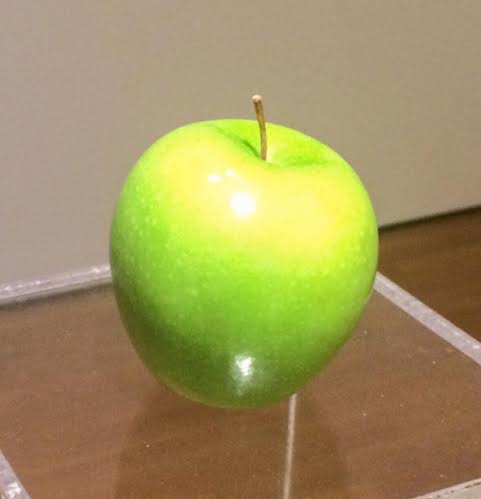
    apple

    Apple, NY Arts/A.Banker

    Ono is an extant member of Fluxus Movement of anti commercial aesthetics originated by George Maciunas. It included Nam Jun Paik, Dick Higgins, John Cage, Joseph Beuys, Alan Kaprow and others that have passed.. It opened up definition of art. MoMA calls this One Woman Show and Yoko demonstrates through her explorations this concept that is an historical and current contribution.

    The exhibition was organized by Klaus Biesenbach, Chief Curator at Large, MoMA, and Director, MoMA PS1; and Christophe Cherix, The Robert Lehman Foundation Chief Curator of Drawings and Prints; with Francesca Wilmott, Curatorial Assistant, Department of Drawings and Prints.

    2-DSC02444

    Yoko Ono and the exhibition organizers: Klaus Biesenbach with Christophe Cherix, NYC, May 12, 2015. NY Arts/ J. Gora

    ‘All art is good without judgement.  Scientists have discovered smiles make us happy.’ – Yoko Ono

    11263062_10153833174992729_4904347991643112424_n

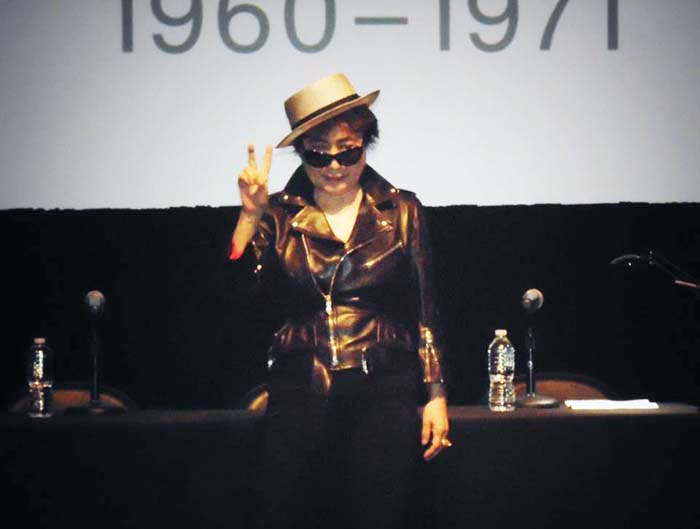
    Artist Yoko Ono gestures before speaking at the Museum of Modern Art regarding an exhibition dedicated exclusively to her work, titled “Yoko Ono: One Woman Show, 1960-1971″, NYC, May 12, 2015. NY Arts/ J. Gora


    – Amy Cohen Banker for NY Arts

    As opportunities abound, the relationship between artists and dealers gets a whole lot more fluid

    Nobody knows if or when the music might stop, but for the time being, artists are dancing their way around the gallery system. Once a rarity, it is now common for artists to shift allegiance.

    Recent high-profile movers include Mark Bradford, Sterling Ruby, Elmgreen & Dragset, Adel Abdessemed, Cecily Brown, Adrian Ghenie and Theaster Gates. The heightened activity is a side-effect of an art market in which few bat an eyelid at the prospect of $1.5bn being spent on post-war and contemporary art in New York this week: at the auctions, at Frieze New York (which opens to VIPs on Wednesday) and at the satellite fairs.

    An open marriage

    Bradford has left Sikkema Jenkins and White Cube (C51) and is now exclusively represented by Hauser & Wirth (B7). Ruby has left Hauser & Wirth, but is still represented by a network of galleries including Sprüth Magers (C9), Gagosian Gallery (B60) and Xavier Hufkens (B44). Gates is now showing only with White Cube, which has also signed Etel Adnan and Michael Armitage. Abdessemed no longer works with David Zwirner (C50), and Nicole Eisenman has left Koenig & Clinton to join Anton Kern Gallery (C5).

    Brown, who recently ended a 15-year relationship with Gagosian, has a show at Maccarone in New York (until 20 June) and is working with Thomas Dane Gallery in London, but has no plans for permanent representation. “Being with a gallery is like a marriage, so there doesn’t seem to be any reason to leap into another marriage straight away,” she told New York magazine.

    “It’s not unusual for artists to have crossover representation in one city, where you maybe work with two galleries,” says the artist Michael Elmgreen. Elmgreen & Dragset are represented at the fair by Galerie Perrotin (C25), Massimo De Carlo (B1) and Victoria Miro (B3).

    The artists’ show at Perrotin (Past Tomorrow, until 23 May) is their first in New York for ten years. Elmgreen tells us that they are speaking to “a few American galleries” about further US representation, adding that Perrotin is amenable to a more open relationship—but collectors should not expect an announcement soon. “We don’t jump on board very easily,” Elmgreen says. “Our work demands a certain kind of gallerist, so we try for a long time to scare people away. If that doesn’t happen, we surrender and say OK, let’s play.”

    Widening the field

    There are more options than ever for in-demand artists. The increase in the number of art fairs, galleries, museums and foundations over the past two decades means that there are simply more places to show art. Meanwhile, auctions have moved closer to the primary market.

    The downside is that some artists can feel overlooked. “I needed to schedule an exhibition and it was impossible for them to show my work,” says the artist Ghada Amer of Gagosian, which she left in 2010. She is represented at the fair by Cheim & Read (C38) and Tina Kim Gallery (C43). “A gallery shouldn’t be more famous than its artists. I was being branded through a dealer, but I wanted to be known for my work,” Amer says.

    The challenge for dealers is to keep artists satisfied while retaining solo representation within a territory, Emmanuel Perrotin says. “If another gallery is necessary… we will [agree] to collaborate,” he says. “But it’s always difficult for the artists to share their relationships with too many people.”

    Going it alone

    Some artists are snubbing the classic arrangement in which they focus on the creative process while galleries take care of finances, loan requests and sales. “More and more artists try to keep those aspects to themselves and maintain a certain independence,” says Andreas Gegner, a director at Sprüth Magers. The younger generation of artists, having grown up in a booming market, may want to either distance themselves or run the show.

    The artist Tavares Strachan chooses not to work with any one gallery. “I don’t feel I need that traditional representation,” he says. “I work with institutions, galleries, museums—whatever needs to be done for the art to happen. Relationships can be a lot more dynamic nowadays and dealers are more open to different kinds of situations.”

    Strachan warns of the dangers of focusing on art’s commercial aspects. “It’s not useful for an artist to play the market,” he says. “It makes it harder to stake a claim to your voice, which is the primary reason for becoming an artist in the first place.”

    Other artists may move to create a different context for their work or to spark new connections, says the art adviser Emily Tsingou. “If you don’t get curatorial interest in the mid- career moment, you’re in danger of never getting interest again,” she says.

    Ultimately, the decision boils down to individual connections. “An artist-gallery relationship has to have soul. It has to achieve friendship, which involves loyalty and love,” says the artist Sean Scully, who shows with Timothy Taylor Gallery in London and Cheim & Read in New York. “The reason it works so well for me is that I keep it simple and human.”

    ————————————————————–

    Source:  Charlotte Burns for THE ART NEWSPAPER

    By Jerry Saltz for Vulture

    On Friday, I paid what I thought was to be my first and last visit to an old friend I’d never met before. Then, even though the thought of doing so again produced excruciating pain and disgust in me, I returned for a final visit on Sunday, assuming I would never see this sight again in my lifetime.

    Both times, I went to the showrooms of Christie’s Auction House in Rockefeller Center. There, hundreds of works were on view, all to be auctioned in a sale that some say will generate $1 billion. This seems an omega point of auctions, a point one doesn’t return from or to, but it could be surpassed before long.

    On both days, I was among a crush of highly styled buyers, international collectors, investors, speculators, and advisers of the highest strata of the art world. In one small gallery were installed an $8 million Picasso gouache, a $15 million Fontana, a $45 million Monet, a $50 million Rothko, a $130 million Giacometti, and the little canvas I’d take home, a sickly tremendous Picabia portrait priced at only $350,000. A lovely nearby 1998 Elizabeth Peyton is priced at a half-million dollars.

    My stomach turned at the sight of a woman carrying a yapping Yorkshire terrier while heading out of this overcrowded gallery. Like most people here, she and her comfort dog were on their way to the main attraction, a masterpiece of late-20th-century painting. This work has been in private hands since being sold in 1956 — a year after it was painted. Except for possible loan exhibitions, it will be in private hands again after tonight, and for the remainder of my lifetime.

    I set eyes on the beautiful reward by Picasso known as The Women of Algiers, an epic master class on the ways of painting, art history, color, structure, and form that will be sold tonight to a private collector for $140 million. (Barring an unfathomable utopian act of singular generosity, that is, whereby Christie’s realizes that this is more than just another painting for sale and makes certain that the work will be sold only to a purchaser who will donate it to a museum.) It can’t sell for less, as there’s already a reserve on the work. I was there to say good-bye to the Picasso and almost every other one of the hundreds of works about to go under the hammer.

    The Women of Algiers is an onslaught of color contained within structural forms that create and break up, reconvening only to fissure and form again. Almost every shape merges with the next, extending itself and its neighbors, then congealing into something specific before fading again into something else. The painting is a glimpse at tangents that might touch only in infinity. Four women. Or perhaps three women, and a painting of another woman, pulse in a graphic field of interior space bracketed by black light on one side, curtains on another, tile floor and patterned carpet below, and coffered ceiling above. Everything Picasso has ever painted is here in abstract fashion. And dozens of new ways of painting and mark-making. Like the painting or not, it feels like everything he’d go on to paint is here, too. On the left is a giant, Cyprian-like seated woman. Her voluptuous breasts are corseted by some sort of laced red bodice that makes her a cross between a fertility figure, goddess, Medusa, caryatid, harem figure, and proprietor of this realm and the next. Her veil, headdress, or hair is a labyrinth of yellow, blue, red, and white intertwining coils. Not only is it the best headpiece I’ve seen outside Aztec art, it looks forward to Jasper Johns’s great crosshatch paintings, even to de Kooning’s last lucid looping lines. She seems to hover here. Not on the ground or subject to gravity, she anchors the whole world to her left.

    Over her left shoulder is what looks like a mirror but is either a window or another painting, picturing a spread-eagle, arms-upstretched nude. The vagina in that picture becomes another eye looking out of the painting. Next comes a walking or serving figure. But everything on this side of the picture comes down to an incredible reclining odalisque on the bottom part of the painting. She comes from many places. Most obviously from the supine figure in Picasso’s own insurrectionary shot across the bow of the 20th century, Les Demoiselles d’Avignon, from 1907. Art aficionados wryly know that she is also Picasso’s barbaric response (in the best sense of the word) to Matisse’s earlier revolutionary blue nude. From at least then on, Picasso stalked Matisse’s every move. In fact, Women of Algiers was painted just 105 days after Matisse died. When asked why he turned to exotic odalisques and harems, subject matter long associated with the Frenchman, Picasso commented, “When Matisse died, he left his odalisques to me.” Matisse was sadly wise to this. Not long after Picasso paid him a studio visit in the South of France, Matisse wrote to his son that Picasso “saw what he wanted to see. Now he will put it all to good use.” Imagine being dogged by this Spanish monster your entire artistic life. No wonder Matisse was always trying to get away.

    Unlike the wind sheer of sources in this work, its history is fairly straightforward — here in the auction house, they call it provenance. In June 1956, Picasso’s dealer, Henry Kahnweiler, sold this picture and nine others from the same series to Victor and Sally Ganz, often described as great American collectors. True, they bought masterpieces, but how great they were as “collectors” might be judged in other ways. In fairly short order the Ganzes flipped — I mean sold — ten of the paintings, keeping five. After selling one of them in 1988, all the rest were auctioned off nine years later. Technically speaking, not factoring time on loan to exhibitions, Women of Algiers has only been on public view for the last ten days.

    I walked into Christie’s in a state of strange pathos. Excited about seeing such great art; sad because it was displayed under these crowded conditions, and because I knew almost everything I saw might not be seen again in public. I felt, I’m finished complaining about auction houses. Yes, the people who work there love art as much as everyone in the art world loves art. But I do think they’re at the center of a storm that’s raging out of control and is wrecking terrible damage to the world they love by creating a filter that fakes one way but goes the other. Under the guise of so-called “quality,” auction houses fabricate a pervasive psychic field that sees art in terms of price and profit. This seductive shallow field forces collectors with similar work or similar –isms to rush the same artists and –isms to auction the following season to reap ever-higher prices. Auctions are not only doing this with historical material; they’re now doing it with contemporary art. And this has escalated prices for new work artificially, exponentially, and in ways that I think are bad for everyone and can’t possibly be sustained. It all seems fake. If only two people on the planet can be made to bid against one another for anything, a prospect easily arranged with the smoke and mirrors of auction spectacle, PR, and spin, then prices will spin upwards with only a tiny handful of people creating this updraft. Of course, artists, collectors, dealers, even auction houses should make money from art — I’m a capitalist, even if not a very successful one. But there’s no doubt in my mind that the prices for all art, masterpieces included but especially contemporary, recent, and new art, are completely out of whack and ridiculously overpriced. I am sorry, but it seems sick to me to see new artists selling art out of their first shows for between $30,000 and $40,000. Something’s gotta give. Good-bye, Picasso, I thought.

    That’s when the force of nature Sara Friedlander, head of evening sales, swooped down on me. Sara knows as much about art and loves it as much as anyone I know. She started a happy, hysterically funny harangue of me for my ten-year hissy fit about auction houses, me carrying on about high prices and how impossible it is now for any museum to even compete. We walked through the exhibition for a while, both of us barking at one another. At one point, we passed chairman and international head of postwar and contemporary art Brett Gorvy, who said, “I love your Instagram. You sure hate us.” Yes! Thanks! A minute later, the mega-mega-everything-owner of Christie’s, François Pinault, sauntered by. I said, “Please don’t introduce me to him.”

    But Friedlander was brilliant. She knew every detail of every work of art on view. She could write a book. As she rattled off fantastic facts of art history, she also kept me off-balance, regaling me with stories so fast I couldn’t write them down. I remember that when I asked if buyers were still willing to pay $10 million for a recent Jeff Koons painting of a lobster and centerfold, she laughed and said, “Tits and ass always sell. Dicks, not so much.” Then she pointed, “I mean, look at those tits.” When I said that auctions were all rigged, she said, “Auctions are the most transparent place to buy art in the world. Unlike dealers, who screen everyone and pick and choose who gets to buy work, anyone with enough money can buy anything here. Everything here has notes on what the work costs and if it’s on reserve.” When I said that auction houses always say that they present “exhibitions” when they’re really just installing whatever lots they have for sale, she said, “For sure! We’re all nerds who want to be curators.” Commenting on a woman who was wearing head-to-toe Alaïa, Friedlander speculated that her shoes cost more today than the original price of the de Kooning she was looking at. When I carped about all this art disappearing forever after auction, she said, in a tone that was distinctly silly boy, “A lot of it will be back here next season.” So will I, I suppose.

    unnamed
    Massachusetts College of Art and Design
    PETER WAYNE LEWIS
    PROFESSOR OF PAINTING: FA2D
    AREA-COORDINATOR PAINTING
    621 Huntington Avenue
    Boston, Massachusetts 02115 USA
    Office: 617-8797517
    Cell: 973-7045467
    E-Plewis@massart.edu
    OASIS: BEIJING
    PETER WAYNE LEWIS Director- 皮特.韦恩.路易斯
    Niu Xiaogang- Manager +86-13621052946
    318 ART GARDEN HEGEZHUANG Row 2 west # 1-3
    Chaoyang Qu, Beijing, CHINA 100020
    地址:朝阳区崔各庄乡何各庄村318艺术园西区2排1-3
    pwlewis236@gmail.com
    www.peterwaynelewis.com
    CATALOGS:
    JAYJAY GALLERY-CALIFORNIA,USA-
    MATTHIAS KUPER GALLERIES STUTTGART/BEIJING

    By Manuel Alejandro Rodríguez Pardo.

    The Empire State Building lights up with the colors of twelve of the most iconic artworks of its collection. Michelle Obama and Bill de Blasio cut the ribbon while famous established artists and high end brands such as Audi and Tiffany & Co. contend to be the first in welcoming and congratulating. This May 1st Manhattan celebrates the culmination of the biggest art district in the world.

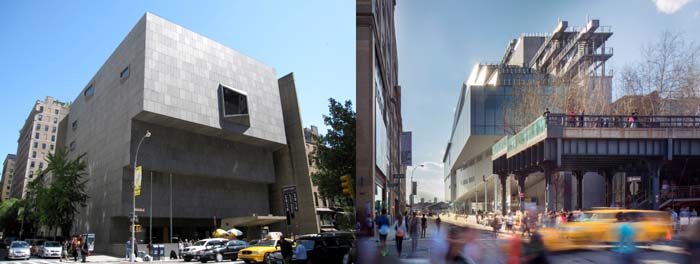
    Marcel Breuer’s building, inaugurated in 1966, is an igneous rock bunker with rough surfaces and
    proportions. It is a menacing Cyclops refractory to its architectural environment. Breuer’s design was
    coherent with the already anachronic and romantic idea of a Whitney Museum as fortress and shelter
    for the American art that was disregarded if not blatantly scorned by the big cultural institutions such as the encyclopedic MET and the Eurocentric MoMA. 2015 Whitney, three miles Southern, and closely flanked by the Hudson River and the High Line Park, is the absolute antithesis of the former building.

    Renzo Piano was chosen by the Board of Trustees to make a significant expansion for the museum eight years ago. The Italian architect is specialized in museum spaces and he has built and projected twenty five of them spread around the world. The diaphanous Centre Georges Pompidou in Paris, the mimetic Menil Collection in Houston, the daring expansions of the Art Institute of Chicago and the Harvard Art Museums, or the Botín Center for the Arts that will hover over the bay waters of the city of Santander in northern Spain this summer.

    One would say that Renzo Piano has turned Breuer’s building inside out. Those huge negative echelons of the façade have been turned into large terraces. The stairs have been pulled out, and that volcanic somberness has turned into bright white steel sheets and ample glass surfaces. If Breuer’s building was a bunker, Piano’s building is an open square. Not only because the lobby carries that name but also because the building can be seen through from East to West with no interruption until the horizon. This perspective is particularly possible from the High Line Park. The elevated section of a disused railroad runs parallel to the river from the Javits Center and the Hudson Yards (the pharaonic development that encompasses 16 skyscrapers, the 7 Subway extension, and the Culture Shed, an international center for artistic and cultural innovation where the New York Fashion Week will start taking place in 2018) southwards through Chelsea’s 350 art galleries, until the very gate of the Whitney. The High Line Park attracts five million visits a year, and the museum is ready to receive and even transform them: Because this mille and a half of aerial gardens now have a destination and theme delimitation. There is no other art district so large and dense.

    Perhaps this reason suffices to extend, to triple, Whitney’s expositive space, and transform the house of the artists in the “house of the curators” as Chief Curator Donna de Salvo called it recently. Ms. De Salvo and her team of six curators worked closely with Renzo Piano in designing a building where art was first, a functional building projected from the inside out.

    Renzo Piano en la inauguración. Photo by: Alejandro Pardo for NY Arts

    Renzo Piano en la inauguración. Photo by: Alejandro Pardo for NY Arts

    The inaugural exhibition is naturally the biggest in the museum’s history and fills the space with
    artworks from the permanent collection. Jasper Johns’ stacked “Three Flags” (1958) established a
    record price for a living artist when the Whitney Museum bought it for $1 million in 1980. Or the
    magnificent “Rose” (1958-1966) by Jay DeFeo. Her opus magnum that meant eight years of work for her
    and ended up buried alive in a seminar of the San Francisco Art Institute. Willem de Kooning’s “Door to
    the River” (1960) that may veiledly refer to the qualities of the West face of the building. Or the
    photographic series “The Ballad of Sexual Dependency” (1979-96) by Nan Goldin, which is so meaty and tender; and so many others.

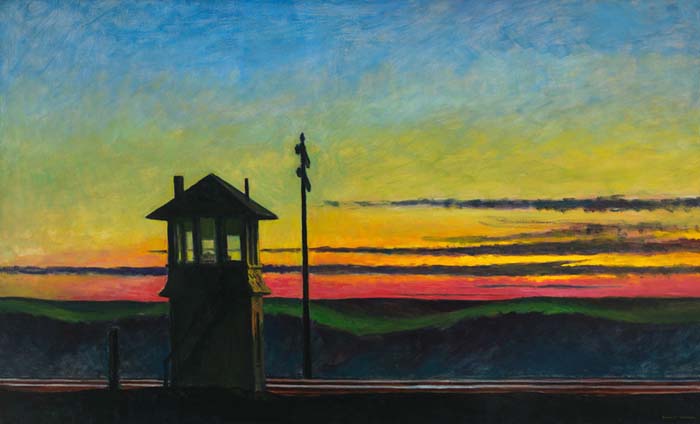
     Edward Hopper Railroad Sunset 1929. Photo by Alejandro Pardo for NY Arts.

    Edward Hopper Railroad Sunset 1929.

    Carter E. Foster, Steven and Ann Ames Curator of Drawing of the Whitney, puts the accent on the
    central role of Edward Hopper in Whitney’s collection: “One of the first exhibitions he had in his life was
    at the Whitney Studio Club, which was the organization that preceded the Whitney Museum, where the
    Whitney grew out of. He was supported by the museum: the painting “Early Sunday Morning”, which is
    my favorite painting from the whole collection, was bought just a few months after it was painted, so he
    felt that support early in his career. He had two retrospectives in his lifetime here at the Whitney, and
    he became very friendly with the curator Lloyd Goodrich who then became director of the Whitney. So I
    think he felt that the Whitney was his home as an artist. In fact, he left his collection to us when he died,
    so we have the largest collection of his work and a long history with him.”

    “Early Sunday Morning” was inspired by a building that belonged to this neighborhood. The original title
    of that painting was “Seventh Avenue Shops” which were between 16th and 17th Street. And actually
    Gansevoor Street, where the Whitney is now, used to extend up to the spot where that building was.
    However the painting doesn’t attempt an accurate representation of the building. He painted based on
    what he saw, but memory is the subject of his paintings. There is something deeply poetic in the way he paints the memory of the mundane.”

    Photo by: Alejandro Pardo for NY Arts

    Photo by Alejandro Pardo

    The permanent collection of the Whitney Museum has great value because it’s a piece of the art history
    of the United States and the world, in so far as its art is universal, and since many of its artists weren’t
    born nor dead under stars and stripes. This been said, it’s fair to wonder if the highest value of the
    Whitney resides actually in interpreting the past within a clear perspective of the present, and an
    unflagging dedication to spur the future. The Whitney Biennial works as a systematic factory of
    contemporaneity. The team of curators want to take their time in the searching process and have
    postponed the Biennial until 2017, so they have the whole 2016 to enrich our next contemporaneity to
    come. Who’d be the next Georgia O’Keeffe, Jackson Pollock and Jeff Koons?

    News | Exhibitions