• "Reflection in Teal" ©Shira Toren 2014 mixed media on canvas 32" x 30"

    “Reflection in Teal” ©Shira Toren 2014 mixed media on canvas 32″ x 30″

    Opening Reception Sat. December 5, 6-8pm
    Cross Contemporary Art
    81 Partition St. Saugerties, New York 12477
    on view from November 28th through December 27th, 2015

    Shira Toren’s solo show “Eternal Return” opens with an Artist’s Reception on Saturday, December 5, 6-8pm at Cross Contemporary Art, Saugerties, NY. 
    Shira Toren’s solo show “Eternal Return” is an exhibit of abstract paintings and drawings that refer to vast patterns and dimensional space.  Painted on plaster substrates applied to canvas, these luminous images serve as a spiritual template for the real world. Ms. Toren uses the velocity of twining, travelling or precipitating marks to create universes that are at once vast and minute. The same way many cells make up a living organism, stars create the constellations and human populations collectively make history, Shira Toren’s artwork refers to the endless consolidation of the many into the one.
    Shira Toren “Eternal Return” is on view from November 28th- December 27th with a reception for the artist on Sat. Dec 5, 6-8pm

    About Shira Toren:  Shira Toren is an emerging American-Israeli artist. Born in Tel-Aviv, she moved to New York City to study fine art and design receiving her BFA from the Pratt Institute and an Associate Degree in Art Therapy from The New School. Ms. Toren has also studied at The Art Students League as well as IS183 School of Art in Stockbridge, Massachusetts. Shira Toren is a recipient of The Henry Matisse Estate Scholarship and attended the New York Foundation for the Arts Bootcamp in 2011. Ms. Toren maintains studios in New York City and Great Barrington, Ma.

    More about Shira Toren:
    Artist’s website: http://www.shiratoren.com
    New York Times mention: http://bit.ly/ccastnyt

    The Museum will present a career retrospective of Frank Stella (b. 1936), one of the most important living American artists. This survey will be the most comprehensive presentation of Stella’s career to date, showcasing his prolific output from the mid-1950s to the present through approximately 120 works, including paintings, reliefs, maquettes, sculptures, and drawings. Co-organized by the Modern Art Museum of Fort Worth and the Whitney, this exhibition will feature Stella’s best-known works alongside rarely seen examples drawn from collections around the world. Accompanied by a scholarly publication, the exhibition will fill the Whitney’s entire fifth floor, an 18,000-square-foot gallery that is the Museum’s largest space for temporary exhibitions.

    Frank Stella: A Retrospective is organized by Michael Auping, Chief Curator, Modern Art Museum of Fort Worth, in association with Adam D. Weinberg, Alice Pratt Brown Director, Whitney Museum of American Art, New York, and with the assistance of Carrie Springer, Assistant Curator, Whitney Museum of American Art, New York.

    Frank Stella: A Retrospective is jointly organized by the Whitney Museum of American Art, New York, and the Modern Art Museum of Fort Worth.

    In New York, the exhibition is sponsored by

    Significant support is provided by

    Major support is provided by The Brown Foundation, Inc.; Steven & Alexandra Cohen Foundation; Julia W. Dayton; Pamella and Daniel DeVos; Katherine Farley and Jerry Speyer; the Fisher Family; The Marc Haas Foundation, Inc.; the Henry Luce Foundation; Robert E. Meyerhoff and Rheda Becker; the National Committee of the Whitney Museum of American Art; and an anonymous donor.

    Generous support is provided by The Broad Art Foundation, Peter and Betsy Currie, Theodor and Isabella Dalenson, Marcia Dunn and Jonathan Sobel, Louis G. Elson, Ann and Graham Gund, Marguerite Steed Hoffman, Barbara and Tom Israel, Martin Z. Margulies, Scott Mead, Kenneth & Marabeth Tyler, Melissa Vail and Norman Selby, the Bagley and Virginia Wright Foundation, and public funds from the New York City Department of Cultural Affairs in partnership with the City Council.

    Additional support is provided by Irma and Norman Braman; Audrey and David Mirvish; the National Endowment for the Arts; Emily Rauh Pulitzer; Paul J. Schupf Lifetime Trust, Gregory O. Koerner Trustee; and anonymous donors.

    Significant endowment support is also provided by Lise and Michael Evans, Sueyun and Gene Locks, and the Jon and Mary Shirley Foundation.

    The installation of Wooden Star I (2014) and Black Star (2014) on the fifth-floor outdoor gallery is made possible by Marianne Boesky Gallery and Dominique Lévy Gallery.


    Courtesy of Whitney Museum of American Art

    Untitled-1

    Courtesy of Staff Tech Arts. Photo by George Holzer.

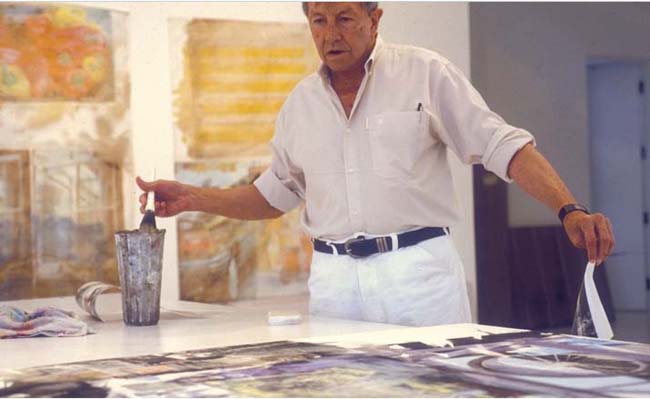
    New York—Pace Gallery is pleased to announce the exhibition of late works by Robert Rauschenberg on view at 534 West 25th Street from October 23 to December 12, 2015. The exhibition is Pace’s ninth major exhibition of work by the artist and the first since Pace began representing the Robert Rauschenberg Foundation earlier this year.

    The exhibition will examine the Anagram, Arcadian Retreat and Anagram (A Pun) series. These works were created beginning in the mid-1990s, a pivotal period for Rauschenberg as he developed and perfected a powerful new technique combining dye transfer with novel supports including plaster, large-scale paper and polylaminate panels. The resulting approach would inspire the artist’s practice over the remainder of his life. A majority of the works included in the exhibition come from Rauschenberg’s personal collection, which now makes up the holdings of the Robert Rauschenberg Foundation. A new catalogue with an essay by art historian Jonathan Fineberg will accompany the exhibition.

    Read more

    unnamed (1)

    CURRENT EXHIBITION
    Merike Estna “Corporate Jungle”
    4 September – 31 October 2015

    Temnikova & Kasela

    Lastekodu 1, Tallinn, Estonia, +372 6405770, info@temnikova.ee. Wednesday-Saturday 3-7 pm

    unnamed

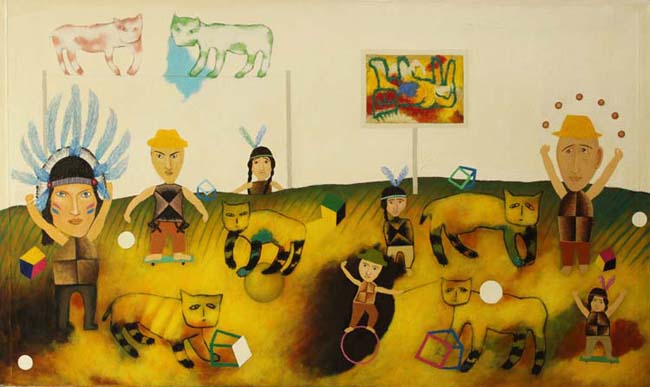
     Indiańska Parada,   oil na canvas, 86 x 146 cm / 34" x 57,5" 2009

    Zibi Krygier, Indiańska Parada, oil na canvas, 86 x 146 cm / 34″ x 57,5″ 2009

    ”Art by Zibi Krygier entertains with a colour, symbolism, and above all an affirmation of life, because the artist is in love with people and the world, which distinguishes his art by way of positive energy. Valuable art flirts with the imagination to produce real reception. Frequently art happens to be more real than reality, as it discloses a quintessence of our desires, passions and longings. We will find here many emotions, and dreams, the world’s scent becomes palpable. Such is the art of Zibi Krygier which appeals to so many, which is the reason for the artist’s success”
    – Katarzyna Gniewecka „Nowojorczyk życia” Magazyn – Just Quality 12/2009

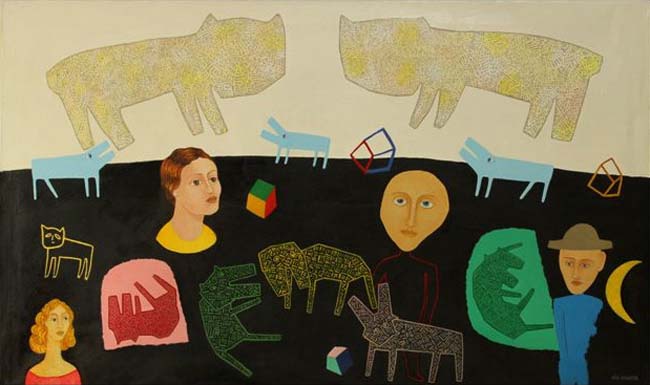
    Zibi Krygier, Zabawa z dwoma Psami,  oil on canvas, 86 x 146 cm / 34" x 57,5" 2009

    Zibi Krygier, Zabawa z dwoma Psami, oil on canvas, 86 x 146 cm / 34″ x 57,5″ 2009

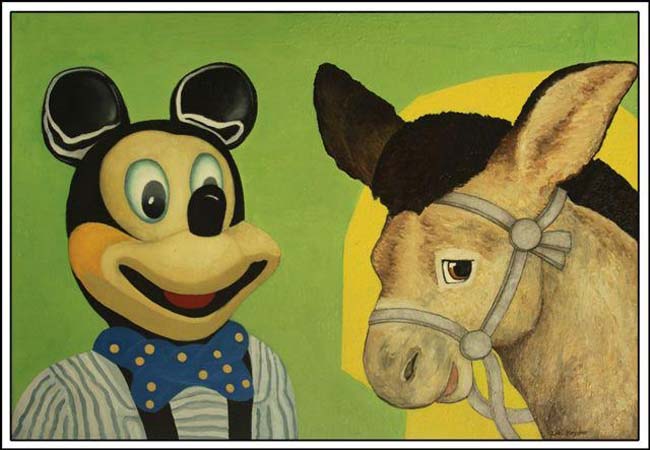
    Zibi Krygier, Mickey Mouse and Donkey, oil and enamyl on canvas, 57 x 84 cm / 22,5" x 33"  2011

    Zibi Krygier, Mickey Mouse and Donkey, oil and enamyl on canvas, 57 x 84 cm / 22,5″ x 33″ 2011

    Zibi Krygier

    Zibi Krygier

    More about artist at: www.zibikrygier.com

    Interview with Yoko Ono by Abraham Lubelski

    Yoko Ono:

    The criterion of me selecting John’s work for the show was that artistically it was good. It had to be artistically good. With both of us being an artist that comes first. I am very happy there is going to be a John Lennon art exhibition on his 75th birthday.  I feel that it had to be done and I’m sure the audience will get something out of it.

    The producer of the gallery did a very good job. I wanted to do it and have professional people to create an essential show to bring around the world.

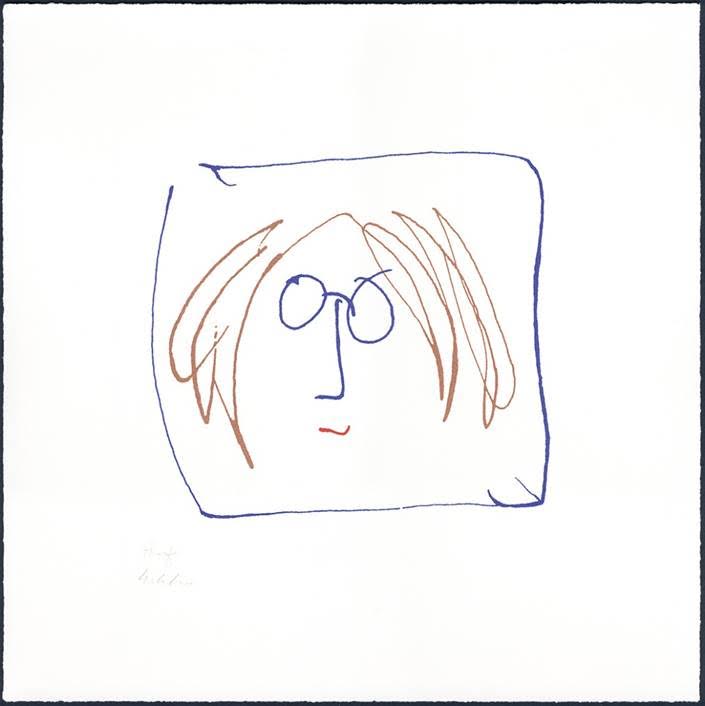
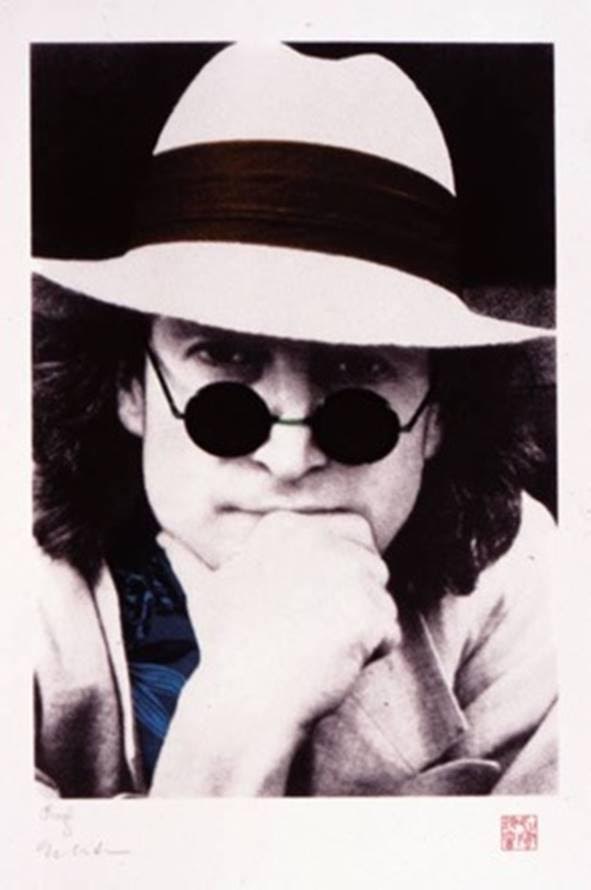
    Image:  Self Portrait. Copyright © Yoko Ono.

    Image: Self Portrait. Copyright © Yoko Ono.


    When John and I were together and he was making art, it was the most peaceful time, the most peaceful moment, when he was doing his artwork.

    When we created songs in the studio of course it’s not always peaceful because the songs are much more energetic and powerful. It was not easy to do all that while smiling. Sometimes we were not smiling.

    With his artwork he was always so happy and while he was doing it everyone around him was feeling good. There was no collaboration with John’s artwork. He was such an incredible, artist from the time he was a teenager. John was very independent and you see that in what he created.

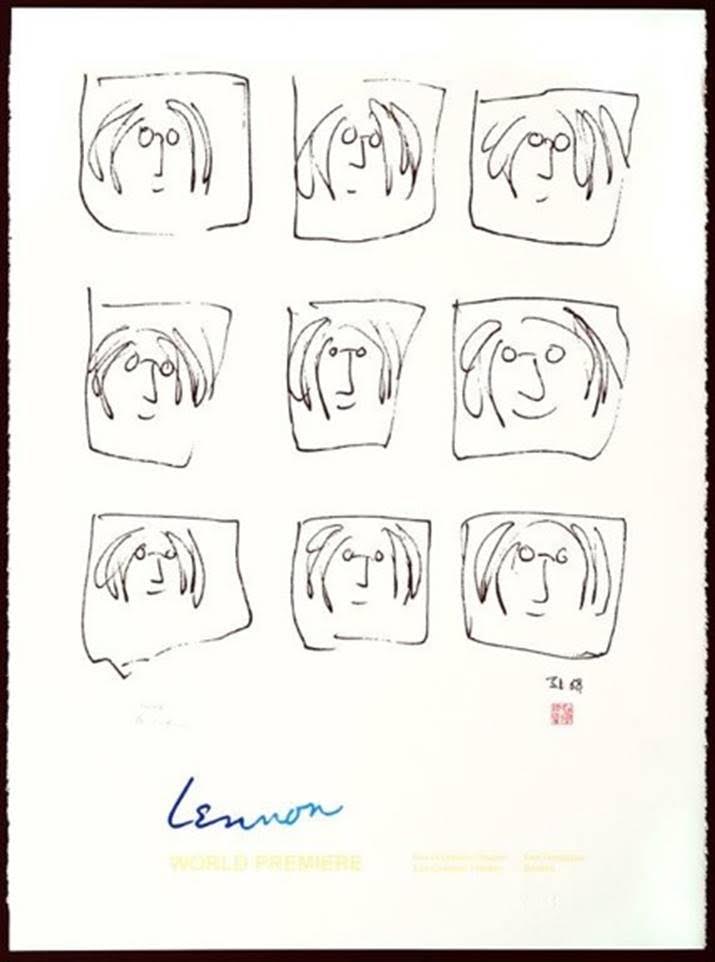
    Image:   Lennon   Copyright © Yoko Ono.

    Image: Lennon Copyright © Yoko Ono.

    It was a surprise that from the time he was young he was already very cynical.  The kind of stuff he made was good and ready to be put in a newspaper, to be published and no one would believe that a young person did it.

    Early on he was already talking about mistrust that all of us have towards government. That was coming out in his drawings. It’s incredible.  And then by the time he was with me, I think that the mood changed a little and he was not really so angry about anything, but at the same time he still had that kind of cynicism and that comes through, it’s very interesting.

    We are both artist so we didn’t have any convoluted discussions about our work. John would just be doing it and he would say “Yoko, look what do you think about this.”  What could I say? “Oh beautiful” that’s about it.

    The family environment made no difference. We went to Japan together and he was extremely interested in the Japanese brush strokes… which is kind of unique and there is a lot of Asian type work that he did at the time…

    He did art work wherever we happened to be. We traveled a lot and John was able to do some work while on the plane. It was quit interesting. He was just very good at it. It didn’t matter where he was. He just did the work wherever. When he was inspired he just did it.

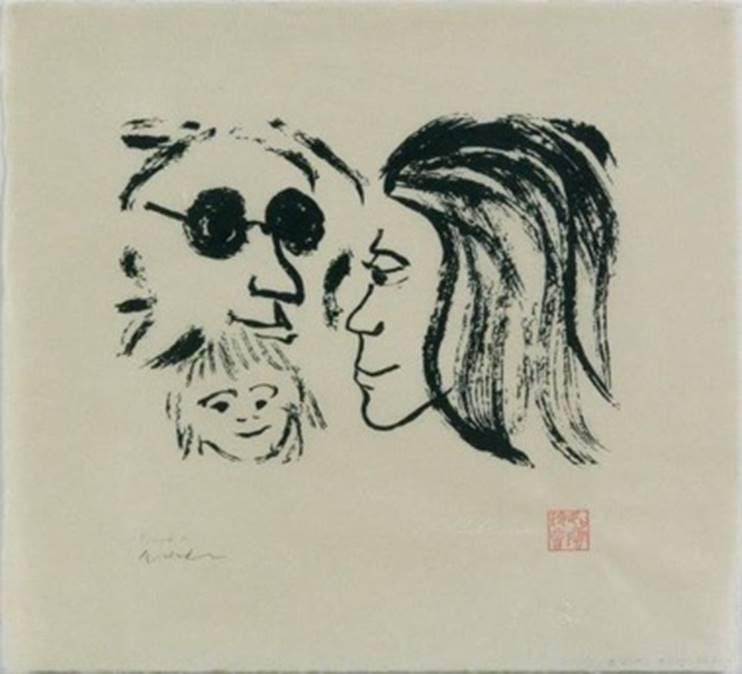
     Image:  Family of Peace   Copyright © Yoko Ono.

    Image: Family of Peace Copyright © Yoko Ono.

    He had his own way definitely and he wasn’t going to copy anybody else.
    He just did it the way he wanted to do it. It was very obvious.

    He didn’t ask anybody what he should do. He was the first kind of independent artist in that sense. But he would ask me “ Yoko why don’t you look at this. What do you think about this” and of course am I going to say? I was always honest actually. Honestly he was so good.

    The reason and the way he created were so different and so we didn’t have any competition between us. We didn’t compete with each other at all. The way he created was so different and we just loved each others work.

    Image: Photographic Suite        Copyright © Yoko Ono.  Photo Credit: Nishi

    Image: Photographic Suite Copyright © Yoko Ono. Photo Credit: Nishi

    When John was inspire with a song, it was just like putting the lyrics in a notebook or sheet of paper, we just piled it up to make sure it did not get lost.  Then one day he might say “ remember that one let’s just decode.” But with the artwork he just did it, and in the midst of a lawyer’s meeting. Lawyer meetings can be so boring. So he did some drawings. Afterwards one lawyer would say, “what are you doing? Can I have that please?”  “Oh sure”  John was so magnanimous. Many lawyers have his work now.

    He didn’t have any effort in making, doing his artwork. He just enjoyed it and therefore he did it.
    Let’s put it this way. He was a more angry young man when he was fourteen or nine and he was expressing his anger towards the government or whatever at the time. He was young but incredibly mature in that sense.

    When we were together he was celebrating the fact when we were together. His work was not too cynical. If there was a cynicism it was splashed on somebody else and you see it in his drawings. It was so very interesting.

    Just occasionally he would do something with a kind of a cynicism.  It was interesting. You feel that as well when you go to the show. But most of the time the underlying feeling was that he was getting happy. He was happy about his life.

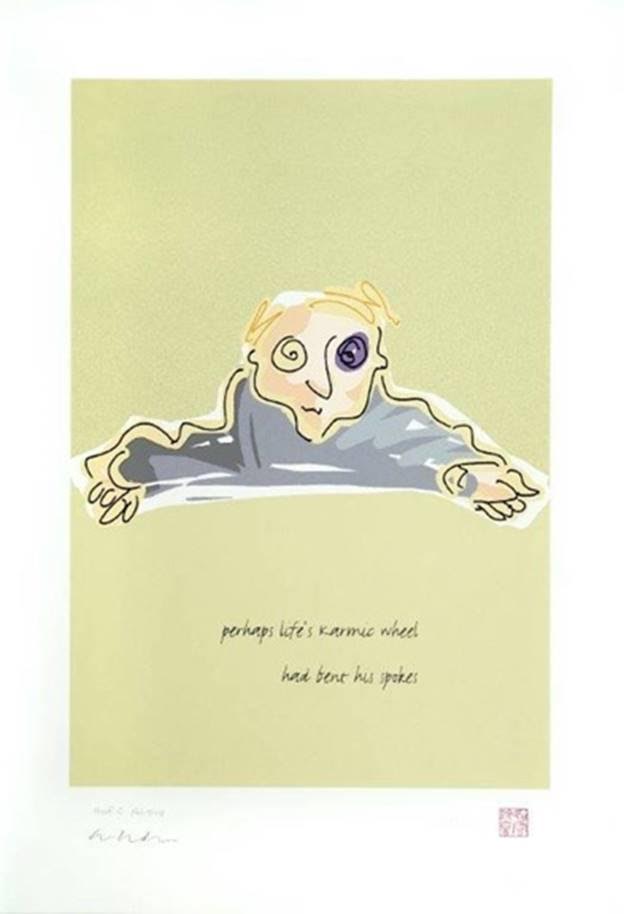
    Image:  Life’s Karmic Wheel     Copyright © Yoko Ono.

    Image: Life’s Karmic Wheel Copyright © Yoko Ono.

    Abraham Lubelski:

    What would I like to know about John Lennon the person, the artist? What was he trying to do? What was possible? What do we all have in common?

    Yoko Ono says that John found “true peacefulness” when he painted.  So what made him restless?  How did he manage?  How do we manage?

    As artists, as human beings what makes us the same? What makes us different? Alone or together how are our lives impacted? What and who makes the differences in our lives?

    Yoko goes on to say “I myself and John we were both artist.” Yes, I want to believe that about all of us.  We all are artists? Life is Art? Can we imagine and create: warmth, love, compassion, trust, joy and peace?

    John Lennon would eagerly say “Yoko, look at this?”  What did she see? What could she say? As we view the exhibit of John Lennon maybe we can hear John asking:  “Look! What do you think about this?” What would you say?

    October 1 – 31st, 2015
    AFA GALLERY
    54 Greene Street
    New York, NY 10013
    Website:    www.afanyc.com


    ©NY Arts: Interview with Yoko Ono by Abraham Lubelski

    A single woman struggles to rebuild her life in Brooklyn after spending 10 years abroad as the unrecognized muse to a famous filmmaker. Wallabout is an intimate first-person account of an overeducated and underemployed outsider who navigates an often hypocritical and corrupt society. (…)

    Founded in 2007, The Bushwick Film Festival exhibits independent film and media in the heart of New York City’s new locus of eclectic creativity and contemporary culture: Bushwick. Our programming runs year round with classes, workshops, and content open to the community and distributed via digital and broadcast networks. Our competition, now in its eighth year, attracts industry leaders, submissions of international note and culminates in a four day festival of screenings and events.

    Read more

    Kaunas Biennial, the biggest contemporary art event in the Baltic States, has started its 10th edition with the exhibition Threads: Fantasmagoria about Distance, curated by the well-known art theorist and curator Nicolas Bourriaud. Kaunas central post office became a key to the exhibition itself, accumulating works by artists as Liam Gillick (USA), Walead Beshty (UK), Saadane Afif (FR/DE), Roberto Cabot (BR), Pakui Hardware (Neringa Černiauskaitė and Ugniaus Gelguda, LT/USA), Lothar Hempel (DE), Julijonas Urbonas (LT), Katja Novitskova (EE), Arnas Anskaitis (LT), Carsten Höller (SE), Bronė Sofija Gideikaitė (LT), Amalia Ulman (AR/UK/ESP), Katie Paterson (UK), Attila Csorgo (HU), Kelley Walker (USA) and Darius Žiūra (LT). Threads’ ambitions are both to approach the form of fantasmagoria and to address the way today’s artists include the notion of distance in their works: in a globalized and digitalized world, how does art deal with transportation, real time communication? What is the current shape of the presence/absence dialectics? How do artists present absent realities? As a metaphor, Threads also stresses the parallels between today’s art and the spectacle of fantasmagory, focusing on the similarities with this proto-movie theatre both in terms of techniques and intellectual issues, and leads the way to another possible history of art, where feature films and installations would share a common ancestor. Based on this link between science, poetry and spiritualism, Threads is an exhibition about art as a system that connects itself to a different time and/or space. The artwork as a telegraphic device, entering into contact with something happening somewhere else, in another realm, world, place or times…

    Exhibition Sonic Patterns work of Myrto Karanika and Jeremy Keenan_Peacock_ photo by Remis Scerbauskas

    Exhibition Sonic Patterns work of Myrto Karanika and Jeremy Keenan Peacock, photo by Remis Scerbauskas

    Lewben Art Foundation offered the unique possibility to explore its outstanding collection in the exhibition Networked Encounters Offline at the M. Žilinskas Art Gallery featuring works by Ian Cheng (USA), Gabriele De Santis (IT), Nick Darmstaedter (USA), Mohamed Namou (FR), Deimantas Narkevičius (LT) and Simon Denny (AU), analyzing the forms of post-internet art communication. According to Francesca Ferrarini, the curator of the exhibition, thanks to digitalisation and the Web, we are bombarded by images everywhere we go today; and all these images are flat two-dimensional images, which we see mostly on computers. We are surrounded by a real world that is influenced by edited images of itself. It does not matter if we have never been to the Caribbean: we know what it looks like. It does not matter if we have never seen Boetti’s map in reality: we can count the stitches on Google Art Project. The exhibition of the Lewben Art Foundation is about the encounter by a generation of artists who have been investigating the new aesthetics of the image, playing with materials, appearances and figures. The internet and digitalisation have influenced not only the way we all approach figures, but also the way artists do, on one hand, with the most classic forms of art, such as painting and sculpture, and on the other hand, using the latest technologies. Basically, what happens is the internet approach to things moves into real life. Let’s say the internet has started to be an environment, and it also exists offline.
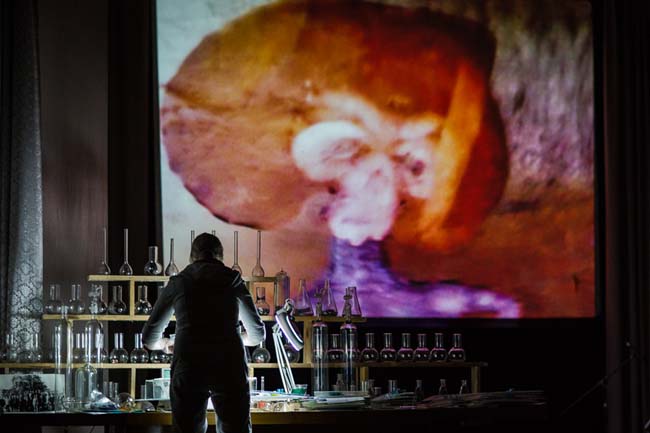
    Pislicone Theatre and music trio CHUI from Croatia_photo by remis scerbauskas  (2)

    Pislicone Theatre and music trio CHUI from Croatia, photo by Remis Scerbauskas

    Another outstanding exhibition Sonic Patterns, produced by The Biennial’s partner, Crafts Council (UK) presents interdisciplinary sound, video and visual art projects. The installation “Dataflags” by Fabio Lattanzi Antinori (IT), recently seen in the V&A Museum, and James Bulley’s (UK) project „Tactus“, creating experiences of Braille via sound, is engaging with the audiences. The organisers of Miniartextil, Arte&Arte, based in Italy, presented Simona Muzzeddu (IT) and photographer Mattia Vacca (IT), who not only made a special project about the Lithuanian conscription, but is showing his latest project, A Winter’s Tale: a photo report about an archaic community living in the Italian Alps, whose men are away from home for nine months every year. Another photography project in the Biennial is The Birth of Kikimora by Artūras Morozovas (LT). Kikimora is a creature from Slavic mythology which may lure one into a swamp, but it is also the word used to describe the uniform of a sniper. It is a photo story about women who sew camouflages in Kiev for Ukrainian snipers fighting in the East. The meaninglessness of war is also analyzed in the exhibition and performance The Terrible Love of War by Italian artist Silvia Gaimbrone (IT) in cooperation with the Kaunas Boys and Youth Choir.
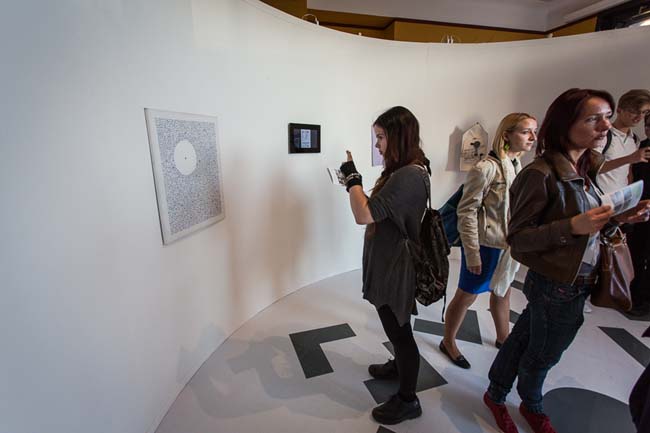
    Exhibition THREADS at Kaunas post office_photo by remis scerbauskas

    Exhibition THREADS at Kaunas post office, photo by Remis Scerbauskas

    During the Biennial, the residency programme Cotemporal Encounters: Interdisciplinary Approaches to Sound, Memory, and Place will occupy historical industrial places, derelict factories, former cabbage storehouses and other architectural spaces, as well as other events. Twelve young artists from all over Europe is currently working together exploring the city’s social and political past and trying to rediscover it in the ruins of architecture embracing contemporary art. In the former textile factory, the Croatian organisation LAB852 together with famous sound artist Elisabeth Schimana (AT) and her team implemented an ambitious interdisciplinary project called AGORA or an Artistic Assembly. Another key part of the Biennial, based on community art projects, is called Friendly Zone #6. Cabbage Field, curated by Vita Gelūnienė and Ed Carroll. The project focuses on an abandoned and polluted territory 13 000 sq. m. large, where rubbish heaps make waste of architectural heritage — former cabbage storehouses. The curators initiated cleaning actions, talks and discussions with local people, collected their memories and stories in order to change the space and help create a stronger community.

    Among the many events and initiatives in the 10th Kaunas Biennial, the advanced educational programme and presentation of the book Contemporary Art Biennial as a Site Specific Event: Local versus Global on the 3rd of October are to be mentioned. The book’s editor Dr. Daiva Citvarienė has invited such international experts as Marieke van Hal (co-founder of the Biennial Foundation and International Biennial Association), Michaela Ott (philosopher), Lewis Biggs (curator, founder and long-lasting developer of the Liverpool Biennial), Eugen Rădescu (co-founder of the Bucharest Biennial, theoretician, curator), Tomasz Wendland (Artistic Director at the Mediations Biennale in Poznan), and Skaidra Trilupaitytė (PhD in Art History), to share their ideas and thoughts on the subject. The book features interviews with Virginija Vitkienė (PhD in Art Criticism, curator, Artistic Director of the Kaunas Biennial) and Nicolas Bourriaud (writer, curator).
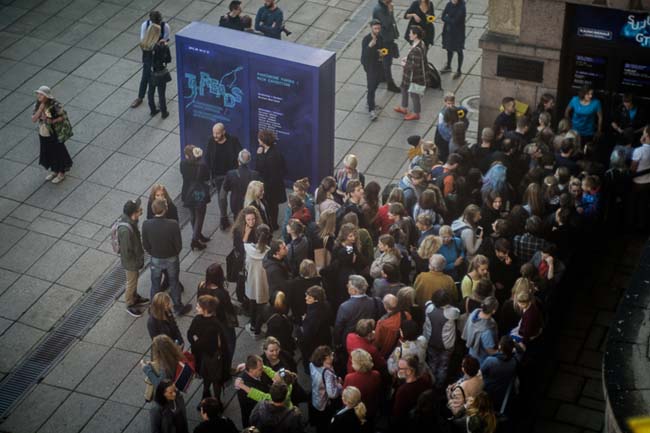
    Opening of the exhibition THREADS at Kaunas central post office_photo by remis scerbauskas  (3)

    Opening of the exhibition THREADS at Kaunas central post office, photo by Remis Scerbauskas (3)

    The opening weekend of the biennial attracted hundreds of art lovers and experts from Lithuania and abroad and surprised by the wide and thrilling programme. It is not so often nowadays to wait in the queue for two hours willing to see the exhibitions of contemporary art.
    More information:
    www.biennial.lt


    Courtesy of Kaunas Biennial

    unnamed

    Ford Crull Solo Show “Crossroads“

    Opening Reception Sat. Oct 3, 4-6pm
    Ober Gallery
    6 N. Main St. Kent, Ct 06757
    on view thru Nov. 15, 2015

    Ford Crull’s latest solo show “Crossroads” opens with an Artist’s Reception on Saturday, October 3, 4-6pm at Ober Gallery, Kent, Ct.

    Ford Crull’s latest oil paintings and drawings are a 21st century exploration of ancient signs and patterns. Starting with the quadratic composition of the Crossroad, Crull’s markmaking emerges Sent from my iPhone

    Ford Crull “Crossroads” opens October 3rd and continues through November 15th.

    About Ford Crull:
    Since Ford Crull received his B.F.A. in painting from the University of Washington in Seattle, WA, he has shown extensively throughout the United States and internationally in solo and group exhibitions. Recently, Mr. Crull has exhibited in Shanghai, London, and Milan. His work is represented in The Metropolitan Museum of Art, Brooklyn Museum, National Gallery of Art (Washington D.C.), Dayton Art Institute, as well as many corporate and private collections such as Coca Cola, IBM Corporation, J.P. Morgan & Co., and Mobil Oil Corporation, among others. Recently he has executed live art performances in Shanghai, Seattle, and The Woodstock Film Festival.

    About Ober Gallery:

    Ober Gallery is a gallery dedicated to showing mid-career and established artists who have a connection to New York City, New England and Russia. Open Thurs 1-4, Fri and Sat 12-5 and Sun 1-4 at 6 N. Main St. Kent, Ct 06757 Phone the gallery  860-927-5030  for more information

    News | Exhibitions