• Yaroslav Derkach
    SYMBOLS
    18.02 – 18.04.2016

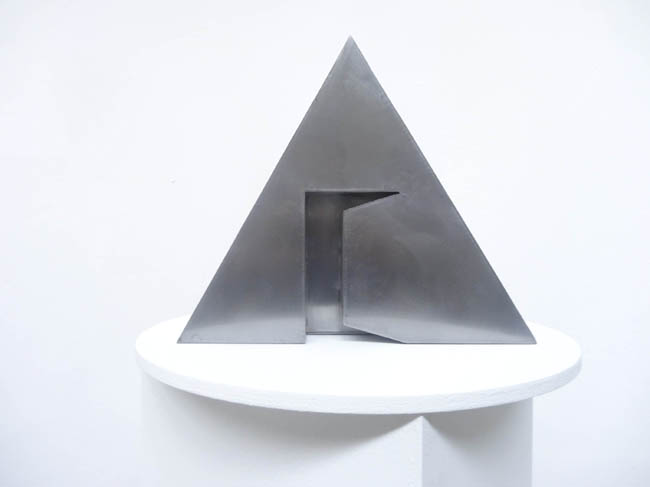
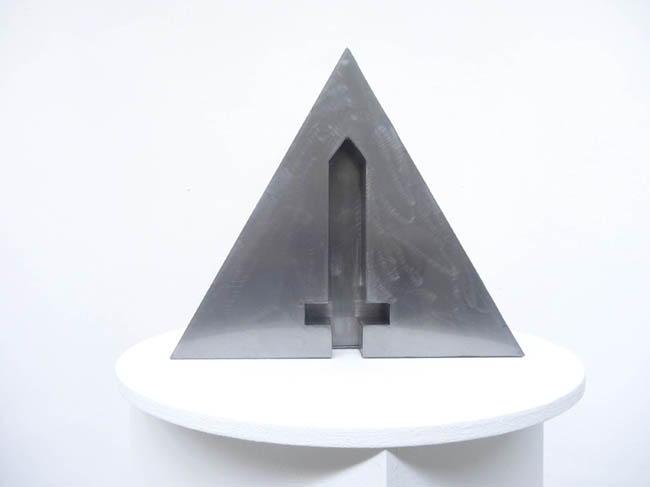
    Symbols, strong as steel
    How powerful senses of this world can be expressed? Perhaps, using symbols. Project consists of ten objects, and their configuration is triangle and square, which personify an intention to grow up and stability. Material, from which the symbols made, is a symbol itself. It is metal. Its strength gives the same quality to the concept of current project. In realism sign means object (reality), in postmodernism sign means sign. Symbol combines realism and postmodernism.
    S2
    Yaroslav Derkach, conceptual  Ukrainian sculptor, was born in Lugansk, 1977, and currently lives in Kyiv. Graduated from Lugansk State University, faculty of Ukrainian filology. His previous personal art project at TSEKH was “DOGMA”, conceptual objects from black metal, 2014. Participated in Art Market Budapest, 2013, and Art Vilnius 2010, 2011.
    TSEKH contemporary art gallery
    Kyiv, 69 Kyrylivs’ka (Frunze) Street

    SYMBOLS

    S3

    How powerful senses of this world can be expressed? Perhaps, using symbols.

    Because symbols mark the reality so deeply, unlike pragmatic sign, which simply points an object. Symbol has its own sense, and simultaneously represents the other one. Symbol is endlessly unfolding in space, giving to subject an opportunity of free storytelling about itself.

    Project consists of ten objects, and their configuration – is triangle and square, which personify an intention to growing up and stability. In fact, these symbols have double meaning.  Symbols contains various objects from the real world, they became features of human aspirations. Due to its understandable meaning, these constructions do not need to be sophisticatedly decoded.  Simultaneously, horizon of their meanings is getting wider. Understanding begins as a result of associative thinking, and treatments are not constant.

    Material, from which the symbols made, is a symbol itself. It is metal. Its strength gives the same quality to the concept of current project.

    In realism sign means object (reality), in postmodernism sign means sign. Symbol combines realism and postmodernism.                                                                         

    – Yaroslav Derkach


    March  3 – 6, 2016

    Spring Studios, 50 Varick Street
    New York, NY 10013

    Learn more

    index

    Elias Friedensohn: Hat  Blocks Crows       

    Dates:        8    March    –    9    April    2016
    Reception:    Saturday    19    March    3    –    5    pm

    Luise Ross Gallery
    547 W 27th St #504
    New York, NY 10001

    Learn more


    Source: ARTSY EDITORIAL
    BY MOLLY GOTTSCHALK

    “If you see a painting out there and you wanna call me, I can give you the 411,” six-time NBA All-Star Amar’e Stoudemire tells me from his Miami mansion, a 14,555-square-foot home filled with run-of-the-mill baller pad fare—a movie theater, a nine-car garage, a game room complete with a wet bar—oh, and a budding art collection.

    Stoudemire bought the house in 2011 for a cool $3.7 million following a mega-deal with the New York Knicks, and the following year began to fill it with art. His Instagram account, with some 366,000 followers, is dotted with ’grams of new acquisitions—paintings by up-and-coming artists Devin Troy Strother and Hebru Brantley, a print by Basquiat—and, well, one where he’s taking a bath in red wine post-practice. (His favorite soak? Matarromera Crianza. Don’t worry, he drinks a glass after.)

    Currently in his 13th year in the NBA, on a one-year, $1.5 million contract with the Miami Heat, Stoudemire has added curator, art collector, and adviser to his list of many well-styled hats donned. Since his 2003 NBA Rookie of the Year award—he was the first-ever high schooler to receive it—he’s played ball for the Phoenix Suns, the Knicks, the Dallas Mavericks, and the Miami Heat; teamed up with designer Rachel Roy on a sporty women’s fashion line; authored a Scholastic paperback series for middle-schoolers; made a cameo on Law & Order; and played himself as an anxious patient pre-knee surgery in Judd Apatow’s Trainwreck.

    Stoudemire’s off-court assists of the art-world sort date back to November 16th, 2007. He was ringing in his 24th birthday at a party in Phoenix, Arizona (then playing for the Suns), when a friend brought over a memorable gift that would spur years of future collecting. What to give a basketball player who has everything? A painting of himself, at a lifesize 6’11”, holding a few of his favorite things: a menorah, a Bible, and, you guessed it, a basketball. “There were a lot of symbols inside the painting that reflected my thoughts, who I am. I loved it,” says Stoudemire, who is “culturally Jewish” and sports a Star of David tattoo on his left thumb. “That was when I started to become more involved in the art world.”


    Read more: ARTSY EDITORIAL

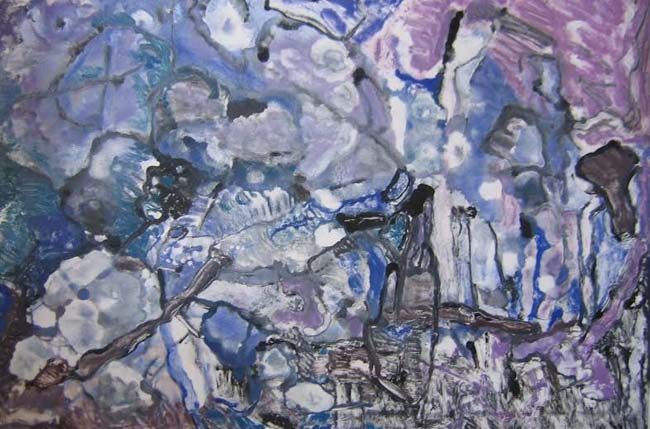
    Beverly Brodsky, Water & Stone, 32" x 42", monotype

    Beverly Brodsky, Water & Stone, 32″ x 42″, monotype

    DATE:    Thursday, March 3, 2016 / Opening Reception
    TIME:    6:00 p.m. – 8:00 p.m.
    PLACE:  Carter Burden Gallery
    548 West 28th Street, #534, New York, NY 10001

    Carter Burden Gallery presents three new exhibitions: Unbound in the east gallery featuring Beverly Brodsky and Elisabeth Jacobsen, Recent Monotypes in the west gallery featuring Myrna Burks and On the Wall featuring Carol Massa. The reception will be held March 3, 2016 from 6 – 8 PM. The exhibition runs from March 3rd through 24th at 548 West 28thStreet in New York City. The Gallery hours are Tuesday–Friday, 11am-5pm, Saturday 11am-6pm.

    Beverly Brodsky

    In Unbound, Beverly Brodsky presents abstract paintings and monotypes for her first exhibition at Carter Burden Gallery. Brodsky’s visceral surfaces are created through many layers of paint. In layering the paint, the artist reflects on the passage of geological time, and how time can be seen through the earth’s layers. In addition to geology, the artist is inspired by mysterious, non-linear realities of the spirit world.  Brodsky’s travels to the Middle East, the Caribbean, the Pacific Northwest, Vermont, and Japan have influenced her work. Her interactions with different cultures, mythologies, and religions have particularly impacted Brodsky’s color decisions. The resulting surfaces of Brodsky’s paintings and monotypes reveal her passion for color.

    Beverly Brodsky, born in Brooklyn, New York, attended Brooklyn College (B.A. degree), where she studied with Ad Reinhardt and Burgoyne Diller. She is an internationally exhibited abstract painter, lives in New York City and teaches at the New School. She has been awarded several fellowships and grants. These include The Connecticut Commission on The Arts(1979), The New York Foundation For The Arts Fellowship (2000), and The Adolf and Esther Gottlieb Foundation Grant (2012). In 1977 she was awarded the Randolph Caldecott Medal for her book, The Golem. Her museum exhibitions include: The Jewish Museum (1988), The Whitney Museum of American Art (2000), The Mazza Museum, (Ongoing), and The Hebrew Union College Museum (2015). Arts In Embassies has recently included her paintings on long term loan exhibitions.

    Read more

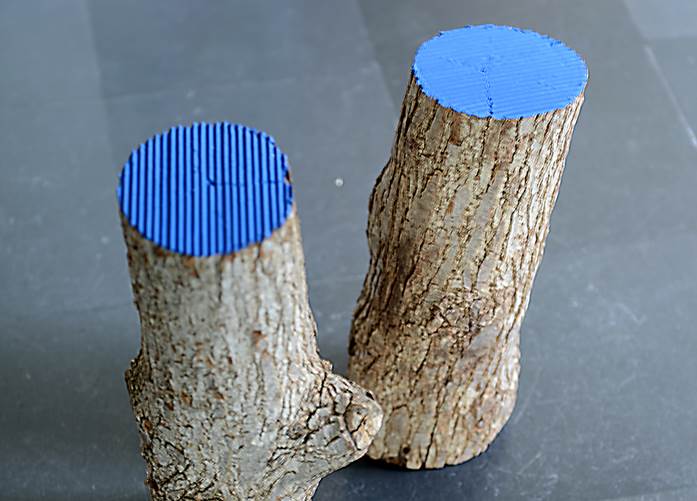
    Since the mid-1990s, Jill Baroff has been strongly influenced by Japanese architecture, which she categorizes as “floor-based,” as opposed to the West’s emphasis on verticality. During a six-month NEA fellowship in Japan, Baroff was captivated by the way light traveled across the weave of her tatami floor during the day; constantly changing the patterns of the mats and consequently affecting the shape and feel of the interior spaces she occupied. In 1997, for an exhibition in Germany, Baroff achieved the same kind of effect using corrugated paper. For the installation at the Bronx Museum Terrace, Baroff chose to work with tree trunks collected from a grove in Upstate New York.

    in a grove refers both to the site where the material come from, as well as to a short story by Ryunosuke Akutagawa, adapted by Akira Kurosawa in the film Rashomon, in which multiple eye-witness testimony of an event contains conflicting information. In Baroff’s installation, the top surface of each trunk has been routed by hand to create grooves, which channel light and capture shadow and has been painted with a single color. in a grove is a monochrome project that is perceived as intensely multi-colored. The viewer becomes the pin around which visual phenomena pivots.

    Jill Baroff in a grove (detail), 2016 White walnut wood, flasche

    Jill Baroff
    in a grove (detail), 2016
    White walnut wood, flasche

    Jill Baroff’s work is represented in the following collections: Achenbach Foundation, Fine Arts Museums of San Francisco; Fogg Art Museum, Harvard University Art Museums, Cambridge; Museum Folkwang, Essen; Hamburger Kunsthalle, Hamburg; Kupferstichkabinett, Berlin; The Menil Collection, Houston; The Museum of Modern Art, New York; National Gallery of Art, Washington; Staedel Museum, Frankfurt; Staatsgalerie Stuttgart, Stuttgart; Yale University Art Museum, New Haven.

    Jill Baroff: in a grove
    February 24 to May 8, 2016

    The Bronx Museum of the Arts
    1040 Grand Concourse
    Bronx, New York 10456
    T: 718-681-6000
    info@bronxmuseum.org


    Courtesy of The Bronx Museum of the Arts

    NY Arts
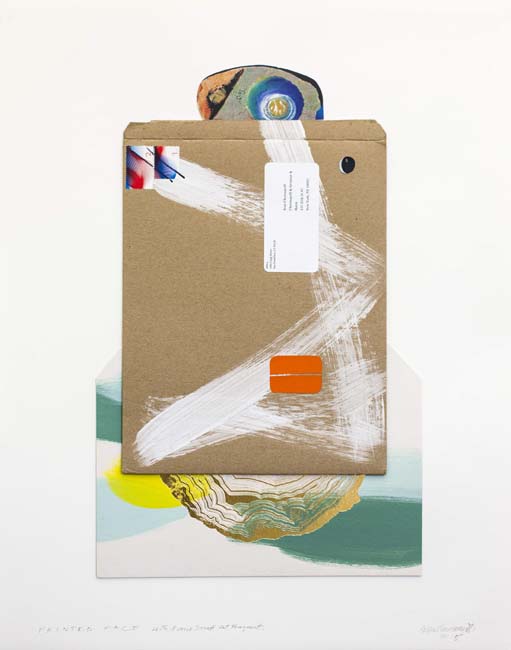
    Ivan Chermayeff, Printed Face with Enrico Donati Hat Fragment, 2015, collage, 14 x 11 inches

    Ivan Chermayeff, Printed Face with Enrico Donati Hat Fragment, 2015, collage, 14 x 11 inches

    March 3 – April 9, 2016
    Opening reception: Thursday, March 3, 2016 from 6-8pm
    Artist Lecture: Saturday, March 12 from 2-3pm 

    Pavel Zoubok Gallery is proud to announce an exhibition of collages and sculptures by Ivan Chermayeff (b. 1932), whose fine art practice and influential design career have saturated the visual landscape and profoundly shaped the post-modern era. Focusing on works made within the past decade, Collages & Sculptures celebrates the compositional strategies shared between the artist’s fine art and graphic design practices. Informed by a lifelong commitment to the interplay of tone and form, Chermayeff’s associative images manifest a deeply poetic sensibility and a rigorous graphic intelligence. He has famously said that the essence of design is “finding relationships,” a tactical approach to visual communication that similarly informs his collages and assemblages.

    Composed of humble materials including envelopes, stamps and pebbles, Chermayeff’s extemporaneous compositions vibrate with the color and chaos of daily life. Emphasizing the textural and graphic variety of physical correspondence, his collages incorporate memos and mementos from the mailroom of his legendary firm Chermayeff & Geismar & Haviv. These found elements are the basis of many works in the exhibition, where stamps become eyes and barcodes form mouths, offering each personage a distinct character. In another series, Chermayeff constructs an array of abstract, geometric collages from contiguous lines and planes of pure color. These ebullient yet economical works balance positive and negative space, shaping palpitating surfaces that appear to be freeze frames from a life’s pursuit of graphic dynamism.

    Ivan Chermayeff’s work as a fine artist, designer and illustrator has been exhibited throughout the United States and abroad, with solo exhibitions at the Birmingham City University, England; De La Warr Pavilion, Bexhill-On-Sea, England; Pera Museum, Istanbul, Turkey; Aldrich Museum of Contemporary Art, Ridgefield, Connecticut; Corcoran Museum of Art, Washington D.C.; Cooper Union, New York; and The Virginia Museum of Art, Richmond; among others. Chermayeff is the co-founder of Chermayeff & Geismar & Haviv, one of the most iconic design agencies of the 20th Century. Recognized worldwide, their logos and graphic identities have been commissioned by clients including Chase Manhattan Bank, NBC, Mobile, PBS, The Smithsonian, The Museum of Contemporary Art (Los Angeles) and The Museum of Modern Art. This is Chermayeff’s second exhibition at Pavel Zoubok Gallery.

    Pavel Zoubok Gallery
    531 West 26th Street, 2nd Floor
    New York, NY 10010

    unnamed

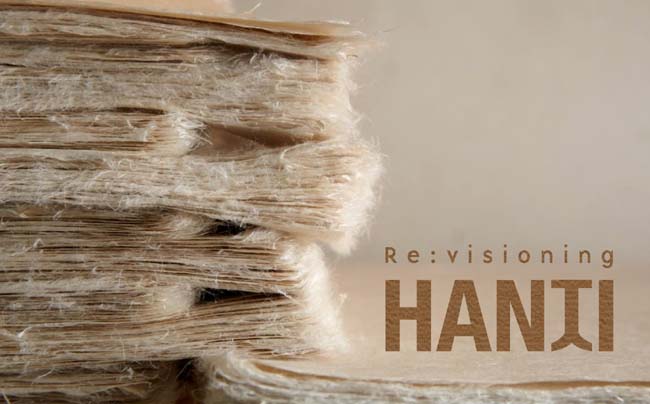
    Re:visioning HANJI Exhibition
    to launch as a part of Asia Week 2016

    at the Korean Cultural Center New York

    Hanji, Korean traditional paper created by “ninety-nine touches by the maker and one touch by the user” is presented in showcase exhibition from February 24th to March 31st, 2016.

    Opening Reception: Wednesday, March 9, 2016 at 6 – 8 PM 


    Re:visioning HANJI

    February 24th to March 31st, 2016.
    Opening Reception: Wednesday, March 9, 2016 at 6 – 8 PM 

    You are cordially invited to join us for a VIP preview and Opening Reception of the Re:visioning HANJI exhibition at Gallery Korea of the Korean Cultural Center New York to celebrate 1000 years of the rich history of hanji, Korean traditional handmade paper.

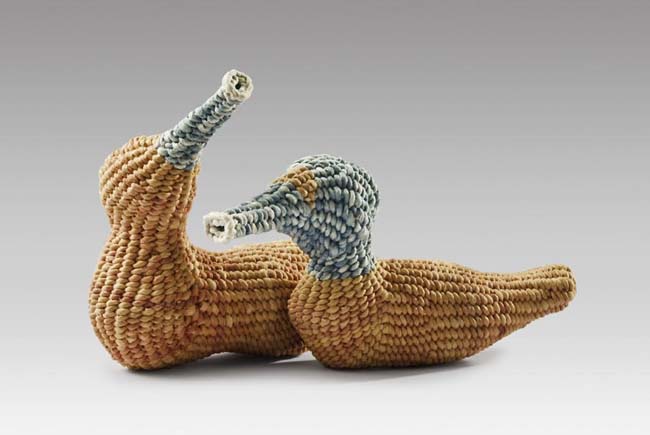
    Hanji literally means ‘the paper of Hanguk (the Korean term to refer to the country),’ and is the exquisite traditional Korean paper made with the fibrous skin of mulberry trees. The process of making hanji is lengthy and complicated, and it is said the completion of a single sheet of hanjirequires “ninety-nine touches by the maker and one touch by the user.” The deliberate complexity and multilayered steps required for the creation of hanji is not only a direct reflection of its rich history but also contributes to its longstanding allure. In its respect for nature in the production process, its unmatched resilience and textural range, and the ways that hanji has so closely been intertwined with the livelihood of Koreans (not only for as paper for drawing and writing but in the creation of everyday, household products), hanji has been an indispensable part of Korean history.
    The exhibition explores the past, present, and future of hanji – from its long history since the 4thand 5th centuries in the Korean peninsula to the visually and texturally intricate artworks and industrial application in our contemporary times, Re:visioning HANJI is a celebration of the deep tradition and continuing potential of hanji in the global market.

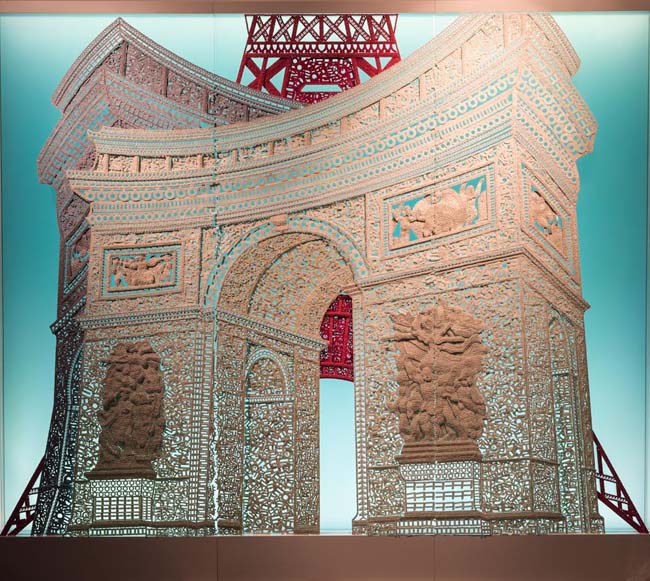
    Ran Hwang

    Ran Hwang

    n Hwang, is an internationally renowned poetic installation artist who uses thousands of handmade hanji buttons to create large-scale installation works. Hwang’s 9 feet tall installation depicting the Triumphal Arch and Eiffel Tower will be shown at the exhibition. The installation, the Beginning of the Bright, is made of Hangul (Korean alphabet hanji buttons to celebrate Hangul’s designation as a UNESCO Record Cultural Heritage. Ran Hwang has exhibited at several international institutions including the Queens Museum of Art, New York; The Hudson Valley Center for the Arts, New York; the Chelsea Art Museum, New York; The Seoul Arts Center Museum; and The Jeju Museum of Art, Jeju Island.

    unnamed3

    Aimee Lee

    Aimee Lee is papermaking artist and the leading hanji researcher and practitioner. She holds a BA from Oberlin College and an MFA in Interdisciplinary Book and Paper Arts from Columbia College Chicago. She researched Korean papermaking and its related crafts on a Fulbright Fellowship and returned to the United States to build the first hanji studio in North America at the Morgan Conservatory in Cleveland, Ohio.  Her artwork is exhibited internationally and resides in collections that include the Joan Flasch Artists’ Book Collection, Museum of Modern Art Library, and Yale University Library Special Collections. She travels widely to teach and lecture at colleges, museums, and arts organizations. She has written about her research for numerous publications and maintains extensive digital resources about hanji on her website (aimeelee.net).

    Further detailed information and materials on the history, materials, and applications of hanji can be viewed and downloaded at our website at www.koreanculture.org.

    Partnered Event: HANJI Workshop 
    A weekend hanji workshop will be held on Saturday, March 12th, and Sunday, March 13th at the Korean Cultural Center New York led by artist Aimee Lee, one of the leading hanji experts in the United States. The workshops provide an in-depth and hands-on opportunity to learn about the nuanced process of making hanji, and also is a great chance to make your own hanji craftworks.

    The program is free, but reservations are required and space is limited. Please note that programs on March 12th and 13th differ, and level of difficulty should be noted. For more information on the workshop, please email gallerykorea@gmail.com.

    Gallery Korea at
    Korean Cultural Center NY 

    460 Park Ave.,6Floor
    New York, NY 10022
    http://www.koreanculture.org

    Although the main discussion centers were the cities of New York or Paris, the modern thinking in art didn´t only took place there, its aspirations reached other latitudes that, simultaneously, were added to the break up with the figurative tradition of naturalistic representation and configured the new artistic languages that we know today as Avant Garde movements. Mexico was one of these countries.

    The exhibition Los Modernos, organized by the Museo Nacional de Arte in collaboration with the Musée des Beaux-Arts of Lyon, city of de Lyon, France, offers a sample of the development of modern art in the first half of the XX century, from a selection of significant examples of European and Mexican art.

    The curatorship is in charge of Agustín Arteaga, headmaster of the Museo Nacional de Arte and Sylvie Ramond, headmaster of the Museé des Beaux-Arts of Lyon, in collaboration with Paulina Bravo, chief of the curatorial department of the MUNAL, and Ariadna Patiño Guadarrama, —curators associated to the project-, Los Modernos is composed by nine thematic cores that do not answer to a chronological order but to aesthetics discourses that allow to appreciate the statements and dialogues shared by Mexicans and Europeans about the path of the plastic arts, as well as their contributions in the development of the Avant Garde movements such as post- impressionism, fauvism and cubism among others.

    Which were the common explorations between these two continents? What generated this ideological change and which were its implications in the artistic field? This questions will be boarded throughout the more than 140 pieces that compose this exhibit and which provenance comes both from the Musée des Beaux-Arts of Lyon, and the Museo Nacional de Arte’s collection; as well as other Mexican collections such as the Museo de Arte Moderno and Rufino Tamayo, and internationals as the Musée Picasso and the Centre National d’Art et de Culture Georges Pompidou of París.

    The Mexican Revolution and the First and Second World Wars, altered the way of thinking of the artists and their plastic creativity. Even though the French artists are considered the predecessors of modern art, the Mexican artists were not oblivious to the new possibilities that art found to expand its field of action and some of them, like Diego Rivera, Ángel Zárraga, Gerardo Murillo or Lola Cueto, knew from first hand such precepts in their trips and journeys in Europe. Some others, like the students from the Escuela Nacional de Bellas Artes —formerly the old Academia de San Carlos— from teachers that studied in Europe or even came from there, knew the same concerns they had in the old continent, as is the case of Saturnino Herrán and María Izquierdo to mention a few.
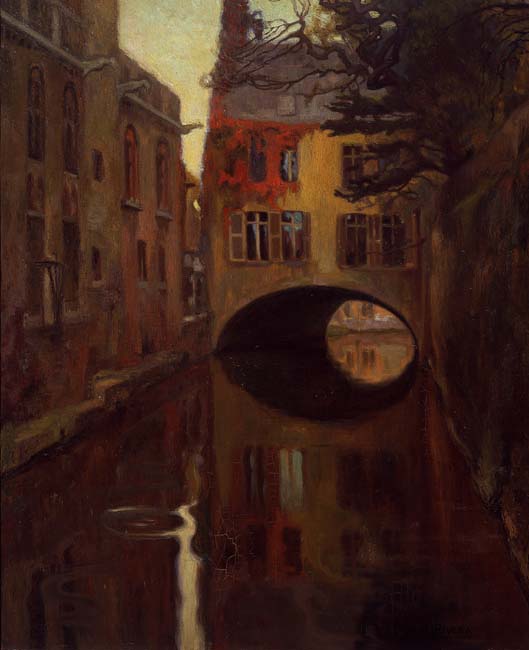
    Diego Rivera. La casa sobre el puente, 1909 Óleo sobre tela 147.7 x 121.45 cm (sin marco) 150.2 x 124 x 5 cm (con marco) Museo Nacional de Arte, INBA Acervo Constitutivo, 1982

    Diego Rivera. La casa sobre el puente, 1909 Óleo sobre tela 147.7 x 121.45 cm (sin marco) 150.2 x 124 x 5 cm (con marco) Museo Nacional de Arte, INBA Acervo Constitutivo, 1982.

    There were ass well, European Artists like André Breton (France, 1896) Wolfgang Paalen (Austria, 1905), Leonora Carrington (England, 1917) or Remedios Varo Spain, 1908), among others, that visited or lived a part of their lifes in Mexico, where not only did they bring new aesthetic proposals from their own countries but also participated from ideas that were already being generated here to give a new turn to the European explorations.

    Paisaje, the first of these cores, offers a set of pieces of artists such as Albert Gleizes, Rivera or Albert Marquet, that show the fundamental changes in the relationship between drawing and painting that occurred in the shift from the XIX to the XX century. This works expose the early process of transition of some modern artists to more radicalized ways to conceive the space, as cubism would do later, where there is no longer an interest to copy reality but begin to reinterpret it.

    The feminine nude was a topic of interest for modern art, because it was linked to the bohemian life and the creative liberty free from the aristocratic moral. The core Desnudo exposes the diverse ways in which the female body was approached once the moderns began to abandon the classical anatomical proportion rules instituted by the Academy and began to propose new approximations to gender through fading figures and the superposition of multiple perspectives. This block is composed by works of artists such as Gerardo Murillo (Dr. Atl), Jean Puy, Raoul Dufy, Ángel Zárraga, Pierre Combet-Descombes, Rufino Tamayo, among others.
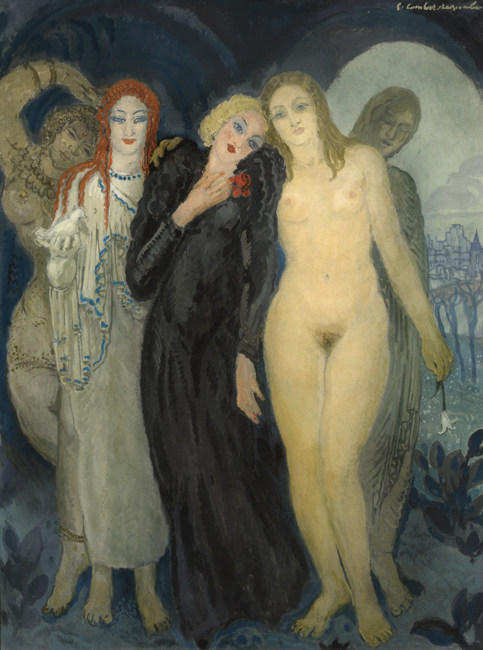
    Pierre Combet-Descombes, Fantômes, 1936. Tempera sobre tabla, 200 x 150 cm 207 x 157 cm Don de Louis Gallavardin en 1949. Museé des Beaux-Arts de Lyon. No. Inv. 1949-8, 1920, Guilles Alonso, Lyon, N14-414, Basset Alain: Photographe, TIF.

    Pierre Combet-Descombes, Fantômes, 1936. Tempera sobre tabla, 200 x 150 cm 207 x 157 cm Don de Louis Gallavardin en 1949. Museé des Beaux-Arts de Lyon. No. Inv. 1949-8, 1920, Guilles Alonso, Lyon, N14-414, Basset Alain: Photographe.

    The popularization of photography in the XIX century caused the pictoric portrait to abandon the function of representing with the greatest naturalism possible –this was better done by the photographic machine- and opened a field of possibilities that led the modern painters to focus on the emotional and expressive qualities of the subject. The third core, Retrato, oscillates around this topic, it shows the variety of aesthetic solutions and plastic explorations on color, light, chiaroscuros or anatomical disproportion, that the artists used to represent subjectivity. In this core we will find pieces of artists such as Henri Matisse, David Alfaro Siqueiros, Gino Severini, Alfonso Michel, Suzanne Valadon and Alfredo Zalce among others.
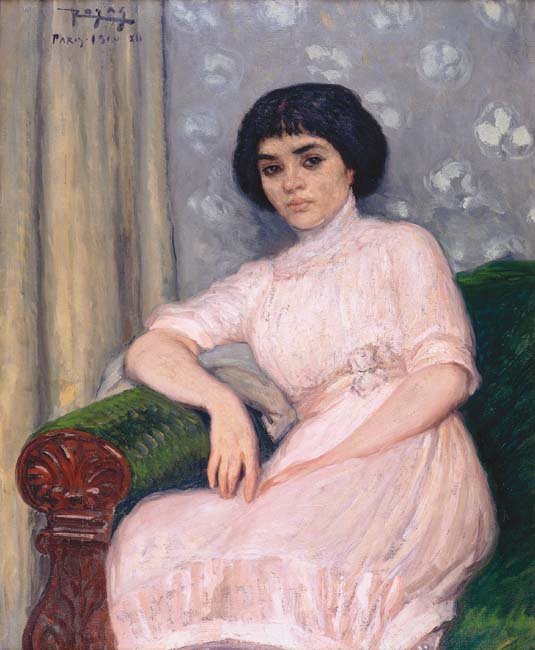
    Ignacio Rosas. Retrato de Tomasa Venegas, 1910 Óleo sobre tela 80.9 x 64.8 cm (sin marco) 83 x 67 x 3.8 (con marco) Museo Nacional de Arte, INBA Acervo Constitutivo de 1982.

    Ignacio Rosas. Retrato de Tomasa Venegas, 1910 Óleo sobre tela 80.9 x 64.8 cm (sin marco) 83 x 67 x 3.8 (con marco) Museo Nacional de Arte, INBA Acervo Constitutivo de 1982.

    Surrealismo deepens in the interchange that took place in our country between national and European artists. The Mexican Surrealism although distant to the specific adscription conceived in Europe and New York was consolidated thanks to the presence of foreign artists like Wolfgang Paalen, Leonora Carrington, Remedios Varo. Besides pieces from these artists, this section includes some examples of the remains of this movement in Europe after World War Two, through Works of André Masson, Wilfredo Lam, Victor Brauner and Max Schoendorff.
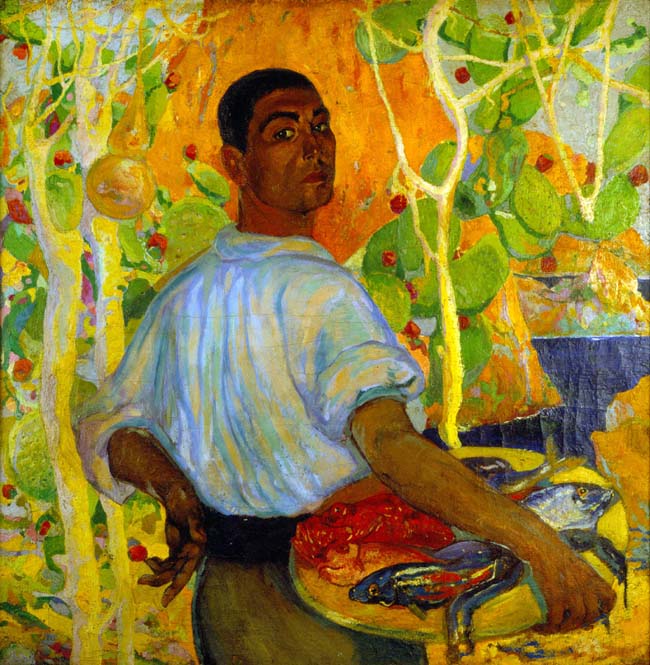
    Roberto Montenegro. Pescador de Mallorca, 1915Óleo sobre tela99.5 x 99.5 cm 102.6 x 102.8 x 4.5 cm Museo Nacional de Arte, INBA Acervo Constitutivo. 1982. F

    Roberto Montenegro. Pescador de Mallorca, 1915Óleo sobre tela99.5 x 99.5 cm 102.6 x 102.8 x 4.5 cm Museo Nacional de Arte, INBA Acervo Constitutivo. 1982.

    In the other hand, the core Luz y Color shows the formal explorations about these two elements (light and color) that were no longer approached as a tool in service of the hegemonic of drawing, always controlled to mimic reality, but to progressively become protagonists of the painting thanks to their plastic potential. In these sections we find art works from artists like Robert Delaunay, Lola Cueto, Pierre Bonnard, Roberto Montenegro, among others.

    In Línea pieces of authors such as Picasso, Fernand Léger, José Clemente Orozco or Alonso Michel will be exposed. In this section, the pieces compose a series of examples about the new position that the line acquired in the modern art that -as is the case of color and light- stopped being limited to the technique of drawing to ascend as an autonomous unit because of its pictoric qualities.
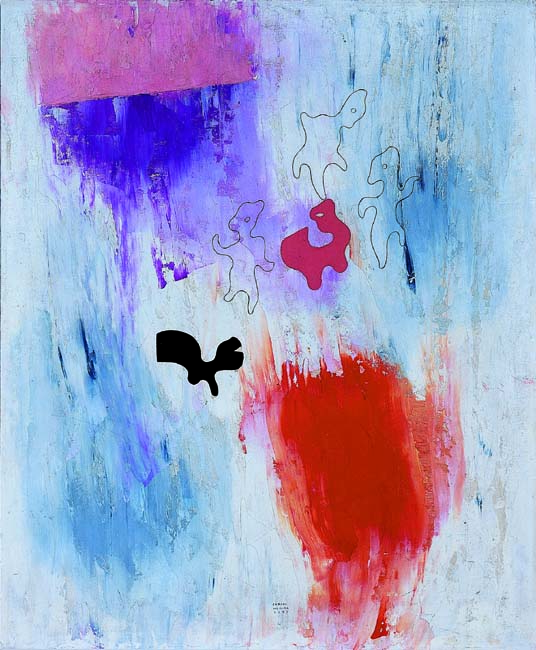
    Carlos Mérida. Angelitos de la serie Cielo de Texas, ca. 1936 Óleo sobre tela 61 x50 cm (sin marco) 97.7 x 87 x 6.5 cm (con marco) Museo de Arte Moderno, INBA

    Carlos Mérida. Angelitos de la serie Cielo de Texas, ca. 1936 Óleo sobre tela 61 x50 cm (sin marco) 97.7 x 87 x 6.5 cm (con marco) Museo de Arte Moderno, INBA.

    The refection on space was one of the concerns that interested the moderns. Cubism is the best example of this interest. Espacio, eight core, shows these explorations through works of Georges Braque, Henri Hayden, Emilio Di Cavalcanti, Léger, Diego Rivera and others.

    Finally, the core Abstracción shows art works of this artistic style that is totally opposite to figurative art. It includes pieces of authors such as Pierre Soulages, Olivier Debré, Antoni Tàpies, Francis Bacon and the Mexicans Manuel Felguérez, Vicente Rojo or Fernando García Ponce.
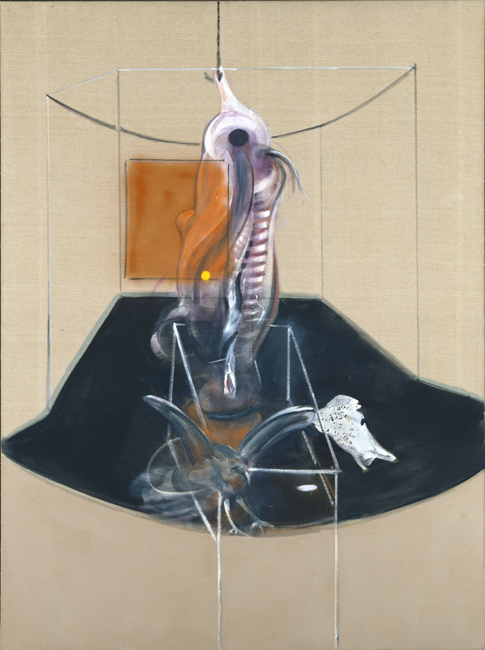
    Francis Bacon. Carcasse de viande et oiseau de proie, 1980 Huile sur toile 198 x 147 cm217.8 x 167 cm Musée des Beaux-Arts de Lyon Legs Jacqueline Delubac, 1997 Inv. 1997-21, N08-212, Ojeda, Le Mage: Photographe, TIF.

    Francis Bacon. Carcasse de viande et oiseau de proie, 1980 Huile sur toile 198 x 147 cm217.8 x 167 cm Musée des Beaux-Arts de Lyon Legs Jacqueline Delubac, 1997 Inv. 1997-21, N08-212, Ojeda, Le Mage: Photographe.

    In different directions, this exhibition will be an encounter with all the senses, to know the creative spirit among the national and foreign artists and the dialogue that takes place in each core allows to generate a series of proposals where the MUNAL will involve all the public. Cita a ciegas is one of these, in schedules that will be revealed, the exhibition will hide the name of its artists to highlight the mastery of each of the works, promoting new experiences that bring the spectator and the pieces closer in a different way.

    Also, as part of the Academic Program, there will be a film cycle, conferences, guided tours and workshops. There will be as well, a catalogue in bilingual edition and downloadable material in the web page www.munal.com.mx

    Los Modernos will be in exhibition from November 11th to April 3rd 2016.  

    After its stay in the MUNAL, Los Modernos will travel to the Museo de las Artes of the Universidad de Guadalajara (MUSA) in Jalisco.

    Exhibition organized by the Museo Nacional de Arte, Mexico in collaboration with the Musée des Beaux Arts de Lyon City of Lyon , France.


    Courtesy of the Museo Nacional de Arte, Mexico

    NY Arts

     

    The curator of the seventh edition of Bucharest International Biennial for Contemporary Art will use a novel approach to bring art closer to people in the public space. This is the first edition of Bucharest Biennale where the works will not be exhibited between the four walls of a museum or an art gallery, but in different areas of the city, as to be more accessible to the majority residents.

    The most important contemporary art event in Eastern Europe will be held May 26 – June 30 2016 and will be curated by Niels Van Tomme (Belgium), researcher, critic and curator who works at the intersection of culture, politics and contemporary aesthetics. All of the works from this edition will be exhibited through billboards, courtesy of Posterscope. Standing at the crossroads between public and private, the stands which will hold the works will open up a discourse about how the public spaces in a city can be cultivated.

    “The curatorial concept of Niels Van Tomme (BE) ‘What Are They Building Down There?’ puts forth strong overtones of a new way of navigating the city, the works being exhibited in different urban areas, creating a trail which invites one to discover the entirety of Bucharest, not just experience an art exhibition.”
    Răzvan Ion & Eugen Rădescu – Co-fondatori Bucharest Biennale


    “Cooperation with Bucharest Biennale is part of our company philosophy. It is a goal for us to help the development of the cultural area. We wish to be a good start and the cooperation to continue in the future. We are glad to contribute to this important event.“
    Bogdan Mogoroașe – Client Service Director Posterscope Romania


    Through this innovative exhibition mode, contemporary art will become an integral part of the city and in placing the works in 21 different areas, they will become available to the majority of residents, whether they live in the city center or in the furthest neighborhoods.

    The collaboration with Posterscope is a first for a contemporary art event in Romania and underlines the cooperation between the artistic and economic spheres.

    Each work will be exhibited for the first time during the 7th edition of Bucharest International Biennial for Contemporary Art and will be adapted to the exhibition medium. The works will be exhibited on billboards* and backlit billboards*.

    Posterscope is the leading communications agency specialising in creative and digital out-of-home advertising such as OOH billboard advertising. The Posterscope network consists of almost 900 people in 52 offices, located in 34 countries worldwide.

    BUCHAREST BIENNALE
    Bucharest International Biennial for Contemporary Art

    May 26 – June 30 2016

    More details about the concept of BB7: www.bucharestbiennale.org


    Courtesy  of the Bucharest International Biennial for Contemporary Art

    News | Exhibitions