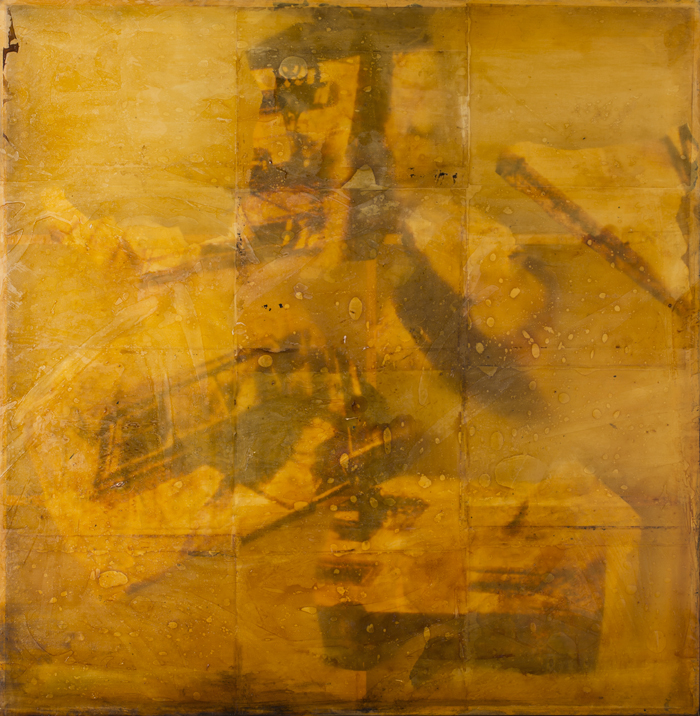
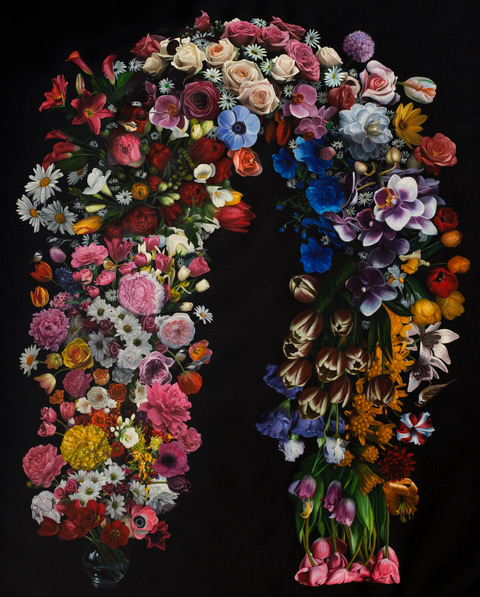
• Disintegration. 53 x 57 inches, mixed media, 2016

    Disintegration. 53 x 57 inches, mixed media, 2016

    Jerzy Kubina
    ‘Between Light and Shadow”
    Opening: Saturday, Sept. 24th 2016, 6-9pm.
    September 24th – October 22nd, 2016

    Square Peg Gallery
    385 Warburton Ave.,
    Hasting-on-Hudson, NY 10706
    e-mail: mdiep@squarepeggallery.com

    SQUARE PEG GALLERY PRESENTS BETWEEN LIGHT AND SHADOW​, A SOLO SHOW FEATURING NEW WORK BY POLISH ARTIST JERZY KUBINA. OPENING RECEPTION, SATURDAY, SEPT. 24TH, 2016, 6-­9PM.

    “In my belief, art is the source of pure energy and truth, obsessively mirrored in the ritual of creation. My new works are a continuation of the process of creating art for art’s sake.”
    –  Jerzy Kubina, July 2016

    Square Peg Gallery​ in Hasting-on-Hudson will host a public opening reception for Between Light and Shadow,​ a solo show featuring new work by Jerzy Kubina​, on Saturday, September 24th, from 6pm to 9pm, at 385 Warburton Ave., Hasting-on-Hudson, NY. The show will conclude with a closing reception on Saturday, October 22nd, from 2pm – ­ 5pm.

    Jerzy Kubina was born in Zamosc, Poland; he studied at the Academy Of Fine Arts in Krakow during the communist regime, and graduated with a masters degree in painting. In 1986 Kubina moved to New York and began to experiment with installations and large scale paintings, and in 1991 he spent a year living and working in Paris. Kubina uses a variety of techniques to create layers, textures and translucency in his work. His studio process is akin to that of a laboratory; he constantly challenges himself to discover something exciting, always looking for new techniques to express his emotion.

    In addition to being widely exhibited in the US, including at the legendary and highly esteemed OK Harris ​in SoHo and well known Louis XIV gallery in Paris, Kubina’s work has been shown internationally, in France, Poland and Mexico.

    Square Peg Gallery
    website www.squarepeggallery.com
    mdiep@squarepeggallery.com.

    By Emese Krunák-Hajagos

    EKH: When visiting your exhibition at the Elaine Fleck Gallery in Toronto, I was looking at your large format paintings trying to figure out the technique you used. Then Elaine Fleck explained that it is a unique process, invented by you, called Gravity paintings, since you use gravity to control the flow of paint. When and how did you discover and develop your painting method?

    AS: I’ve been shaping my painting method into something unique, that I enjoy for years. I first learnt how to paint with paintbrushes, but it took me longer to discover how to paint without them! It wasn’t easy to stop using the tool I was most comfortable with, but you have to take risks to discover new things.

    I started using drips back in 2008 to achieve a natural/organic energy in my work. At that time I used paintbrushes and tape to create the more concrete, architectural elements. As I became more experienced with using gravity to direct the flow of paint, the paintbrush became an unnecessary touch-up tool. It was then I realized with more planning, calculating and layering I could eliminate the use of a paintbrush and tape. This became a challenge that took over three years to master. In 2011 I created my first brushless painting. Now, after years of experimenting with gravity and rotating my canvas, I am able to manipulate where and how each drip will fall. My work evolves with each piece I create. I am still discovering new techniques.

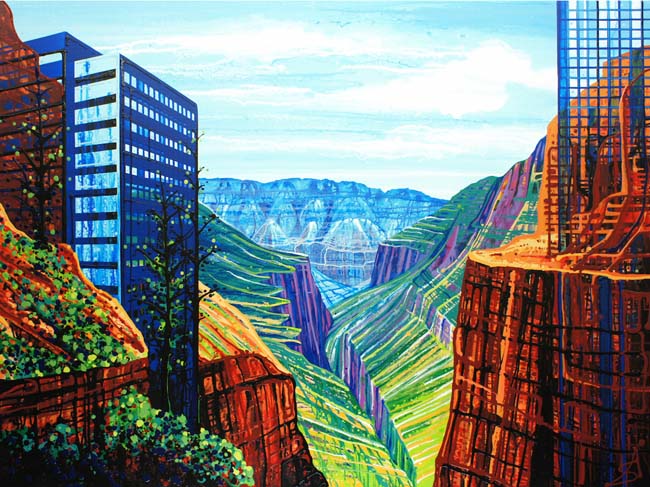
    Amy Shackleton, Perched on the Rim (Arizona + Toronto) 2014, acrylic and enamel on canvas, 45″ x 60″. Image courtesy of the artist and Elaine Fleck Gallery

    Amy Shackleton, Perched on the Rim (Arizona + Toronto) 2014, acrylic and enamel on canvas, 45″ x 60″. Image courtesy of the artist and Elaine Fleck Gallery

    EKH: I also watched the amazing videos, Terraced city and Waterworks (Painting Time-Lapse) showing you during work. You don’t use paintbrush but a special technique that never been used before. Please tell us more about the details of the procedure.

    AS: Using squeeze bottles filled with liquid paint I build each painting from the ground up with hundreds of lines and dots. I use string and a level to help predict where each drip will fall and a spray bottle filled with water to manipulate the drips. As in real life construction, the architectural aspects of my work are calculated, measured and controlled in order to assure precise locations of each line. As in nature, the environmental elements are more spontaneous, liquid and organic, relying on gravity’s force.

    EKH: Many of your works are large. How is a 50-foot long piece assembled?

    AS: My studio is set up to accommodate the creation of large scale works. The maximum diameter I can spin is fourteen feet, but I am able to create larger pieces by using multiple panels. I am currently working on a 53-foot-long piece, which is made up of thirteen interconnected panels. Since my spinning/drip technique requires drying time between layers, I make the best use of my time by working on up to six paintings at once in my studio.

    EKH: The subject matter of your canvases are mainly urban landscapes. Did you find your theme first and then develop a suitable painting method for it, or was it in the other way around?


    Amy Shackleton,Through the Trees (Toronto + California) 2015, acrylic and enamel on canvas, 45” x 60”. Image courtesy of the artist and Elaine Fleck Gallery

    Amy Shackleton,Through the Trees (Toronto + California) 2015, acrylic and enamel on canvas, 45” x 60”. Image courtesy of the artist and Elaine Fleck Gallery

    AS: I discovered my theme before I developed a suitable painting method for it. After experimenting with a variety of subjects, I eventually zoned in on urban landscapes because I have a passion for nature and the city. I have always had a soft spot for nature, but my attraction to the city came much later—during my studies at York University in Toronto. That is when I began to realize the environmental benefits of high-density living and I started exploring the relationship between nature and cities.

    I explored this theme and experimented with various techniques during my studies at York University. My unique painting method began to emerge in my fourth year and has been evolving ever since.

    EKH: Your paintings are mostly realistic cityscapes with elements of abstraction depicted with strong colors. They seem calculated, almost architecturally planned, but still feel somewhat spontaneous. How do you decide on a composition? Do you work from photographs or sketches?

    AS: Yes! I’m glad you feel the spontaneity amidst the planned elements of my work. Since I like to experience the places I paint, I travel for inspiration. I take thousands of photographs of urban and natural environments to inspire my digital studies. I use Photoshop to juxtapose my photographs, develop a composition and decide on a colour palette. Once I know exactly where I’m going with the piece I print the computer study and start painting. Since each layer builds on the last, there is little room for error with my technique.

    EKH: The introduction for your exhibition at Elaine Fleck Gallery states: “Shackleton’s paintings call to mind the dystopian post-apocalyptic aesthetic but strangely without all the gloom, hinting at rebirth and optimism.” You aim for a new, harmonious synthesis of the urban and the natural world. Do you consider yourself an environmentalist?

    AS: I do consider myself an environmentalist. My paintings are intended to portray urban life at its best, demonstrating ways we can work with nature rather than against it. I envision post-industrial worlds where sustainable relationships exist between man and the environment. By exploring the continually evolving approaches to preserving our environment and living more efficiently, I suggest how we can implement innovative solutions for city planning and development with minimal impact on surrounding habitats.

    EKH: What is coming up for you in the near future?

    AS: The Elaine Fleck Gallery will be hosting a solo exhibition of my work this December. Together with the Elaine Fleck Gallery, I am planning a Canada-wide exhibition of my 53-foot-long painting in progress: The Great Canadian LEEDscape. Featuring imagery from each province and territory, this painting explores the natural environment and the recent development of sustainable, LEED-certified buildings from coast to coast. The exhibition is scheduled to debut at Evergreen Brick Works in May 2017 followed by the Visual Arts Centre of Clarington in June 2017. We are in the process of securing additional venues in Western, Northern and Atlantic Canada.

    13895043_1729200797339493_1131742193560859652_n

    Opening Reception: August 17th, 8pm – 9pm.

    Aug. 17-Aug. 23, 2016

    From the official press release by XiMT Photography-

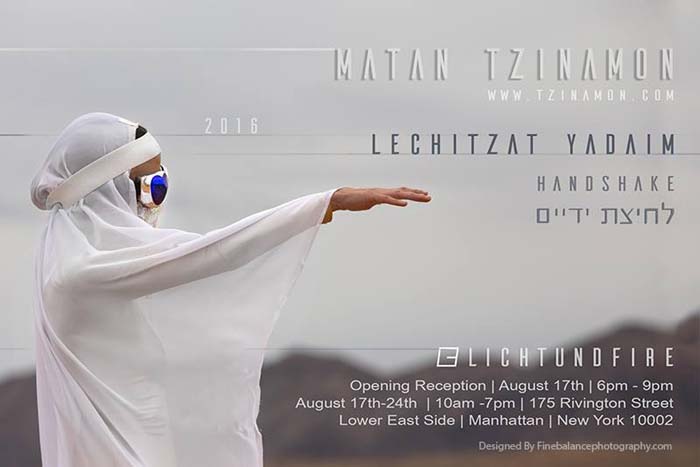
    XiMT Photography announces Matan Tzinamon’s first solo exhibition in New York, at LICHTUNDFIRE (Gallery) in the Lower East Side, Manhattan.

    This exhibition displays a selection of images that capture a broad, yet distinct, current social issue – “Communication.” Lechitzat Yadaim means “a handshake” in Hebrew, and with this exhibition Matan Tzinamon is expressing the issue of a lack of communication in today’s world, offering a simple solution: let your eyes do the handshaking, and open a window for more genuine communication. Tzinamon believes that the future of communication depends on preserving eye contact.

    Matan Tzinamon, born and raised in Israel, explains that the increased dependence on communication via electronic devices, and decrease of communication through the eyes or in person is one of the route causes of the state our world is in today. Eye contact, our most basic form of communication, has been substituted by devices that have become the most common way to run away from our illusionary fears.

    “My body of work reflects the importance of preserving eye contact as a way of communication, and allows the viewer to “shake hands” with my images, by simply looking into their eyes. Through my exhibition, I wish to see the viewer take the experience of my art to the outside world, and help me start creating more handshakes – Lechitzot Yadaim. Lets take the effort and use our eyes to shake more hands.” (Matan Tzinamon, August 2016)

    www.tzinamon.com


    Lichtundfire
    Location:
    New York, NY 10002
    www.lichtundfire.com

    Peter_Karis_opps_web


    MARYLAND ART PLACE ANNOUNCES CALL FOR ENTRY IN PARTNERSHIP WITH THE CYBERWIRE:  “CREATING CONNECTIONS”


    Maryland Art Place (MAP), in partnership with The CyberWire is pleased to announce an open ‘Call for Entry’. An extension of MAP’s annual IMPRINT project, MAP is working with The CyberWire to offer “CREATING CONNECTIONS”, a commission and print replication project.  The image of that artwork will be reproduced in a limited edition and presented to the guests of The CyberWire’s 3rd Annual Women in Cyber Security reception on September 27, 2016.  Applications are due Saturday, August 27, 2016


    The goal of CyberWire’s reception is to facilitate connections among women working in cyber security. The concept of networks—social networks, computer networks and support networks—may be an important point of departure for creating the commissioned work. This commission is open to submissions from women artists living and working in the greater Baltimore metropolitan area.


        We live in a time where cyberspace has become inextricably linked to the lives of individuals and organizations of all kinds. Cyberspace is the medium of global commerce and communication, and it is one of the most important factors in the social, political, and technological changes we see occurring today. The CyberWire provides concise and relevant daily briefings on the critical news happening across the global cyber security domain. In an industry overloaded with information, The CyberWire helps individuals and organizations rapidly find the news and information that’s important to them.


    The Women in Cyber Security Reception will bring together women from across the region and all different points on the career spectrum. This event will be an opportunity to meet, greet and share a common goal—empowering women to succeed in the cyber security field. Leaders from industry, academia, and government can reconnect and strengthen existing relationships while building new ones. Those just starting out in their careers have the chance to meet the technical and business professionals who are shaping the future of cyber security. This invitation-only event will be held at the Columbus Center overlooking Baltimore’s Inner Harbor.


    To view the full prospectus, visit http://mdartplace.org/opportunities/maportunities


    Maryland Art Place (MAP) inspires, supports, and encourages artistic expression through innovative programming, exhibitions, and educational opportunities while recognizing the powerful impact art can have on our community. MAP creates a dynamic environment for artists of our time to engage the public by nurturing and promoting new ideas. MAP has served as a critical resource for contemporary art in the Mid-Atlantic since 1981. www.mdartplace.org. MAP is supported by the Maryland State Arts Council and the Baltimore County Commission on the Arts & Sciences.  For more information contact: aomi@mdartplace.org or call 410.962.8565.

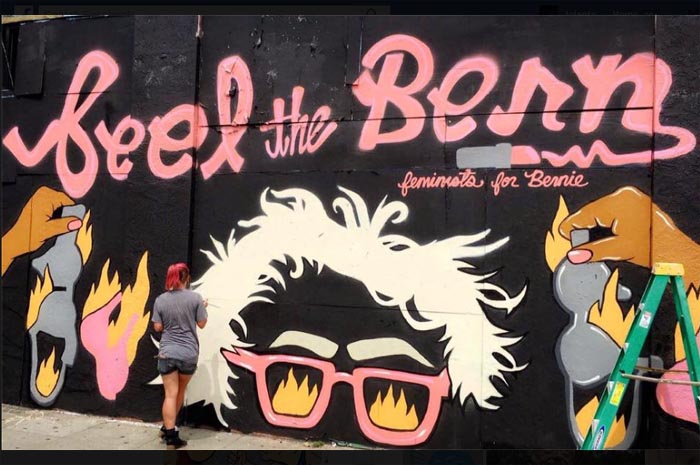
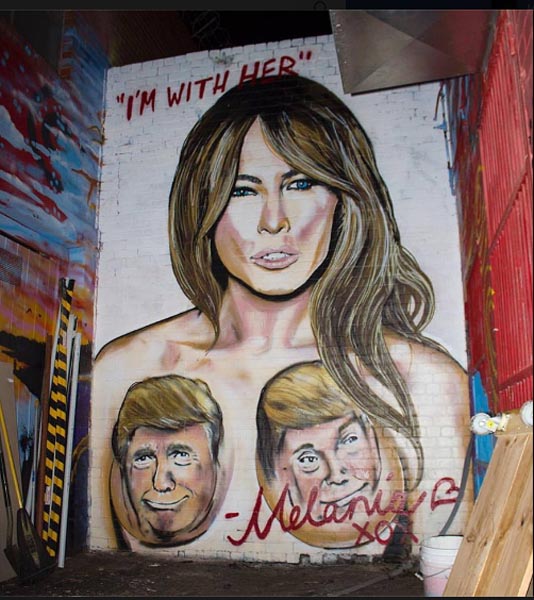
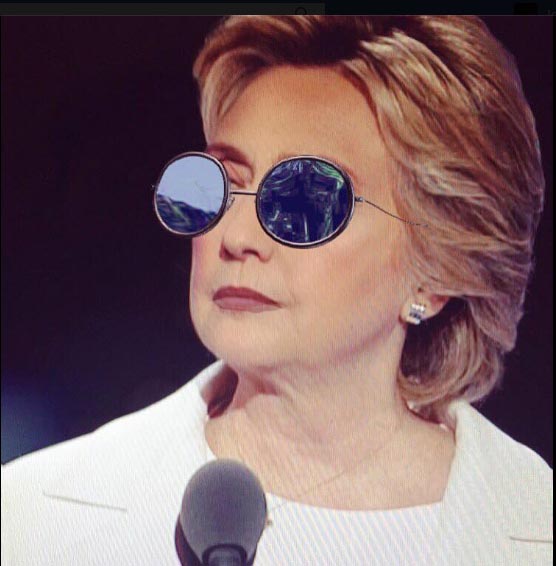
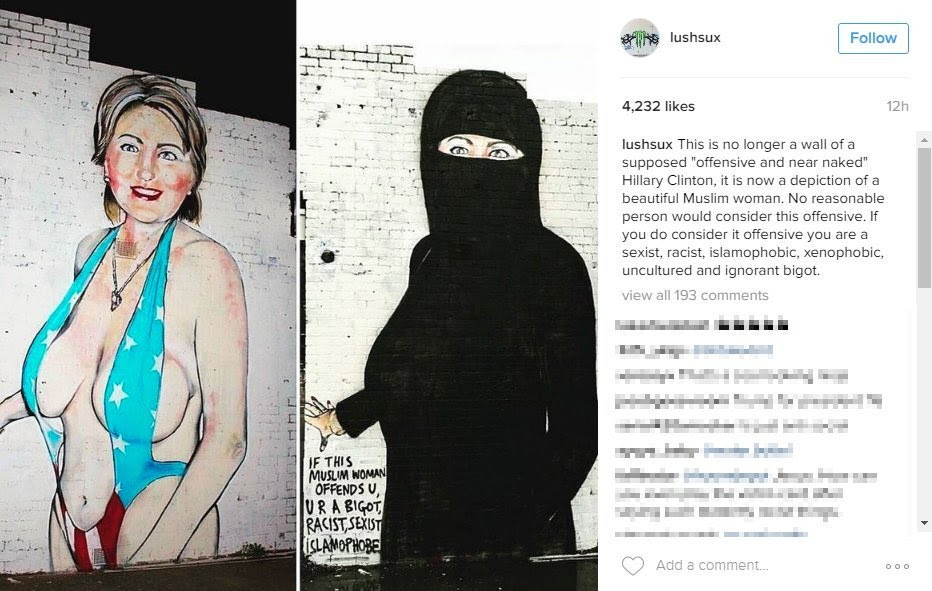
    2016 Democratic National Convention Through Social Media
    Selected artworks and social media posts, July 2016:

    Vik Muniz, Source: Facebook profile image. July 2016.

    Vik Muniz, Source: Facebook profile image. July 2016.


    Artist unknown. Source: Jerry Saltz, Facebook wall. July 2016.

    Artist unknown. Source: Jerry Saltz, Facebook wall. July 2016.


    Untitled-5

    Artists For Bernie. Source Facebook. July 2016.


    Lushsux. Source: Facebook, July 2016.

    Lushsux. Source: Facebook, July 2016.


    Octavio Zaya. Source: Facebook. July 2016.

    Octavio Zaya. Source: Facebook. July 2016.


    Oliver Wasaw. Source: Facbook. July 2016

    Oliver Wasaw. Source: Facbook. July 2016


    Artist unknown. Source: Jerry Saltz, Facebook wall. July 2016.

    Artist unknown. Source: Jerry Saltz, Facebook wall. July 2016.


    unnamed

    Lushsux. Mural in Australia. Source: Twitter


    NY Arts staff

    The New Museum at 231 Bowery, Ground Floor
    July 28–31 & August 4–7
    12–5 PM

    WHAT: Public Beta, NEW INC’s second annual end-of-year showcase
    Public Beta takes its name from the world of rapid prototyping in software development and the ethos of the tech mantra “release early, release often,” Public Beta offers NEW INC’s members a lab-like environment in which to test their ideas and present their work, developed over the past twelve months, to the broader public. Over the course of two weekends, the rotating showcase will present new products, virtual reality experiences, installations, and performances that have been incubating this past year.

    WHO: NEW INC, the New Museum’s non-profit incubator for art, design, and technology, is a testing ground for new ideas. It brings together forward-thinking artists, fashion designers, musicians, virtual reality filmmakers, product designers, software developers, architects, and more to develop creative projects and businesses that respond to our present moment and point the way toward the future. A collaborative, interdisciplinary program for individual practitioners and new businesses alike, NEW INC incubates the growth and development of projects that blur the lines between culture and commerce.


    WEEK 1 (July 28–31)
    “VIRTUALITIES” & “THE CRITICAL MARKETPLACE”

    VIRTUALITIES
    The artists, filmmakers, designers, and storytellers whose work is presented in the Virtualities section exploit virtual reality’s ability to immerse viewers in a different world—instantly transporting them to far-flung places.

    VR works include:

    GIANT—Trapped in an active war zone, two parents struggle to distract their young daughter by inventing a fantastical tale. Inspired by real events, Giant is an immersive virtual reality experience that transports the viewer into the family’s makeshift basement shelter. The parents’ fairy tale intensifies as bomb blasts draw closer and closer.

    HUBBLE CANTATA—Viewers will have the opportunity to float within the imagery from the Hubble Telescope. Eliza McNitt previews this new project for the first time at the NEW INC showcase. It will premiere during the BRIC Celebrate Brooklyn! Festival, presented by VisionIntoArt/National Sawdust, on Aug 6, as a multidimensional view into space paired with a live performance, opening the world of Virtual Reality to 6k people for free. Note Kickstarter campaign.

    AFRIPEDIA – DANCE BATTLE 360°—Stocktown Films and House of Real present the world’s first 360-degree virtual reality-video dance-battle experience, showcasing the best urban street dancers from Dakar, Senegal, in an interactive online experience in which audiences can immerse themselves in the movement, the music, and the city itself.

    N=7—Rachel Rossin presents a virtual reality simulation that translates the structure of side-scrolling game play into an immersive experience. In a Dante-esque underworld, the viewer enters a domain of hacked architectural and video game imagery, collaged with algorithms generated from paintings, corporate signage, browser logos, and clippings from scenic destinations. Note: Rachel Rossin is the virtual reality fellow at NEW INC, and her work is part of a First Look commission by Rhizome and the New Museum.

    HYPER.ZONE—This demonstration showcases six gaming levels in a multiplatform virtual space. It features art, fashion, furniture, and performances by artists Matty Bovan, Brady Gunnell, Maxime Guyon, Sigrid Lauren, Alexandra Marzella, Pinar & Viola, Brendan Smith, Morey Talmor, and others.

    NOTHING TO SEE—Nothing to See by Charles Sainty is a virtual reality installation and sculptural series centered around user-uploaded videos of wrecked vehicles on video-sharing sites. This project is an investigation of our relationship to those tragic images and our desire to define that which defies our understanding. What do we gain from this act of looking? What do we see?

    SELECTIONS FROM SENSORIUM WORKS—Sensorium Works presents its recent work, including Laurie Anderson—Times Square, filmed for the Midnight Moment program in Times Square; São Paul—Urban Graffiti, which highlights the relationship between the city and the artistic practice of Mauro; and The Heart Of Brooklyn—Turner Cody, a performance of “Deep In The Heart Of Brooklyn.”

    THE CRITICAL MARKETPLACE
    From subtly critical gestures to objects enabled by new design and manufacturing processes, the products on display in the Critical Marketplace demonstrate how artists and designers are using the market to test and spread their ideas about the world.

    Products include:

    SHOP:MOBILE—Telfar Clemens presents a mobile shop that attempts to create a shop-able context for his work outside of the designer boutiques to which his work is most often bound, but where it is perhaps least often understood. SHOP:MOBILE is a highly mobile shop architecture that will house both a curated selection of garments by Clemens and a loop of his video work.

    ANTIBOT WEAR—In response to the ubiquity of surveillance cameras in public space today, artist unit exonemo has created a customizable apparel line as a source of offline free speech. The web service utilizes machine-unreadable captcha typeface—typically used to exclude bot programs from online log-ins—to allow users to generate their own wearable designs. The project has been produced in collaboration with incubator member Print All Over Me.

    THE COUNTERPOINTER—The Counterpointer by Luisa Pereira is a synthesizer that generates three-voice harmonies in the style of Johann Sebastian Bach. For an alto melody created by the user, it produces bass and soprano voices based on the rules of eighteenth-century counterpoint. It is the first device in The Well–Sequenced Synthesizer, a series exploring new ways of interacting with music through computation and interactive design.

    BHOLD—Bhold aims to change how we manufacture and produce goods by prioritizing efficiency and sustainability. It is the first to bring the concept of digital beta testing to physical products in a scalable model, through the Bhold Labs program. The company’s goal is to thoughtfully design objects for the widest audience.

    FLIRTING GOBLETS—Flirting Goblets by HE+HU is a series of kinetic products designed to facilitate social interaction. A feathered device is connected to each goblet, serving as an avatar for a person to gently touch the world. The feathers are controlled by sensors that interact with one another, helping people break the ice by using an absurd approach.

    CONTINUUM—Continuum by Patrick Delorey is a line of self-generating, limited-edition jewelry. Digital animations of each piece unfold indefinitely—moments from these animations are identified, extracted, and materialized by additive manufacturing. Each resulting piece is unlike any other that has come before, or any that will come after.

    EXTENSION PILLARS—The fountain was once a staple of town squares: a life-sustaining public amenity adorned, perhaps, by marble statuary befitting its central role. Today, cell phones have an equivalent importance. Pinkhouse’s Extension Pillars re-envision the charging station for these devices to complement their importance, creating an essential utility—and a proverbial watering hole.

    ATHA—Atha presents pieces from Michelle Cherian’s most recent trip to Nepal and stories from the road—about the artisans, crafts, and places that have inspired her work.


    WEEK 2 (August 4–7)
    “VARIATIONS / INSTALLATIONS”

    This section features a wide range of performances and installations that strive to reconnect us with our senses, our bodies, and the natural world—yet, all the while, they rely on technologically mediated methods such as futuristic wearable devices, bio-feedback and motion sensors, and augmented reality or sound-enhanced meditation techniques.

    AGALINIS DREAMS—Combining multichannel video and live performance, Agalinis Dreams by Miriam Simun invites audiences to participate in a multisensory ritual experience to commemorate the impending extinction of the Agalinis Acuta, a tiny grasslands flower and the only endangered plant species in New York. Viewers are invited to don wearable sculptures that deliver scents during this intimate performance.

    DEFINING REALITIES—This study and an installation explores both kinetic movement and organic growth. Through the use of digitally fabricated sculptures, VOLVOXLABS (VVOX) has created a façade representing different ecosystems. The physical structures gain life through movement with the aid of small motors, which animate the structure while conveying the idea of an evolving environment.

    FUTURE PAST NEWS—Super 8 film found in a flea market depicting governments in chaos and an impending war seems like it could easily be today’s news, but it’s from 1937. What will happen in fifty years, when someone finds documentation of our news? This augmented reality app by Karolina Ziulkoski and Andrea Wolf switches the view between 1937 and present, showing how history repeats itself and how we forget.

    HEARTMONIC—Heartmonic by Lisa Park is an experimental performance piece that uses heart rate sensors to create sonification of participants’ heartbeats. Each participant will generate the sound of a different instrument and, following instructions from a conductor, will be guided into creating a symphony based on their synched heartbeats. This collaborative experience will build an emotional bond.

    SOUNDBATH—Created by MJ Caselden, Soundbath is an exploration of energy flow and vibration, and their impact on mood and consciousness. Using a series of custom sound-generating sculptures, Caselden envelops the audience in a wash of sound, in which they can lie back and experience vibrations moving across a listening space.

    TOTEMS—Totems by Parc Office are a series of haptic products for human computer interaction. They challenge traditional methods of input and output by atomizing them into space. Instead of the typical screen-dominated devices of today, Totems are a family of small, simple, and beautiful objects that each perform a specific function.

    UNTITLED—In collaboration with Satellite Labs and VVOX, Carlo Van de Roer uses new technology to expand on his interest in the relationship between in-camera imaging technology and our perception of time and place. Van de Roer created patented technology that enables the use of moving light sources within the frozen world of high speed imaging.

    WEATHER HAS BEEN NICE—Weather has been nice by Andrea Wolf is a series of generative video installations in which found vintage postcards are broken down into their elements. Creating an immersive audiovisual experience, the large-scale projections of ever-changing landscapes will be complemented by a recording of the sound pieces, embedded within beanbags created with incubator member Print All Over Me.

    LEARN MORE


    Courtesy the New Museum

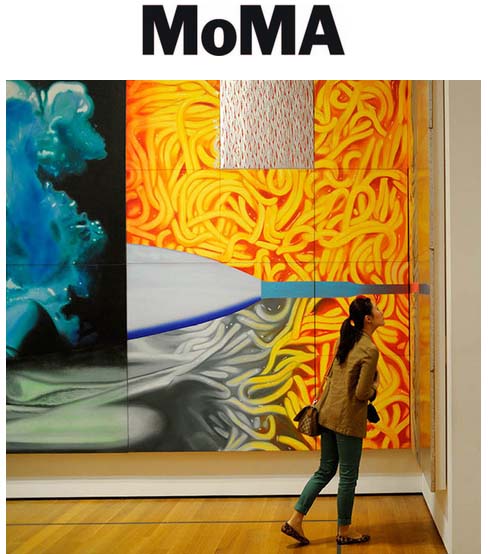
    Installation view of From the Collection: 1960–1969. The Museum of Modern Art, New York, March 26, 2016–March 12, 2017. © 2016 The Museum of Modern Art. Photo: Martin Seck
    Installation view of From the Collection: 1960–1969. The Museum of Modern Art, New York, March 26, 2016–March 12, 2017. © 2016 The Museum of Modern Art. Photo: Martin Seck

    Become an Artist Member and Join Us for the Next Artist Member Open House

    It’s the perfect time to become an Artist Member, because this Wednesday, July 20, from 6:00 to 9:00 p.m., the entire Museum will be open after hours just for Artist Members at our next Open House. You’ll be able to explore new exhibitions focusing on contemporary artists, like BRUCE CONNER: IT’S ALL TRUE, without the crowds, and mingle with fellow creatives in the beautiful Abby Aldrich Rockefeller Sculpture Garden, which features sculptures made in the 1960s by artists such as Alexander Calder and Ellsworth Kelly, as an extension of the exhibition From the Collection: 1960–1969.

    MoMA’s Artist Membership was created for artists working in areas represented in the Museum’s collection—painting, sculpture, drawing, prints, photography, filmmaking, architecture, design, and sound, media, and performance. It includes free admission, guest passes, Artist Member Open House evenings, and more, for only $35—don’t miss this incredible opportunity to join our community.

    To join, visit Member Services in the Museum lobby or e-mail artistmembership@moma.org. Applicants will be asked to share an exhibition announcement, website, or current CV listing exhibitions or projects. We look forward to welcoming you to the Museum!

    LEARN MORE


    NY Arts Newsletter July 2016


    Marlborough Barcelona is pleased to present Blanca Muñoz first solo exhibition in Barcelona.

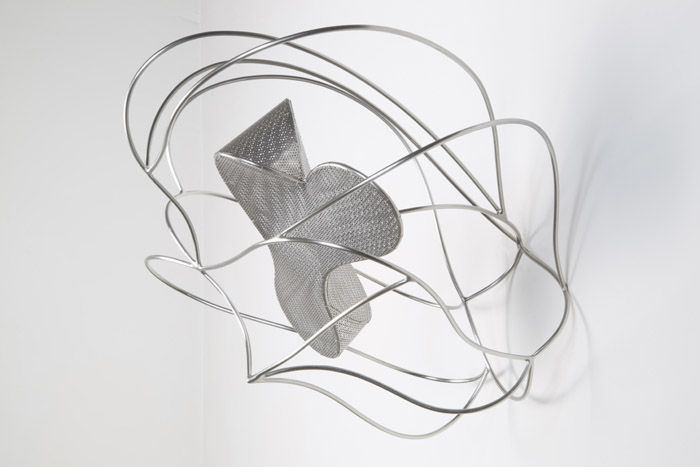
    The exhibition gathers a group of works made of stainless steel and ceramics that comprise from the year 2009 up to the present day, where the artist expresses her interest in light, cosmology and the organic shapes of nature.

    Blanca Muñoz (Madrid, 1963) studied Fine Arts at the Universidad Complutense of Madrid and was granted a scholarship to develop her projects in Rome and Mexico, two cities that marked the artistic career of the sculptress.

    During her stay in Mexico, Blanca Muñoz worked on engravings with steel plates. She later used this material on the making of her first sculptures. After her return to Madrid, the artist became aware of the importance of the Mexican experience regarding light and space and began to be more interested in lighting and cosmology. That fact made her investigate on the impact of light on objects and started to embrace her relation with steel to make curved sculptures. In parallel to this, she continued to explore the technique of engraving, adding steel rods in the flat surface of paper.

    The sculptural work of Blanca Muñoz is hereditary from the scientific constructivism as well as her lyrical side: precision and intuition at the same time. The artist is also interested in the botanic world, studying equally shape and cellular organization of plants.

    To create her pieces, the artist has set the essential reference marks by modelling and welding the stainless steel rods to add the branches, connections or deviations. The rigidity of steel becomes flexible and the gray color is combined with die cut or plated steel which can be green, gold, magenta, emerald, or cyan. This blending provides the sculptures of a mysterious movement which is generated by the waving of the steel and its chromatic combination.

    The main piece of the exhibition, Candombe (2009), is a large sculpture with rods and
    perforated plates of stainless steel. The blue perforated plates and its wavy shape empower the kinetic effect of the piece, endowing rhythm and musicality.

    In the exhibition we also find other works of organic character, like Atrapada (2013), Venera (2011), Azorada (2011) or Alada (2014). With Bujía (2013) the artist introduces more color in her works through the use of perforated plates with metalized colors.

    Blanca Muñoz, Atrapada, 2009, Varilla y chapa perforada de acero inoxidable, 190 x 360 x 220 cm

    Blanca Muñoz, Atrapada, 2009, Varilla y chapa perforada de acero inoxidable, 190 x 360 x 220 cm

    By last, a set of pieces of ceramics without enamel and steel rods are shown, a new language for the artist but it recalls her graphic work.

    Blanca Muñoz has realized important solo exhibitions like, El Universo Transparente at Espacio Uno and Jardín Sabatini of the Museo Nacional Centro de Arte Reina Sofía, The Blue Dance in Marlborough Chelsea, Nueva York, or Circunnavegación in Sala Alcalá 31. Her work is part of outstanding collections like the one in Fundación Juan March, the Würth Collection or the one belonging to Museo Reina Sofía, among others. The exhibition that is featured during the Barcelona Gallery Weekend is her first solo
    exhibition in Barcelona.


    Courtesy of Marlborough Barcelona.


    A creative playground by Aphrodite Désirée Navab

    By Anna Savoy

    East Village’s popular Studio 26 Gallery which is located in the Eastvillager building on East 3rd St. between Avenues A and B, hosted an interesting artistic exploration by Aphrodite Désirée Navab–an ink drawing series, When Madness Meets Hunger, curated by Marika Maiorova. This conceptual project represents an imaginary encounter between the protagonist of Iranian writer Sadeq Hedayat’s novella, The Blind Owl, and the protagonist of Czech writer Franz Kafka’s short story, “The Hunger Artist,’ integrated by Navab.

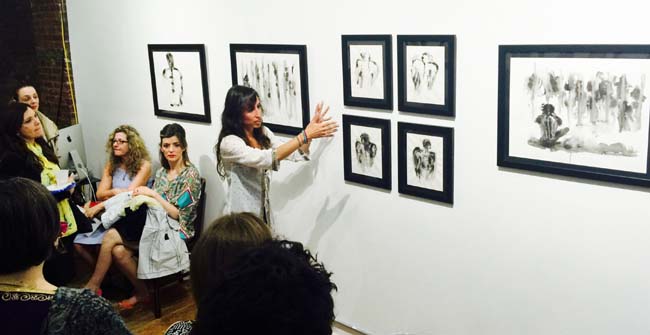
    Aphrodite Désirée Navab invited the audience to examine the similarities and differences that she found between all three artists and writers in the room, herself included. In answer to a question from the audience: “What if Kafka and Hedayat were alive and here in this room right now?” Navab answered, “I hope that they would not be horrified by my elementary level dialogue.” An artist and a writer herself, Navab’s response was both humble and modest. Her artistic work is anything but elementary—rather, quite sophisticated and eloquent. She earned her doctorate in Art Education at Columbia University in 2004 and received her BA magna cum laude in Visual and Environmental Studies from Harvard College in 1993. “This work comes from the place of incredible admiration,” Navab confides, something palpable to her audience.

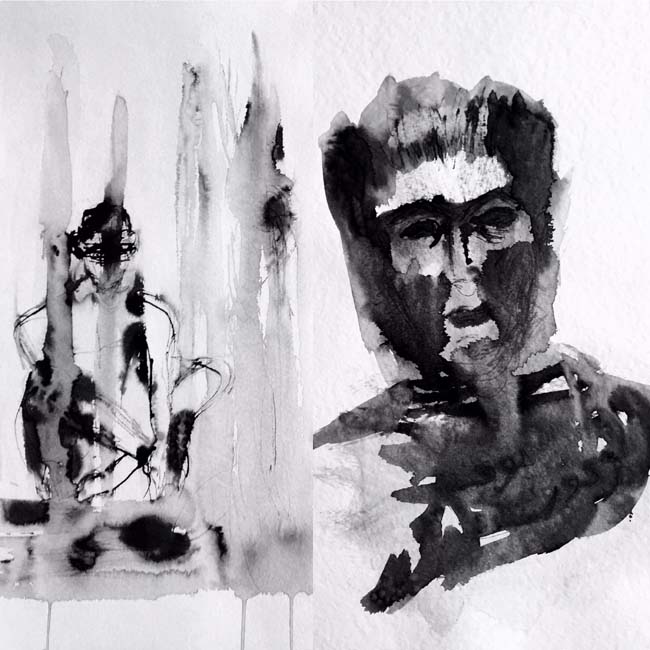
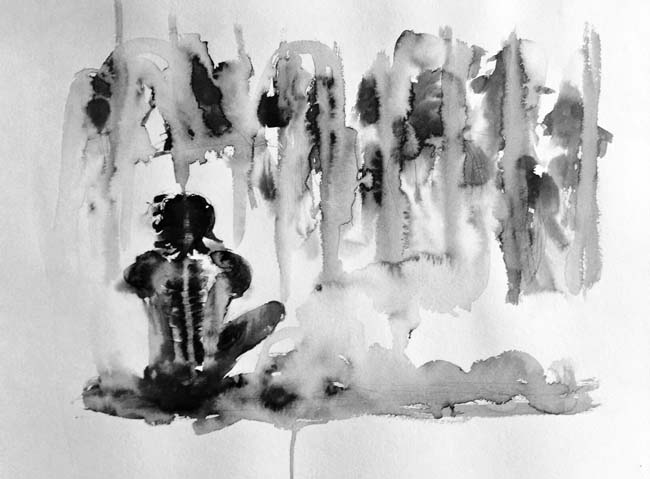
    From the series: The Blind Owl Meets the Hunger Artist.

    From the series: The Blind Owl Meets the Hunger Artist.

    Since first reading “The Hunger Artist” at Harvard, and The Blind Owl on her own in her 20s, Navab kept thinking that these two writers and their protagonists need to have a conversation, because their struggles, although different, had enough similarities that a dialogue would be insightful. “The images and metaphors in these works were so vivid and gripping that they haunted my imagination for a long time,” Navab shared. It would take another 20 years before she would bring them together. And it’s no accident that she brings their issues to life today in NYC, in the present and in the current events of our particular existential experiences, whether be it global politics or the elections in the USA, or the refugee crises in Europe, STUDIO 26 gallery was the right platform for this context.

    Franz Kafka (1883-1924), a Czech Jewish writer, living in Germany, writing in German, was dying of tuberculosis when he wrote this highly autobiographical story, which was published only after his death. It is a very allegorical and dark short story about a sort of performance artist who performs hunger as an art. Navab points out that it is “not a hunger strike or any kind of protest –the hunger artist wasn’t against anything in particular. Rather, he couldn’t find anything that would satisfy him.” The performance was the existential pressure of the artist hungering for an ideal that he never really reaches. On the other hand, this is a story about an individual who is marginalized and victimized by his society, facing the decline in appreciation of his craft. This archetypical creation by Franz Kafka could have been based on a true story as well. Hunger artists were performers who were common in Europe and America in the 18th through the early 20th centuries, who starved themselves for extended periods of time for the amusement of paying audiences. The phenomenon first appeared in the 17th century and saw its heyday in the 1880s. But the title of Franz Kafka’s story, which has been also translated as “A Starving Artist” soon enough became an enduring popular expression about an artist.

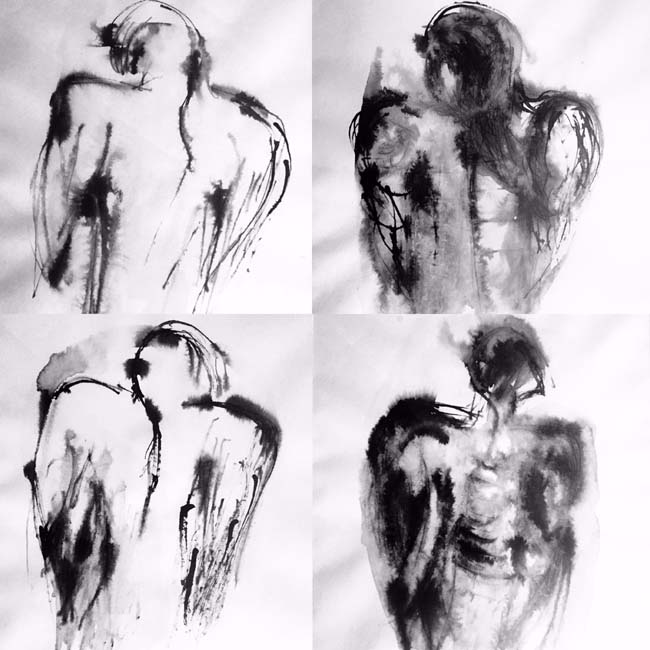
    From the series: The Blind Owl Meets the Hunger Artist.

    From the series: The Blind Owl Meets the Hunger Artist.

    Most of us can relate to the hunger of the artist in quest of something he/she can’t quite satisfy. Navab made ink drawings of the hunger artist at different phases of his life: from when the public was extremely supportive of his art to abstract portraits of the artist transforming into a skeleton. In one of Navab’s most moving drawings, the hunger artist has disappeared altogether (after dying in his circus cage) and is replaced by a bloodthirsty, full of life, black panther who is not only hungry but very aware of what would satisfy his hunger.

    Navab shared: “When the impresario of the circus asked the hunger artist why he felt compelled to fast all these years, the artist answered that if he only knew what would satisfy his hunger, he would be eating all the time, satisfied like anyone else. This is very poignant when one learns that Kafka wrote this story on his deathbed with tuberculosis on feeding tubes, no longer able to eat. The allegorical and metaphorical mirror the literal–Kafka’s own life.” What Navab’s art suggests is that the physical hunger of the allegorical character symbolizes the psychological and spiritual crisis of the writer himself. Kafka is the hunger artist. And we can relate to the hunger of the artist.

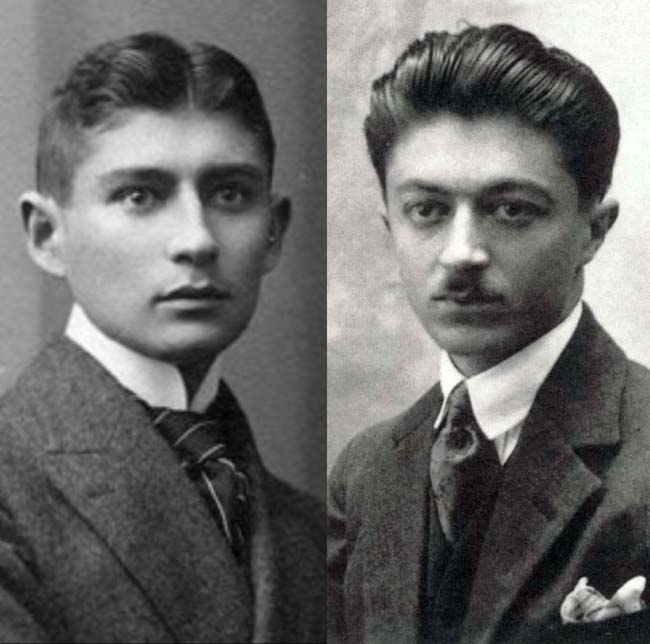
    Franz Kafka and

    Franz Kafka and Sadegh Hedayat

    Kafka died in 1921 and influenced many artists and writers around the world. One of them is Sadegh Hedayat (1903-1951), one of the most important writers of contemporary Iranian literature, who was also known for translating the works of German writers like Rainer Maria Rilke and Franz Kafka into Farsi. Hedayat was very inspired by Kafka’s psycho-fiction which influenced his own writing style.

    Throughout the curated show you can see Navab’s ink drawings of Hedayat’s novel, The Blind Owl. She portrays how the protagonist metamorphoses into his own shadow on the wall, which increasingly starts to resemble an owl who is blind. “Why blind?” Navab asks, “When owls are known to see extremely well? Because the owl who grows blind is very much the alter ego of the protagonist himself who is on opium and hallucinating. He is as unreliable a narrator as an owl who cannot see.” His obsessions about his wife cheating on him, his fears, his debate to kill her or not to kill her, immerses us into the madness of the protagonist as he is writing his story down. “When we find out that Hedayat himself committed suicide by gassing himself in a small rented apartment in Paris, we realize that the work is highly autobiographical, navigating his own madness,” Navab adds.

    From the series: The Blind Owl Meets the Hunger Artist.

    From the series: The Blind Owl Meets the Hunger Artist.

    Navab uses the ink drawing medium to explore her concepts because it is very fluid and allows her to draw freely from both observation and imagination. She read works by both Kafka and Hedayat and researched their life stories and German and Iranian history. Both writers did not fit in with their place or time. Feeling alienated and marginalized, self-transformation and metamorphosis became a liberating concept for the writers. If you look closely at Navab’s drawings, you can recognize images resembling photographs of Kafka and Hedayat themselves.

    Kafka died in 1924, Hedayat died in 1951, and Navab moved to the United States in 1981. Navab points out that roughly every thirty years there was a death and a rebirth for the artists as each one picked up the dialogue. She called her visual context: “a creative playground which rekindles the issues, concepts and struggles of both writers. The idea is to play with performance, rituals of sanity and insanity, hunger, transformation, metamorphosis in both texts.”

    Aphrodite Désirée Navab giving an artist talk.

    Aphrodite Désirée Navab giving an artist talk. Studio 26 Gallery.

    Navab comes from an extensive art background since she first began to draw as a child in Isfahan, Iran. She continued in Athens, Greece and then in New York City where she was first introduced to printmaking at The Dalton School. At Harvard she was first introduced to silver gelatin black and white photography. Her interdisciplinary dexterity shows in her exhibition where the images alternate between looking like monoprints or ink drawings or black and white photographs. Her art has been featured in over one hundred and fifty exhibitions and is included in a number of permanent collections including: The Lowe Art Museum, the Harn Museum of Fine Arts, Casoria Contemporary Art Museum, Naples, Italy, and the Museum of Fine Arts, Arkansas State University.

    Navab was recruited by STUDIO 26 GALLERY in October, 2015. Her artwork has been represented by the gallery ever since, featuring the new series on its website; www.studio26eastvillage.com/dsire-navab-portfolio. Her work was exhibited by Studio 26 Gallery at the following fairs: Art on Paper, Art Basel Miami, December 1-6, 2015, and Art New York/Context, NYC, May 3-8, 2016.

    Studio 26 Gallery exhibits international contemporary emerging and mid-career artists working in a wide range of mediums. One can stop by the Gallery to hear live music, sit in on a poetry reading, or view visual art that ranges from sculpture, to painting, to performance and more.

    Exhibition “WHEN MADNESS MEETS HUNGER” was curated by Marika Maiorova who was born in Tbilisi, grew up in Moscow and lives and works in New York City and has had extensive experience in curating exhibitions and performance pieces internationally.

    Studio 26 Gallery
    179 E 3rd St
    New York, NY 10009
    www.studio26eastvillage.com


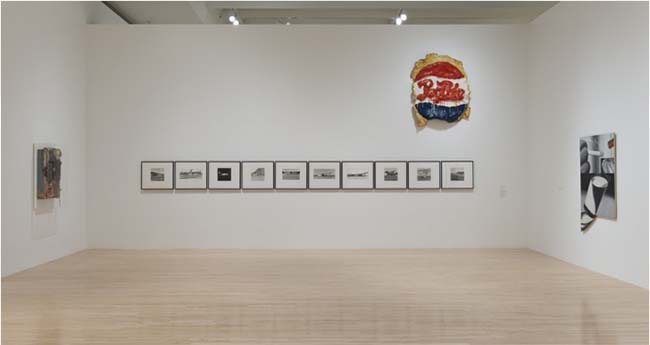
    Installation view of The Art of Our Time, August 29, 2015–September 12, 2016 at MOCA Grand Ave, courtesy of The Museum of Contemporary Art, Los Angeles, photo by Brian Forrest

    Installation view of The Art of Our Time, August 29, 2015–September 12, 2016 at MOCA Grand Ave, courtesy of The Museum of Contemporary Art, Los Angeles, photo by Brian Forrest

    Chief Curator Helen Molesworth has installed an exhibition highlighting the affinities between artists and artworks in an attempt to rethink the now conventional chronological installation of art. By exploring connections that emerge through artist friendships, the history of art schools, and artists’s own stated interest in other artists’s work, this presentation of MOCA’s esteemed collection of post-1945 art highlights iconic works alongside lesser known material drawn from the nearly 7000 objects in MOCA’s collection. Recently acquired work is on view, gesturing towards MOCA’s newly invigorated collecting. MOCA’s collection is considered to be among the most important collections of post-war art in the world, this installation aims to reintroduce its richness and depth as well as signal a new era of scholarship and a renewed commitment to collecting at the institution.


    The Art of Our Time
     is organized by Chief Curator Helen Molesworth.
    Lead support is provided by The Sydney Irmas Exhibition Endowment, the Margaret and Daniel Loeb Third Point Foundation and the MOCA Projects Council.
    In-kind media support is provided by KCETLink.


    Courtesy of The Museum of Contemporary Art, Los Angeles.

    News | Exhibitions