• Artists are really reaching back into the bag of tricks these days. The rampant discourse about postmodernism has seemed to cool off a bit, but the effects of its presence are clear. The standard bag has been stretched into something more of a gaping sack. All across the spectrum of ages, artists are doing things that were previously unthinkable, unattainable, or just under-recognized.

    Being an artist has always been so much about one’s handle on previous visual history. Our access to information is now blown wide-open thanks to the Internet. It’s a resource quite available to all of us, but as with most things, it means a different thing to grow up with a technological innovation than it does to realize that the same innovation is causing rampant change within the world you are accustomed to. It must be similar to the ripple of disruption that happened the first time the camera was being fully utilized as an artistic tool. The reality of it all is, thanks to this proliferation of information, now all artists have to be aware not only of the generations before them, but also of contemporaries by their side, not to mention the young up-and-comers who are greedily sucking up information in their wake. An artist has to have his or her head on a swivel, constantly keeping an eye on all other creatives around them, knowing that with the vast sea of information available, any artist could be the next daunting aesthetic pirate. As we all know, art has always been very much about stealing.

    Some young artists are making work that takes on a refined look in order to bump their name into the ring of commerce, while some older artists are making work that appears fresh and young, hoping to stay in the conversation by taking on the look of those breaking onto the scene. Meanwhile the Internet has its eyes on all of it, doing what the Internet does best, widening the spotlight and democratizing information. The funny thing is, regardless of their technological prowess, this actually means the young people have to be watching their back just as closely as the old.

    There’s something great about it all.

    In 2009 the New Museum ran a blockbuster of a show called Younger than Jesus, showcasing a promising group of artists who at the time were younger than the age that arguably the most documented historical figure was when he died. As far as we can tell, maybe Alan Kaprow would consider Jesus an artist, but for us it’s a bit of a stretch. This got us thinking, “Who the fuck cares? What does it mean to be young as an artist anyway? Isn’t the point that you are engaging in a lifelong pursuit? Why should your age matter at all?”

    We know, it’s a lot of pointed questions.

    Once we cooled off from our little fit, what this really got us thinking was, “How long does a typical artist live, maybe 80 years?” A quick check into the standard life expectancy revealed an actual statistic of closer to 78.6 years. We decided to draw a line in the sands of time at the age of 40, conceivably half way between an artist’s birth and death. Instead of taking it upon ourselves, we asked a group of artists younger than forty years old to pick a group of twenty artists they admired older than forty, and we asked a group of artists older than forty to select a promising group of twenty artists under the age of forty.

    Artists have a very discerning eye, keeping their mind tuned by viewing a multitude of work, often what they really like can be quite different than the work they make themselves. Always being on the scene, on cannot follow all the trends but instead must pick and choose patterns they see as relevant and built to last. The people we selected to choose their favorite artists from across the age divide are people we knew were always out surveying the openings, meeting new people, shaking hands and forging new connections and professional relationships. In asking them to select the artists that had caught their eye, we knew they would filter out the bullshit.
    Although it was a pretty specific idea, requiring a good amount of explaining on our end, we ended up with a solid group of artists doing their thing with aplomb. Age be damned, really. The more interesting thing that came out of this little experiment was the reality of how little age mattered to an invested artist these days. It seems a talented artist will always be making engaging work.

    The artist’s age comes into play more readily in the way others approach the work. Gallerists and collectors will project value on the art based on the stage of development they connect to whatever age the artist seems to be. There is a perceived gamble involved with collecting young artists work in that it may be strong now, but later may unravel as studio process proves not to be sustainable. These selections represent a group of individuals who have been chosen by attentive contemporaries as artists engaged in sustainable, serious work that is built to be part of a life-long pursuit.

    It proves that age matters less than ever. With the expanded field of accessible knowledge open to all and growing wider by the second, information is sometimes able to bypass actual experience when in the right young hands, paired with hard work, and a sprinkle of luck. It also doesn’t hurt to have someone else pat you on the back once in a while.

    This piece began as a bit of an experiment, evolving as we began to feel out its strengths and weaknesses along the way. In the end we are pretty excited by the result. The forty artists we ended up with are making work that is only showy when appropriate, poetic but not inaccessible, and ranges many media. In the end, we feel like it’s an eclectic mix of pertinent work that may only share one thing in common: collective admiration.

    40+

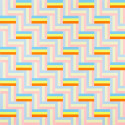
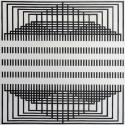
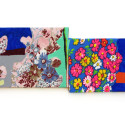
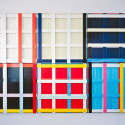
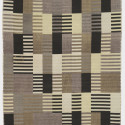
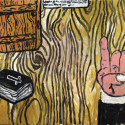
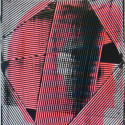
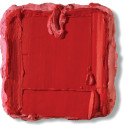
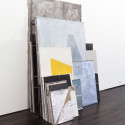
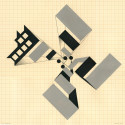
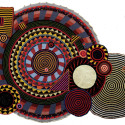
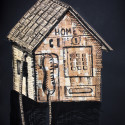
    Linda Francis, Wendy White, Stanislav Kolíbal, Abel Barroso, Xenobia Bailey, Jane Evelyn Atwood, Tom Butter, Roberto Molla, Jim Lee, Bram Bogart, Johnny Mullen, Armen Eloyan, Annie Albers, Christian Bonnefoi, Imi Knoebel, Kes Zapkus, Peggy Ahwesh, Nancy Shaver, Taylor Davis, Rose Wylie

    40-

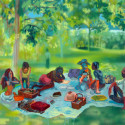
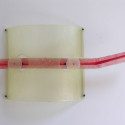
    Aaron Stephan, Abigail DeVille, Esperanza Mayobre, Fawn Krieger, Helen Benigson, Ilona Szalay, Jacolby Satterwhite, Jacqueline Cedar, Lauren Seiden, Mala Iqbal, Mark Sengbusch, Matt Mignanelli, Nichole Van Beek, Osamu Kobayashi, Rudolf Reiber, Sarah Maple, Shinsuke Aso, Tameka Norris, Laura Bottin, Nate Ethier

    To arrive at the Arsenale Nord one must take a boat. As I step from the quay, the frenetic, madding opening week bustle of the Arsenale is left behind. There is no sense of loss. A light drizzle is in the air and I feel as though I’m on a pilgrimage towards tranquility and peace, crossing the river to my salvation. I’m going to see the work of Shirazeh Houshiary.

    Shirazeh’s work for the 55th Biennale di Venezia, Breath is a collateral event housed in La Torre di Porta Nuova. Built between 1809 and 1814 to enable the mechanical placement of masts onto ships, it is a building of almost ecclesiastically monumental proportions and presence. Breath is a four channel video and sound installation that features soft but captivating voices.

    There is one chant for each of four major religious traditions: Buddhist, Christian, Jewish and Islamic. The work’s positioning couldn’t be more fortuitous. The two, looking out together over the water, enhance each other perfectly.

    From the outside Breath announces itself as an immense fabric box. Made from black felt, its sides soar upwards as far as the archway it inhabits. Sunlight beams down from above onto its muted surface. At the front there is a shoulder width gap through which it is clear the viewer is invited to enter. Visibility is limited as one passes down a short, narrow passage. There is very little light either natural or artificial, only that which seeps in from outside

    Inside is an intimate, square space. As my retinas adjust to near darkness, four small video screens slowly become apparent at eye level. The sound that welcomes me is an enticing, but unclear overlaying of four different incantations. As I approach each screen in turn, one of the four chants becomes more clear, but it is never possible to hear one without registering the other three. The sounds are fused together, inherently inseparable before they reach the ear. The source of the audio is lost somewhere in the darkened space. Do they originate from the ear, the brain, or in the space between the speakers and myself? Like the breath, these sounds are hardly tangible. No sooner are they perceived than they are gone, transformed into something else.

    On the screens I see what appear to me as specks of light floating and pulsating in abstract, centrifugal formations. Their movement evokes something of the astronomical realm. It’s almost as though I’m outside the universe looking in, watching it in miniature, expanding and contracting. The spaces between the dashes of light grow larger and then smaller again.

    Involuntarily I throw my head back and look up as one might beneath the dome of a cathedral. In the semi-darkness I can’t make out an ending to this temporary vaulted structure. The four black walls fly upwards into an apparent infinity. The space has no edges, as if there were no limit to its bounds.

    What I find most compelling is that this work seems to point towards commonality and that energetic oneness that permeates every being, living and nonliving. It is something of a surprise that Shirazeh Houshiary’s Breath should find itself at la Biennale di Venezia—the home of competitive, jingoistic individuation.

    So subtle is this work, and so persuasive, that I begin to question the wisdom of the Biennale’s artistic nationalism. At a time when borders are in a constant state of actual, philosophical, and metaphorical transgression, and the transfer of communication and knowledge take place almost exclusively via a rhizomatic hyper-network, the notion of a meaningful space existing for national pavilions begins to seem absurd.

    By Beverly Knowles

    Image courtesy of the artist

    Image courtesy of the artist

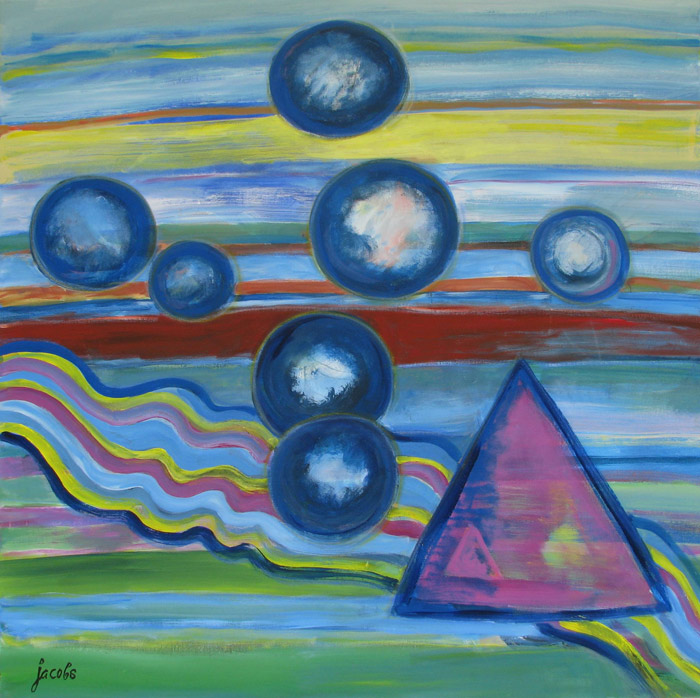
    I studied at the Art Academy in Hamburg, Germany. I’ve always loved art, music and, dance. When I capture joyful and moving moments of life in my pictures I mix the shining colors of my art according to these moments. For me there is a parallel between the harmony of colors and harmony of musical intervals. Both have the power to stir strong feelings in us. Both color and music sweep the dust from our soul and make us come alive.

    My paintings and illustrations for children set no limits to a child’s imagination. It is from our children that everyone learns to see the world anew.

    astridjacobs.de

    Image courtesy of the artist

    Image courtesy of the artist

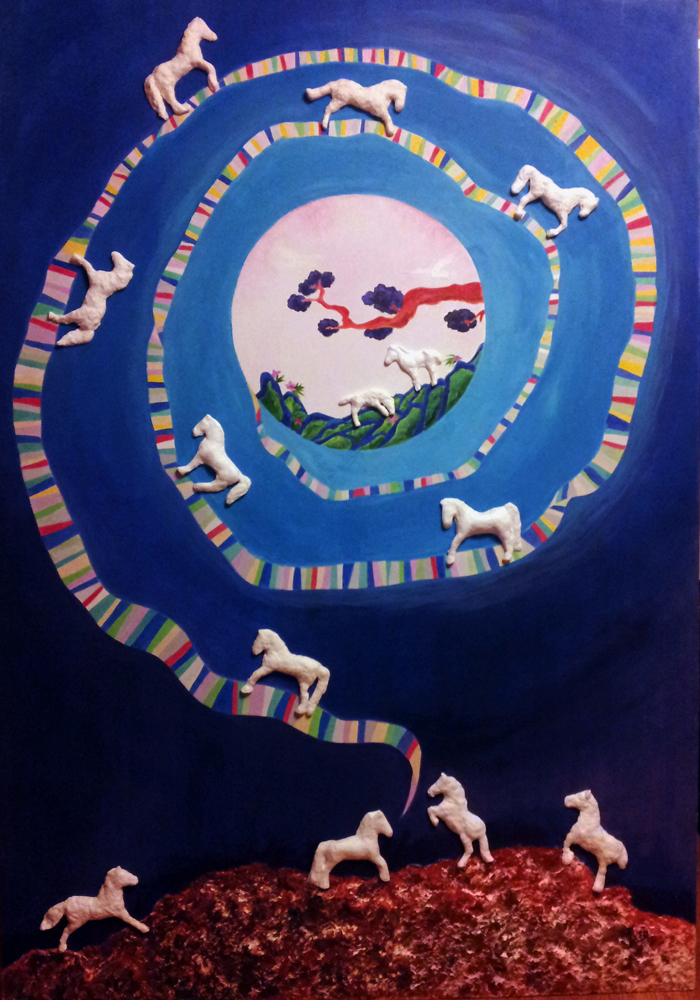
    My artistic inspiration comes from Hermes, the Greek mythical god who plays the role of messenger. My work features diverse symbols. Among these, horses symbolize a messenger who conveys a message. I want to engender power and energy inside modern people through these horses. Vivid, luscious colors, tones, and images are the symbolized messages which the artist would like to present to the modern people.

    cjddus0.blog.me/

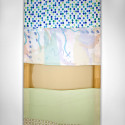
    NY Arts Magazine joined Robert Henry Contemporary (56 Bogart, Brooklyn) for the opening reception of Time Times Three, an exhibition of three artists exploring time-space relationships. The gallery is brightened by Pancho Westeendarp’s dreamy cyan colorfield; 73 photographic prints scale the white wall, forming an anomalous shape. Victoria Burge paints and draws on cosmology prints and lunar charts, making natural and artificial connections through superimposed layers. Tom Kotik, sculptor and rock musician, implicates sound and silence through the visual effects of color and shape and the materiality of MDF and sound proofing foam. Check out this eccentric group of three, on view until July 28.

    Robert Henry Contemporary
    Time Times Three
    June 12–July 28, 2013
    Opening Reception : June 13, 6–9pm
    Robert Henry Contemporary, 56 Bogart, Brooklyn NY 11206

    All images courtesy of Lindsay Dye

    Josh Blackwell, Plastic Basket Troutman, 2012

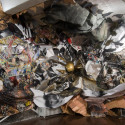
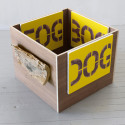
    This show explores notions of the discarded and the distressed in the work of four artists: Josh Blackwell, Antonia Perez, Katherine Powers and Randy Wray. Josh Blackwell began collecting plastic bags from city streets and kitchen cupboards about six years ago. In the studio, the bags are fused shut and/or embroidered with yarn, deliberately thwarting their function. The bags attempt to redress their semi-degraded status with the addition of colorful embroidery in geometric patterns. The compositions draw upon “high” and “low” vernaculars such as Geometric Abstraction, Minimalism, folk traditions and do-it-yourself craft projects. Contrasting “artificial” plastic with “natural” yarn, the work interrogates the economies of waste and necessity. Antonia Perez is a mixed-media artist who makes sculpture, assemblage and installations. She gathers discarded objects such as used plastic bags, household linens, tissue boxes and assorted detritus from the home that has the potential for conversion to something unexpected. Her process transforms them from their lowly status as trash to the elevated existence of an art object. Katherine Powers is fascinated by the paradoxical activity of dissolving the physical and giving form to the ephemeral. She is attracted to the shimmer and variety of color in our abundant refuse, a sort of urban plankton. The artist views the collages as vibrant portraits of our internal world, defining the interplay of material, emotions and spirit. Randy Wray’s recent works recycle and transform the detritus of our castaway culture–junk mail, discarded polystyrene packaging, used clothing and old furniture–to perform a kind of alchemy and examine ideas about faith. They explore a number of seemingly polar opposite relationships: abstraction/representation, beauty/grotesquerie, natural/man-made, naive/sophisticated, familiar/foreign. By blending disparate ideas and sensibilities, the artist aims to create new paths of connection.


    Storefront Bushwick
    16 Wilson Ave. Brooklyn

    Schmatte
    Josh Blackwell, Antonia Perez, Katherine Powers and Randy Wray

    May 30 — June 23, 2013
    Reception: May 30, 6-9 pm

    new galerie

    New Galerie’s first transatlantic exhibition ties together its art spaces in Paris and New York with two overlapping shows collectively entitled Rematerialized. The exhibition presents a new crop of artists from America and Europe – interrelated, though offering a diverse picture of a burgeoning art scene. In order to see what these artists are doing, one might start out by looking at what they are undoing.

    New Galerie, New York
    June 20 – August 3, 2013
    Opening Reception: June 20, 6-8 pm
    630 9th Avenue, Ste 308

    Nate Boyce
    Parker Ito
    Sean Raspet
    Brad Troemel

    New Galerie, Paris
    June 6 – July 20, 2013
    2 Rue Borda

    AIDS-3D
    Dora Budor & Maja Cule
    DIS
    Aleksandra Domanovic
    Lizzie Fitch
    Janus Hom & Martyn Reynolds
    David Horvitz
    Parker Ito
    Tobia Madison & Emanuel Rossetti
    Miltos Manetas
    Artie Vierkant

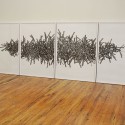
    Annette Rusin, Cosmetic Gardening wall installation, 2007

    Annette Rusin, Cosmetic Gardening wall installation, 2007

    NURTUREart presents The Indifference of Wisdom, curated by Project Curate and Julian A. Jimarez Howard.
    Featured artists: Clem Chen, Ernest Concepcion, Caroline Falby, Annette Rusin, Sarah Wang, Paul Wiersbinski, and Matthew Silver.

    NUTUREart
    The Indifference of Wisdom
    Jun 14–July 12,2013
    Opening Reception : June 14, 7–9pm
    NURTUREart Gallery, 56 Bogart St., Brooklyn NY

    Image courtesy of the artist

    Image courtesy of the artist

    My photos are my world as I see it. They are the moments which I capture as my own expressions. They are full of forms, colors and depth. My photos are inspired by the fascination of nature enriching our lives in all its forms. I am happy to catch these moments to marvel and share them as the passage of my timeline.

    ajaynarayan.com

    July Fairs Banner

    Art Hamptons
    Sculpture Fields of Nova’s Ark in Bridgehampton, NY
    July 11-14, 2013

    Art Southampton
    Art Southampton Pavilion | Southampton Elks Lodge
    July 25-29, 2013

    artMRKT Hamptons
    Bridgehampton Historical Society
    July 11-14, 2013

    Festival International Montreal en Arts
    See website for exhibition locations
    June 12-16, 2013

    Art Osaka
    Hotel Granvia Osaka, Japan
    July 19–21, 2013

    Art | Jog
    Taman Budaya Yogyakarta, Indonesia
    July 6, 2013

    Malaysia Contemporary Arts Festival
    See website for exhibition locations
    July 2–Sep 30. 2013

    News | Exhibitions