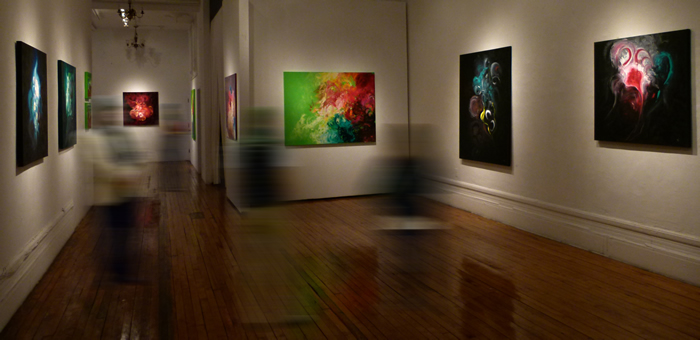
• Courtesy of the artist.

    Courtesy of the artist.

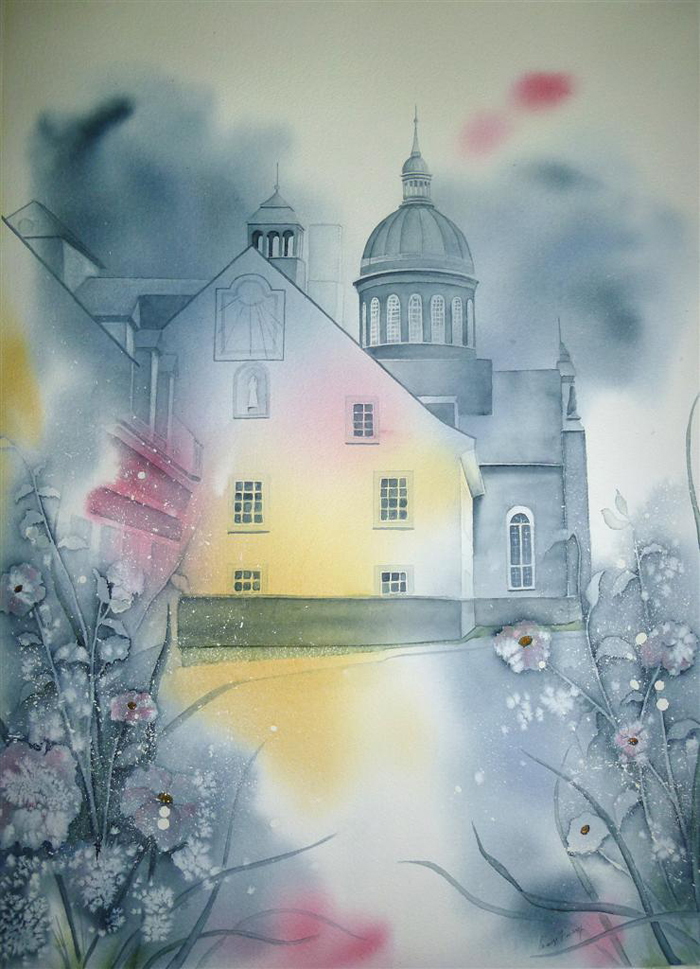
    I have painted in watercolor for over 10 years. My greatest achievements are born with spots of color (pigment) deposited into wet paper. The quantities of water and pigments used, along with my inclinations and my emotions all affect the results. I challenge myself to imagine or see what I will do with this fusion of colors before I begin. With this technique, I realize flowers, landscapes, houses, etc. Harmony and sweetness prevail in all of my creations.

    solangenourry.com

    Courtesy of the artist

    Courtesy of the artist

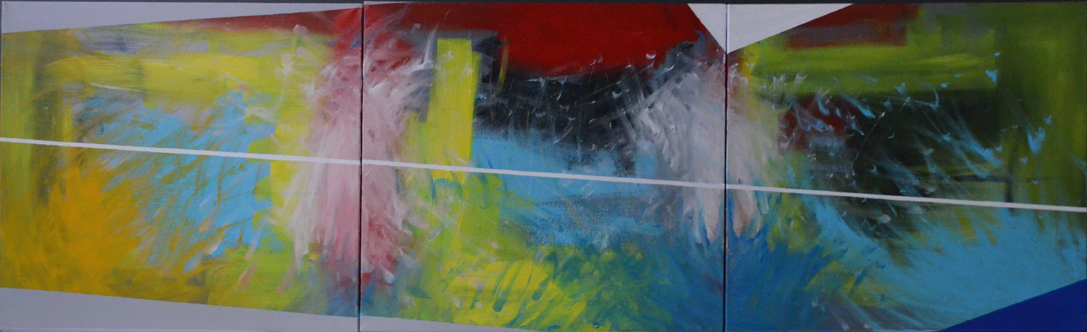
    It has been said that every work of art has an autobiographical feature. Somehow–more or less obvious–the artwork reflects the character of its creator. My three-dimensional works are polyhedral: expression of a free agreement between geometric severity and creative freedom. There are unknown virtues that contribute to recognizing an alchemy between two far and at the same time near realities in the surname Rigamonti, which can be divided into riga (line) and monti (mountain). Non-Euclidean geometry is required to understand that the line–closely linked to an earthly logic–needs the mountain to be such: its celestial reflex is full of an inner metamorphic ambition. They reach their completeness only together, one cannot occur without the other. The line–in its chtonic one-way attitude–needs the mountain to express itself; as the mountain needs the line to confirm its celestial vocation.

    gigirigamonti.it

    Courtesy of the artist.

    Courtesy of the artist.

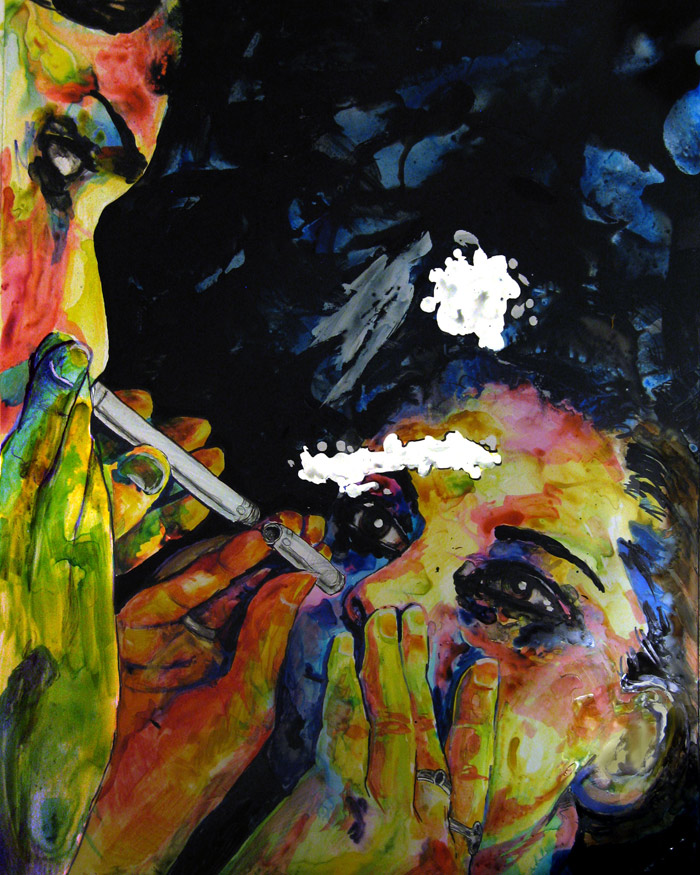
    Merging literature and visual art act as the catalyst for creating my autobiography, Pendulum.  The story journeys through irrational thoughts of self-inflicted pain as each segment explores the different abnormalities inherent in the rampant stages of what is to be bi-polar.  Each self-portrait and abstraction carries facets that create entirely different tones.  The fluctuation in mediums creates memories in luminous oil, depression in soft charcoal, mania in vivid color, and rage in graphic blacks. Hand-written text became an integral element that forged a symbiotic relationship between novel and art.  Each visual shift represents my fears and personal conquests in this compendium of imagery.

    vanessa-aves.com

    On Friday, June 21st NY Arts Magazine attended the opening of Party Picks at Salon 94 Bowery, which encapsulates a dynamic selection of Jimmy DeSana’s incredibly visceral oeuvre. DeSana is most well known for documentation of the New York punk scene and the celebrities that represent this aggressive, yet equally titillating cultural movement. However, labeling DeSana as a mere commercial, punk photographer greatly depletes the artifice that secretes from his images. It would marginalize his role in the New York art scene as passé instead of as an artist whose work continues to resonate.

    In Pliers (1978), we must confront the dramaturgical aspect that DeSana consciously interweaves into his works. The scene is clearly constructed, yet the image seethes with pain, flamboyance, and eroticism. It is in this space—caught between the limits of the photographic medium and the performance within these confines—that DeSana wants to keep us. It is here that we become isolated with the image.

    As DeSana’s style matures, this space becomes more tangible and alluring. In Sweatshirt (1980-1982), DeSana’s range and stylistic language has grown and is at its most vocal. Much like Pliers, our need to understand and to dissect, collides with the subversive playfulness of the image. DeSana teases us and invites us into this Lynchian bathroom where the banal meets the fantastic. If we were to cage our imagination, we could be able to deconstruct the image easily. We could say these futuristic helmets were put on nameless heads, we could say that underneath this fetal construction lies two separate human beings.

    Yet as we gaze at the elegant, yet deformed hunchback figure, something alien grips us. These conjoined beings with celestial helmet-heads are presented in isolation from the world around them. It is as if we are peering into a terrarium. Our cheeks squeak against the plexiglass barrier, as we observe something that is so familiar, yet inorganic and completely synthetic. Our perception of the body is disrupted.

    DeSana simultaneously rips apart both what we know and what we expect in the photographic image. Reconstructing it as a space that provokes us to enter, to explore, and to discover. His work challenges us with the syndicating of our most intimate selves, and the private space where the body’s agency and coinciding uncertainty congeal.

    By Elizabeth Ashley Temple

    salon94.com

    microscopeJonas Mekas
    Outlaw: New Works
    Microscope Gallery
    June 27 – July 29
    Opening Thursday June 27, 6-9pm

    Installation view, Broadway Gallery.

    SPONSORED: NY ARTS MAGAZINE & ART FAIRS INTERNATIONAL

    paypal_icon.gif

    Promotion & Publicity Fee: $1900


    PROJECT & PUBLICITY PROPOSAL PART ONE: CATALOG SIZE: 8.5” X 11”

    • 6,000 copies printed for sale & distribution
    • Representation in print and within NY Arts Magazine on the website.
    • The catalog will be a special section, as part of NY Arts Magazine. As part of NY Arts Magazine, it will be distributed nationally and internationally to our distribution system (available at variety of location including galleries, museums and popular bookstores, such as Barnes and Noble), as well as our subscribers.
    • The Catalog will include an introductory essay on the Artists At Home & Abroad.
    • Each artist will have one full page in the catalog. The page will include one image and a submitted text on their work. Deadline for submitting all data is one week after exhibition agreement.

    PROJECT & PUBLICITY PROPOSAL: PART ONE & PART TWO

    • A page on www.BroadwayGalleryNYC.com for a whole year featuring an image of the artists work.
    • An image of the artist’s work will be displayed on Art Fairs International as a Flash Presentation as Artists At Home & Abroad at www.artfairsinternational.com for the duration of month.
    • Press Releases will be written and posted on a variety of websites including Art Cat, Art slant, NY Arts Magazine and Art Fairs International. The Press releases will also be distributed via email to the Broadway Gallery, NY Arts Magazine and World Art Media mailing lists (which include museums, galleries, curators, writers, art publications, artists, and art fairs).
    • Artists At Home & Abroad will be featured among the “Artists of the Month” Banner on the homepage at www.artfairsinternational.com and also at www.nyartsmagazine.com.
    • Each artist participating in the project will be represented, with an image of his or her work (which may or may not be the work on view). A hyperlink will go directly to the artist’s personal website.
    • A special page will be created exclusively for Artists At Home & Abroad at www.globalartprojects.com This page will be online for a minimum of one year, with each participating artist’s hyperlink and image.
    • Artist to be featured in the print edition, NY Arts Annual Web Directory (next available issue). a) The 1/6 Page feature in print will include: Artist Name, Website address, One image of the artist’s work (hi res 300 dpi)
    • Posts regarding the Artist at Home and Abroad exhibition will be featured on our Facebook and Twitter pages.

    PUBLICATION & DISTRIBUTION: 2013

    • Schedule & Payments: Total cost for publicity program + catalog is $1900 and includes 2 complementary copies of the NY Arts Magazines Artists At Home & Abroad Catalog edition.
    • Shipping, Work & Sales: Each artist will show works in the group exhibit Artists At Home & Abroad. Maximum allotted wall space will be 55” x 30” per artist.
    • At the back of each work there must be: Artist Name, Title of the Work, Medium, Price, and Artist’s website address.
    • Artists are responsible for the all shipping arrangements, including shipment and arrival of the works in NYC. Works are to, no less than, arrive 3 to 4 days prior to day of exhibition.
    • The artist will receive 70% from the sales of their own work and the gallery will receive 30%. The artist is required to provide the title and price, gallery commission included.

    All questions regarding this proposal should be submitted directly to your NY Arts Publicist. To request help with making a payment email lubelski@nyartsmagazine.com

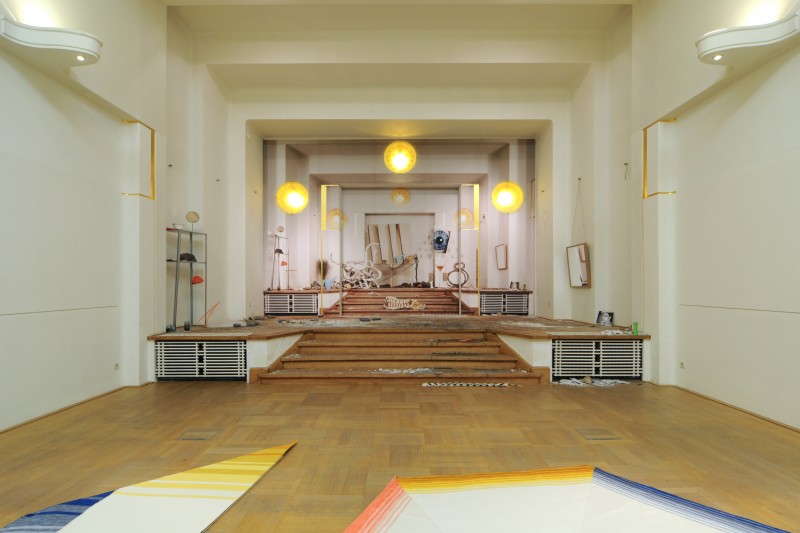
    6 Possibilites for a Sculpture

    Six Possibilities for a Sculpture, installation view, La Loge 2013 – image: Isabelle Arthuis

    Curated by: Zoë Gray
    Hedwig Houben, Jennifer Tee, Caroline Achaintre, Robert Orchardson, Emmanuelle Laine

    Six Possibilities for a Sculpture
    La Loge Gallery
    April 12 – June 29, 2013
    Kluisstraat – rue de l’Ermitage 86
    B-1050 Brussels

    Workorganized by Sara Greenberger Rafferty
    Katherine Bernhardt, Sarah Crowner, TM Davy, Michelle Grabner, Joanne Greenbaum, Sara Greenberger Rafferty, David Kennedy Cutler, Michael Mahalchick, Eddie Martinez, Yuri Masnyj, Sam Moyer, Ian Pedigo, Kate Shepherd, B. Wurtz

    Work
    Klaus von Nichtssagend Gallery
    June 27 – July 28, 2013
    Opening Reception: Thursday, June 27, 6-8PM
    54 Ludlow Street, NYC
    klausgallery.com

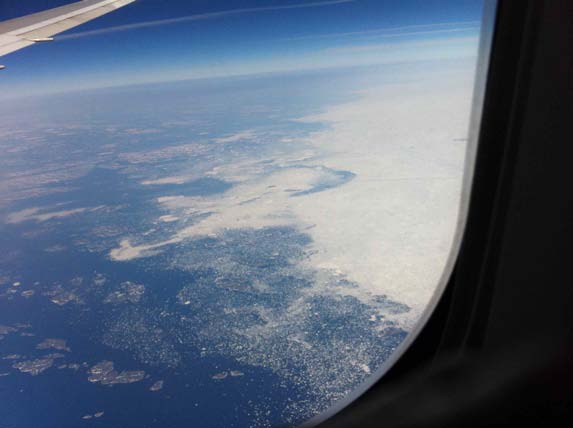
    On June 13, 2013 at 10 AM, I started my journey on an American Airlines flight to New York. I had a seat by the window, and the place next to mine was free so it made for a very comfortable trip. I flew right over the Nordkapp. It was a comfortable flight and there was no trouble with my passport or custom control. I got on the Airtrain from the airport and then I caught the subway into Manhattan.
    Suddenly, I was standing in the middle of the city. And now I had to orientate myself to the Westside, Eastside, Downtown, and Uptown. The people of New York are very friendly. While I was trying to figure out where I needed to go, a man asked me if he could help me. I always thought New Yorkers were just like the Swiss—arrogant and impolite. After he told me where to go, I hopped into a taxi. I told the taxi driver where I needed to go, but he told me I was so close to my destination that I could walk. However, I ended up walking for half an hour. The hotel was easy to find, and and after I checked in I changed my shoes and headed out to Broadway.

    I watched people catch taxis but it seemed very difficult, so I decided the subway was a better option. Back in Switzerland people told me that taking the subway was dangerous, but I survived.The next station was Broadway, so I got out and started to look for my destination. However, Broadway is a very long street in New York. After a few attempts, I found the gallery. Unfortunately, it was late and the gallery had already closed. “OK,” I said to myself, “Tomorrow is another day.”

    At a little shop, I bought something to drink and a sandwich. I found a little park I had seen before and decided to sit down and relax. The sandwich was so big that I only ate half of it. I asked myself, “What should I do with the other part?” There were a lot of homeless people in New York, so I had the perfect solution. I saw two older women sitting on the street, and I gave them the other half. They where happy, and so was I. Surprisingly, the homeless people in New York are very polite. When you don’t wish to speak to them, they leave you alone. Very tired, but very happy I decided to go back to my hotel. The highlight of the day was finding the right subway and getting out of the right station on my way home.

    I went straight to bed, and slept deeply until 4:50 AM, when I suddenly awoke. I tried to go back to sleep, but I didn’t have a chance. I used this time to plan my day; I had a lot of sightseeing to do. I planned which subways I would need to use after my breakfast. I head to Time Square. I got there at 8 AM. There was no chance of walking the red carpet. Nevertheless it was impressive. My next stop was the Empire State Building. I was at the top in a quarter of an hour. There was no queue because I got there really early. Thank you, jetlag! As fast as I was at the top, I was back at the bottom. I decided to go for a real coffee at Starbucks.Reisebericht GB
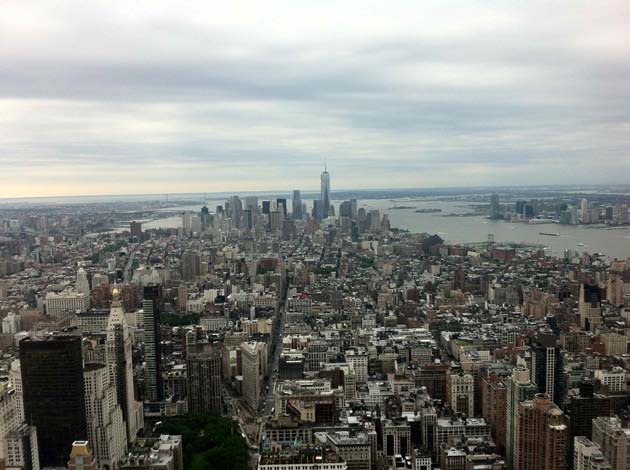
    Coincidently, it started to rain. Everyone was wearing rubber boots in all different colors. I was afraid that there was a flood alarm, but nothing happened. I got back on the subway. I headed downtown towards the statue of liberty and Wall Street. Now it really started raining. I was angry because I didn’t have an umbrella with me, so I had to wait under an awning of a small restaurant. Then I saw a man with a little trolley coming towards me. It seemed like he had a cart full of rubbish. He asked me if I wanted to buy an umbrella, but I told him no. After I realized my misunderstanding, I felt very silly. Luckily, another trolley came soon and I bought an umbrella. Now I could walk to the port and take my photo.
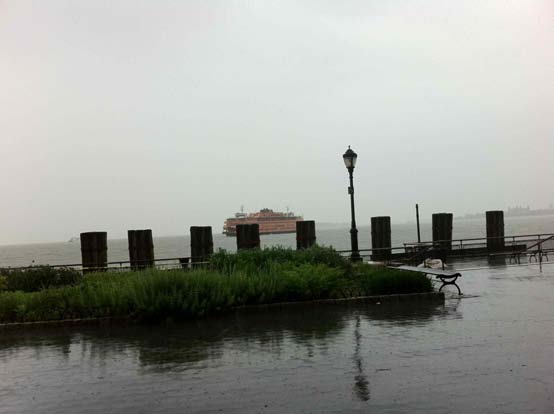
    northkapp
    This looks quite harmless, but in the next photo you will see how badly it was raining.
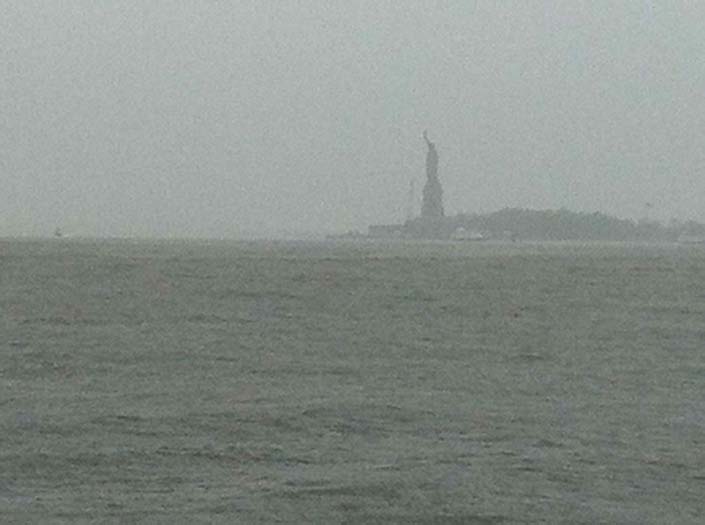
    northkapp

    I didn’t have enough time to take the ferry to the Statue of Liberty, and because time is money I headed for Wall Street. It was raining so heavily, I decided to wait there. Afterwards, I was hoping to find a thousand dollar note on Wall Street. Unfortunately, there was nothing to find, so I went to the Brooklyn Bridge. I realized that New Yorkers were really friendly people. When I was standing for only ten seconds, someone immediately asked me if they could help me. I was able to get to the Brooklyn Bridge straight away. My feet were hurting and I felt tired, so I decided not to walk across the entire bridge. I went to Chinatown instead.
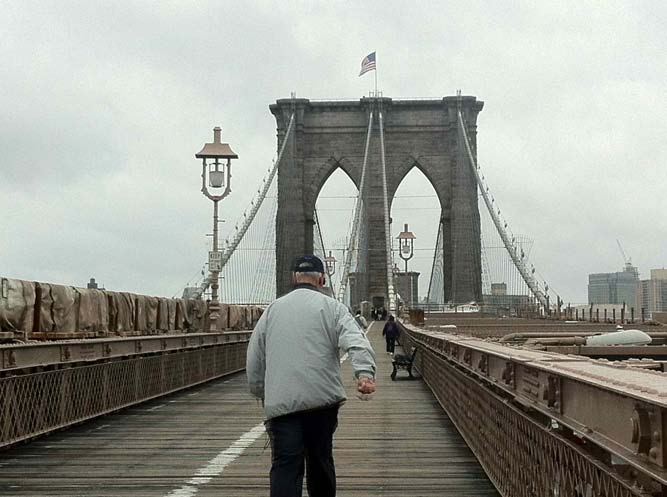
    northkapp

    In Chinatown there were so many restaurants; I couldn’t pick one. There were a lot of beautiful restaurants, but I chose a little one. When I went people looked directly at me as if I had come from the Moon. I got a seat in the middle of the restaurant at a table where the chef was also eating. He kept throwing angry glances at me, so I decided to ignore him. I Ordered a meat, tomatoes, and rice dish. He gave me a spoon, and was surprised I could eat with chopsticks. Now when I left, he smiled at me. On my way to the subway, I saw a violinist on the street and I was surprised that New Yorkers gave him money. He was a really good musician, so I gave him some money as well. Now it was time to go to the gallery. I had a warm welcome when I arrived, and I was happy to see my paintings next to the entrance. I had time to go back to the hotel, shower, and change my clothes. But before I went to the hotel, I had to see Central Park.

    What do you think I bought next when I saw this advertisement?
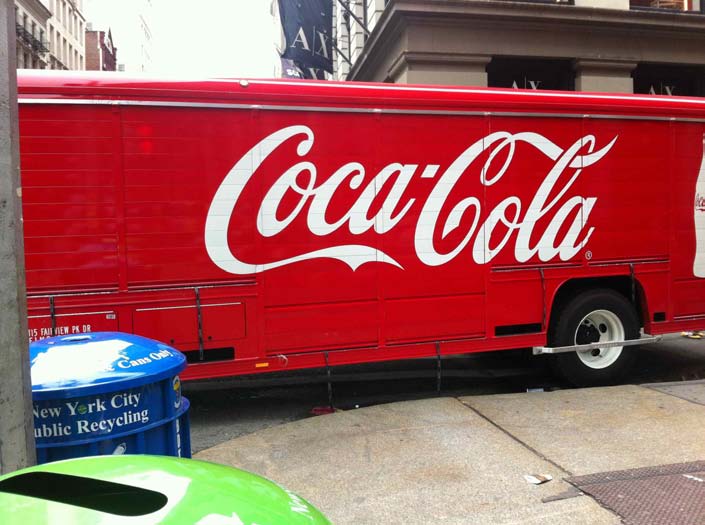
    northkapp

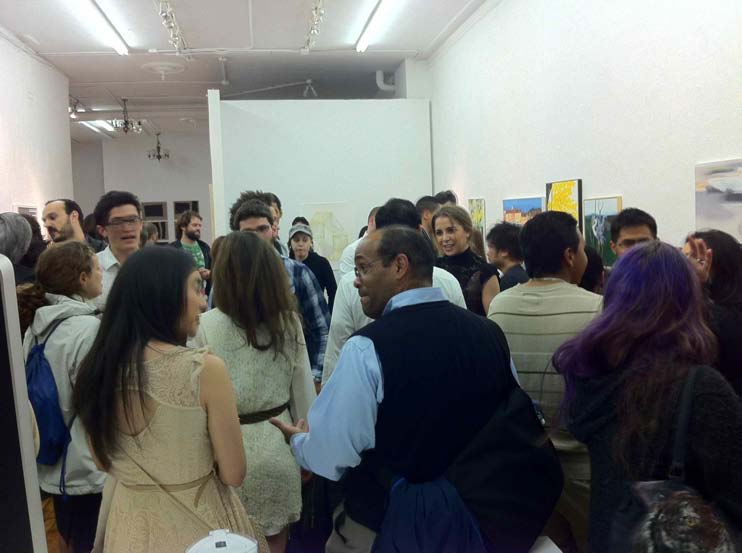
    I didn’t stay long in Central Park, but it was amazing to see that much green in the middle of New York. Because riding horses is a hobby of mine, I had to take a picture of one of them in the park. After I went back to my hotel, I took a short nap. Then I was back in the subway, headed for the opening reception at the gallery. A lot of people showed up and I made good connections with other artists. With a lot of cards and many new impressions, I wanted to go back and eat something.
    northkapp

    Despite all the warnings, I took the subway once again and as you can see, I survived. I was very tired, and fell asleep within seconds.

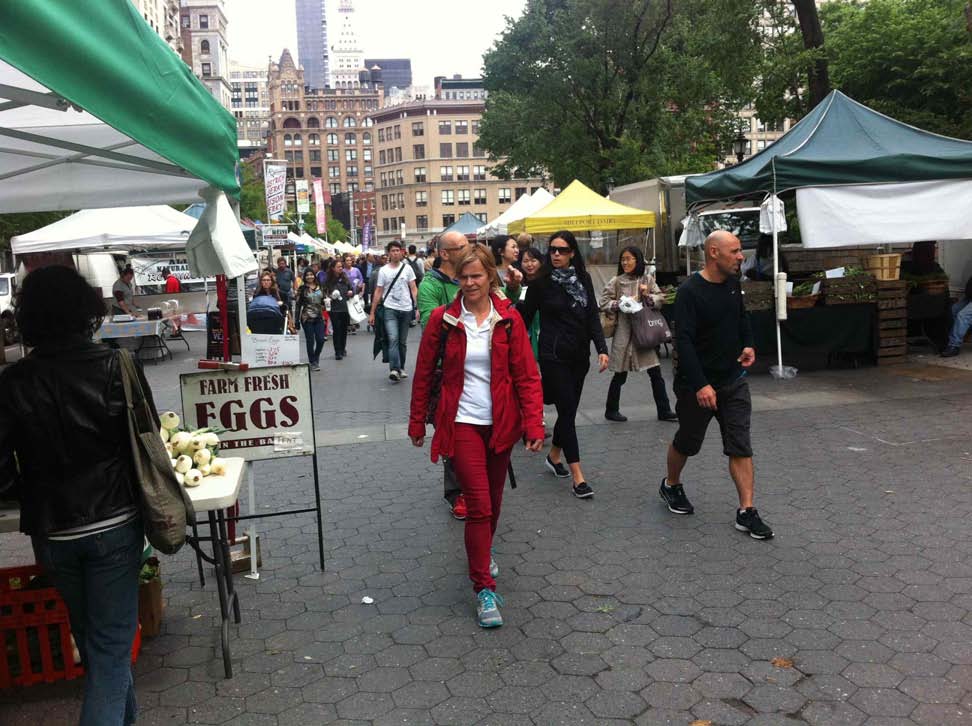
    Yet again, I awoke at 5 AM. After a shower, I planned my last day. I ate a quick breakfast, and I checked out. With my luggage in tow, I headed for the nearest subway station. I wanted to visit some galleries, and had a tip that I could visit plenty of them on the lower east side. I couldn’t find any of them, so I decided to go to the galleries I had contacted before. In two of the galleries, the responsible people were not there. But I was able to send my documentation to the last gallery. I felt happy about this news, so got a nice lunch in Chelsea. On the way to the restaurant, I had found myself in the middle of a market, where you could buy fresh fruits and vegetables.
    northkapp

    Afterwards I headed for the airport. The flight was delayed by three hours, but I slept during the flight so it wasn’t a problem. At last we landed in Zurich, and I could finally go home happy, but tired.

    It’s not a stretch to imagine the printed book becoming an endangered species in a society where 140 characters or less becomes the limit of knowledge consumption. With the advent of Facebook, Twitter and other forms of digital media, the appreciation for the printed word becomes simultaneously treasured and successively phased-out. Multidisciplinary artists Antonia Wright and Ruben Millares contemplate and attempt (on a small scale) to reverse this degradation of the book by reaffirming its utility, its artistry, and its general significance even in a contemporary moment.

    Entitled State of the Book, the two Miami-based artists (Millares is a frequent collaborator with Wright on her live and recorded projects) will inhabit the space of Spinello Projects within the Wynwood Arts District beginning July 13th. A cavernous, generous space called the Gesamtkunstwerk houses both Spinello Projects helmed by Anthony Spinello and Butter Gallery, directed by Francisco de la Torre. A set of false glass doors resembles a storefront bookshop at the entrance to the gallery, leading up to the open space itself which is populated by shelves and stacks of printed material available to peruse and probe. The sensation is strange: a library within a white cube almost tempts the viewer to be cautious or wary of what they’re about to see, somehow intimating that a quiet reading room is just too pure, too innocent of a concept to be housed in a young, avant-garde art gallery in Miami. The realization steadily sets in that there are no computers, no eerie video installations whispering evil subliminal messages in the air, no interpretive dance or wild gestures about to shock the hell out of the audience.

    One can simply sit, relax and engage with a good, old-fashioned hardcover without a single technological outlet to be seen. The healthy collection is sourced from the Miami-Dade Public Library system as well as private book and manuscript collectors, and the artists themselves. The gallery becomes insular and protective, a kind of haven where the shelving and the physical qualities of the books become aesthetic materials. They subsume the institutional ‘sanctity’ of the gallery where each book, each word could equal a brush stroke, the sheen of a bronze sculpture, or the glimmer of a video work. Consequently, the visitors become part of the work: without their active participation, this pop-up library would be just another forgotten vessel of works. Wright and Millares encourage a reverence, a renewed fascination with the book as something more than a receptacle of fact and fiction. The gallery is transformed into a different kind of visual space, where subject and object merge into words, sentences, narrative plots and published theories.

    Wright and Millares have, in the course of their joined and respective practices, pushed this sort of boundary before where practical expectation of a performative act is blindsided by a rush of socially-conscious challenges made directly to the audience. What is most delightful about this exhibition, however, is its location. Miami isn’t widely known as a ‘temple of knowledge’ versus a humid den of thieves and sinners. Not that this show will change that stigma anytime soon, but its comforting to know that two local artists relish all the city can offer-even if its not set to cocktails, thumping house beats, and the glare of the summer sun.

    by Shana Mason

    spinelloprojects.com

    To view a previous project by these two artists, please enjoy the following video:

    Job Creation in a Bad Economy from Antonia Wright on Vimeo.

    News | Exhibitions