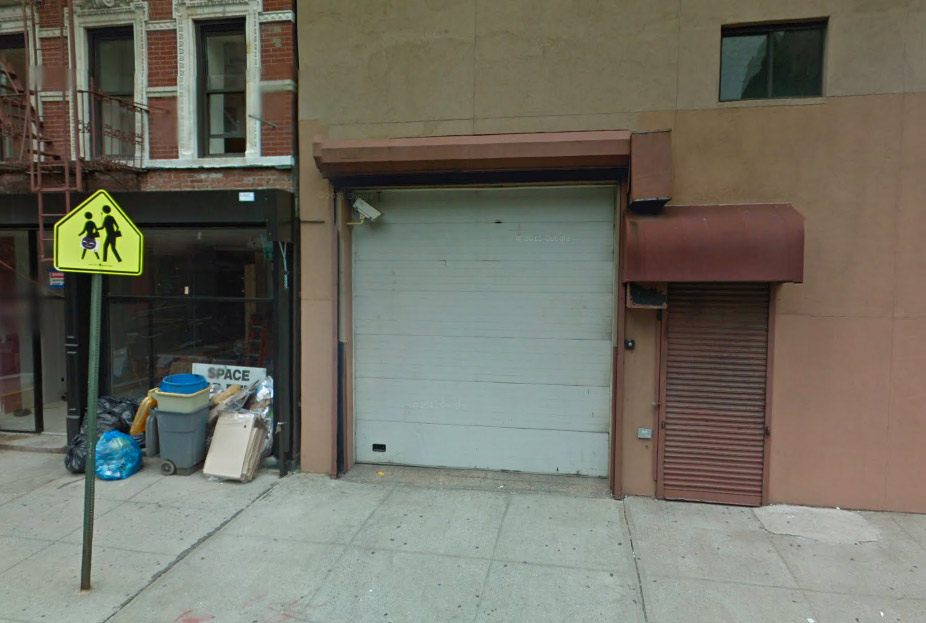
• This image may or may not be of the correct garage. Deal with it.

    This image may or may not be of the correct garage. Deal with it.

    Featuring: Bianca Beck, Sebastian Black, Carol Bove, 
Sarah Braman, Elaine Cameron-Weir, Alex Da Corte, 
Charles Harlan, Dan Herschlein, Jon Kessler, Zak Kitnick, 
Becky Kolsrud, Chris Martin, Sam Moyer, and Borna Sammak.

    Garage Show
    Rachel Uffner Gallery
    November 24, 2013 – January 19, 2014
    Opening Reception: Sunday, November 24, 6-8 pm
    Garage adjacent to 170 Suffolk St
    racheluffnergallery.com

    The new Meridian exhibition at the recently launched Tryon St Gallery, (just a stone’s throw from London’s Saatchi gallery), explores the universal human fascination with finding our place in the world and recording it through maps and mapping. Attesting a human need to determine and record one’s position in the world, maps—and intangible concepts such as meridians—are instrumental in understanding and exploring the environment that surrounds us, as well as our own inner landscapes. The work of the five UK and USA based artists showcased in this exhibition explore different mapping processes and draw on the notion of perception as both a collective and subjective experience.

    In Mappa Universalis, UK artist Mat Chivers undertakes the mapping of his own brain using MRI scans, resulting in a very unconventional self-portrait. Trying to bring to light the neurological process behind human perception, Chivers combines scans of the two hemispheres of his brain, the right, intuitive and imaginative side, and the left, logical and reasoning side. Visually intriguing, this work reflects on how their joint activity is responsible for our complex perception of reality, simultaneously pointing out the particularity of each individual’s perception, and the universality of neurological function.

    LA based artist, Gregory Michael Hernandez is fascinated with the way humans build grids of perception based on the mapping, representation and interpretation of their environments. For his London debut, Hernandez presents Circular Mound Altar in Perspective, where he recorded the mathematical coordinates of the 405 stones of the Circular Mound Altar in Beijing, which served as a spiritual portal between earth and heaven, and used them to photograph the night sky above the Mojave Desert in California. Through this process, the artist recreates his own gateway by photographically mapping the starry firmament, traditionally associated with heaven. This truly astral composition also demonstrates how data and information can be easily distorted and manipulated.

    US based British artist Matthew Picton extends on the ambiguous nature of maps, by addressing their potential use for a nation’s image/branding and political propaganda. In Moscow 1812, he recreates a map of the city that recorded the fire damage caused by Napoleon’s attack on the city, using partially burned sheets of music from Russian composer Tchaikovsky’s famous 1812 overture. Both commissioned by the state, the map and the composition form part of nation-building strategy, denouncing the damages caused by the French army and celebrating the strength and glory of Russia in the face of adversity. The threatening burns delineating the reliefs on the map draw our attention to the dangerous political use of maps as a propaganda tool for the building of a nation’s image.

    Also featuring works by US based, Irish artist Stefana McClure and British artist Susan Stockwell, the exhibition at Tryon St shows how artists are exploring this subject on both sides of the Atlantic. In short, the Meridian show is a must-stop on your art map.

    Image courtesy of the artist.

    Image courtesy of the artist.=

    My work situates the exploration of everyday life while combing through its little spaces of deeper meanings yet to be abstracted. I view them as incomplete fragments waiting to be reconstructed into a new product that not only brings aesthetics but interaction in a direct or indirect way. Each of my works call for the amalgamation of multiple mediums. I believe the collision of media is where the magic starts in creating a dialogue between the current and the different, while being critical about the moment. I hope my work brings more than just a pretty surface, provoking society in new ways of seeing.

    darylgoh.com

    Mechelen is a small city in Belgium, poised exactly half way between Brussels and Antwerp. Though it has a higher percentage of listed buildings than the better-known tourist magnet Bruges, for a long time, the city has been a hidden gem. Over the last couple of years, however, Mechelen has managed to put itself on the international art map with a series of ambitious exhibitions and projects. One of these is Contour, the Biennial of Moving Image, which just saw its 6th edition come to an end.

    Leasure, Discipline, and Punishment is the title of this year’s edition curated by Jacob Fabricius. As the biennial developed a strong tradition by showcasing video art in various historical venues throughout the city, Fabricius configured his exhibition in four public (or semi-public) buildings, each with a distinct set of rules and regulations influencing human behavior. Apart from the brand new city museum Hof van Busleiden exhibition hall, there is also the prison, the KV Mechelen football stadium, and a church. The three keywords in the exhibition’s title are not only tackled in the respective venues corresponding to the theme, as one might imagine, but throughout the entire exhibition. This curatorial approach was probably adopted in order not to follow the title too literary, but it sometimes also resulted in a certain loss of coherence.

    The video How to Live in the FRG by Harun Farocki welcomes the visitor in the hallway of Hof Van Busleiden, the main venue. The movie is a compilation of training sessions ranging from military exercises, instructions on how to cross a street, to striptease lessons. Produced just before the fall of the Berlin Wall, it gives an absurd insight from the East German point of view of overregulated events in the West steering the (free?) behavior of individuals. Inside, the big exhibition space is filled with a construction of scaffolding, a clever move to make this space suitable for showcasing plenty of video art—though Fabricius also wisely integrated sculptures, like a wacky doll by Jos de Gruyter & Harald Thys, and installations for variety’s sake. The exhibition design refers to prison cells, which is of course no coincidence. On one of the walls, you can see posters of various movies set in prisons (Caged, Femmes en prison, etc.), hanging next to a video in which Liz Magic Laser created choreography with dancer Lisbeth Gruwez. The work is set in Mechelen’s prison and based on the movements of the characters in these films.

    Another highlight was the video and sound piece The Twelfth Man by Paul Hendrikse. The artist observed football fans in the local football stadium and made an inventory of their slogans, cheers and sounds. The music score, which is also exhibited here, is brought alive in an isolated recording studio. Other works are less convincing however, and have little, or nothing to do with the theme, like the stop animation by Peter Wächtler, Pernille which is with Madsen’s video Dissolve in which she tries to blur our sense of representation. The work of Gustaaf De Bruyne (1954- 1977) is somehow too obvious of an attempt to include a local, forgotten artist that is hence rediscovered—a rather trendy device in the art world these days.

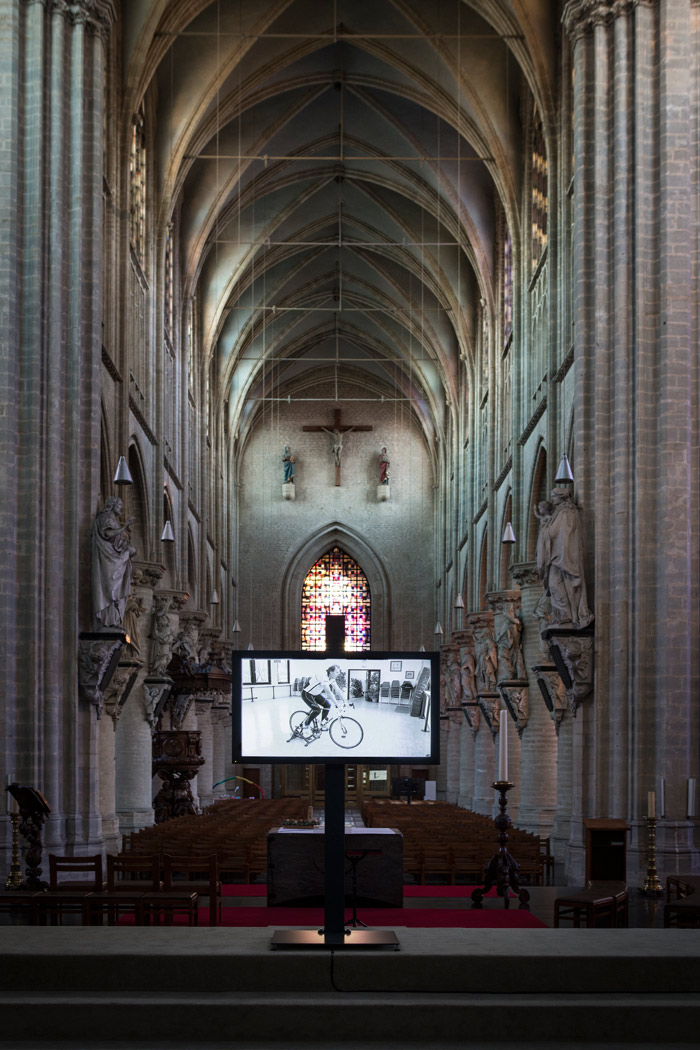
    Josef Dabernig  Excursus On Fitness, installation view 2010. Video, black & white. Contour 2013. The 6th Biennial of Moving Image. Photo Credit: Kristof Vrancken.

    Josef Dabernig, Excursus On Fitness, installation view 2010. Video, black & white. Contour 2013. The 6th Biennial of Moving Image. Photo Credit: Kristof Vrancken.

    As a whole, the church of Our Lady across the Dyle is a missed opportunity. Though churches have so many rules and regulations and are hence an ideal inspiration point for the theme, most of the pieces presented here are rather tame and not striving to engage with this loaded venue at all. One of the few exceptions is Pablo Pijnappel’s sound installation Lucas, which has been set in a confession chair

    The prison was, for understandable reasons, not accessible during our visit, while the football stadium only displayed a handful of works (Josef Dabernig, Pernille, and Madsen.) Hence the locations functioned more as a theoretical backbone or source of inspiration, possibly leading to new commissions, rather than as exhibition venues. That is a pity however, as Fabricius wants to investigate the restraints and possibilities of these venues on the social fabric. By not using them to the fullest, he partly fails in this mission.

    Though there are many interesting works to see at this biennial (Sonia Boyce, Sarah Vanhee, Alejandro Cesarco, etc.) and it has an interesting curatorial angle, it does not really manage to keep the fascination constant. Even the work of David Shrigley, who made a list of rules for each venue, lacks a bit of his characteristic strength—and that says something.

    By Sam Steverlynck

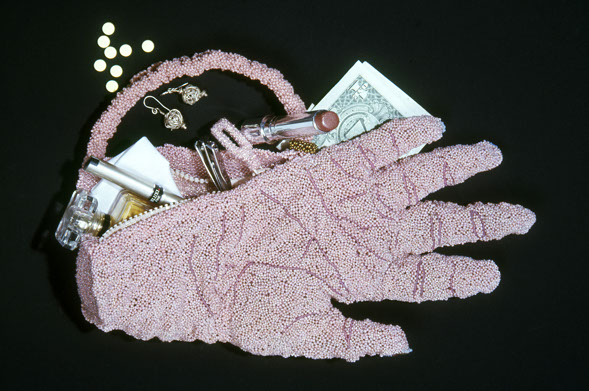
    handbagFeaturing: Alison Collins, Caetano de Almeida, Dan Bailey, Dan Estabrook, David Chatt , David Shapiro, Felix Gonzalez-Torres, Jana Brevick, Jeff Chien-Hsing Liao, Lisa Hoke, Paul Chan, Peter Matthews, Rafael Lozano-Hemmer, Richard Hughes, Sonya Clark, Tehching Hsieh, Walead Beshty and more.

    0 to 60: The Experience of Time through Contemporary Art
    November 22, 2013 to January 25, 2014
    Opening reception: Thursday, November 21, 6–8 PM
    Pratt Manhattan Gallery
    144 West 14th Street, 2nd Floor
    New York City
    www.pratt.edu

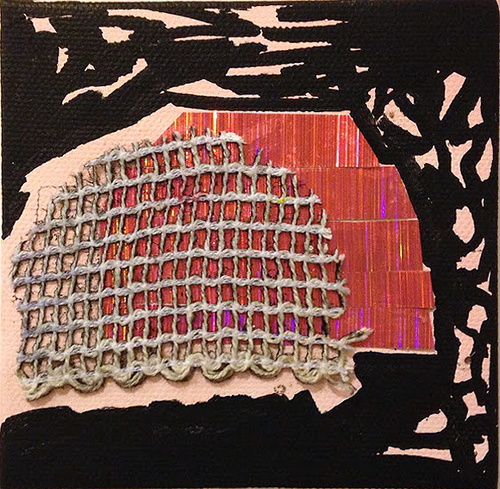
    Candice Strongwater, Rainwater, 2013, Mixed media on canvas, 4x4 inches

    Candice Strongwater, Rainwater, 2013, Mixed media on canvas, 4×4 inches

    Featuring: Lee Arnold, Michael Brennan, Ai Campbell,  Bill Carroll, Nicole Cohen, Dana Crossan, Jennifer Dwyer, Shingo Francis, Veronique Gambier, Joy Garnett, Daniel Hill, Loie Hollowell, Arlan Huang, Rhia Hurt, Will Hutnick, Rachel Kohn, Suzy Kopf, Natalie Lomeli, Allison Maletz, John F. Moore, Janet Pedersen, Simona Prives, Rachna Rajen, Judy Rifka, Jean Rim, Esther Ruiz, Mary Schiliro, Rachel Sharp,  Marcy Sperry, Vincent Stracquadanio,  Candice Strongwater,  Jannell Turner, James Vanderberg, Jia Wei,  Rachael Whitney, Jeanne Wilkinson, Rose Wong, Heidi Yockey

    Trestle Gallery: Winter Art Sale
    November 22, 2013, From 6:00 PM to 8:00 PM

    168 7th Street, 3rd Floor
    Brooklyn
    trestlegallery.org

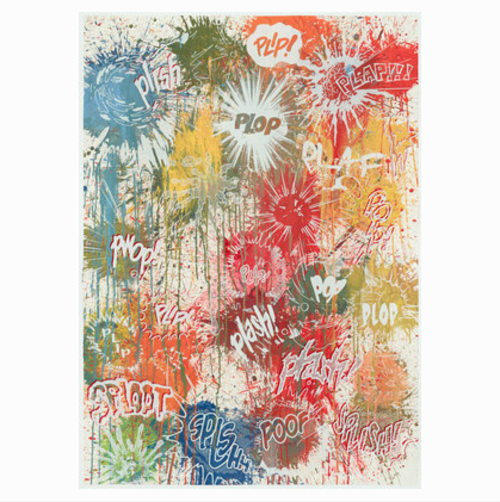
    Christian Marclay, Actions: Plish Plip! Plap!!! Plop…(No.2), 2013; screenprint with hand painted acrylic, 37 7⁄8 × 49 in.

    Christian Marclay, Actions: Plish Plip! Plap!!! Plop…(No.2), 2013; screenprint with hand painted acrylic, 37 7⁄8 × 49 in.

    This new group of works consists of silk-screen on painted backgrounds, featuring onomatopoeias that evoke the sound of painting actions (SPLORCH! SLLURP! WHOOMPH!). Torn from comic book pages, collaged, blown up and printed on canvas and paper, the onomatopoeias extend Marclayʼs investigation into the relationship between sound and image, sampling elements from art and popular culture.

    Christian Marclay
    New Paintings and Works on Paper
    November 22, 2013 – January 18, 2014

    Paula Cooper Gallery
    534 West 21st Street
    New York City
    paulacoopergallery.com

    As a repository of Dadaist ideas, the brilliant show at Blain/Di Donna, Dada and Surrealist Objects, represents what constitutes artistic re-interpretation. It brings back into focus the bankruptcy of contemporary artistic initiatives as nothing more than  shameless re-invention.  The “objects” in this elegantly-mounted show represent imaginative artifacts created between 1920 and 1969 (save for the anomaly Marcel Jean’s Le Magnetoscope, 1983.) For a half-century, Dada and Surrealist tendencies self-perpetuated new challenges and interpretations of what constitutes an art form. Playful and iconoclastic, these objects can be seen as the primary agent provocateur for artists of the Chelsea  generation. But this generation’s response, rather than one of further exploration, has been revealed as one of  soulless mimicry, and not the least bit flattering of the past but rather a shallow exploitation of it.

    What is celebrated in this show is the spirit of artistic freedom and the pathway that a handful of free spirits paved. “I am for an art that bleeds, weeps and sings the strong songs of poetry.” says an anonymous New York Dadaist. That poetic vision is seen fully realized in the exemplary works beginning with the earliest executed construction, Indestructale Object by Man Ray and his Rayograph print of 1922.  They echo F.T. Marinetti’s challenge to “Let us boldly create the ‘ugly’ in literature and kill solemnity wherever it may be.”* While Marinetti is considered the father of Futurism, he is the Godfather of Dada. His transformation epitomizes the gradual refutation of the classical in favor of the  unexpected elevation of the found object and the composite of opposites.

    With Dada, one enlists the mystery of the everyday, see Marcel Duchamp’s Chess Score of 1965, and Andre Masson’s Ondine with its borrowed feather, sand, and shell.

    These works are as different from classical sculpture as Music Concrete differs from Marinetti’s first sensuous explorations,”Her body is jeweled with the fine night dew and the sweat of lingering pleasures drunk long from the lips of the Stars”.*

    With the re-interpretation of the sensual also comes the assertion of irony in works by  Magritte, Femme-bouteille of 1955 and Enrico Donati’s Shoes of 1945.  Dada is mostly “surface tension” that requires the observer to bring something to the perception of art. Where Max Ernst forces one to read his Un triste sire for an inherent emotion, Man Ray defies any intention of seriousness with Ballet Francais II of 1971, unless the viewer is politically astute. There is much to discover in this show of surfaces where minimalist tendency had a point, one that is soon to be all but buried in the muck of the 2020s.

    By Tony Zaza

    * Technical Manifesto of Futurist Literature, 11 May 1912.
    ** The Sensual City, 1908

    Tabor Robak

    Tabor Robak’s work employs computer generated imaging to create videos of invented worlds. Working in programs including Unity, After Effects, Photoshop and Cinema 4D, the artist explores a secondary, digital reality, rendered in what he refers to as a “Photoshop tutorial aesthetic” or a “desktop screensaver aesthetic.”

    Tabor Robak, Next-Gen Open Beta
    November 24, 2013 – January 12, 2014
    Team Gallery
    83 Grand Street
    New York City
    teamgal.com

    Irena Jurek: Ok, so tell me which hotties you’re keeping an eye on this season.
    Casey Jane Ellison: I keep to myself.

    IJ: Your newest series, “What the F*shion,” parodies the fashion show genre, and deconstructs identity, status, and misogyny. Can you talk about what motivations led you to satirize fashion specifically?
    CJE: I wanted to have a laugh with my generation about the way we are marketed to more than about fashion, specifically. I do think the fashion industry can be sexist, classist, and boring and so can any industry. But, I also think that the idea of the way people dress themselves is fun. It’s fun when people look cool and when they look insane.

    IJ: I agree with you that any industry can be sexist and classist, but fashion more so than any other industry evokes notions of power, status, and body dismorphia. Before Twiggy came onto the scene almost fifty years ago, eating disorders were relatively obsolete. It seems to me that the fashion industry is the ideal vehicle for your subject matter.
    CJE: I cannot attest to the history of eating disorders, but I disagree that their origin is Twiggy considering admen and corsets predate her. And I’ll add that my eating disorders are only a small part of my subject matter. I find that there is institutionalized sexism everywhere to be made fun of.

    IJ: What is it about the way that your generation is marketed to that struck a chord with you?
    CJE: The way my generation is marketed to struck a chord with me mostly because the way I’m marketed to doesn’t strike a chord with me. I’m alienated by most content that is supposed to be speaking directly to me or to my demographic.  And I think that dynamic is heartbreaking and hilarious. I’m in love with the idea of exclaiming false platitudes to an audience that doesn’t relate and then being like, “Right, ladies?!” Especially when there are men in the audience. Right, ladies?!

    IJ: Much of your work comments on the disparity between the textbook definition of the male gaze and the way that the actual objectification of women operates in every day life and pop culture. What are your thoughts on the inconsistency between the two?
    CJE: I think it is part of our language to not say the thing that is actually happening, but to just keep talking. And honestly, I’m just a baby girl in a baby world, after all.

    IJ: Your humor often seems to rely on drawing our attention to the thing that is happening that is not being said. In one episode, you give tips on “how to dress for men,” which seems to be in tune with the way that much of fashion is marketed.
    CJE: “Girlz Dressing 4 Guyz” is not a thing.  It seems like it could be a thing, but it’s actually not.

    IJ: You mentioned that you remember the day that you became aware of the double standard and how largely patriarchal our society is. Could you describe that day?
    CJE: I just remember feeling bloated as I stared up at the ceiling and thought, “Oh hell no.”

    IJ: You use avatars, animations, and your actual self to create a public representation of your identity. Yet, your work often seems personal. Can you describe the way in which you take ownership of your image through the use of self-portraiture?
    CJE: I self-objectify.

    IJ: What made you decide to use the avatar in particular as a form to depict yourself?
    CJE: The processes of creating my 3D avatars are intentionally convoluted and they’re very difficult to make and animate.

    IJ: Why is having an intentionally convoluted avatar important to you, and why is the difficulty important to your process?
    CJE:  If they’re difficult to make, then they are difficult to recreate.  My images and 3D models are visually encoded.

    IJ: With the current emergence of so many social networking sites, where literally anyone can have a public platform to perform, your videos seem especially timely. How has social networking affected the current landscape and do you believe that the current saturation of social media is here to stay?
    CJE: We will know the questions to those answers to those questions in 500 years, maybe.

    IJ: You curate a continuing series called “Aboveground Animation,” that’s been held at Ramiken Crucible, The New Museum, and MOCA. How has your role as a curator influenced your views on art as well as your own art practice?
    CJE: I founded Aboveground to build a community that my work and I can be a part of, also to propagate the work that I think is important.

    IJ: How do you decide which work is important?
    CJE: The animations presented in Aboveground are images, techniques, and concepts that shock me because I have never seen or realized them before.  It’s important to me to help share that experience with as many people as I can.

    IJ:  Do you have any upcoming shows or projects that you are working on?
    CJE: I’m performing stand up all the time and I’m making new 3D animations and 3D prints, robots and holograms.  And yes, I’m being serious.

    caseyjaneellison.com

    News | Exhibitions