
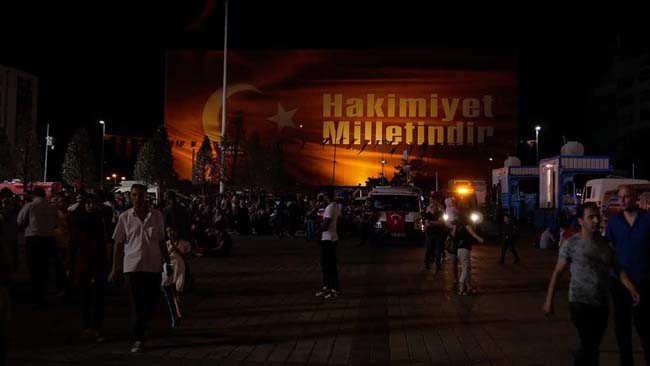
• unnamed

    A film by Oliver Ressler
    30 min., 2016

    First exhibition and screening:

    “Who Throws Whom Overboard?”, SALT Galata, Istanbul (TR), 23.11.2016 – 15.01.2017 (solo exhibition O. Ressler)
    http://saltonline.org/

    “Emergency Turned Upside-Down”, MUMOK Cinema, Vienna (A), 30.11.2016, 7 PM (O. Ressler in conversation with Charles Esche)
    https://www.mumok.at/en/events/oliver-ressler

    Refugees attempting to enter the European Union play a specific role in the relation between the EU and Turkey. The same European powers that routinely invoke “human rights” to justify military action in Africa and Asia (including the “Middle East”) deny all protection to survivors fleeing the slaughter they order. The EU border regime is responsible for tens of thousands of drownings in the Mediterranean, while Turkey has opened its borders to nearly three million refugees, more than all EU states combined.

    The film channels voices that not only go unheard but are quite unheard-of in the western “refugee debate” – because if Europe is the center of the world, speakers like these couldn’t possibly exist. They are Syrian refugees who preferred not to seek a way into the EU, choosing to continue their lives in Istanbul instead.
    The Syrians describe their life as “guests” in the continent’s largest metropolis, which for 500+ years has sheltered survivors of wars and pogroms started by powers to its north and west. One thing they discuss at length is the difficulty of making a living in Istanbul. Another is the reluctance of the EU to admit more than a pitiful number of refugees, whom it treats collectively as a social pathogen, a mobile hazard to be isolated and “made safe”. All the conversations were recorded in Arabic in the days after the coup attempt in Turkey on 15 July 2016, which therefore also became a topic of the film. Quietly reversing the entire perspective of the “refugee debate”, the film develops a political analysis of Turkish and European politics from the standpoint of Syrian refugees.

    The speakers are not seen in the film. Their anonymity is maintained as a precaution against repression and unwanted consequences of all kinds.
    The interviews are combined with images made from long single shots taken in Istanbul.
    The words and images are accompanied by an experimental audio composition – produced specifically for the film – which likewise bears witness to conditions of war and terror and to things left unsaid.

    Director and producer: Oliver Ressler
    Cinematography, audio recording and editing: Oliver Ressler
    Translator and organizer: Zuhour Mahmoud
    Production assistant: Kerem Renda
    Color correction and finishing: Rudolf Gottsberger
    Sound design and Music: Vinzenz Schwab
    The film was commissioned by SALT Galata for Oliver Ressler’s solo exhibition “Who Throws Whom Overboard?” and received support from the BKA and the Austrian Cultural Forum in Istanbul.
    Special thanks to Vasif Kortun and November Paynter for supporting the project in all its stages and for sharing their insights into the local context and contacts.
    Furthermore, I would like to thank Matthew Hyland, Zuhour Mahmoud, Shereen Mansour, Şenay Ozden and Pinar Öğrenci.

    Further information and film excerpt:
    http://www.ressler.at/there_are_no_syrian/

    October 25, 2016 – January 8, 2017
    Witness an extraordinary moment in the history of modern art, one fueled by cultural and political revolution.

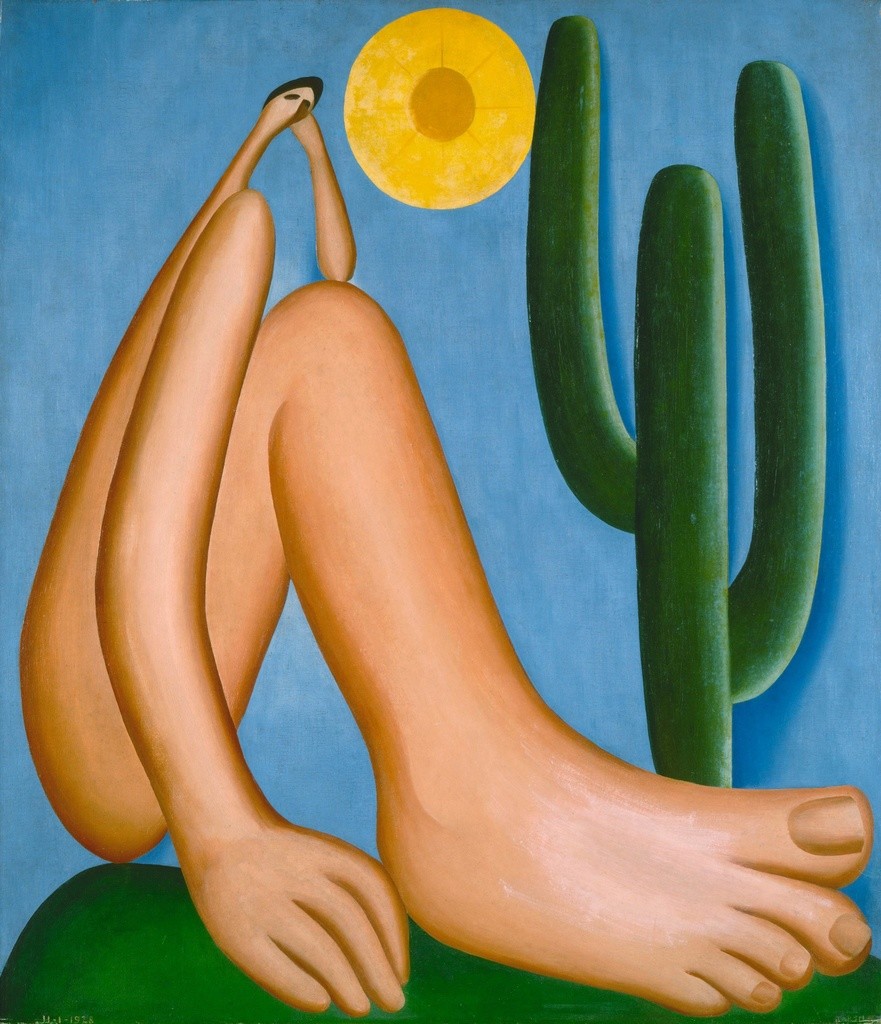
    From the start of the Mexican Revolution in 1910 to the aftermath of World War II, artists and intellectuals in Mexico were at the center of a great debate about their country’s destiny. The exhibition tells the story of this exhilarating period through a remarkable range of images, from masterpieces by Diego Rivera, José Clemente Orozco, David Alfaro Siqueiros, Frida Kahlo, and Rufino Tamayo to transfixing works by their contemporaries Dr. Atl, María Izquierdo, Roberto Montenegro, Carlos Mérida, Manuel Álvarez Bravo, and many others. Paint the Revolution offers a deep look at the forces that shaped modern art in Mexico, the progress of which was closely watched around the world. The exhibition takes its name from an impassioned essay by American novelist John Dos Passos, who saw Mexico’s revolutionary murals during a visit to Mexico City in 1926–27. In addition to featuring portable murals, easel paintings, photographs, prints, books, and broadsheets, the exhibition will display murals by the Tres grandes (Diego Rivera, José Clemente Orozco, and David Alfaro Siqueiros) in digital form. The Philadelphia Museum of Art presents this landmark exhibition in partnership with the Museo del Palacio de Bellas Artes in Mexico City. Drawn from US and Mexican collections, it is the most comprehensive exhibition of Mexican modernism to be shown in the United States in more than seven decades.

    #PaintTheRevolution


    Courtesy of  Philadelphia Museum of Art.
    © 2016 Philadelphia Museum of Art

    As America Heads to the Polls, Philip Guston’s Nixon Drawings Go On View in New York City 

    ‘Philip Guston: Laughter in the Dark, Drawings from 1971 & 1975′
    Hauser & Wirth, 548 West 22nd Street, New York City
    1 November 2016 – 14 January 2017
    Opening: Tuesday 1 November, 6-8PM

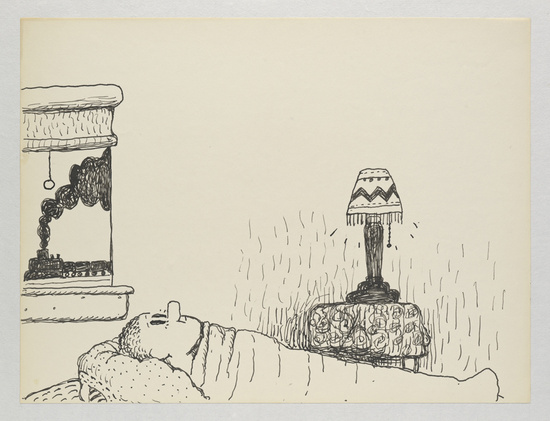
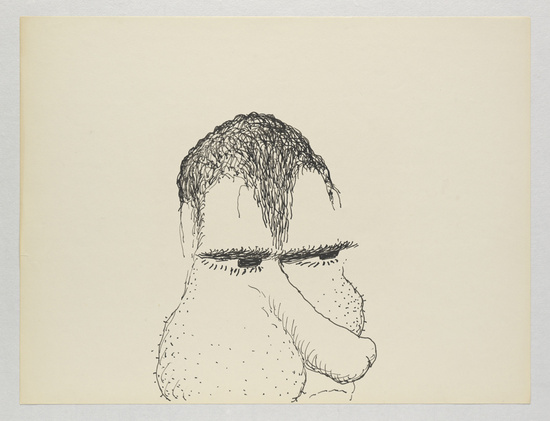
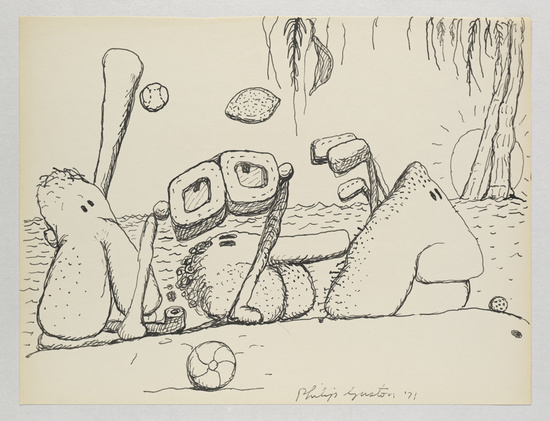
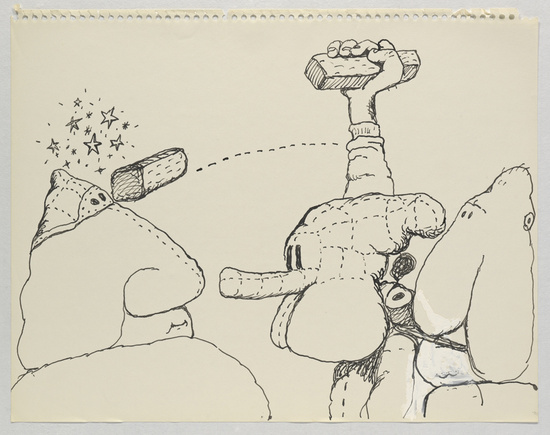
    Beginning 1 November 2016, one week prior to the general election that will determine the 45th President of the United States, Hauser & Wirth will present ‘Philip Guston: Laughter in the Dark, Drawings from 1971 & 1975,’ an exhibition devoted to the renowned late artist’s satirical caricatures of the 37th President of the United States: Richard Nixon. Featuring some 180 works depicting Nixon and his cronies, the exhibition includes Guston’s infamous Poor Richard series and brings together over 100 additional drawings and one painting never before been seen by the public. The exhibition marks the first time this entire body of work has been presented to the public at large.

    gusto77351-3ggq38

    Untitled (Poor Richard), 1971 Ink on paper 26.7 x 35.2 cm / 10 1/2 x 13 7/8 in © The Estate of Philip Guston Courtesy Hauser & Wirth

    Guston’s trenchant works were created at an historic moment, amidst the tumultuous political climate of the early 1970s, as the United States suffered under the weight of civil unrest and social dissent following the assassinations of Martin Luther King Jr. and Senator Robert F. Kennedy, the chaos of the 1968 presidential election, and the enduring violence and brutality of the Vietnam War. In his studio in Woodstock, New York, Guston’s distress over the political situation was fueled by conversations with his friend, the writer Philip Roth. The artist and the writer shared an intellectual disposition for the mundane ‘crapola’ of American popular culture, and in Nixon discovered a subject they could each mimic and animate in art. During the summer of 1971, Roth had recently completed ‘Our Gang’, an outlandish political satire of the Nixon administration. Putting pen to paper, Guston similarly engaged in an artistic pursuit of the embattled President, turning toward the immediacy of drawing and reveling in the power of expressive line. The works in ‘Laughter in the Dark’ can be viewed within the distinguished tradition of political satire and social commentary by such artists as Hogarth, Daumier, Goya, and Picasso. Seeking a language to resolve a pictorial crisis that was at once personally and politically engaged, Guston’s adaptation of the comic-strip style of caricature emerged at a pivotal crux in his artistic career.

     Untitled (Poor Richard), 1971 Ink on paper 26.7 x 35.2 cm / 10 1/2 x 13 7/8 in © The Estate of Philip Guston. Courtesy Hauser & Wirth


    Untitled (Poor Richard), 1971
    Ink on paper
    26.7 x 35.2 cm / 10 1/2 x 13 7/8 in
    © The Estate of Philip Guston. Courtesy Hauser & Wirth

    On view through 14 January 2017, ‘Philip Guston: Laughter in the Dark, Drawings from 1971 & 1975’ is co-curated by Sally Radic, of The Guston Foundation, and Musa Mayer, the daughter of the artist. The exhibition is the first to be presented in Hauser & Wirth’s new temporary space at 548 West 22nd Street. The exhibition is accompanied by a brief chronology that serves to remind viewers of the ‘highlights’ of Nixon’s career.

    About the Exhibition

    In May 1971, Philip Guston returned from an eight-month sojourn in Italy following the scathing critical response to his October 1970 Marlborough Gallery exhibition in New York. That first showing of his late paintings had been assailed by critics and admirers of high modernism as an act of heresy, a full-fledged betrayal of abstract painting. Unraveled and deflated by attacks from critics like Hilton Kramer, who publicly denounced Guston as ‘A Mandarin Pretending to Be a Stumblebum’ (the headline of his biting New York Times review), the artist lamented the art world’s rigidity. ‘It was as though I had left the Church’, he stated at the time. ‘I was excommunicated’. Less than one year later, Guston would return to the U.S. with his immersion in figuration and the aesthetic of transgression only reinforced by criticism, now replete with the grotesque and the absurd.

     Untitled (Poor Richard), 1971 Ink on paper 26.7 x 35.2 cm / 10 1/2 x 13 7/8 in © The Estate of Philip Guston Courtesy Hauser & Wirth


    Untitled (Poor Richard), 1971
    Ink on paper
    26.7 x 35.2 cm / 10 1/2 x 13 7/8 in
    © The Estate of Philip Guston
    Courtesy Hauser & Wirth

    The works on view in ‘Philip Guston: Laughter in the Dark, Drawings from 1971 & 1975’ were created at this pivotal moment of Guston’s personal and artistic journey. The exhibition opens with ‘Alone’ and ‘In Bed II’, two paintings from 1971 that culminate Guston’s outpouring of satirical Nixon images over the months of July and August that same year. Developed through the language of caricature, these works propose a new pictorial order that conveys both the pathos of a fraught inner terrain and the impossible turmoil of the exterior world. Each painting renders a solitary figure lying awake in bed, caught in an introspective state of contemplation and foreboding. These pictorial compositions suggest parallels between images of the young Nixon rendered in Guston’s ‘Poor Richard’ series and the artist’s revealing self-portraits of later years. The lexicon of images that first animated his Nixon drawings, here begins to substantiate the themes and iconography that give such potency to his late work.

     Untitled, 1971 Ink on paper 27.6 x 35.2 cm / 10 7/8 x 13 7/8 in © The Estate of Philip Guston Courtesy Hauser & Wirth


    Untitled, 1971
    Ink on paper
    27.6 x 35.2 cm / 10 7/8 x 13 7/8 in
    © The Estate of Philip Guston
    Courtesy Hauser & Wirth

    The exhibition continues in three subsequent rooms where viewers will find the artist’s never-before-exhibited Nixon drawings and the Poor Richard narrative from 1971, as well as works from The Phlebitis Series from 1975.

    Guston shared great contempt with Philip Roth for the newly elected Richard Nixon. This unwavering sentiment would intensify when The New York Times and The Washington Post published the so-called ‘Pentagon Papers’ in June 1971, revealing incalculable lies that had been fed to the American public about the country’s decades- long involvement in the Vietnam War. Nixon’s attempt to prevent the leaked documents from further disclosure – a decision overruled by the Supreme Court – exposed his character to satire and served to foreshadow the revelations to come with the Watergate break-in and the cover-up that eventually brought Nixon and his administration down. In a witty rebuttal to the President’s posturing, Guston caricatured Nixon’s self-mythologizing identity, sly political maneuvers, and disposable morals into a farcical cartoon canon.

    In the newly exhibited works from Guston’s sketchbooks, visitors to the exhibition will get a closer look at the artist’s working process and the development of his imagery. They can study Guston’s parodies of the President’s humble upbringings and dirt-poor youth in the drawing of a locomotive engine billowing with black smoke. As the train departs from the ocean waves and exotic palm trees of the California coast, it reminds us of Nixon’s determined path toward early political success. To complete the dramatic scene-setting Guston borrows the phrase, ‘It seems like an impossible dream…’ from Nixon’s 1968 Presidential Nomination Acceptance Speech at the Republican National Convention, and memorializes it in clouds. In sketches where Nixon himself is depicted, Guston exaggerates anatomical attributes, notably Nixon’s famous 5 o’clock shadow, defiant gaze, swollen jowls, and ever-growing nose. Nixon’s ‘schnoz’ is rendered as phallic morphology, becoming a visual cue for Guston’s condemnation of the President’s obscene deceits.

    While Guston’s narrative follows Nixon from his youth to his eventual resignation of the Presidency in 1974, the primary fuel for the Nixon drawings came from the events of July 1971. Encouraged by his trusted National Security Advisor Henry Kissinger, Nixon announced plans to visit China and establish a new era of statesmanship and political relations. Dumbfounded by the hypocrisy of a man who had built his career upon a virulent anti- Communist stance, Guston conceived a slew of skits and sketches related to the voyage Nixon would take when visiting China in February of the following year. The President is depicted nose-deep in a manuscript of mock-Chinese text, scheming and plotting in preparation. As the President frolics and plans for the hoopla of a the Poor Richard series of 73 drawings were at last exhibited together and published in a volume of the same name by the University of Chicago Press.

    Guston would return to the subject of Richard Nixon once more in his oeuvre in 1975. After Nixon’s resignation under the threat of impeachment, Guston produced a final series of savage political drawings about the President. Poor Nixon is rendered as a ‘victim’ of the Watergate scandal he himself created and the revelations on the White House tapes he had ordered. The President’s phlebitis-afflicted leg – an ailment from which he suffered severely – is gargantuan, bandaged, and weighted. In the rarely exhibited painting ‘San Clemente’ (1975), Nixon, red-faced and inflamed, appears in agonizing pain, dragging himself across the California beach with a self-pitying tear rolling down his cheek. Bunkered at his ‘Western White House’, the former leader of the free world has become a symbol of self-disgust and shame. Completed five years before the artist’s death, this remarkable painting stands a monument to despair, and a meditation on aging and mortality. 

    ‘Philip Guston: Laughter in the Dark, Drawings from 1971 & 1975′ will be open to the public at Hauser & Wirth, 548 West 22nd Street, New York City, Tuesday through Saturday, 10AM – 6PM.


    Courtesy of Hauser & Wirth New York
    Copyright © 2016 Hauser & Wirth

    On view October 23, 2016–March 5, 2017

    MoMA PS1 will present the first comprehensive U.S. survey of the pioneering British artist Mark Leckey and the largest exhibition of his work to date. Since coming to prominence in the late 1990s, Mark Leckey’s dynamic and varied practice has combined formal experimentation with pointed explorations of class and history. His art has addressed the radical effect of technology on popular culture, and given form to the transition from analog to digital culture, powerfully influencing younger generations of artists. The exhibition will bring together major bodies of Leckey’s work, including a broad array of video works and sculptural installations alongside new pieces made specifically for the exhibition.

    Photograph by Pablo Enriquez. © 2016 MoMA PS1

    Photograph by Pablo Enriquez. © 2016 MoMA PS1

    Among the highlights of Mark Leckey: Containers and Their Drivers will be Leckey’s breakthrough film Fiorucci Made Me Hardcore (1999), which uses sampled footage to trace dance subcultures in British nightclubs from the 1970s to 1990s; a selection of the artist’s Sound System sculptures (2001–2012), functioning stacks of audio speakers that recall those used in street parties in London; his pedagogical lecture performances; GreenScreenRefrigeratorAction (2010), a video and installation that considers “smart” objects and our increasingly technological environment; and a new iteration of the installation UniAddDumThs (2014), which Leckey created as a “copy” of a touring exhibition, The Universal Addressability of Dumb Things, that he had curated the year before. The exhibition will also feature a newly expanded presentation of Dream English Kid 1964–1999 AD (2015), an autobiography told through what the artist calls “found memories” that have been compiled from sources like archival television clips, YouTube videos, and eBay ephemera, as well as meticulous reconstructions of specific memories using props and models. Combining deeply personal and popular subjects, this amalgamation of media allows Leckey to investigate the pivotal moments in technology and culture that have occurred in his lifetime.

    Mark Leckey: Containers and Their Drivers is co-organized by Peter Eleey, Curator and Associate Director of Exhibitions and Programs, MoMA PS1; and Stuart Comer, Chief Curator, Department of Media and Performance Art, The Museum of Modern Art; with Jocelyn Miller, Curatorial Associate, and Oliver Shultz, Curatorial Assistant, MoMA PS1.

    Mark Leckey (b. 1964, United Kingdom) was awarded the Turner Prize in 2008 and has been the subject of numerous solo exhibitions at institutions including Haus der Kunst, Munich, Germany (2015); WIELS Contemporary Art Centre, Brussels, Belgium (2014); the Hammer Museum, Los Angeles (2013); Nottingham Contemporary, Nottingham, UK (2013); Banff Centre, Banff, Canada (2012); and the Serpentine Gallery, London, UK, (2011). He has participated in the Carnegie International (2013), the 55th Venice Biennale (2013), and the 8th Gwangju Biennial (2010). Leckey lives and works in London.


    The exhibition is made possible by The Andy Warhol Foundation for the Visual Arts and by MoMA’s Wallis Annenberg Fund for Innovation in Contemporary Art through the Annenberg Foundation.

    Major support is provided by The International Council of The Museum of Modern Art, The Junior Associates of The Museum of Modern Art and the Maurice Marciano Family Foundation.

    Additional funding is provided by the MoMA PS1 Annual Exhibition Fund.


    Courtesy of MoMA PS1
    © 2016 MoMA PS1 | An Affiliate of The Museum of Modern Art

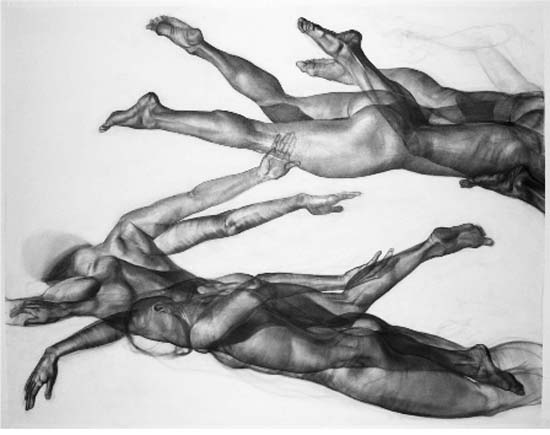
    Sanda Skujiņa / LV, “Swimmers who were destined to meet but it never happened”, 2016, acrylic / charcoal on canvas, 150x200 cm.

    Sanda Skujiņa / LV, “Swimmers who were destined to meet but it never happened”, 2016, acrylic / charcoal on canvas, 150×200 cm.

    28.10 – 20.11.2016
    Young Painter Prize 2016


    We would like to inform that TSEKH gallery Vilnius, having only three months old, have been chosen as location partner of the most prestigious art Prize of Baltia!

    We are proud with the fact that we, as Ukrainian and Lithuanian contemporary art gallery, have honor to present 15 dynamic and young Baltian artists from Lithuania, Latvia, and Estonia. Main prize – 2.500 EUR – is waiting for the winner.

    Furthermore, we are inspired by the high level of respect from the Prize’ organizers, because this year TSEKH gallery’ director Mr. Oleksandr Shchelushchenko is in the jury board.

    TSEKH contemporary art gallery Kyiv / Vilnius

    http://tsekh.com.ua/

    14369920_1749499535309619_3689658881994708247_n

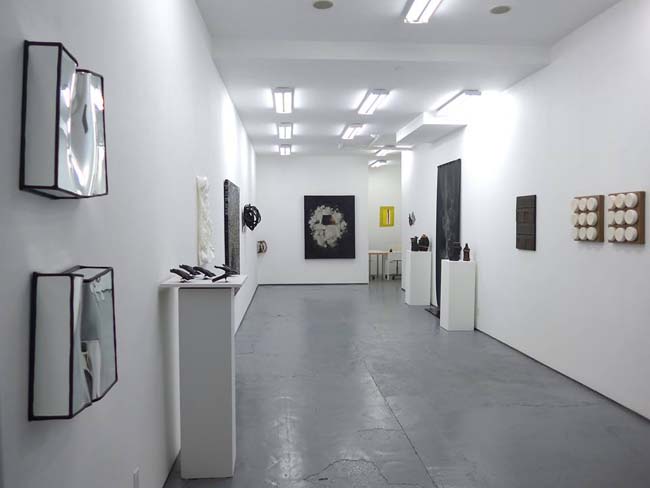
    Lichtundfire is happy to extend Chewing Tar, a tightly curated group show  by Linda Griggs, which  sheds a light on artists working with non-traditional materials, usually used in a different  non-art context. The use and inclusion of nontraditional, commercial materials to make art leaves the option for an infinite expansion of the creative field and encourages the redefinition of what has been perceived as distinguishably artistic.

    From the the Catalog Essay by Linda Griggs:

    Chewing Tar brings together fourteen artists working with materials typically manufactured for non-art purposes. Included are roofing tar, fibrated asphalt, tire rubber, wood shims, aluminum oxide, Tyvek®, 3D printing, and fused plaster.

    These artists come to their materials differently. Some find that the material inspires the art. There is an irresistible attraction in shiny tar, shimmering aluminum, and thick, black rubber. For others, when a preconceived idea can’t be executed using traditional art supplies, non-traditional materials are sought out. In either case the industrial materials intended purpose is discarded in favor of its visual potential.

    This show differs from up-cycled shows in that the artists did not choose their medium based on its ubiquity as a discarded material … and offers a view of these non-traditional art materials focusing on the rich, the lush, and the refulgent, often showcasing the tactile or voluptuous qualities of the medium.

    The artists choices, humble or high tech, present an element of surprise as we become aware of the materials original purpose and its newly elevated and highlighted significance in these handsome, visually textural pieces.


    Chewing Tar Lichtundfire is the second installment in the ongoing Chewing Tar series, which began with an exhibition at the UMASS Amherst Fine Arts Center, Hampden Gallery, March 2016. The title Chewing Tar refers to the childhood pastime of chewing on melting, sticky tar found on the side of the road in the summertime.


    Linda Griggs (MFA Hunter College, BFA Virginia Commonwealth University) has curated or assisted on 12 exhibitions.  Her past shows include All | Together | Different: A Survey of Working Artists on the Lower East Side, reviewed on PBS Arts Watch, ARTslant Worldwide, ARTslant, Bedford + Bowery, IdeaSmyth, DART and Visual Arts Daily. It included over 100 artists including Kiki Smith, Roger Welch, Richard Hambleton, Kembra Pfahler, Anton Van Dalen, David Sandlin, and Susannah Coffey. Mapping Heaven, a group exhibition at Front Room Gallery, NYC, was reviewed in Arts in Bushwick.  In Worth Telling, co-curated with Erik Sanner at The Clemente, NYC, artists responded to writers including Luc Sante, Jose Antonio Vargas, Duke Riley and Nicole Wittenberg. Sweetness and Light and Where There’s Smoke were shown at the Hampden Gallery, UMASS Amherst.  She directs E32, an ongoing Lower East Side crit/discussion group.

    The catalog can be viewed online at https://sites.google.com/site/griggscuratorial/chewingtarnyc. In addition, please inquire about the printed version.

     
    Lichtundfire: 175 Rivington Street, NY NY 10002
    Contact: Priska Juschka, info@lichtundfire.com, New Tel: 917-675-7835
    Gallery Hours: Wed- Sat. 12-6 PM, Sun 1-6 PM
    www.lichtundfire.com

    On view beginning October 15, 2016

    Members’ Opening Reception
    Saturday, October 15, 5:30–7pm
    RSVP to 413.664.4481 x8112 or cweber@massmoca.org
    Please join us afterwards for a concert in the Hunter Center with Benjamin Clementine at 8:30pm.

    “A paradisiacal landscape where [black-faced lawn] jockeys appear — made from the crystals that would normally go into chandeliers, on a raised platform accessible via four ladders — is the heart of “Until.” “I had been thinking about gun violence and racism colliding,” Mr. Cave said. “And then I wondered: Is there racism in heaven? That’s how this piece came about.” Read the full profile in The New York Times.

    If you think you know Nick Cave, think again. The artist celebrated for his wearable sculptures called Soundsuits turns expectations inside out at MASS MoCA in a massive immersive installation opening October 16, 2016, where not a single Soundsuit will be found. Instead, Cave uses MASS MoCA’s signature football field-sized space to create his largest installation to date, made up of thousands of found objects and millions of beads, which will make viewers feel as if they have entered a rich sensory tapestry, like stepping directly inside the belly of one of his iconic Soundsuits.

    The exhibition will also be used as a performance space. Conceived as a one-year concatenation of community events, music, theater, and art, Until incorporates special appearances by dancers, singer-songwriters, pop artists, poets, and composers, together with panel discussions, community forums, and other forms of creative public debate and engagement.

    Often seen as celebrations of movement and material, the first Soundsuit, made out of twigs, was a direct response to the Rodney King beating, a visual image about social justice that was both brutal and energizing. Just as the violence of the Rodney King beating was the impetus to Cave’s early work, the death of men such as Eric Garner, Trayvon Martin, and Michael Brown drive his new imagery. For Cave’s new MASS MoCA installation, Until—a double play on the phrase “innocent until proven guilty” or in this case, perhaps, “guilty until proven innocent”—Cave addresses issues of gun violence, gun control policy, and race relations in America today.

    Until begins with a dense sculptural field of metallic lawn ornaments leading to a crystal cloud topped by a private garden populated with birds, flowers, and black-face lawn jockeys, finally coming to rest before a cliff wall constructed of millions of plastic pony beads. This is an active space where alluring kinetics and a sumptuous materiality are suddenly punctuated by images of guns, bullets, and targets, positioning us all as culpable, vulnerable, and potentially under attack. The aim of this is pointed, sparking discussion about important issues in a space that is at once dazzling, provocative, and—ultimately—optimistic. Cave believes in humanity, celebrating possibility while also creating a forum for sharp debate and critical discussion.

    “I view this work as a theater set, or an elaborate community forum, as much as a work of sculpture,” he notes.

    This is Nick Cave from the inside out, on a grand theatrical scale.

    Nick Cave, Until (detail), 2016
    photo by Douglas Mason


    Courtesy of MASS MoCA

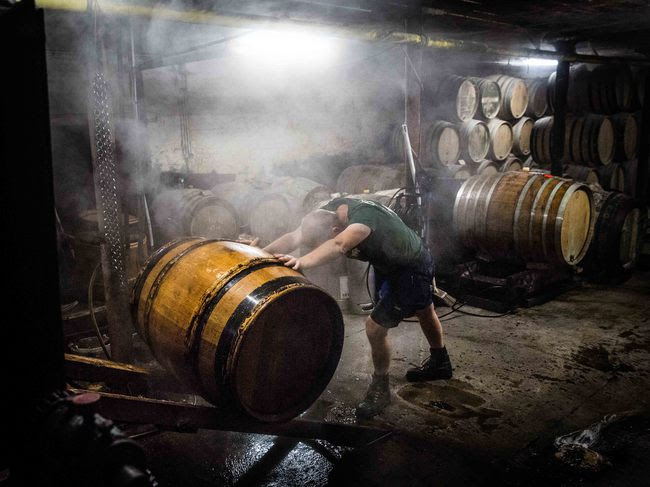
    20161007 BRUSSEL Brouwerij Cantillon in Anderlecht FOTO BAS BOGAERTS

    20161007 BRUSSEL Brouwerij Cantillon in Anderlecht FOTO BAS BOGAERTS

    The majority of European cities turn their old industrial districts into residential areas with shops and offices, pushing productive activities further and further out of the city. The Brussels Region has gone for a different approach. But industry is a vital part of the rich economic and urban fabric of a vibrant city. The BOZAR exhibition ‘A Good City has Industry’ gathers policy makers, architects, experts, developers and entrepreneurs round the table and makes a plea for the productive, circular city. From October 26 to January 15 at the Ravenstein Gallery.


    The exhibition A Good City Has Industry is falling back on the results of the IABR Atelier Brussels. This workshop for research-by-design and knowledge exchange was founded by Flemish and Brussels players within the context of the 2016 — The Next Economy edition of the International Architecture Biennale Rotterdam (IABR).

    During the last IABR edition, Mark Brearley (professor at The Cass in London) made a speech about Brussels and the Flemish periphery. ‘A good city has industry’ was the very message that Brearley wanted to drive home. And what has emerged? Brussels is one of the few European cities where industry is very much part of its fabric. Mark Brearley referred during his speech to his own city, London, which, in his own words has, ‘swallowed itself up’. Industry has been cleared out of the city in favour of homes, shops and entertainment. Brussels, on the other hand, still has all that is required to be a ‘good city’. Industry is still everywhere. On large premises around the canal, along the railways and in the periphery we find an abattoir, a cement factory and a sorting and transhipment centre for metals. But even in the heart of the city industry is omnipresent: car garages, carpenters, logistics firms, etc. The prominent presence of industry in the city is a big advantage for Brussels, and we need to further strengthen this and better entrench it in the urban fabric. Thanks to its industry Brussels has the potential to develop into a sustainable, more self-supporting and circular city.

    The exhibition in BOZAR charts Brussels’ productive fabric and economic flows with the aid of photography and cartography. Scale models and drawings show the research-by-design that designers developed in collaboration with public and private players. Concrete practical examples provide opportunities and strategies for a city which reconciles living and working and which makes room for an inclusive, circular economy.

    The gallery space in the Ravenstein rotunda is been taken over by more than just a classic exhibition. A large desk marks it out as a setting for discussions and workshops. The exhibited works serve as inspiration or provocation for further actions. The exhibition space is a space for knowledge exchange and debate about the future of the city.

    Exhibition A Good City Has Industry
    26.10.2016 – 15.01.2017

    Location
    BOZAR – Ravenstein Gallery (1ste floor in de rotunda)
    Galerie Ravenstein 48 – 1000 Brussels

    www.bozar.be/en

    For his first solo museum exhibition in the United States, Cheng Ran debuts a new multi-video installation in the New Museum’s Lobby Gallery.

    Cheng Ran: Diary of a Mad
    10/19/16 – 01/15/17

    Cheng Ran (b. 1981, Inner Mongolia, China) is one of the most promising Chinese artists of his generation. Since 2005, Cheng has been producing film and video works that draw widely from both Western and Chinese literature, poetry, cinema, and visual culture, fabricating new narratives that combine myths and historical events. “Cheng Ran: Diary of a Madman” marks the culmination of his three-month residency at the New Museum, initiated in partnership with K11 Art Foundation.

    The exhibition borrows its title from what is widely considered China’s first modern short story, written by Lu Xun in 1918. Just as Lu Xun’s story comprises first-person narratives of a character at the margins of society who gradually turns mad, Cheng’s fifteen new videos take the form of diaristic vignettes that reveal a larger assessment of a foreign place through the eyes of an outsider. As a first-time visitor to the United States, Cheng approaches New York already familiar with iconic and cinematic images of the city, simultaneously intending to find and capture what is typically excluded from such views.

    Cheng’s earliest works, shot entirely in the confines of his apartment, attempted to make compelling the ordinary and unspectacular aspects of his immediate environment. Inspired by filmmakers such as Werner Herzog, Jim Jarmusch, and Béla Tarr, Cheng’s subsequent films and videos often registered his curiosity as he observed the overlooked and incongruous aspects of everyday life and chronicled his interactions with remote and historic sites. His new multi-video work, Diary of a Madman (2016), includes imagery from his early morning explorations of New York City streets, a trip to the Staten Island Bay, and a visit to an abandoned psychiatric hospital on Long Island, exposing his sense of estrangement amid his encounters with uncelebrated and obscure facets of the city.

    Embracing a long lineage of experimental cinema, Cheng’s new work follows the making of his nine-hour epic In Course of the Miraculous (2015), which imagines the stories behind three real-life mysterious disappearances. These include British mountaineer George Mallory, who went missing while ascending Mount Everest in 1924; artist Bas Jan Ader, who vanished during his 1975 journey across the Atlantic as part of a performance titled In Search of the Miraculous; and the Chinese fishing trawler Lu Rong Yu no. 2682, which in 2011 returned to land after eight months with only one-third of its original crew still alive. With a narrative inspired by fables and mythic literature, Cheng reinterprets the title of Ader’s final work, and in doing so, reflects on his paradoxical pursuit of the inexplicable or unimaginable parts of history. In Course of the Miraculous will be screened on select days in the New Museum Theater.

    The exhibition is curated by Helga Christoffersen, Assistant Curator, and Massimiliano Gioni, Edlis Neeson Artistic Director.

    Cheng Ran was born in 1981 in Inner Mongolia, China, and lives and works in Hangzhou, China. His work has been featured in numerous biennials and group exhibitions, including “SALTWATER: a Theory of Thought Forms,” the 14th Istanbul Biennial (2015); “When I Give, I Give Myself,” the Van Gogh Museum, Amsterdam (2015); “Inside China – L’Intérieur du Géant,” chi K11 art museum, Shanghai (2015), K11 Art Foundation Pop-Up Space, Hong Kong (2015), and Palais de Tokyo, Paris (2014); the 8th Shenzhen Sculpture Biennial, China (2014); “ON|OFF: China’s Young Artists in Concept and Practice,” Ullens Center for Contemporary Art, Beijing (2013); the 26th European Media Art Festival, Osnabrück, Germany (2013); and “Video Art in China – MADATAC,” Museo Nacional Centro de Arte Reina Sofía, Madrid (2011). Cheng Ran’s recent solo exhibitions include “In Course of the Miraculous” at the K11 Art Foundation, Hong Kong (2016), and “Cinematheque: Music is On, Band is Gone” at chi K11 art museum, Shanghai, and Galerie Urs Meile, Beijing and Lucerne, Switzerland (2015). His other solo shows have been presented at: Unlimited, Basel, Switzerland (2016); Qiao Space, Shanghai (2016); Armada, Milan (2015); and Leo Xu Projects, Shanghai (2014). Cheng Ran was nominated for the first edition of the OCAT & Pierre Huber Art Prize in 2014 and the Absolut Art Award in 2013, and was named the “Best Video Artist” by the art magazine Radian in 2011.


    Courtesy of the New Museum

    Film-maker and Sanders supporter says he was so spooked by the shock Brexit vote he rushed his documentary out before the election to make the case for Clinton

    Everyone loves a surprise. Hours after announcing the existence of a new film, Michael Moore in TrumpLand, film-lovers, leftists and New Yorkers drawn to wherever the action is were lining up outside the IFC Center in Greenwich Village.

    The free screening, which included a chat with the Oscar and Palme d’Or winner that lasted almost as long as the film, had a bit of a carnival atmosphere. People with megaphones, lighted signs and placards quoting Bob Avakian mixed with folks taking selfies in front of a Zoltan-esque Trump fortune-teller booth. One weary person looking for a spare ticket raised her index finger, a holdover from Grateful Dead shows, when people “need a miracle”.

    The real surprise: the movie itself consisted almost exclusively of footage of one man talking.

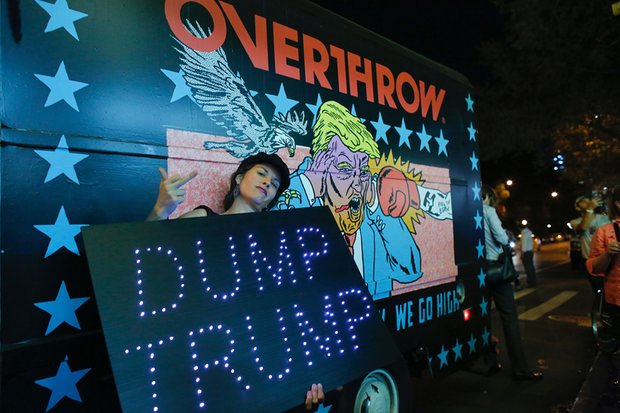
    A woman poses next to the Knockout Trump Truck outside the IFC Theater, ahead of the premiere of Michael Moore in TrumpLand. Photograph: Kena Betancur/AFP/Getty Images

    A woman poses next to the Knockout Trump Truck outside the IFC Theater, ahead of the premiere of Michael Moore in TrumpLand. Photograph: Kena Betancur/AFP/Getty Images

    Once inside, we learned what inspired the populist documentarian to shoot a new movie 11 days ago and rush it out just two weeks before the election: he is terrified.

    “I was in England during Brexit week, promoting my last film. All the polls said it wouldn’t happen. They were wrong,” he said.


    Source: The Guardian – Read more


    News | Exhibitions