• A strawberry candy-wrapper, recreated extra-large in the bold, commercial colors of the original throw-away, hangs just inside the entry; it is a cheerful welcome to this exhibition, and the shift in scale startles me—the painting is about the size of my head, and this makes me think of the urgency of a child’s valentine offering: in matters of love, bigger is better. In another room, a fat phone book, splayed open as if in a (failed) attempt to make a paperback Christmas tree, then doused with layer upon layer of greyish paint, is installed near the ceiling. This object is beautiful and disturbing, it looks very real and yet fictive; I think of a cyclone, I think of Ezekiel’s Wheel, I think of it in the making—going from wet to dry, again and again, picking up dust and smog as evidence of its history.

    These objects in John Burtle’s exhibition, Support Constructs at Michael Benevento Gallery, are made mostly from acrylic paint; some lack any additional support beyond the paint, and the paint objects that do employ traditional supports do so matter-of-factly, in a way that seems not interested in old-fashioned art conversations about “the support.”

    Surveying the first room, I see before me on the ground the sculpture Banana Skin (2012), withered and blackened as though by age; it reminds me of corny old movies with a shuffling tramp, and of clowns (a little bit), and of lunch. This banana skin has darkness and humor, it has the seriousness of a thing that is made by hand. The scale is funny though, smaller than it should be (in my mind) and as I look down I feel like Lewis Carroll’s Alice, with her long, stretching neck. I want to be careful of it, not because the sculpture is small, but because it has made me feel big and unstable on my distant feet. It’s curious to me that I am made to feel fragile by this diminutive work of art, which through a kind of transference has increased in substance relative to me, if not in size.

    A large painting hangs to my left, this looks like a landscape, with cartooney elements made from thick layers of acrylic paint collaged onto unstretched, open-weave linen. But the various parts, including a volcano, lustily blowing red smoke, a saguaro cactus, a rain cloud, and also a separate painting, seem organized to tell a story. The composition feels allegorical, as do the title(s): Thanks, But an Umbrella or Something Would be More Useful (2013), for the larger piece, Untitled (Everything is not Okay) (2010-2013), and Oooof for the combination. Each part of this community of paintings is independent, and yet each relies for support on the other parts; directly, through adherence, and indirectly, by association.

    She Loves Me, She Loves Me Not, She Loves Me, She Loves Me Not… (2013) is an example of yet another type of strangeness in Support Constructs. This lovely and lush array of purple flower petals appears straightforward as I approach it, “Ah, I see. He painted the petals on plastic, peeled them off, and stuck them on this circular panel, beginning at the center.” The scale of the work is enveloping. Without horizon, it also feels without edges when I stand before it; and the patterning of the petals creates visual waves, similar to the repetitive patterns in Bridget Riley’s paintings. They are a strong attractor on my center of gravity. Once again, I am made to feel, or rather, allowed to feel unstable by this artist’s work. I choose to say, “allowed” because this is a pleasurable instability. Burtle offers his experience as being possible through the objects in this show; as an artist he uses persuasion, not force.
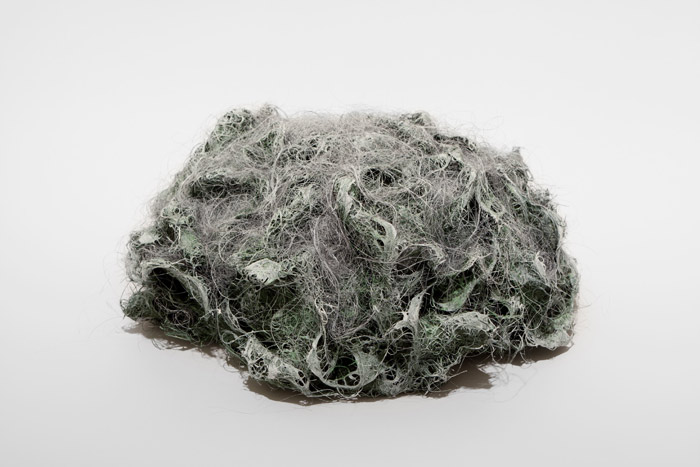
    John Burtle, Hairy Succulent, 2013. Acrylic paint, hair, 12 x 12 x 4.75 in. Image courtesy of Michael Benevento Gallery.

    John Burtle, Hairy Succulent, 2013. Acrylic paint, hair, 12 x 12 x 4.75 in. Image courtesy of Michael Benevento Gallery.

    Among Burtle’s other concerns in this exhibition seems to be the queerness of art objects—queer in the sense that a thing is unsettling. The 3/5 scale of Banana Skin is one example of this strangeness, another is the sculpture Hairy Succulent (2012), a curious representation of a desert plant that grows low to the ground, and is hirsute in aspect. I look at Burtle’s sculpture and I don’t want it be to real hair, I want it to be some material the artist crafted. But it is hair, real hair, collected from a barbershop, and it is all the more creepy because of this.

    Curiously for a show as dedicated to object-hood as Burtle’s show is, I think the matter at hand is better understood through language, and by considering his objects in relation to each other, along with the exhibition title. To draw from Wikipedia, “A construct in the philosophy of science is an ideal object, where the existence of the thing may be said to depend on a subject’s mind. This as opposed to a real object, where existence does not seem to depend on the existence of a mind.” A construct might be a real thing, but it will be a concept, and not an object.

    An exhibition is as much ideas as it is objects, Burtle reminds us of this with his title. In this way Support Constructs serves as an emphatic, if gentle reminder of the fluid nature of identity, both human and artistic. While our essence (whatever that thing is) remains essentially always the same, we are changed by our association with others. In other words, to speak in human terms, a friendship is greater than the sum of its parts.

    By Geoff Tuck
    install07a-650x365

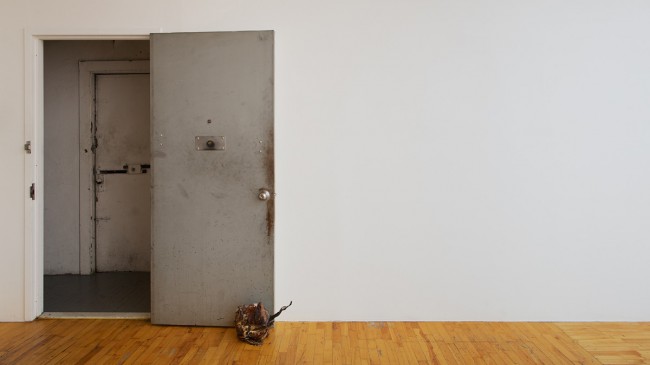
    Image courtesy of Clifton Benevento

    Michael E. Smith
    November 2, 2013 – December 21, 2013
    Opening Reception: November 2, 2013 5-7 pm
    Clifton Benevento
    515 Broadway NY
    cliftonbenevento.com

    unnamed

    Image courtesy of The Journal Gallery

    Colin Snapp
    National Charter
    November 7, 2013 – December 20, 2013
    Opening Reception: November 6, 2013 6-9 pm
    The Journal Gallery
    106 North 1st St. Brooklyn, NY
    thejournalinc.com

    Iranian born London based Shirazeh Houshiary’s sixth solo exhibition The eye fell in love with the ear at the Lehman Maupin Gallery, New York, is very aptly titled. Infused by her deep metaphysical concerns, her ethereal abstractions speak volumes to anyone who listens.

    The largest most breathtaking work Echo, 2013, evokes an expansive body of water. Numerous shades of blue shimmer through the canvas like the dappling surface of the ocean. Hues of aquamarine, purple, gray, and green are seamlessly woven into the fabric of the painting. The illusion of an aerial view is created through the subtle manipulation of color and tone, such that there is a constant play of light that radiates from various points and illuminates the entire canvas. A thick black jagged line that resembles the edge of a landmass severs the painting into two. Houshiary uses this device to map the perceptual space in the work, while emphasizing the materiality of its physical qualities and the aesthetic dimensions of this same surface.

    The viewer is drawn to her signature web of fine lines that seem almost embroidered rather than meticulously hand painted. On closer inspection, a veil stretches over each canvas that gives the work its delicacy and beauty. Influenced by Islamic architecture and its interlacing patterns, Houshiary’s all over filigree-like design serves a deeper transcendental purpose. The translucent gossamer both obscures and directs the viewers’ eyes towards a deeper metaphysical space. One is induced into a meditative trance by the prismatic effect of the colors and the intricate decorative element. These qualities seem to highlight the recurring presence of the infinity of time and space in her works.

    In Ode, 2013, and Vertigo, 2013, also constructed in a similar vein with alluring veils and birds-eye-perspectives, Houshiary shapes the mood of her paintings through her choice of colors.  Varied saturations of purple give Ode a more somber feel, while a lighter palette of sky blues and violets provide Vertigo with an ethereal tonality.  Much like Mark Rothko’s abstractions, Houshiary’s use of color fields and flat surfaces make the paintings vibrate with emotional depth and create contemplative moments.

    Shirazeh Houshiary,Dust, (still frame), 2011-2013. Digital animation run time: 7 minutes, 8 seconds Edition of 6 Courtesy of the artist and Lehmann Maupin, New York and Hong Kong.

    Shirazeh Houshiary, Dust, (still frame), 2011-2013. Digital animation run time: 7 minutes, 8 seconds. Edition of 6. Courtesy of the artist and Lehmann Maupin, New York and Hong Kong.

    Her video installation titled Dust, 2011-13, is made up of burning candles that form a grid against a backdrop of ivory travertine. Wafts of soot become amorphous fragile clouds before they disappear and reappear to take new shapes and patterns. The slow, almost imperceptible movement of veils of soot against the pale limestone reveals the gradual transience of time, and the yin and yang of opposites—black fleeting soot against the permanence of solid white stone. The accompanying soundtrack of a violin combined with the hypnotic incantation of a chant mesmerizes the viewer.  Houshiary demonstrates her ease with various mediums as she deftly combines different artistic traditions.

    The sculptures in the gallery made from bright, anodized aluminum bricks differ from the paintings in their sturdy sinuous forms and muscular armature. A sense of rhythm and movement emanates from the curvatures and the arrangement of varied shades of bricks. Although less appealing than their two-dimensional counterparts, these large works complement the paintings in the gallery.

    At the end, Houshiary succeeds in making the viewer believe that if art is to remain an important entity it has to go beyond daily existence.  It must rise above culture and creed in order to resonate with the human soul.

    By Bansie Vasvani


    The title itself is a little bit strange. Where is here and where is there? Why does anyone want to get from here to there?

    Stepping into Red Head Gallery we come face to face with a combination of nerve and wit, a painting of a large dark tunnel that seems ready to swallow us. Above it is a landscape with a bridge and greenery while in the top left corner the image of a bull breaks the peace. But we don’t spend too much time looking at nature as our gaze keeps returning to the tunnel. It is so dark and forbidding but somehow mesmerizing as well. A sculpture of a young hooded girl stands behind a rail and stares into the darkness, maybe trying to decide whether to enter or keep away. The exhibition poster shows a different version of this installation where a boy squats on his skateboard in a suspended moment of indecision. It’s not a question of seeing the “end of the tunnel” at this point as it’s so far away. The boy is all the way at this end and has to decide whether to move into it at all. It is a very scary depiction of starting your adult life and it’s understandable that the young person’s reaction seems rather passive.

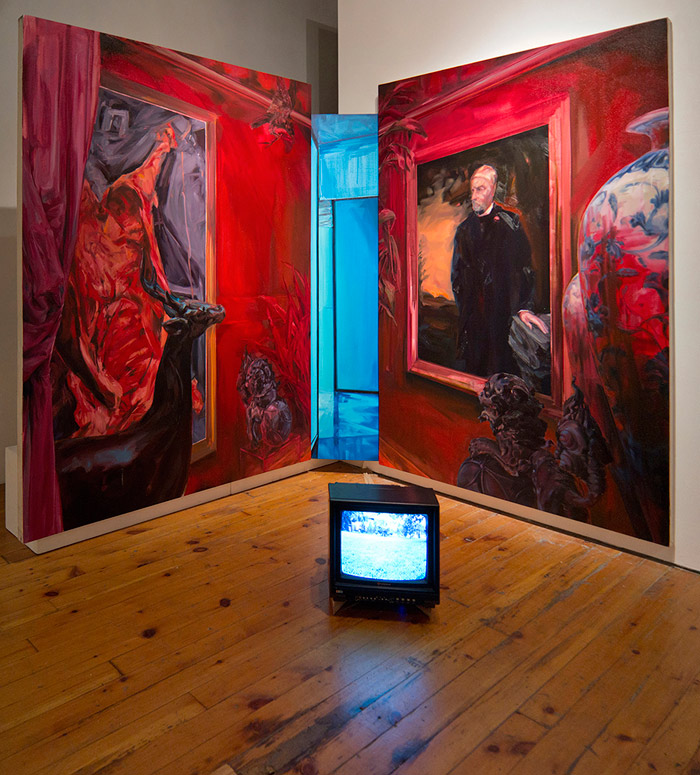
    The corner piece titled A Momentary Decision of Monumental Significance has two large red panels and a smaller, blue one, plus a sculpture, a projector and a video. In one panel we see a deer and behind it a bloody carcass that might be its future. In the opposite panel a man is posing as a bourgeois family patriot—someone important. The hunter and the hunted are looking at each other from one panel to the other. The sculpture of a young girl faces the man. Her head is covered by a hood and she’s holding some brochures—maybe handouts against animal cruelty. In her other hand is a large flag with a forest bridge projected on it.

    Gillian Iles, A momentary decision of monumental significance, 2013. Triptych, oil, acrylic and pastel on canvas, 78 x 66, 72 x 16, 78 x 54 in,  with video. Image courtesy of the artist.

    Gillian Iles, A Momentary Decision of Monumental Significance, 2013. Triptych, oil, acrylic and pastel on canvas, 78 x 66, 72 x 16, 78 x 54 in, with video. Image courtesy of the artist.

    Can the generation gap between these two figures—between past and future—be bridged, or it is just an illusion like the projected image? Maybe the bridge is there so the deer can avoid a grisly fate.

    A pack of lions are fighting in the corner of a large painting titled A Combination of Cunning, Speed and Astonishing Grace. Their sudden movement is in strong contrast to the heavy stillness of the futuristic building towering over them. Most likely the land with its sandy colors originally belonged to the animals even if they seem to be alienated from it now. This composition includes two sculptures of youngsters, one with the face of a lion on the back of its head, and the other, a wolf. Iles mentioned that she often uses animals as metaphors to show the characteristics of a group or to signify what might become of those children as adults. Will these two become fighters for the environment or will they just tear each other apart in social conflicts?

    Sculptures of fragile young figures fill the room and they are often the protagonists of Iles’ paintings as well. She is looking at the social disruption that teenagers face these days and their body language as a clue to figuring out their response. Many of the youngsters wear hoodies to protect their fragile identity. Some of them turn their back to us unready to face the challenges we represent. As Iles says in her artist statement,

    “The world of youth on the cusp of adolescence is a closed and inaccessible environment of mysterious rituals, customs and codes of behaviour that are unintelligible to outsiders. Sculptural elements have been added which work in tandem with, and react to the paintings, creating a physical void between the subjects and the object of their desire and repulsion. The figures stand tentatively on the cusp of awareness of their potential and the abyss of the adult prerogative.”

    This exhibition is not for the frail of heart. It is a brave show with a strong message about environmental issues as well as the challenges that every generation faces when replacing the previous one. They want to be better. Hopefully they still have a chance to save our environment and define a morality that supports and respects us all. It won’t be easy for them while adults are always saying, “That’s not how we do things here”—the title of Iles’ previous show.

    By Emese Krunák-Hajagos

    redheadgallery.org

    26_09_2013_ART_FORUM_04

    Image courtesy of Lisson Gallery

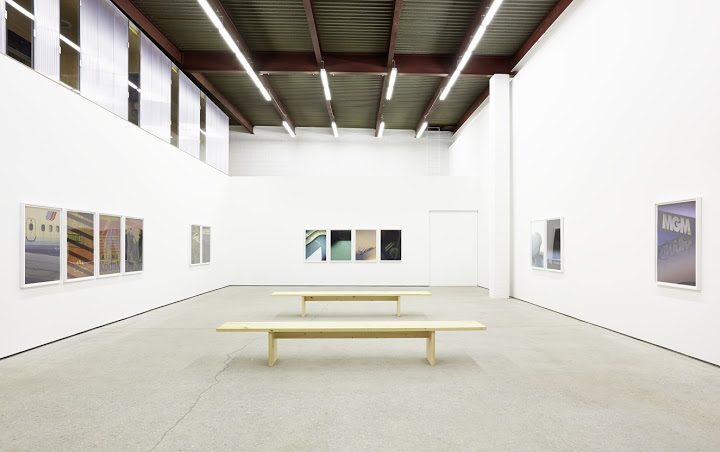
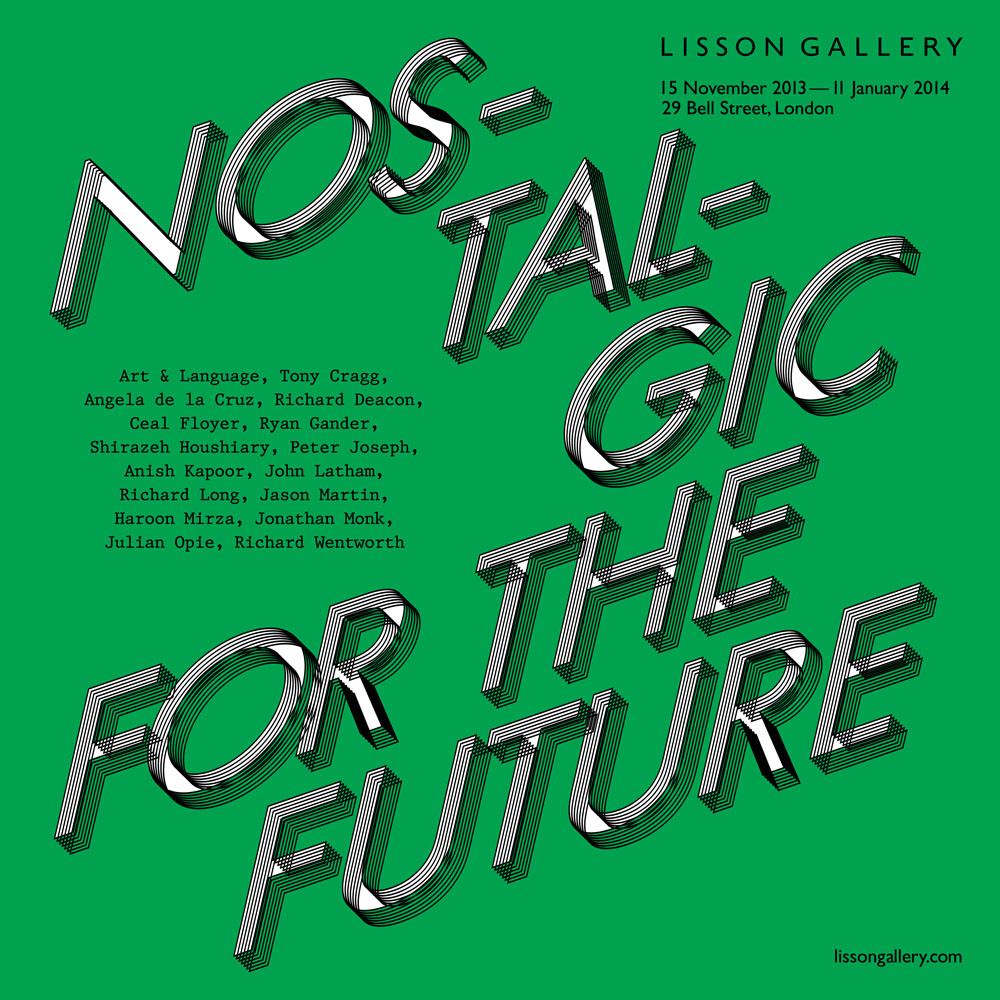
    Featuring: Art & Language, Tony Cragg, Angela de la Cruz, Richard Deacon, Ceal Floyer, Ryan Gander, Shirazeh Houshiary, Peter Joseph, Anish Kapoor, John Latham, Richard Long, Jason Martin, Haroon Mirza, Jonathan Monk, Julian Opie, Richard Wentworth

    Lisson Gallery
    Nostalgic for the Future
    November 15, 2013 – January 11, 2014
    27 Bell Street
    London
    lissongallery.com

    Recent work by Adam Chodzko. Image courtesy of the Benaki Museum.

    Recent work by Adam Chodzko. Image courtesy of the Benaki Museum.

    You’ll see; this time it’ll be different is a site-specific working by the renowned UK artist. It takes place within the framework of the series “Artists in Dialogue with the Benaki Museum”, a collaboration with the British Council, which started in 2011 and aims to bring together artists from Greece and Britain.

    For his project, Adam Chodzko stages a retrospective exhibition of imaginary Benaki Museum posters from the near future, installed along the liminal space of the Pireos building’s ramp. Through this poster series, the Benaki Museum is seen to have spread into surprising and awkward venues across Greece, ending up scattered and yet whole. Accompanying this collection of future exhibition posters is a video which documents the various ‘private collections’ that have been custodians of these records of the museum’s activities. Revealing a series of ordinary domestic spaces where these posters have hung – and acquired their ‘aura’ from traces of age and use – we see that, rather than originating from official and national sources, they are on loan from diverse, remote and unexpected places.

    Adam Chodzko considers the museum as an emotional and idiosyncratic living being, which becomes increasingly hybrid and integrates into daily life. He imagines the moment where it reflects on its recent activities and challenges us to reconsider and deconstruct stereotypes regarding both its audience and its exhibits. This process leads us to make assumptions about who a museum might be for and who defines the meaning and value of a nation’s culture and thus takes responsibility for preserving and promoting it.

    In the spirit of the ‘Artists in Dialogue with the Benaki Museum’ programme, the installation You’ll See; This Time it’ll Be Different thus reflects on the role of the museum in the representation of history, memory, knowledge and tradition, as well as on the conditions of viewing and on the relation between artistic production and the institutional space of its reception.

    Chodzko’s work is the third project realized in the framework of the ‘Artists in Dialogue…’ programme. In its inaugural year (2011), UK artist Andy Holden engaged with the context of the Benaki Museum’s ancient Greek and Roman sculptures, while in 2012, Greek artist Antonis Pittas created a sensory installation using the interior ramp of the Benaki Museum’s Pireos Street building.

    Adam Chodzko was born in London in 1965 and today lives and works in Whitstable, Kent, UK. He studied Art History at the University of Manchester and Fine Art at Goldsmiths College. His context-specific works in a wide range of mediums, from videos to installations, performance and painting, focus on the intersections between fiction and reality and on the traces of reality shifts in objects, places, but also audiences and networks of people. For this particular project he was mostly interested in using archival material from the Benaki Museum to imagine a transposition of roles among the custodians of works of art, but also of their meaning outside a certain context, and speculate on the potential of the intuitive reactions they trigger.

    Text courtesy of the Benaki Museum

    Mapping Heaven

    The concept for this exhibition, curated by Linda Griggs, is inspired by “Darwin’s God” by Robin Marantz Henig (March 4th, 2007, New York Times Magazine) which discussed Stephen Jay Gould’s idea of religion as a spandrel in the evolutionary biology of the brain.

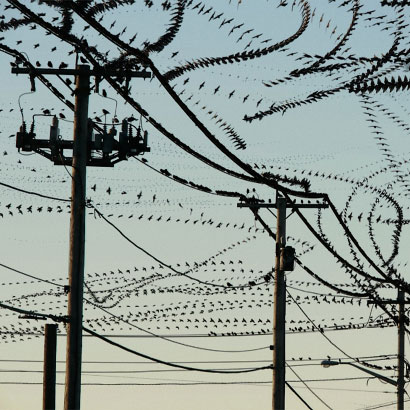
    Featuring: Babette Allina, Sally Curcio, Allen Hansen, Dennis Hlynsky, Thomas Lyon Mills, Igor Molochevski, Lindsey Noble, Anne LaPrade Seuthe, Patricia Smith and Larry Walczak

    Mapping Heaven
    November 22, 2013 – January 5, 2013
    Opening Reception: December 13th, 7-9pm
    Curated by Linda Griggs
    The Front Room
    147 Roebling Street
    Williamsburg, Brooklyn
    frontroom.org

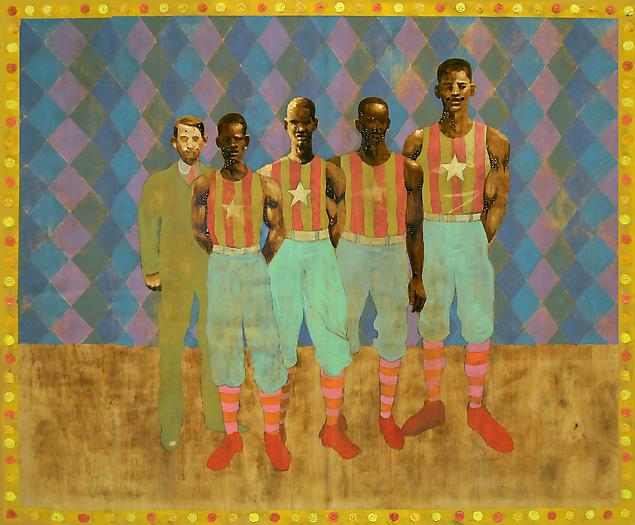
    Derek Fordjour, FEARLESS FOURSOME, 2013. Oil, acrylic, polyurethane and stain on wood panel, 82 x 96 inches

    Derek Fordjour, FEARLESS FOURSOME, 2013. Oil, acrylic, polyurethane and stain on wood panel, 82 x 96 inches

    Corpus Americus is a collection of new work by a dynamic group of 10 emerging and mid-career American artists that challenges the viewer to consider the evolving notion of individual and collective American identity.

    Featuring: Margaret Bowland, Caitlin Cherry, Derek Fordjour, Valerie Hegarty, Doron Langberg, Simone Leigh, Mario Moore, Jenny Morgan, Jennifer Packer and Nathaniel Mary Quinn.

    Corpus Americus
    December 03, 2013 – January 18, 2014
    Curated by Dexter Winberly
    Driscoll/Babcock
    525 West 25th Street
    New York City
    driscollbabcock.com

    Benefit

    PADDLE 8: ONLINE AUCTION
    Online Auction will be in effect Dec 2-13th on Paddle 8. [Auction Click Here]
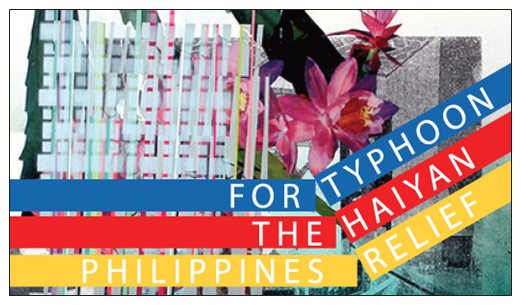
    All proceeds from the auction will go to The National Alliance for Filipino Concerns (NAFCON).

    THE LODGE GALLERY: EXHIBITION OF AUCTION WORKS
    Artworks will be installed at The Lodge Gallery. While the works are on view at The Lodge, bidding remains open at Paddle 8.

    Featuring: Samuel T. Adams, Brian Alfred, Tomer Aluf, Michael Anderson, Noah Becker, Erik Benson, Sarah Bereza, Katherine Bernhardt, Per Billgren, Lisa Blas, Paul Brainard, Erik den Breejen, Kadar Brock, Amanda Browder, Ethan Browning, Maria Calandra, Emily Chatton, Andy Cross, Emily Davidson, Paul DeMuro, Eric Doeringer, Benjamin Dowell, Austin Eddy, Alison Elizabeth Taylor, Rachel Mijares Fick, Matthew Fisher, Dawn Frasch, Amanda Friedman, Jim Gaylord, Jackie Gendel, Rebecca Goyette, Jenna Gribbon, Debra Hampton, Sarah Hardesty, Jack Henry, Shara Hughes, David Humphrey, Scott Indrisek, Samuel Jablon, Aaron Johnson, Mi Ju, Ambre Kelly, Will Kurtz, Emily Noelle Lambert, Katerina Lanfranco, Erika Langstroth, Kristina Lee, Stuart Lorimer, Lauren Luloff, MaryKate Maher, JJ Manford, Nathan Manuel, Christian Maychack, Matt Mignanelli, Christian rex Van Minnen, Nick Naber, Piero Passacantando, Sirikul Pattachote, Don Porcella, Kanishka Raja, Caris Reid, Duke Riley, Jean-Pierre Roy, Lisa Sanditz, Tom Sanford, Gretchen Scherer, Kristen Schiele, Nikki Schiro, Ryan Schneider, Stacy A. Scibelli, Michael Scoggins, Sandra Sitron, Elisa Soliven, Alfred Steiner, Trish Tillman, Nicolas Touron, Jade Townsend, Russell Tyler, Chuck Webster

    Typhoon Haiyan Benefit
    Online Auction: December 2 – 13, 2013
    Gallery Exhibition: December 6 – 10, 2013
    Reception: Tuesday, December 10, 7-9pm

    Lodge Gallery
    131 Chrystie Street
    New York City
    thelodgegallery.com
    paddle8.com

    News | Exhibitions