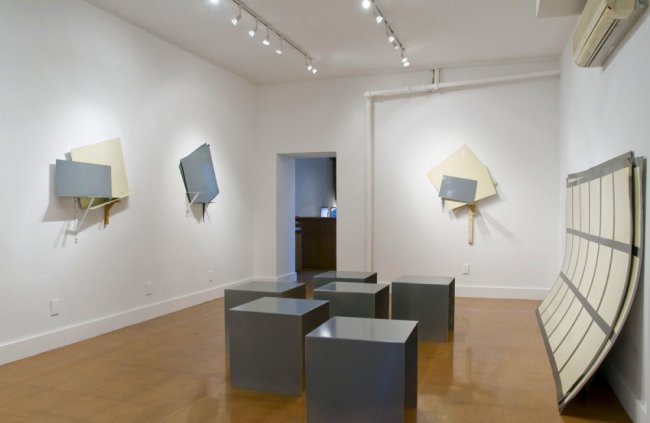
Image courtesy of Blackston
Eugenio Espinoza
Going Blind Faith
November 3, 2013 – December 22, 2013
Opening Reception: November 3, 2013 6-8pm
Blackston
29C Ludlow St. NYC
blackstongallery.com




Image courtesy of Blackston
Eugenio Espinoza
Going Blind Faith
November 3, 2013 – December 22, 2013
Opening Reception: November 3, 2013 6-8pm
Blackston
29C Ludlow St. NYC
blackstongallery.com

Visual arts publication is seeking a Sales/PR Assistant to join our staff. We are an exciting visual arts publication surveying the art world both nationally and internationally, with a significant presence online and in print for over 17 years. The select candidate will be an energetic, enthusiastic, detail-oriented individual with a good sense of time-management. He or she should be able to multi-task in a fast-paced setting. No direct sales experience is necessary; we are willing to train the right applicant with service experience.
Tasks may include:
Focused research on sales leads for publicity and sponsored content
Searching artist databases and finding potential clients
Maintaining professional email correspondence with artists
Creating and maintaining artist research
Requirements:
Strong background in customer service or sales
Proficiency in Microsoft Office
Team-oriented
Professional communication and interpersonal skills
Excellent oral and written communication skills
To Apply:
Resume
Cover letter explaining why you think you will be successful at this position
lubelski@nyartsmagazine.com
Qualifications:
Bachelor’s Degree
Interest in the arts.
**No phone calls or walk-ins please.
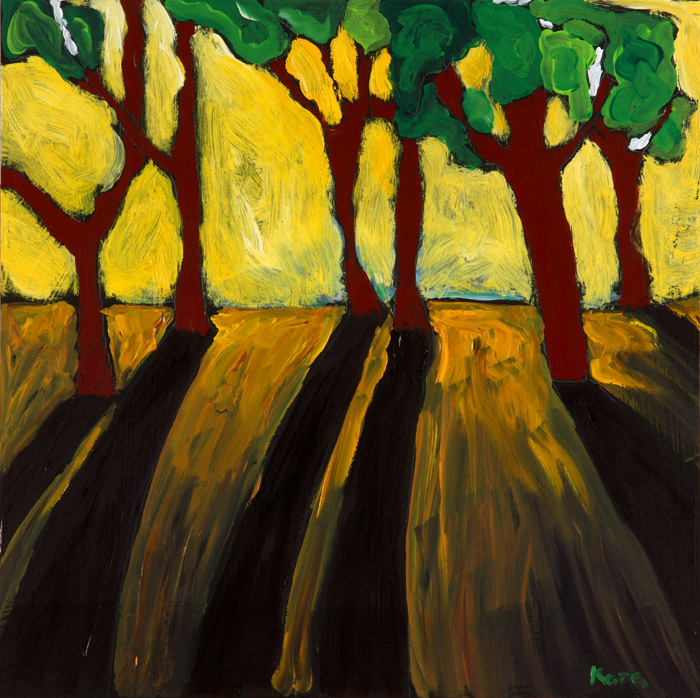
Image courtesy of the artist.
All art is collaboration, whether I am collaborating with myself, or with the subject, or doing a home portrait for someone—it’s one of the things I love best about painting. Then the painting is shared and it becomes a collaboration between the viewer and the piece.

Image courtesy of the artist.
The abstract and figurative painting are more often in the center of my work. Often-but not always- I use photos as very loose templates. I like to improvise, let my imagination run free. I quickly edit trivial areas and focus on parts that require extra attention. Delicate, transparetnt oil colors are my favorites, but I often also access collage materials and acrylic colors. I follow my instinct and I like when my painting can tell a short story.
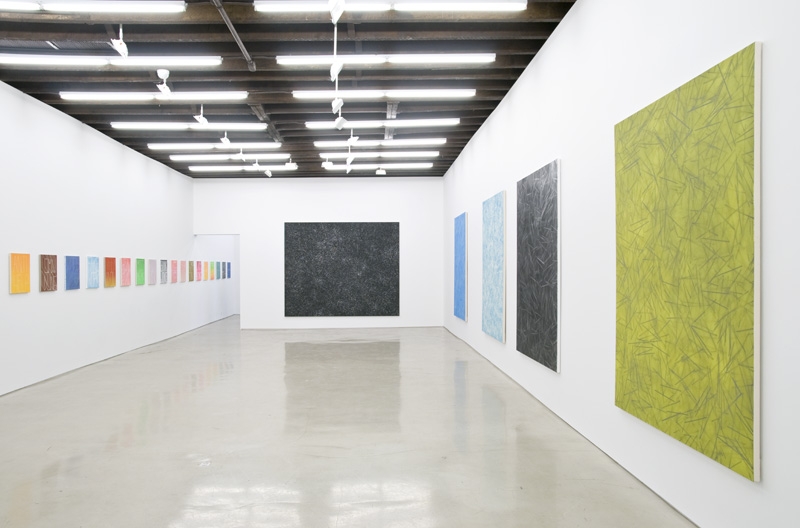
Image courtesy of Lisa Cooley Gallery
Scott Reeder
Scott Reeder: People Call Me Scott
October 27th, 2013 – December 22, 2013
Lisa Cooley Gallery
107 Norfolk St. NYC
lisa-cooley.com
The Bloomberg New Contemporaries at the ICA, London, is the oldest of the graduate survey exhibitions having been originally founded in 1949, and is considered an authoritative view of emerging talent, with a wealth of established artists having participated; from Hockney to Kapoor.
The ICA is showcasing 46 artists in the exhibition for the fourth year in succession from what panellists Chantal Joffe, Nathaniel Mellors, and Ryan Gander consider to be the most promising of graduating artists in the UK. The selection in part reflects the tastes of the panel, a fact often derided, but then how could it not? The work is also informative of the thinking and trends of a new wave of contemporary artists; still expanding their working practice, admirably taking risks with their work, in attempts to evolve new narratives and concepts. But like any early experiments, not all are a success.
The New Contemporaries heralds a Duchampian nod back to the ready-made in art, and a rather whimsical return of a slightly Cornellian style of assemblage; the components of which operate as linking points of narrative relying on form and materiality at a conceptual level. One is reminded in some ways of the contents of a Beuysian vitrine.
A refreshing change of depth occasionally becomes a little too deep, as you feel the artists in question may be a little out of their element. There is a feeling that the use of assemblage in these works veers too closely to homage or derivation.
It seems at times that the précis for this exhibition is not far from a Beuysian assemblage—but as a video piece—and with the slick veneer of an MTV edit. With music. who knows, it might work.
There is an allusion to that particular balance of conceptual solidity and disposable culture with Alex McNamee’s Pickled Onion Knuckle Dusters, bronze casts of ring-shaped crisps; that are conceptually ‘permanently transient’ in nature. This is a playful juxtaposition using a serious medium when contrasted with the fashion for unsophisticated painting found throughout the exhibition. That is to say, the conceptual relevance of materials is a thematic element in contrast to the neo-simplistic paint.
Hannah Regel’s pair of faux-snakeskin upholstered shelves, each bearing the apparent weight of a geometric block made of resin and marble dust, have a particular poetic clarity and balance in terms of material usage—if slightly conceptually oblique in nature.
The melodramatic and the ridiculous are also on hand; which is often a reflection of infantile rebellion—as with Adam Hogarth’s video Trolling—as a troll doll talks out of its backside. But then on balance this could also be seen as a juxtaposition between the avant-garde and its subject matter.
There are—in places—moments of refreshing clarity of language to be found in the show; like beacons of perceptibility amongst the over-convoluted.
Fatma Bucak’s video of a performance, Blessed Are You Who Come—Conversation On The Turkish Armenian Border, is one of the more memorable video works on display in New Contemporaries. It has a sense of maturity belying the artist’s age, in that it has a confidence in its use of humour, and in that, questions its own technique.
The video becomes the work, not the documentation of a ‘serious’ performance that it at first purports to be. Instead, this has an element of intentional farce surrounding the behaviour of three septuagenarians in the foreground of the film, arguing about what the hell this performance artist is doing, and why one of them wants to go home!
The piece is highly amusing and in the same instance discusses the nature of language, the subjective perception of visual narratives, and cross-cultural implications. Bucak’s work is quietly self-assured, and has a genuine sense of self.
Another work with a knowing sense of its own identity is Laura O’Neill’s Boney P, a naïve figurative sculpture. It sits as a critical insight into notions of primitive art in relation to its civilised surroundings—and a mockery of that overly self-aware, self-obsessed art-consumerist environment. The piece is a moment in the exhibition where the ridiculous gives way to a cleverly balanced sense of humour.
This exhibition is often ‘quirky’, ‘controversial’, ‘offbeat'; the viewer is met with the ‘shock of the new’—all of these adjectives are clichéd and redundant; not only in relation to any intelligent art criticism, but also in terms of the existence of contemporary art in a visually overt and uncensored media world.
The violent hyper-reality of news media and multifarious Internet imagery shines in our unblinking eyes on a daily basis. In this instance the art should focus on clarity. After all it is a language.
The art in graduate survey exhibitions often has a sense of energy and experimentation not necessarily found in the latter stages of an artist’s career. Within that there can be the cliché of the self-appointed enfante terrible’s habitual desire to shock. There is sometimes the feeling that when learning a new language the practitioner can, on occasion, form sentences that upon first reading are quite unintelligible—but can at least, be interesting to decipher.
By Paul Black
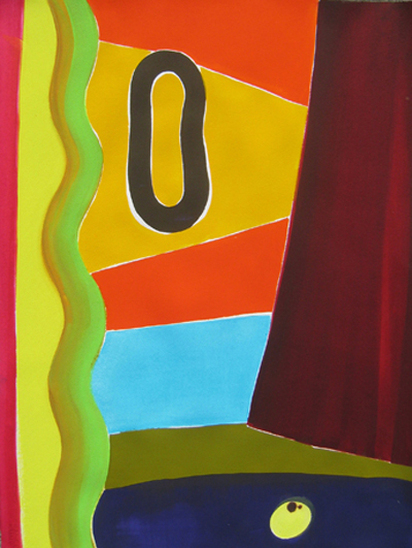
Image courtesy of Janet Kurnatowski Gallery
Richard Timperio
Color Me Gone
November 22, 2013 – December 22, 2013
Opening Reception: November 22, 2013 7-9 pm
Janet Kurnatowski Gallery
205 Norman Ave. Brooklyn, NY
janetkurnatowskigallery.com
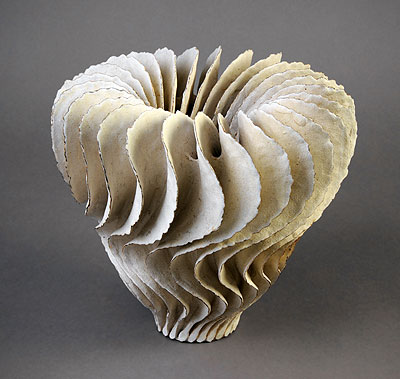
Image courtesy of McKenzie Fine Art.
Ursula Morley Price
November 22, 2013 – December 22, 2013
McKenzie Fine Art INC.
55 Orchard St. NY
mckenziefineart.com
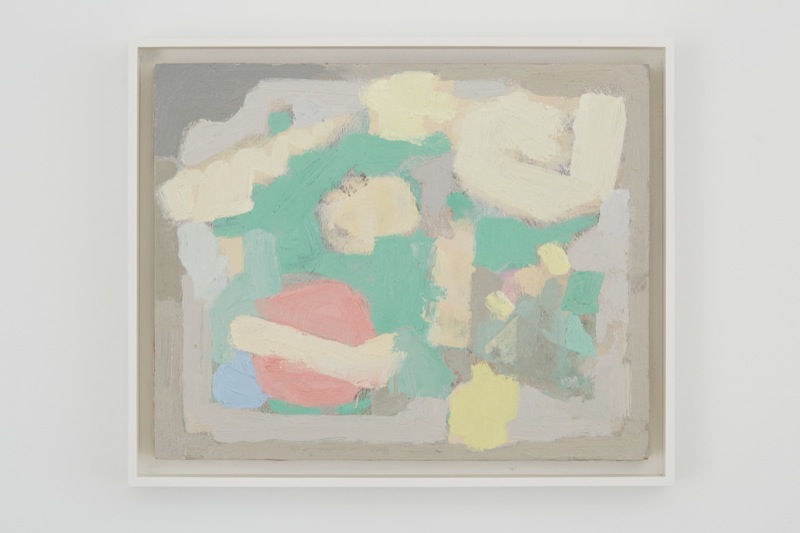
Image courtesy of Laurel Gitlen Gallery
Ryan McLaughlin
Raisins
October 27, 2013 – December 22, 2013
Opening Reception: October 27, 2013 6-8 pm
Laurel Gitlen Gallery
122 Norfolk St. NY
laurelgitlen.com











